


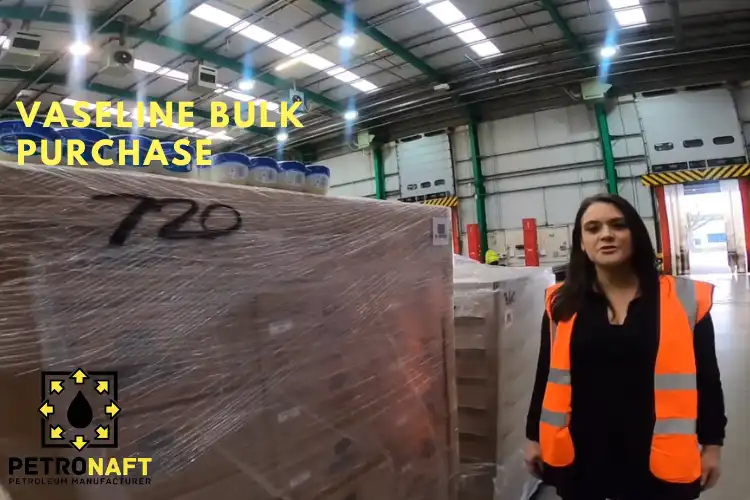
If you need to buy Vaseline in bulk, treat it as a specification-driven petroleum jelly purchase rather than a simple brand request. The right choice depends on end use, grade, documentation, packaging, and logistics. Most buying mistakes happen when teams compare price first and define technical requirements too late.
In B2B markets, the word Vaseline is often used informally to mean petroleum jelly. That can create confusion because branded consumer products, cosmetic raw materials, pharmacopeia-grade petrolatum, and industrial petroleum jelly are not the same thing. A better buying process starts with the application, then works backward into grade, technical fit, compliance needs, and supplier capability.
For personal care, pharmaceutical, and export-oriented use, documentation and refining quality usually matter as much as cost. For industrial and commercial use, consistency, handling, and cost-in-use often matter more than branding. A disciplined RFQ saves time, reduces approval risk, and makes supplier comparisons much more meaningful.
Highlights & Key Sections
What does “Vaseline” mean in a wholesale purchase?
In wholesale buying, “Vaseline” usually refers to the product family, but the actual purchase should be defined as petroleum jelly or petrolatum with a stated grade and intended use.
Procurement teams typically face three different product categories:
- branded finished consumer products
- bulk petroleum jelly used as a manufacturing raw material
- industrial petroleum jelly used in non-cosmetic and non-pharma applications
This distinction matters because suppliers may quote very different products under similar names. One supplier may offer branded retail packs, another may offer cosmetic white petrolatum, and another may offer technical-grade material. A strong RFQ removes ambiguity by stating the end use, required grade, packaging format, and supporting documents.
Which grade should you buy for your application?
The correct grade is the one that matches the end use, compliance burden, and customer requirements. Buying a higher grade than necessary can raise cost without improving performance. Buying a lower grade than required can create quality, regulatory, or customer-approval problems.
| Application | Typical grade approach | What to verify before approval | Main buying risk |
|---|---|---|---|
| Cosmetics and personal care | Cosmetic-grade or pharmacopeia-aligned white petrolatum | Appearance, odor, consistency, documentation, lot traceability | Sensory complaints or compliance gaps |
| Pharmaceutical or OTC-related use | USP- or Ph. Eur.-aligned petrolatum or white petrolatum | Monograph alignment, impurity controls, COA, packaging integrity | Release delays or audit issues |
| Industrial and commercial use | Technical or industrial petroleum jelly | Consistency, handling behavior, stability, repeatability | Process instability or poor cost-performance |
| Sensitive-contact applications | Only use material with explicit supplier statements for the exact use | Application-specific compliance evidence | Assuming suitability without proof |
A practical rule is simple: the more sensitive, regulated, or skin-contact the final application is, the more the buying decision should lean toward documentation, consistent refining quality, and supplier traceability. For industrial applications, the focus shifts toward processing behavior, availability, and total delivered cost.
What specifications matter most before placing a purchase order?
The most important specifications are the ones that affect performance in your real process, storage conditions, and finished product. A short, measurable specification sheet is more useful than a generic description.
Before placing a first order, define these points clearly:
- Color and appearance
Especially important for white grades used in cosmetics, ointments, and visually sensitive formulations. - Odor
Even a slight odor shift can create problems in personal care or skin-contact products. - Consistency or penetration
This affects spreadability, filling, texture, and process behavior. - Melting or softening behavior
Important for hot climates, export routes, and warehouse storage. - Required standard or grade alignment
State clearly whether you need cosmetic-grade, industrial-grade, USP, Ph. Eur., or another requirement. - COA, SDS, and traceability
These should be routine, lot-specific, and available before approval. - Packaging format
Define drums, cartons, liners, palletization, and labeling expectations in writing.
Many petroleum jelly products are available in several consistency ranges, so a grade name alone is rarely enough. Buyers should approve a measurable specification window rather than rely on broad commercial labels.
How should you qualify a supplier and structure your RFQ?
A strong RFQ forces suppliers to quote the same target. That reduces noise in pricing, reveals weak offers early, and speeds up technical review.
A practical five-step buying process
- Define the end use
State whether the material is for cosmetics, ointments, creams, cable filling, lubrication, polishing, or another application. - Set the technical requirements
List the non-negotiable points such as color, odor, consistency, melting behavior, and required documentation. - Request the document package early
Ask for the product data sheet, COA format, SDS, origin details if relevant, and any compliance statements required by your market. - Approve by sample and trial
Evaluate the material in your actual process, storage conditions, and finished formulation before committing to scale. - Finalize logistics before the PO
Compare lead time, packaging, pallet configuration, Incoterms, and replacement policy for off-spec lots.
What a good RFQ should include
- intended application
- target grade
- required documents
- trial quantity and expected annual volume
- packaging format
- destination country or port
- storage or climate concerns
- acceptance criteria for incoming inspection
This process prevents a common procurement problem: receiving a product that matches the commercial name but does not perform correctly in production, storage, or the target market.
What packaging and logistics issues matter in bulk petroleum jelly?
Packaging matters because petroleum jelly is a semi-solid material and can be sensitive to heat, handling, and long transit periods. The wrong pack format can lead to leakage, contamination, difficult unloading, or inconsistent texture after transport.
Commercial supply is commonly handled in drums, cartons, and custom packaging formats depending on grade, handling method, and destination. The best choice depends on hygiene requirements, warehouse conditions, temperature exposure, and how the material will be introduced into production.
A basic logistics review should cover:
- exposure to high temperatures during transit
- need for liners or sealed internal packaging
- risk of leakage or oil separation during storage
- pallet configuration and unloading method
- retention sample policy for each lot
If the supply route includes long export transit or warm storage conditions, it is worth testing the material under likely transport conditions before full-scale purchase. That is often less expensive than solving complaints after the first shipment arrives.
Which suppliers are commonly shortlisted?
Most buyers compare both manufacturers and distributors. In practice, the right shortlist depends on region, grade, documentation support, order size, and delivery model.
Below are 10 established names that procurement teams may encounter when sourcing bulk petroleum jelly or related wholesale supply channels. This is not a ranking, and availability should always be checked for the exact grade and destination market.
- Petro Naft
- Univar Solutions
- Brenntag
- Barentz
- DKSH
- IMCD
- Calumet Penreco
- Sasol
- H&R Group
- Aiglon
A serious shortlist should be built around fit, not reputation alone. A well-known supplier that cannot meet your specification, packaging, or document requirements is still the wrong supplier.
What should you confirm before you buy Vaseline in bulk?
Before you buy, confirm the grade, the documentation, and the logistics. That discipline reduces procurement risk far more effectively than chasing the lowest initial quote.
Executive checklist
- confirm whether you need a branded product or bulk raw material
- define the intended application clearly
- match the grade to the use case
- set measurable acceptance criteria
- request COA, SDS, and compliance documents early
- qualify with samples before the first large order
- lock the packaging format in writing
- compare lead time and export readiness, not only price
- retain a lot sample for future troubleshooting
If your team wants to buy Vaseline in bulk for manufacturing or commercial use, the safest approach is to write the purchase around petroleum jelly performance, consistency, and documentation requirements rather than around a broad product name. That leads to cleaner supplier comparisons, faster approvals, and fewer surprises after delivery.
FAQs
1) Is Vaseline the same as petroleum jelly in B2B procurement?
Not exactly. Vaseline is a brand name, while petroleum jelly or petrolatum is the generic material category. In wholesale sourcing, buyers often use the brand name informally, but the actual purchase decision should be based on material grade and application.
2) When do I need USP or Ph. Eur. grade petroleum jelly?
You typically need pharmacopeia-aligned material when the end use is pharmaceutical, OTC-related, medically sensitive, or destined for markets with stricter documentation requirements. Industrial applications often use technical grades instead.
3) What should I expect on a supplier COA for petroleum jelly?
At minimum, expect lot identification and the key release data relevant to your application, such as appearance, consistency, and any declared grade alignment. For regulated uses, supporting compliance documents should also be available.
4) Can one petroleum jelly grade serve cosmetics, pharma, and industrial uses?
Sometimes, but it should never be assumed. A material that works technically in more than one sector may still fail your documentation, sensory, packaging, or market-specific approval requirements.
5) Is it better to buy from a manufacturer or a distributor?
That depends on your order size, region, and need for local inventory or technical support. Manufacturers may offer deeper product knowledge, while distributors often simplify local availability and multi-product sourcing.
Sources
- U.S. Food and Drug Administration — Relevant for confirming how petrolatum is treated in the OTC skin protectant framework and for grounding grade discussion in regulated topical uses. FDA OTC Monograph M016
- United States Pharmacopeia (USP) — Relevant for supporting the discussion of pharmacopeia alignment and the difference between regulated and non-regulated purchasing requirements. USP Petrolatum Harmonization
- European Parliament / European Commission Answer on Petrolatum in Cosmetics — Relevant for supporting the point that cosmetic petrolatum in the EU requires known refining history and appropriate source control. European Parliament Answer E-008297/2016
- Univar Solutions — Relevant for practical sourcing context around petrolatum applications, product breadth, and distributor-led supply models. Univar Solutions Petrolatums
- Penreco — Relevant for framing petrolatum as a raw material used across industrial, cosmetic, and pharmaceutical sectors with application-dependent requirements. Petrolatum and Regulatory Requirements