


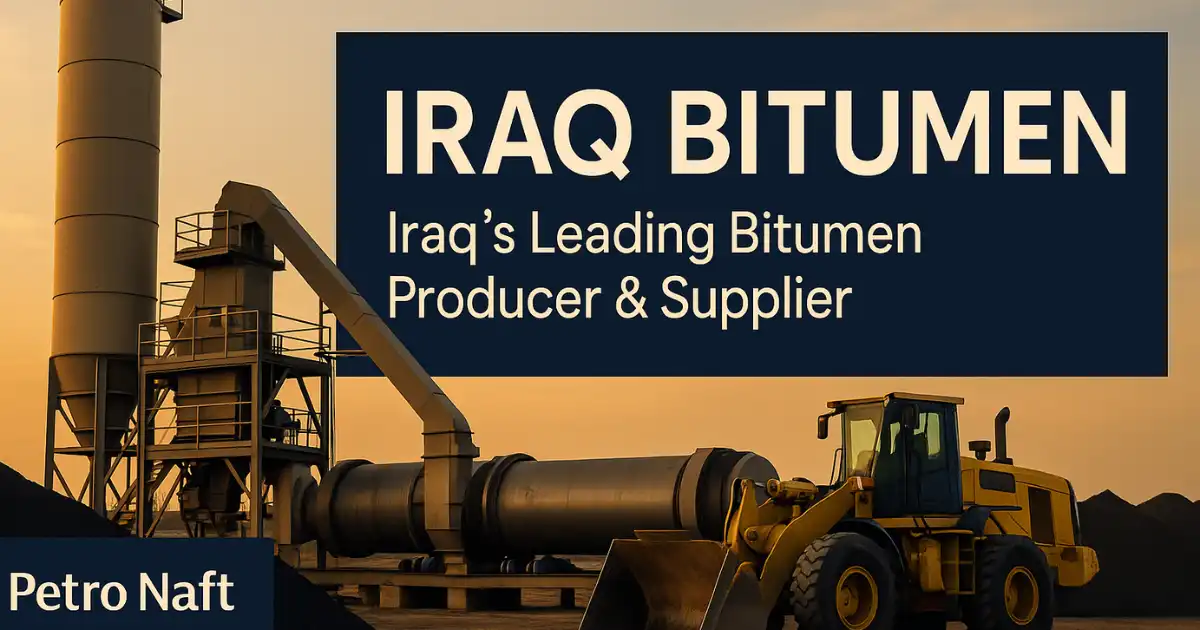
If you’re sourcing Iraq Bitumen for road, roofing, or industrial use, Petro Naft can supply consistent grades with verifiable quality control, flexible commercial terms, and reliable export logistics. Iraq-origin production is consolidated and shipped mainly via main ports of Turkey, supporting thousands of tons per month across drums, jumbo bags, bulk, and regional tanker deliveries.
Highlights & Key Sections
What buyers usually need (and what to confirm first)
Before you compare suppliers, lock these down:
- Grade & application (paving vs. roofing vs. waterproofing vs. industrial)
- Target climate & performance (rutting resistance, cracking, aging)
- Packaging & discharge method (bulk, drum, jumbo bag, tanker)
- Delivery term (FOB, CIF, CPT, DAP, etc.)
- Inspection & documentation (COA + optional third-party inspection)
Practical rule: choose a supplier you can “audit on paper”—clear specs, repeatable test results, and a loading/inspection process you can verify.
Iraq Bitumen: Grades, specifications, and best uses
“Iraq Bitumen” is typically sourced for infrastructure and industrial projects where buyers want a balance of performance and cost. The key is matching the grade to your job and climate.
Common product families you can source
| Product family | Typical use | What to check on the spec sheet |
|---|---|---|
| Penetration grades (e.g., mid-range paving grades) | Asphalt paving, general roadworks | Penetration range, softening point, ductility, flash point |
| Oxidized / blown grades | Roofing sheets, insulation, waterproofing | Softening point, penetration, loss on heating |
| Cutback bitumen | Prime coat, cold application (where allowed) | Viscosity, distillation values, safety handling requirements |
| Bitumen emulsions | Tack coat, surface dressing, cold mix | Emulsion type, breaking behavior, residue properties |
| Modified bitumen (PMB) | Heavy traffic roads, high rutting climates | Elastic recovery, stability, storage stability |
Mini-tutorial: pick the right grade in 3 steps
- Define your application: paving, membrane, coating, or industrial.
- Map your climate: hot climates need stronger rutting resistance; cold climates need better crack resistance.
- Match logistics to your jobsite: bulk works best with heated storage; drums/jumbo bags fit smaller sites or mixed shipments.
Petro Naft supply model for Iraq-origin bitumen
Petro Naft exports various types of bitumen produced in Iraq and ships mainly from Turkey’s export hubs (main ports of Turkey) to destinations worldwide.
Capacity and export capability
Monthly capacity: thousands of tons per month
- Export hubs: main ports of Turkey
- Global supply options: sea freight to international ports + regional land routes
- Neighboring deliveries: land transportation by tanker to nearby markets (where cross-border routes are open and compliant)
Packaging formats available
Choose packaging based on your storage, unloading equipment, and project scale:
| Packaging | Best for | Operational notes |
|---|---|---|
| Steel drums | Mixed loads, smaller storage, distributors | Easy handling; protect from heat and direct sun |
| Jumbo bags | Mid-volume shipments, faster handling | Requires forklifts/cranes; keep dry and covered |
| Bulk tanker / bulk vessel | Large projects, terminals | Requires heated discharge & storage readiness |
| Other common packaging | Specialized distribution | Can be arranged based on destination constraints |
Logistics that reduce risk (not just “fast shipping”)
Reliable shipping is about preventing quality drift and paperwork delays—not only speed.
Sea freight (international)
Petro Naft arranges fast and dependable shipment using reputable carriers active in Turkey, including MSC and Maersk (subject to route availability and booking conditions).
What this helps you avoid
- Container/booking uncertainty during peak seasons
- Delays that increase demurrage and storage costs
- Temperature exposure issues on long dwell times
Land freight (regional)
For neighboring markets, tanker delivery can simplify cost and timing when:
- You have suitable unloading capability
- Border routes and permits align with the shipment plan
- You want reduced port handling steps
Quality assurance you can actually verify
The fastest way to spot a weak supplier is to ask for a clean, repeatable QA workflow.
A practical QA workflow (how serious suppliers operate)
- Pre-loading sampling from the production/holding tank
- Batch-based COA tied to lot numbers
- Sealed sampling during loading (when required)
- Optional third-party inspection before shipment
Petro Naft can provide third-party inspection through SGS and other internationally active inspection companies in Turkey, such as Bureau Veritas and Intertek.
What to request on the paperwork pack
- Certificate of Analysis (COA) for the shipped batch
- Packing list + net/gross weights
- Bill of lading / CMR (as applicable)
- Origin and compliance documents (as required by destination)
- Inspection certificate (if third-party inspection is included)
Commercial terms that fit real procurement
Petro Naft is ready to receive orders and allocate capacity with suitable pricing and consistent quality—especially when you share a clear monthly/quarterly forecast.
Sales terms (Incoterms-style options)
Depending on your destination and your own freight contracts, common terms can include:
- FOB (you control freight)
- CIF (supplier arranges freight + insurance to port)
- CPT (carriage paid to named destination)
- DAP (delivered to your named place, duties excluded)
- Other widely used commercial terms can be arranged to match your workflow
Payment flexibility
Procurement teams often need options that balance speed and risk. Flexible terms can include:
- T/T (telegraphic transfer)
- L/C (letter of credit, common structures available)
- Other standard, mutually agreed payment structures
Practical procurement tip: align payment milestones with inspection release and document readiness to reduce disputes.
How to order Iraq-origin bitumen without delays
Here’s a simple process that prevents the most common issues (wrong grade, wrong packaging, port bottlenecks).
Step-by-step ordering checklist (mini tutorial)
- Send your target grade + intended use (paving/roofing/industrial).
- Choose packaging (drum, jumbo bag, bulk, or other).
- Confirm destination + preferred sales term (FOB/CIF/CPT/DAP).
- Request QA plan (COA + third-party inspection option).
- Align shipment window with your storage readiness (heated storage for bulk).
- Lock documents list required by your customs/bank (especially for L/C).
- Allocate capacity (critical for recurring buyers and peak seasons).
Trends shaping bitumen buying decisions right now
Even if your project is price-sensitive, the market is shifting toward performance and traceability.
- Performance-driven binders: More road authorities and EPC contractors push for binders that resist rutting and fatigue cracking—especially under heavier axle loads and hotter summers.
- Traceability and inspection discipline: Buyers increasingly require batch traceability, documented sampling, and third-party inspection to reduce claim risk and simplify bank/customs processing.
Current challenge to plan for: logistics volatility (space constraints, port congestion cycles, and seasonal demand spikes). The fix is simple: book earlier, confirm packaging availability, and keep documentation standardized.
Executive Summary and buyer checklist
If you want consistent supply with fewer surprises, use this checklist before you sign:
Executive Summary
Petro Naft supplies Iraq Bitumen with scalable logistics via main ports of Turkey export hubs, monthly supply in the range of thousands of tons, multiple packaging formats, flexible payment and sales terms, optional third-party inspection, and reliable shipping with reputable carriers.
Buyer checklist (print-ready)
- Grade matches application and climate (don’t guess)
- Packaging fits your unloading/storage capability
- Target term confirmed (FOB/CIF/CPT/DAP, etc.)
- COA is batch-based and traceable
- Third-party inspection option agreed (SGS / Bureau Veritas / Intertek)
- Shipping plan confirmed (MSC/Maersk or equivalent; route-based)
- Payment term aligned with documents and inspection release
- Capacity allocation confirmed for recurring volumes
FAQs
1) What affects the performance of paving bitumen the most?
Temperature range, traffic load, and binder consistency matter most. A grade that works in mild climates can rut in heat or crack in cold if the binder choice doesn’t match conditions.
2) Should I choose bulk, drums, or jumbo bags?
Choose bulk if you have heated storage and large volume. Drums and jumbo bags work better for smaller sites, mixed cargo, or places where heated discharge is difficult.
3) How can I reduce the risk of receiving off-spec material?
Ask for batch COA tied to lot numbers, a clear sampling plan, and third-party inspection before shipment. This makes disputes measurable instead of subjective.
4) Which delivery terms are best for first-time buyers?
Many first-time buyers prefer terms where freight planning is simplified (often CIF or delivered-style terms), while experienced importers may choose FOB to control shipping and costs.
5) What documents are most likely to delay customs or banking?
Mismatch between invoice, packing list, weights, and transport documents causes many delays. If you use L/C, align every document format and wording before shipment.