


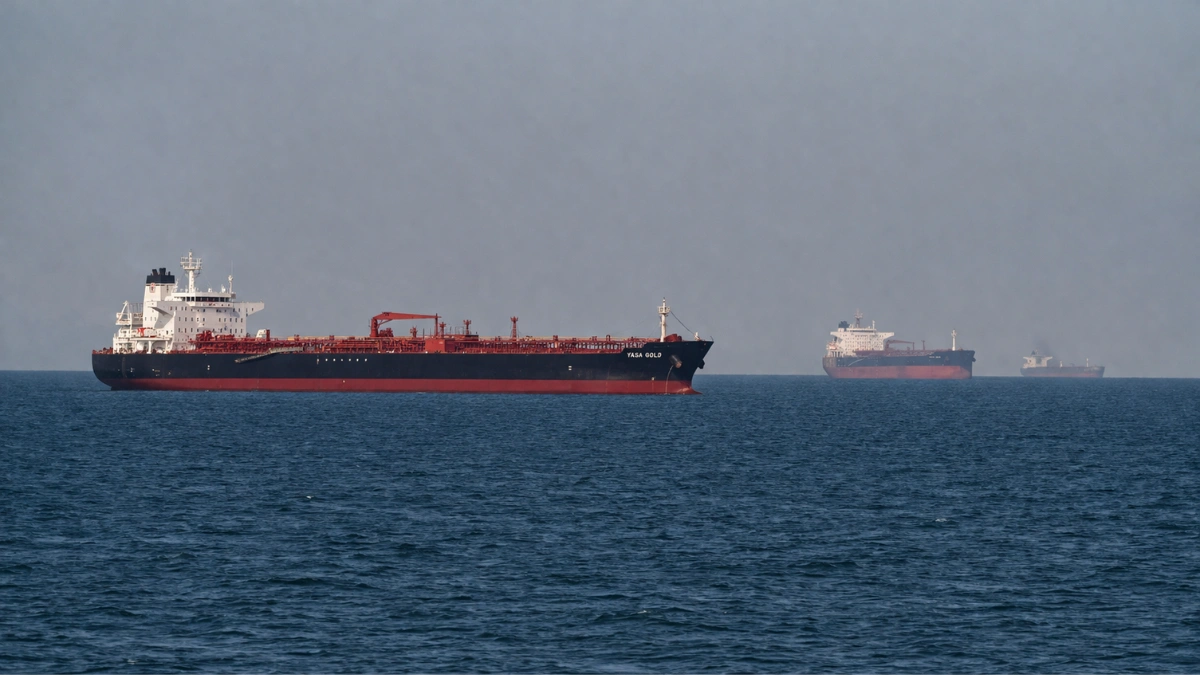
Shipping through the Strait of Hormuz remained heavily disrupted on Friday, April 10, despite a fragile U.S.-Iran ceasefire, extending the Iran-U.S.-Israel war impact on petroleum products into diesel, jet fuel and gasoline markets as refiners, airlines and fuel buyers compete for alternative supply and freight capacity.
The immediate risk now goes beyond crude. The strait is a core export route not only for Gulf crude but also for large volumes of refined products, and alternative pipeline routes cannot fully replace normal flows. That leaves fuel supply chains exposed even if fighting eases and benchmark oil prices pull back from peak levels.
Refined products are tightening faster than crude
Traffic through Hormuz remains far below prewar levels, with shipowners and charterers still waiting for clearer operating conditions before resuming normal voyages. That caution is delaying the movement of crude feedstock to Asian refiners and slowing the export of refined fuels to global buyers.
The squeeze is being reinforced by damage to regional energy infrastructure. Saudi Arabia said attacks reduced its oil production capacity and cut flows on the East-West Pipeline, while also affecting major refining sites including SATORP, Ras Tanura, SAMREF and Riyadh. That matters directly for petroleum products because refinery outages hit diesel, gasoline and jet fuel availability more quickly than crude disruptions alone.
Europe is already warning of downstream effects. Airports Council International Europe said the continent could face a systemic jet fuel shortage within weeks unless the Strait of Hormuz reopens more fully, underscoring how a maritime chokepoint can rapidly turn into an aviation fuel problem.
Across Asia, refined-fuel prices have retreated from panic highs after the ceasefire announcement, but market signals still point to tight supply. Lower crude arrivals are starting to feed through into weaker refined-product exports, and analysts say the supply chain may need months to normalize even if more tankers begin moving again.
Oil prices remain volatile as supply chains reset
Crude futures have fallen back from the sharpest war-driven spike, but oil remains elevated and physical markets are still strained by limited prompt supply. Brent settled at $95.20 a barrel on Friday, while traders and analysts continue to watch whether shipping through Hormuz resumes at anything close to normal volumes.
The U.S. Energy Information Administration has warned that full restoration of flows could take months. Its latest outlook assumes the conflict does not persist past April and that traffic gradually resumes, but not to pre-conflict levels until later in 2026. Under that scenario, Brent is expected to peak near $115 a barrel in the second quarter, with gasoline and diesel prices also staying under pressure.
Governments are already trying to cushion the shock. The U.S. Department of Energy said it has loaned another 8.48 million barrels from the Strategic Petroleum Reserve as part of a broader emergency response coordinated with other consuming countries. Those releases may ease some pressure, but they do not solve the core issue: moving crude and refined products safely through a route that remains only partially functional.
What happens next depends less on the ceasefire headline than on whether shipowners, insurers, refiners and Gulf producers regain confidence that Hormuz can operate predictably. Until that happens, the market risk is likely to remain centered on petroleum products, where refinery damage, freight disruption and delayed cargoes can push fuel costs higher even when crude prices retreat from their wartime extremes.