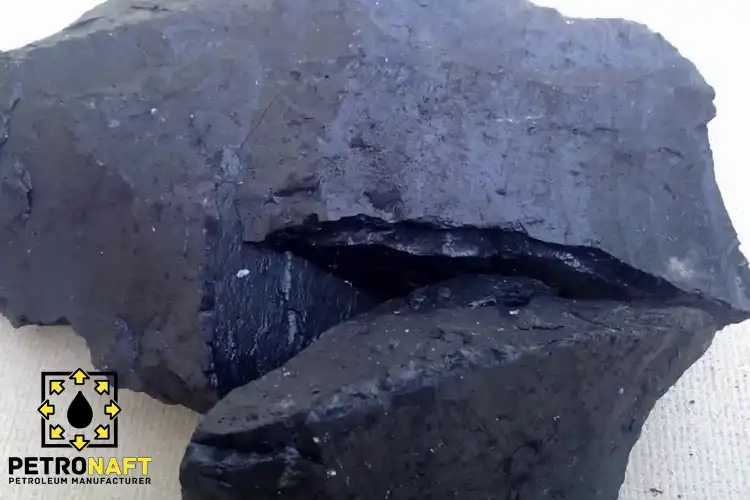
Natural Asphalt is a naturally occurring bitumen-rich material (often blended with mineral matter) used to boost asphalt binder stiffness and durability. In paving, it’s most commonly applied as a modifier to improve rutting resistance and high-temperature performance, or as part of a pre-blended hard binder for heavy-traffic roads, airports, and industrial surfaces.
Highlights & Key Sections
Petro Naft perspective in one minute
If you’re evaluating Natural Asphalt for a project, the fastest way to get it right is to answer three questions:
What problem are you solving? (rutting, high modulus, fuel resistance, durability, RAP balancing)
Which Natural Asphalt form fits your plant and spec? (lake asphalt, asphaltite/resin, rock asphalt)
How will you control risk? (dosage, viscosity, low-temperature cracking checks, consistency testing)
Natural Asphalt: what it is and why engineers use it
“Natural Asphalt” is a broad industry term for naturally occurring bituminous materials that can be used in paving and industrial applications. Unlike refinery-produced paving bitumen, Natural Asphalt is typically harder, often more temperature-stable, and may contain natural mineral fines that act like built-in filler.
The three forms you’ll see in specifications and trade
Lake asphalt: Bitumen + natural mineral content (classic example sourced from Pitch Lake in Trinidad and Tobago).
Asphaltite / natural resin: A hard, brittle hydrocarbon (well-known deposits exist in Utah, including the Uinta Basin).
Rock asphalt: Asphalt-bearing limestone/sandstone—used when you want both aggregate and binder contribution.
Quick comparison table: choosing the right Natural Asphalt
Type
Typical form at plant
What it’s best at
Common trade-offs
Best-fit projects
Lake asphalt
Powder/granules or pre-blended binder
Rut resistance, stability, consistent hardening
Can raise viscosity (mix temp/compaction window)
High-traffic highways, intersections, bus lanes
Asphaltite / resin
Powder/granules (dry or wet)
Big stiffness boost, fuel/chemical resistance
Overdose can hurt low-temp flexibility
Industrial yards, ports, airport aprons
Rock asphalt
Granular/graded mineral + bitumen
Simplified blending, filler contribution
Transport cost; variability by quarry
Regional projects, base/binder course enhancement
Rule of thumb: If you need predictable binder grading, pre-blended solutions are often easier to qualify. If you need plant flexibility, dry-add powders/granules can be practical—if you control dispersion and dosage.
What Natural Asphalt actually does inside the mix
Think of Natural Asphalt as a “hard fraction” upgrade. In practice, it can:
Increase high-temperature stiffness → better rut resistance under slow/heavy traffic
Improve mixture stability → higher modulus mixes for structural capacity
Add mineral micro-filler (some types) → tighter mastic, reduced drain-down in gap-graded mixes
Improve resistance to fuels/oils (certain resins) → useful for industrial pavements
Where people get burned
Most performance complaints come from one of these four issues:
Too much modifier (stiffness up, cracking risk up)
Poor dispersion (clumps → inconsistent cores)
Wrong target (trying to fix moisture damage with a stiffness tool)
No low-temperature verification (binder looks great at high temp but fails cracking checks)
Mini tutorial: how to specify Natural Asphalt without guesswork
Here’s a practical, “project-first” workflow you can apply in a day.
Real-world example: rut resistance gains—and the balancing act
Field trials and agency reports have repeatedly shown that Natural Asphalt modifiers can stiffen mixtures and reduce rutting in heavy-traffic sections—especially where slow-moving loads and high pavement temperatures are dominant. The consistent lesson is equally important:
Rutting often improves before cracking becomes a concern
Cracking risk becomes noticeable when stiffness is pushed too far or climate isn’t considered
Practical takeaway: Treat Natural Asphalt as a performance tool, not a “more is better” additive.
Beyond roads: where Natural Asphalt earns its keep
Natural Asphalt isn’t only a paving material. It’s also used where you need hardness, sealing, and chemical resistance, including:
Waterproofing membranes and roofing compounds
Pipe and tank coatings
Industrial flooring and protective surfacing
Certain drilling and foundry formulations (when a hard resin fraction is beneficial)
If your project involves hydrocarbon exposure, a resin-type Natural Asphalt can be a strong option—provided it’s engineered into a system that still meets flexibility requirements.
Buying Natural Asphalt: what to ask (so you don’t buy a problem)
Whether you’re a contractor, trader, or end user, procurement should be driven by measurable properties, not product names.
Supplier checklist (request this in writing)
Material type (lake / resin / rock) and recommended use mode (dry/wet/pre-blended)
Grading approach (penetration grade or performance grading, as required)
Packaging (bags / big bags), storage limits, and handling guidance
Batch traceability + certificate of analysis (COA)
Where Petro Naft fits in
Petro Naft operates as a manufacturer and supplier for petroleum-based industrial materials and supports customers with spec-aligned production, QC documentation, and export-ready packaging—which matters because consistency is the difference between a modifier that performs and one that creates variability.
Storage, handling, and troubleshooting
Quick troubleshooting table
Symptom
Likely cause
Fix that works
Mix is hard to compact
Viscosity too high / dosage too high
Reduce modifier, adjust temps, or switch integration method
2026 trend angle: why Natural Asphalt is being re-evaluated now
Two forces are pushing the industry toward smarter binder engineering:
Higher RAP usage: Plants need better ways to control stiffness and durability as reclaimed binder content rises.
Sustainability reporting (EPDs/LCA): Producers are under pressure to document material footprints, and some binder additive datasets remain incomplete—making disciplined material selection and documentation even more valuable.
Natural Asphalt shows up here as a practical performance lever, especially when it helps deliver rut resistance without complex polymer systems—provided the mix is validated for cracking and workability.
Conclusion: how to use Natural Asphalt correctly
Natural Asphalt can be a high-impact modifier when you treat it like an engineered ingredient—define the target, start with conservative trials, verify dispersion, and balance rut resistance with cracking risk. Done right, Natural Asphalt improves stability and durability in the exact places conventional binders struggle: heavy loads, slow traffic, and hot pavement conditions.
Executive Summary checklist
Use this before you approve a formula or purchase order:
Defined the primary performance goal (rutting / modulus / fuel resistance / durability)
Selected the right type (lake / resin / rock) for that goal
Chosen the integration method (pre-blended vs dry vs wet)
Started with conservative trial dosage and documented it
Verified dispersion and plant practicality (no clumps, stable feeding)
Confirmed high-temp rutting performance with appropriate testing
Locked QC specs (softening point, penetration/grade, viscosity, ash where relevant)
Required COA, batch traceability, and consistent packaging/storage plan
FAQ
1) Is Natural Asphalt the same as refinery bitumen?
No. Natural Asphalt is a naturally occurring bitumen-rich material, often harder and sometimes containing mineral matter. Refinery bitumen is produced from crude oil refining and is typically graded specifically for paving use.
2) Will Natural Asphalt always reduce rutting?
Often, yes—because it increases stiffness and mixture stability. But rutting can also come from aggregate structure or moisture damage, so performance still depends on the full mix design, not only the binder.
3) Can Natural Asphalt increase cracking risk?
It can if dosage or stiffness is pushed too far for the climate and traffic profile. That’s why low-temperature and fatigue-related checks should be part of every qualification program.
4) Should I use dry process or wet process?
Dry process can be simpler for plants but needs tight dispersion control. Wet process (or pre-blended binder) offers more uniformity, especially when specifications require consistent binder grading.
5) What’s the fastest way to qualify a Natural Asphalt product?
Run a controlled trial: start conservative, confirm workability, test rutting resistance, then verify cracking risk. Lock a QC test set and require batch traceability before scaling up.
Sources
Standard specifications defining Trinidad-lake-modified asphalt binder grading and testing requirements: ASTM D5710/D5710M
Performance-graded specification framework for Trinidad-lake-modified asphalt binders: ASTM D6626