


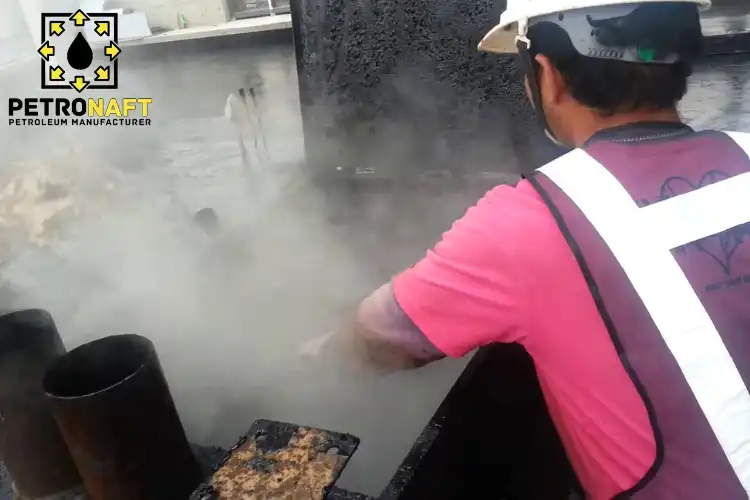
Oxidized Bitumen in Waterproofing works best when you need a tougher, higher-softening-point binder that resists flow on hot roofs, foundations, and detailing. By choosing the right grade (softening point/penetration) and installing it with correct temperature control and reinforcement, you can build water-tight systems that stay stable, repairable, and cost-effective for years.
What readers usually want to know (fast):
- Best for: hot-climate roofs, detailing, built-up systems, protective coatings, pipe/tank wrapping
- Key selection lever: grade (e.g., 95/25, 115/15) matched to temperature + movement risk
- Typical benefits: better high-temp stability, strong adhesion, predictable performance
- Main risks: overheating, brittle performance in cold movement zones, poor substrate prep
At-a-glance decision table
| If your project has… | Choose oxidized bitumen when… | Consider alternatives when… |
|---|---|---|
| High roof temperatures / strong sun | You need flow resistance and stable lap sealing | You need high flexibility at low temps (SBS/PU systems may win) |
| Foundations / below-grade waterproofing | You can protect the membrane (drainage board, protection sheet) | You expect active cracks without crack-bridging layers |
| Complex detailing (upstands, drains, penetrations) | You need a workable mastic for fillets and terminations | You must install in wet/cold conditions without heating |
| Long life + maintainability | You want repairable bitumen-based build-ups | You require one-coat, fast-cure liquids with minimal labor |
Highlights & Key Sections
Oxidized Bitumen in Waterproofing: What It Is and Why It Works
Oxidized (air-blown) bitumen is bitumen that has been processed with controlled air at elevated temperature to adjust its internal structure. In practical terms, it becomes less temperature-sensitive: it holds shape better in heat, and it gives you a more “roof-ready” binder for membranes, mastics, and built-up waterproofing layers.
Why waterproofing teams like it:
- It stays put on hot surfaces instead of creeping or bleeding.
- It forms tight, durable films when properly applied.
- It bonds well with reinforcement (polyester/fiberglass) in many systems.
Simple mental model:
If regular bitumen is “too soft” for high heat, oxidized bitumen shifts you toward higher softening point and controlled hardness—great for roofs and detailing, less ideal for cold, moving cracks unless you engineer flexibility into the system.
Key Benefits Buyers and Applicators Actually Feel on Site
1) Better high-temperature stability
- Helps reduce flow on exposed or semi-exposed applications.
- Improves dimensional stability in built-up and membrane systems.
2) Strong adhesion and “clean” lap behavior
- When you control temperature and surface prep, laps seal consistently.
- You get fewer “mystery leaks” caused by weak bonding at seams and corners.
3) Predictable grading system
- Grades tie to measurable properties (softening point + penetration), which makes procurement and QC simpler.
4) Repairability
- Many oxidized-bitumen waterproofing systems are easy to patch with compatible mastic, strips, or overlays.
5) Cost-to-performance sweet spot
- For many commercial roofs and foundations, it delivers long-life performance without the price jump of premium liquid-applied chemistries.
Grades Explained (and What Those Numbers Really Mean)
Oxidized bitumen grades are commonly expressed like 95/25 or 115/15:
- The first number relates to softening point (higher = more heat resistance).
- The second number relates to penetration (lower = harder material).
Rule of thumb that works in procurement meetings:
- Hotter service temperature → higher softening point / lower penetration
- More movement / colder climate → lower softening point / higher penetration (or choose a modified system)
Practical grade selection table (typical market logic)
| Grade example | Relative hardness | Best-fit waterproofing uses | “Avoid if…” |
|---|---|---|---|
| 85/25 | Medium | foundation coatings, general membranes, moderate climates | the roof surface gets extremely hot |
| 90/15 | Hard | built-up roofs, industrial waterproofing, hot climates | you need flexibility on moving joints |
| 95/25 | Medium-hard | detailing mastics, membrane manufacturing, roof waterproofing | you expect heavy thermal cycling + movement without reinforcement |
| 105/35 | Medium (more workable) | mastics/adhesives where workability matters | you need maximum heat stability |
| 115/15 | Very hard | high-heat roofs, special industrial uses | cold climate cracking risk is not engineered out |
Buyer tip: Two suppliers can sell “the same grade” with different real-world performance. Ask for COA + typical property range, not just a grade label.
Mini Tutorial: How to Choose the Right Grade in 7 Steps
Use this when you’re writing specs or requesting a quotation.
- Define the waterproofing zone
- Roof field? Parapet upstand? Basement wall? Pipe wrap?
- Map the temperature reality
- Hot roof surfaces behave differently than shaded foundations.
- Identify movement risk
- Active cracks, vibration, expansion joints, thermal cycling.
- Pick your system type
- Membrane (torch-on/self-adhered), built-up, coating, mastic detailing.
- Choose a “heat-stability direction”
- More heat stability → higher softening point grades.
- Engineer flexibility if needed
- Reinforcement, crack-bridging layers, modified membranes, proper joints.
- Lock the QC checks
- Softening point + penetration, plus what matters for your system (flash point, viscosity, ash, solubility, etc.).
If you’re stuck: start with the climate + movement question. Most failures trace back to choosing a grade/system that can’t handle the site’s real movement or temperature.
Where Oxidized Bitumen Performs Best in Waterproofing
1) Built-up roofing and multi-layer roof systems
Built-up systems rely on the binder to:
- wet out reinforcement layers,
- seal laps,
- resist flow under heat.
Real-world example:
A logistics warehouse roof in a hot coastal region kept developing “summer slippage” on older soft binders. Switching to a harder oxidized grade plus tighter temperature control during application reduced flow issues and stabilized laps.
2) Membrane manufacturing and torch-on waterproofing
Oxidized bitumen often appears inside the membrane compound where higher softening point improves:
- roll stability,
- storage behavior,
- heat resistance on the roof.
Pro tip: If your membrane is for harsh sun exposure, ask the membrane supplier about:
- compound type (oxidized vs modified),
- reinforcement type,
- and surface finish (mineral, foil, sand).
3) Foundations and below-grade waterproofing (with protection)
Below-grade success depends less on “hardness” and more on system design:
- primer + coating/membrane,
- protection board/drainage,
- backfill control.
Mini case:
For a high water-table basement wall, an oxidized-bitumen coating plus a protection/drainage layer outperformed a single thick coat approach. The drainage layer reduced hydrostatic stress, and the protected bitumen layer stayed intact during backfill.
4) Detailing: fillets, terminations, penetrations
Detailing is where leaks are born. Oxidized bitumen mastics help you:
- build smooth fillets at wall/floor junctions,
- seal around penetrations,
- reinforce tricky corners with fabric.
Site reality: A perfect membrane on the field can still fail if the parapet corners and drain details are rushed. Treat detailing as a “separate scope” with its own checklist.
Application Methods That Actually Work
Method A: Hot-applied (mopping/built-up work)
Best for: experienced crews, large areas, traditional BUR systems
Steps that prevent the expensive mistakes:
- Prep the substrate
- Clean, dry, sound; fix blisters, laitance, loose screed.
- Prime properly
- Use a compatible primer and let it cure to the right tack.
- Control temperature
- Avoid overheating (it increases fumes and can degrade material).
- Embed reinforcement correctly
- No dry voids; full contact; stagger laps.
- Detail first, field second
- Corners, penetrations, drains, upstands.
Safety reality (keep it professional):
- Hot bitumen work carries burn and fume risks; crews should follow SDS guidance, PPE, and jobsite controls.
Method B: Torch-on / heat-welded membranes (where applicable)
Best for: fast installation, repeatable lap welding
Mini tutorial for better seams:
- Pre-cut and dry-fit rolls.
- Heat evenly until the compound “flows” correctly at the lap edge.
- Roll the seam with pressure while warm.
- Check seam continuity at corners and terminations (the usual weak points).
Method C: Cold-applied mastics and coatings (oxidized-bitumen based)
Best for: detailing, repair, smaller waterproofing areas
Keys to durability:
- Don’t apply over dust, dampness, or weak primer.
- Use reinforcement fabric on movement-prone corners.
- Protect the system from UV and physical damage if the product isn’t UV-rated.
Quality Control and Spec Sheet: What to Ask Before You Buy
Here’s a practical buyer’s checklist you can paste into an RFQ.
| Spec item | Why it matters | What to request |
|---|---|---|
| Grade (softening point/penetration) | Determines heat stability and hardness | Grade + typical range + standard test methods |
| Softening point | Predicts flow resistance in heat | COA value + tolerance |
| Penetration @ 25°C | Indicates consistency/hardness | COA value + tolerance |
| Flash point / handling guidance | Safety during heating | SDS + handling limits |
| Packaging & storage | Prevents deformation, contamination | cartons/drums/bulk + storage instructions |
| Traceability | Supports E-E-A-T and project QA | batch/lot number + COA per lot |
Procurement insight:
If the project is sensitive (hospitals, data centers, food plants), add odor/fume management requirements and specify temperature control practices in the method statement.
Cost vs Performance: When to Use Oxidized Bitumen (and When Not To)
Comparison table (decision support)
| Waterproofing option | Strengths | Trade-offs | Best use-case |
|---|---|---|---|
| Oxidized bitumen systems | Heat stability, repairability, proven roofing track record | Can be less flexible in cold/movement zones | Hot roofs, built-up, detailing mastics |
| SBS/APP modified bitumen membranes | Better flexibility and crack tolerance | Higher material cost | Movement-prone roofs, colder climates, premium specs |
| Bituminous emulsions | Easy cold application, lower odor | Slower cure; moisture sensitivity during curing | damp-tolerant prep, maintenance coats |
| PU/PMMA liquid systems | Seamless, fast detailing | Higher cost; substrate moisture rules | complex details, fast-turn projects |
If your structure moves: don’t force oxidized bitumen to do a polymer’s job. Instead, combine it with reinforcement, movement joints, or choose a modified/liquid system for those zones.
Trends That Matter for 2026 Visibility and Real Projects
- Heat-resilience is now a design constraint. Hotter summers and rooftop equipment loads push specs toward higher temperature performance and stricter temperature control during installation.
- Lower-fume and better-controlled hot work is gaining traction. Contractors increasingly adopt improved temperature management, equipment controls, and job planning to reduce odor complaints and exposure risks—especially on occupied buildings.
These trends also help your content qualify for Discover-style interest because they connect material choice to real-world challenges (heat, occupancy, safety, compliance).
Conclusion
Oxidized Bitumen in Waterproofing remains a top-performing choice when you match the grade to climate and movement, control application temperature, and build a complete system (prep + primer + reinforcement + protection). Treat it as a system component, not a standalone “paint,” and you’ll get stable seams, strong detailing, and long-term leak resistance.
Executive Summary Checklist (copy/paste)
- Identify zone: roof field / details / below-grade / wrap
- Match grade to temperature (higher softening point for hotter service)
- Design for movement: reinforcement + joints + crack-bridging where needed
- Verify substrate: clean, dry, sound, properly primed
- Control temperature during hot work; avoid overheating
- Detail first: corners, drains, penetrations, terminations
- Protect below-grade waterproofing before backfill
- Request COA per batch + SDS + packaging/storage requirements
FAQ
1) What’s the difference between oxidized (blown) bitumen and paving grade bitumen?
Oxidized bitumen is processed to increase softening point and reduce temperature sensitivity, making it more stable on hot roofs and detailing. Paving grades prioritize different rheology for traffic and often behave too “soft” for many roofing waterproofing conditions.
2) Which grade is best for hot climates?
In hot climates, higher softening point and lower penetration grades usually resist flow better. The “best” grade still depends on your system (membrane vs mastic vs BUR) and movement design, so always align grade with the manufacturer’s application range.
3) Can oxidized bitumen crack in cold weather?
It can if you select a grade that’s too hard for low temperatures or if the substrate moves. You can reduce risk by using reinforced layers, movement joints, and—when necessary—choosing modified membranes or flexible detailing compounds.
4) Is oxidized bitumen suitable for below-grade foundations?
Yes, especially when you protect it with drainage/protection boards and control backfill damage. Below-grade success depends heavily on surface prep, priming, and mechanical protection—not only the bitumen grade.
5) What should I request from a supplier before ordering?
Ask for grade, test results (softening point and penetration), SDS, packaging method, storage guidance, and batch traceability. For critical projects, request typical property ranges and any jobsite temperature/application recommendations.
Sources
- ASTM International — Softening point testing for bitumen classification and consistency control: ASTM D36/D36M
- ASTM International — Penetration testing used to gauge bitumen consistency and hardness: ASTM D5
- SIS (Swedish Institute for Standards) — Framework specification for oxidised bitumen used in roofing and waterproofing: EN 13304
- Asphalt Roofing Manufacturers Association (ARMA) & NRCA — Practical temperature management and exposure-control guidance for hot asphalt roofing work: ARMA/NRCA Guidance (PDF)
- IARC (WHO) — Evaluation of occupational exposures to oxidized bitumens and their emissions during roofing: IARC Monographs news release