


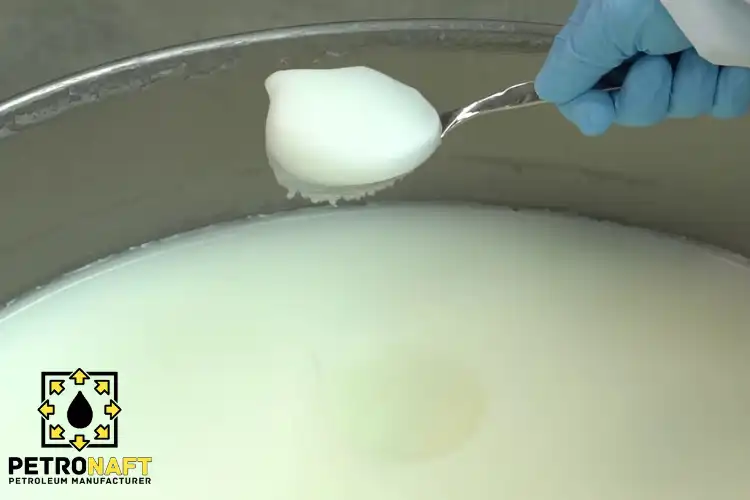
Petroleum Jelly Manufacturers include specialty refiners and brand owners that supply petrolatum in pharma, cosmetic, and industrial grades. The best partners offer consistent microstructure, tight impurity control, and complete documentation (CoA, SDS, traceability) so buyers can meet regulations, reduce rejections, and scale from samples to bulk drums without surprises.
Petroleum jelly looks simple, but sourcing it isn’t. Two “white” jellies can behave very differently in filling, stability, odor, or feel—because the wax/oil balance, hydrogenation severity, and finishing steps vary by producer.
What buyers usually want is:
- Predictable performance (texture, spread, hold, melt behavior)
- Regulatory-ready paperwork (especially for pharma/cosmetics/food-contact)
- Batch-to-batch consistency at scale (not just the sample)
Highlights & Key Sections
What petroleum jelly really is in manufacturing terms
Think of petroleum jelly (petrolatum/soft paraffin) as a semi-solid hydrocarbon network:
- The “solid” feel comes from microcrystalline/paraffinic wax structures
- The glide and occlusion come from high-purity mineral-oil fractions
- The “grade” depends on refining depth + impurity limits + documentation
That’s why the manufacturer matters: they control the refining train, finishing, and quality system that determine how your product behaves and what markets you can legally sell into.
Top Petroleum Jelly Manufacturers to Know in 2026
Below are 10 widely recognized, reputable players spanning consumer, pharma, cosmetic, and industrial supply chains (including Petro Naft).
| Company | Primary footprint | Known for | Typical buyer fit |
|---|---|---|---|
| Petro Naft | Turkey + global supply network | Industrial, cosmetic, and medical grades; export documentation | Importers, distributors, OEM/private-label |
| Unilever | Global | Iconic consumer petroleum jelly brand presence | Retail/consumer channel, brand benchmarking |
| Sonneborn | US/EU | High-purity petrolatums and specialty structures | Pharma/cosmetic formulators, strict specs |
| Calumet Specialty Products Partners | US | Broad petrolatum portfolio and customization | Personal care, industrial blends, steady supply |
| Sasol | Global | Pharma/cosmetic petroleum jellies in wax portfolio | Regulated markets, spec-driven sourcing |
| H&R Group | EU/global | European specialty hydrocarbons & white jellies | EU documentation focus, consistent finishing |
| TotalEnergies | EU/global | Cosmetic/pharma-oriented jelly ranges | Cosmetics supply chains, EU compliance needs |
| Raj Petro Specialities | India + exports | Large-scale petroleum jelly and white oils | Price-performance sourcing, export-oriented buyers |
| Gandhar Oil Refinery (India) Limited | India + exports | White oils and petroleum jelly range | High-volume buyers, multi-region supply |
| Nippon Seiro | Japan + Asia | Wax and petrolatum-linked specialties | Asia supply chains, specialty formulations |
Quick notes on how to use this list (without overcomplicating it)
- If you sell into regulated markets: prioritize suppliers that routinely ship with full pharma/cosmetic documentation packs.
- If you manufacture at high speed: ask for proof of rheology/penetration stability across multiple batches.
- If you need private label or bulk trading: evaluate packaging flexibility (drums/cartons), lead times, and traceability.
Grade differences that change cost, compliance, and performance
Most purchasing issues come from buying the wrong grade (or buying the right grade from a supplier who can’t keep it consistent).
| Grade | Common labels you’ll see | Best for | What must be stable |
|---|---|---|---|
| Pharma-grade | USP/EP/BP / “white petrolatum” | Ointments, medical use, sensitive-skin products | Odor neutrality, impurity limits, documentation |
| Cosmetic-grade | “snow white/white” cosmetic petrolatum | Skin care, hair care, lip products | Color, sensory feel, spreadability, low odor |
| Industrial/technical | “yellow/amber/technical petrolatum” | corrosion prevention, cable filling, rubber/leather | Congealing point, tack, water resistance |
Practical rule: If your label, distributor, or regulator will ask for formal monographs and traceability, start with pharma-grade and work down only if you can justify it.
Mini tutorial: how professionals qualify a petroleum jelly manufacturer
Step 1: lock your “must-have” spec (one page)
Include only what affects your product and compliance:
- Grade target (pharma/cosmetic/industrial)
- Appearance (white/yellow), odor expectation
- Consistency targets (penetration or firmness window)
- Thermal behavior (drop point / congealing behavior)
- Packaging (carton, pail, drum) and shelf-life expectation
Step 2: demand the documentation pack before you sample
For serious suppliers, this is routine:
- CoA (batch-specific)
- TDS (typical values + test methods)
- SDS
- Statement set (allergen, GMO, animal testing status if relevant)
- If regulated: GMP/ISO statements, traceability, and compliance declarations
If a supplier can’t supply these cleanly, don’t waste time on samples.
Step 3: run 6 fast “arrival tests” that catch 80% of problems
These are the checks that prevent production-line surprises:
- Visual + odor check after warming (consistency and neutrality)
- Penetration/consistency at controlled temperature
- Drop point or congealing behavior (process stability)
- Color measurement (especially for “snow white” requirements)
- UV/impurity screening where applicable (risk control)
- Compatibility spot test with your key actives/fragrances (no bleed or sweating)
Step 4: verify performance in your exact process
A petroleum jelly can pass a CoA and still fail in production.
- Fill at your real temperatures and line speeds
- Watch for oil bleed, shrink, or surface dulling
- Compare two batches, not one (consistency matters more than “one good batch”)
A realistic sourcing scenario (what it looks like when it goes right)
Case example: cosmetic brand reformulation
- A mid-size skin care brand switches from a generic “white” jelly to a tighter cosmetic-grade spec because the old material caused texture drift in summer shipments.
- The new supplier provides stable penetration ranges and better finishing control, so the brand reduces:
- rework from inconsistent viscosity
- customer complaints about “greasy feel” variance
- batch holds caused by missing paperwork
Why it worked: the buyer treated petroleum jelly like a functional base, not a commodity.
Common buyer mistakes (and what to do instead)
- Mistake: choosing by lowest $/kg only
Do instead: price by usable yield (rejections + rework + downtime cost real money) - Mistake: approving based on one sample
Do instead: approve two batches and lock an acceptance window - Mistake: ignoring packaging/handling
Do instead: align packaging with your plant reality (heating, pumping, decanting) - Mistake: vague grade language (“white jelly”)
Do instead: specify grade + method set (what gets tested, how, and limits)
Trends shaping petroleum jelly purchasing right now
- Tighter impurity expectations in cosmetics/pharma: buyers increasingly request deeper impurity control and clearer compliance statements, especially for premium skin products.
- Traceability becomes a competitive advantage: more procurement teams want batch traceability, digital CoAs, and faster audit responses—because delays now get flagged by both regulators and large retail chains.
Conclusion: choosing the right Petroleum Jelly Manufacturers
The best Petroleum Jelly Manufacturers aren’t just the ones who can ship a drum—they’re the ones who can keep structure, purity, and paperwork consistent across every batch you buy. If you treat petroleum jelly as a performance ingredient, qualify suppliers with a simple test plan, and lock clear acceptance windows, you’ll source faster, reject less, and scale with fewer surprises.
Executive Summary: buyer-ready checklist
Use this as a final pre-purchase filter:
- Grade is explicit (pharma/cosmetic/industrial), not implied
- Documentation pack received (TDS, SDS, CoA, traceability statement)
- Two-batch consistency verified (not a single “perfect sample”)
- Penetration/consistency window defined and met
- Thermal behavior checked for your process (fill temp, storage, shipping)
- Color/odor acceptance criteria agreed in writing
- Packaging matches your handling (pail/drum/carton; heating/decant plan)
- Lead time and resupply model validated (can they repeat the same quality?)
- Change-control expectations set (you get notified before spec/route changes)
- Supplier can support your end market (labels, compliance, audits)
FAQs
1) What’s the difference between petrolatum and petroleum jelly?
They’re used interchangeably in many markets. In procurement, “petrolatum” often appears in technical documents, while “petroleum jelly” is the common commercial name.
2) Why does “snow white” petroleum jelly sometimes feel different than “white”?
Color usually tracks refining/finishing choices and wax/oil balance. Those changes also affect microstructure, so the sensory feel and spread can shift even when both look “white.”
3) Can one supplier cover pharma, cosmetic, and industrial grades?
Some can, but buyers should treat each grade as a separate qualification. Documentation, impurity limits, and batch controls often differ—even within one supplier’s portfolio.
4) What documents should I request before approving a supplier?
At minimum: TDS, SDS, and a batch CoA. For regulated markets, also request traceability, quality statements, and any market-specific compliance declarations.
5) How do I prevent batch-to-batch variation issues?
Approve against a defined acceptance window (not a single target), validate at least two batches, and require change-control notification before any feedstock or process changes.
Sources
- Unilever’s official brand overview for Vaseline, useful for understanding consumer-market scale and positioning: Unilever – Vaseline.
- Calumet’s petrolatums portfolio page, helpful for verifying typical applications and customization approach in specialty supply: Calumet – Petrolatums.
- Sasol’s product page for a pharmaceutical petroleum jelly grade, useful for confirming pharma-oriented petroleum jelly availability: Sasol – MERKUR 500.
- H&R Group’s product page covering petroleum jellies and white oils, useful for EU-focused specialty hydrocarbon supply context: H&R Group – Petroleum Jellies and White Oils.
- TotalEnergies’ JELLYSEAL range page, useful for confirming cosmetic/pharma compliance positioning of refined jellies: TotalEnergies – JELLYSEAL.