

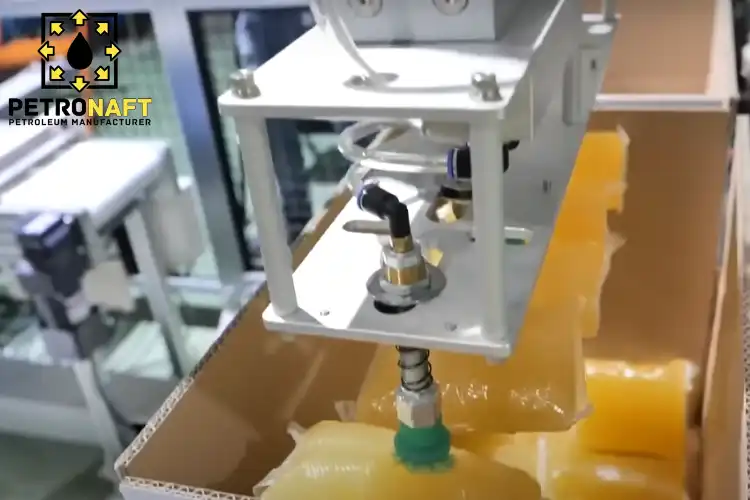
Fully Refined Paraffin Wax in Adhesive Manufacturing improves hot-melt processing by lowering melt viscosity, tuning open time, and speeding set through clean crystallization—without the odor, color, and variability that can come with lower-refined waxes. The practical payoff is faster lines, cleaner appearance, and more consistent bonds across paper, board, and many plastics.
Highlights & Key Sections
Why adhesive manufacturers use fully refined paraffin wax
In most hot-melt adhesive (HMA) formulations, wax is not a “filler.” It’s a performance lever that helps you hit production targets and bond requirements at the same time.
In simple terms, fully refined paraffin wax helps you:
- Control flow (pumpability, bead shape, spray pattern)
- Balance open time vs. set time (workable… then locks fast)
- Stabilize appearance (low odor, light color, fewer impurities)
- Improve consistency (tighter lot-to-lot behavior)
If you run packaging, bookbinding, woodworking, hygiene, or general assembly lines, you’ll feel the difference fastest in line speed, cleanliness, and rejects.
Fully Refined Paraffin Wax in Adhesive Manufacturing: what it actually does
In HMA systems (common polymers include EVA, APAO, and some SBC-based blends), wax typically works as a rheology and crystallization modifier:
- Drops melt viscosity at application temperature so the adhesive wets the surface quickly.
- Crystallizes on cooling, helping the adhesive “set” and resist stringing.
- Shapes the thermal window, influencing how the adhesive behaves in heat (service temperature) and in cold (brittleness risk).
Because fully refined paraffin wax is processed to reduce odor bodies and other trace components, it tends to behave more predictably—especially in light-colored or sensitive applications.
Quick comparison: wax options and what they change
| Wax / modifier | Typical strength in adhesives | Typical trade-off | Best-fit applications |
|---|---|---|---|
| Fully refined paraffin wax | Clean odor/color, good viscosity reduction, fast set | Can increase brittleness if overdosed | Carton sealing, case & tray forming, bookbinding (some grades), general packaging HMAs |
| Semi-refined paraffin wax | Lower cost, decent viscosity reduction | More odor/color variability, higher risk of performance drift | Non-sensitive packaging where odor/color is less critical |
| Microcrystalline wax | Improves flexibility and toughness | Higher viscosity than paraffin; may slow set | Labels, woodworking, flexible packaging bonds |
| Fischer–Tropsch (FT) wax | High hardness, higher softening point, strong heat resistance boost | Can reduce tack if too crystalline | Heat-resistant packaging, elevated-temp performance targets |
| Polyethylene (PE) wax | Slip, abrasion resistance, hardness tuning | Compatibility must be checked carefully | Specialty HMAs, where abrasion/texture matters |
Practical takeaway: Fully refined paraffin is often the most “production-friendly” wax when you need cleanliness + repeatability.
The benefits buyers and production teams care about
Below are the benefits that tend to translate directly into fewer issues on the line and a better finished product.
1) Cleaner odor and lighter appearance
Fully refined grades are commonly chosen for:
- Food packaging outer bonds and sensitive environments
- White / light-colored adhesives
- Consumer-facing packaging where odor complaints become returns
Even when the adhesive performance is “acceptable,” odor and color variability can quietly damage repeat orders. Fully refined wax reduces that risk.
2) More stable viscosity at application temperature
If your operators constantly chase settings, wax quality is often part of the story. With fully refined paraffin wax, you typically get:
- More consistent tank viscosity
- Less “mystery drift” in nozzle performance
- A wider “comfortable” operating window (especially on high-speed packaging lines)
3) Better control over open time and set speed
Open time must match your line:
- Too short → poor wetting, weak bond, skips
- Too long → stringing, smear, slow downstream handling
Fully refined paraffin wax can help you speed set without turning the adhesive into a brittle glass—as long as you balance it with the right polymer/tackifier pair.
4) Faster set = higher line speed (when tuned correctly)
On carton sealing or tray forming, shaving even fractions of a second off set can:
- Reduce compression time
- Reduce bond disturbance
- Cut rejects at corners and flaps
This is where wax selection becomes a profitability decision, not just a raw-material choice.
Mini case examples you can relate to
Case example A: high-speed carton sealing (EVA-based HMA)
Problem: The line runs fast, but operators see stringing and occasional corner lift-off.
Change: Switch to a fully refined paraffin wax grade with tighter melt/congeal behavior and low odor.
Result you typically aim for: cleaner cut-off, steadier bead, and more consistent flap hold—often allowing a small line-speed increase without raising tank temperature.
Case example B: bookbinding side gluing
Problem: Adhesive looks fine hot, but finished books show brittle cracking in colder storage.
Change: Reduce paraffin wax loading and introduce a portion of microcrystalline wax (or adjust polymer grade) while keeping fully refined paraffin for clean processing.
Result you typically aim for: improved flexibility with controlled set speed.
These examples reflect what formulators commonly see: wax rarely works alone—it’s the balance that wins.
How to choose the right fully refined paraffin wax grade
Don’t buy wax by name alone. Buy it by the properties that matter to your process and product.
Key properties that matter (and why)
| Property | Why it matters in adhesives | What “good” looks like (practical) |
|---|---|---|
| Congealing / melting behavior | Impacts set speed and bead stability | Consistent range matched to your application temperature |
| Oil content (low) | Affects odor, compatibility, and migration risk in sensitive uses | Low and consistent, verified by standard method |
| Color | Impacts light adhesives and appearance-sensitive applications | Stable, repeatable batch-to-batch |
| Odor | Impacts worker comfort and consumer packaging perception | Minimal, especially for consumer-facing packaging |
| Compatibility | Prevents haze, phase separation, and long-term instability | Clear, stable blend over time and heat cycles |
A simple selection shortcut by application
| Application | What to prioritize | Common wax direction |
|---|---|---|
| Carton sealing / case & tray | Fast set, stable bead, clean odor | Fully refined paraffin wax (often primary wax) |
| Labels / PSA hybrids | Balanced tack + flexibility | Blend: fully refined paraffin + microcrystalline (often) |
| Woodworking (edge banding, assembly) | Heat resistance, toughness | Consider partial FT/PE wax blend with paraffin support |
| Bookbinding | Flexibility vs. set speed | Lower paraffin dose, add microcrystalline as needed |
Mini tutorial: blending fully refined paraffin wax into hot-melt adhesives
This is a practical, low-drama method that reduces the two classic headaches: phase instability and thermal damage.
Step-by-step (kettle or reactor blending)
- Pre-melt polymer phase
Heat the polymer until it softens and starts to flow smoothly. Avoid overheating early—thermal history matters. - Add tackifier gradually
Introduce tackifier in portions so the melt stays uniform and doesn’t shock-cool or spike viscosity. - Introduce fully refined paraffin wax slowly
Add in increments and allow full melt and dispersion each time. This helps avoid micro-phase separation. - Add stabilizers last (antioxidants, etc.)
These protect against darkening, odor formation, and viscosity drift during storage and application. - De-gas and filter if your process allows
Filtering helps with nozzle cleanliness and consistent bead.
On-line checks that prevent costly surprises
- Viscosity at application temperature (trend it, don’t just spot-check)
- Stringing behavior at your real line speed
- Set speed using a simple compression-and-peel check
- Heat aging (overnight at elevated temperature) to see color/odor drift
Troubleshooting guide: common defects and wax-related fixes
| Symptom | Likely cause | Wax-focused adjustment |
|---|---|---|
| Excess stringing | Set too slow; viscosity too high | Increase wax slightly or shift to a grade with sharper crystallization |
| Corner lift / weak flap hold | Poor wetting or open time mismatch | Reduce viscosity (wax) or rebalance tackifier; verify application temperature |
| Brittle bonds in cold | Too crystalline / too much paraffin | Reduce paraffin wax loading; blend microcrystalline wax or adjust polymer |
| Haze or phase separation | Compatibility issue | Verify wax grade consistency; test alternate wax or adjust tackifier type |
| Darkening / burnt odor in tank | Overheating, oxidation | Lower tank temperature, improve antioxidant package, reduce long high-heat residence time |
Rule of thumb: If you “fix” one issue but create two new ones, you changed the balance too aggressively. Make small moves and retest.
Quality, compliance, and procurement checks that build trust with buyers
Fully refined wax is often chosen because it reduces surprises. To keep it that way, build a simple incoming QC routine:
Incoming QC checklist (practical)
- Certificate of Analysis (COA) matches your key specs (oil, congeal/melt behavior, color)
- Lot-to-lot retention samples saved for comparison
- One quick blend-stability test in your base formulation (even a small lab batch)
- Odor check at operating temperature (not just at room temperature)
Food packaging and “clean materials” trends
Adhesives used in packaging are increasingly expected to support:
- Cleaner odor profiles (brand experience)
- Better control of trace hydrocarbons in sensitive supply chains
- Compatibility with recycled-content packaging and stricter migration expectations
You don’t need to overcomplicate it—but you do need documentation, consistency, and repeatable tests.
Trends shaping wax selection in adhesives right now
- High-speed packaging and e-commerce handling keep pushing adhesives toward faster set and cleaner cut-off. That favors waxes that provide predictable crystallization and stable viscosity.
- Greater scrutiny on mineral oil hydrocarbons (MOSH/MOAH) in packaging ecosystems, especially where recycled paper and board are involved, is driving more demand for well-documented, cleaner raw materials—alongside better analytical controls in the supply chain.
These trends make fully refined grades more attractive because buyers want repeatability, documentation, and low-risk performance.
Conclusion
Fully Refined Paraffin Wax in Adhesive Manufacturing delivers the most value when you treat it as a tuning tool: it can lower viscosity, sharpen set behavior, reduce odor and color risk, and stabilize production—especially in packaging HMAs. Choose the grade by measurable properties, blend it methodically, and validate it with quick line-relevant tests so your formulation stays fast, clean, and consistent.
Executive Summary and Practical Checklist
If you only do five things, do these:
- Confirm the wax grade’s melt/congeal behavior matches your line temperature and desired set speed.
- Keep oil content low and consistent and verify it with a standard method.
- Run a blend stability test (no haze, no phase separation, stable viscosity after heat aging).
- Tune wax level to avoid brittleness in cold—especially for bookbinding or flexible bonds.
- Track line outcomes (stringing, corner lift, bead stability) before and after any wax change.
FAQ
1) Is fully refined paraffin wax only for hot-melt adhesives?
It’s most common in hot-melts, but it can also appear in specialty systems where you need controlled crystallization or viscosity reduction. The key is compatibility with the binder system and your service-temperature requirements.
2) How much wax is typically used in hot-melt formulations?
It varies by polymer system and application goals. Many HMAs use wax as a meaningful fraction to tune flow and set, but the “right” level is the one that hits viscosity, set speed, and toughness without causing brittleness.
3) Can fully refined paraffin wax improve adhesion to coated cardboard?
It often helps by improving melt flow and wetting at the moment of contact, which can translate to more reliable bonds on coated surfaces. You still need the right tackifier and application temperature for the coating type.
4) What’s the biggest risk of using too much paraffin wax?
Brittleness—especially in colder environments—or reduced toughness under impact. If bonds crack or fail in cold storage, reduce paraffin dose and rebalance with a tougher wax or polymer adjustment.
5) Does fully refined wax reduce odor in finished packaging?
In many cases, yes—because it typically contains fewer odor-causing trace components than lower-refined grades. Always evaluate odor at real operating temperature and after heat aging to reflect real production conditions.
Sources
- ASTM International standard defining a widely used method to measure oil content in petroleum waxes: ASTM D721 – Oil Content of Petroleum Waxes.
- U.S. government regulation describing permitted conditions for petroleum wax use in or on food: eCFR 21 CFR 172.886 – Petroleum wax.
- Industry technical guide explaining how waxes affect viscosity, set time, and formulation balance in HMAs: SpecialChem – Hot Melt Adhesive (HMA) Guide.
- Peer-reviewed analysis detailing how wax selection influences setting speed and performance in hot-melt adhesives: ScienceDirect – An analysis of the role of wax in hot melt adhesives.
- Government scientific review discussing mineral oil hydrocarbons in food and food packaging, including relevance to packaging materials: Food Standards Australia New Zealand – Mineral oil hydrocarbons in food and food packaging.