


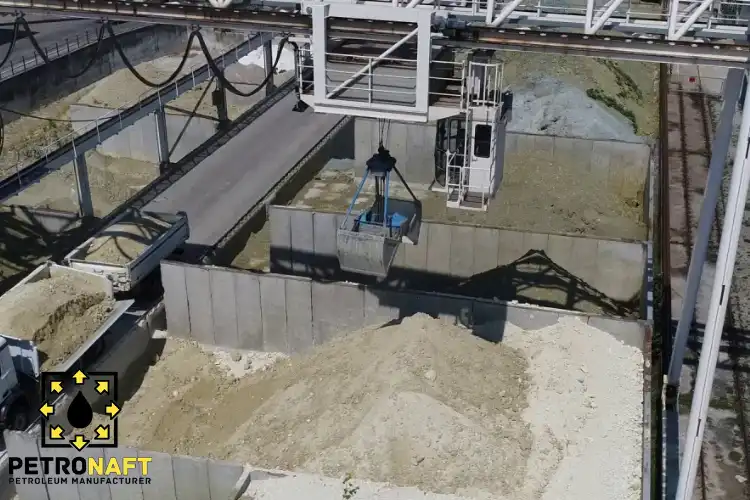
Bentonite Price in Iran is lowest for unactivated calcium bentonite bought in bulk and higher for sodium/activated or API/OCMA drilling grades with tighter viscosity and filtration specs. For an accurate quote, match the grade to your application, request a COA with key tests, compare FOB/CFR options, and calculate landed cost per usable ton (after moisture).
What “price” really means in bentonite buying (fast clarity)
Before we talk numbers, align on what you’re actually purchasing:
- Mineralogy (sodium vs calcium) → drives swelling, viscosity, sealing
- Processing (crushed, milled, activated, granulated) → drives performance + cost
- Specification (drilling/foundry/pelletizing/cat litter) → drives testing + rejection risk
- Delivery terms (EXW/FOB/CFR/CIF) → drives your all-in cost
Highlights & Key Sections
Bentonite Price in Iran: What Moves the Market?
If two suppliers both say “bentonite,” you can still see a 5–20× price spread—because buyers pay for performance certainty, not just clay.
The 8 biggest price drivers (and how they hit your quote)
| Price driver | What it changes | What buyers should do |
|---|---|---|
| Sodium vs calcium base | Swelling, viscosity, sealing power | Specify the type (or target performance) upfront |
| Activation (soda ash) | Raises swelling/viscosity, improves drilling performance | Ask if it’s naturally sodium or sodium-activated |
| Particle size / mesh | Hydration speed, dusting, consistency | Define target mesh and dust limits |
| Moisture content | “Paying for water” vs usable tons | Price on dry basis or set a moisture cap |
| Application standard | Lab tests, QA cost, rejection risk | Require a COA and agreed test method |
| Packaging format | Handling, breakage, contamination | Choose 25 kg / big bag / bulk based on site reality |
| Order size & consistency | Production scheduling, batch control | Lock a monthly/quarterly plan for best pricing |
| Logistics & banking constraints | Lead time, routing, documentary cost | Use clear Incoterms + realistic payment workflow |
A reality check using trade unit values (why specs matter)
Trade statistics for bentonite (HS 250810) show wide “unit value” spreads depending on destination and product form—one clue that raw bulk and processed grades are different products commercially.
| Example destination (imports from Iran) | Reported unit value (USD/ton, approx.) | What that usually indicates |
|---|---|---|
| United Arab Emirates | ~19 | Large-volume raw/bulk shipments are common |
| Kuwait | ~28 | Typically bulk/industrial |
| Turkey | ~107 | Often processed or spec-driven shipments |
| Korea (Rep.) | ~122 | Often tighter specs / added processing |
Use this as directional context, not a live price list. Your actual price depends on grade, processing, packaging, route, and QA.
Grades that actually sell (and how they affect cost)
Most “affordable” purchases happen when the grade matches the job—no over-spec, no under-spec.
Quick grade selector
| Grade / type | Common uses | What to request on COA (practical) | Typical price position |
|---|---|---|---|
| Calcium bentonite (raw/industrial) | absorbents, some construction mixes, fillers | moisture, particle size, basic mineral profile | Lowest |
| Sodium / sodium-activated bentonite | sealing, civil works, some drilling blends | swelling index, viscosity trend, moisture | Low–mid |
| OCMA drilling grade | water-based drilling fluids (cost-sensitive) | viscosity readings, filtrate loss, residue | Mid |
| API/ISO drilling grade | higher-performance drilling fluids | full drilling spec tests + batch consistency | Mid–high |
| Foundry bentonite | green sand binding | green strength, compactability-related metrics | Mid |
| Pelletizing bentonite | iron ore pellet binding | bind strength indicators, moisture, fineness | Mid |
| Granular cat litter | clumping litter | granulation size, dust, absorbency, odor performance | High |
A practical “price band” view (export offers, indicative)
These are broad, market-style ranges to help you sanity-check quotes. Always validate against spec + Incoterms.
| Product form | Indicative range (USD/ton) | Why it lands there |
|---|---|---|
| Raw calcium, bulk/low processing | 15–40 | minimal processing, performance variability |
| Sodium-activated powder | 60–140 | activation + tighter processing control |
| OCMA/API-style drilling grades | 90–180 | lab testing + consistency requirements |
| Cat litter granules | 150–450 | granulation, dust control, packaging, branding |
If a “drilling grade” quote is priced like raw bulk, assume you’re buying risk (inconsistent yield, filtration problems, higher additive spend).
Mini tutorial: compare bentonite quotes in 15 minutes
Here’s a buyer workflow that prevents the most common mistakes.
Step 1 — Define your use-case in one line
Examples:
- “Water-based drilling mud viscosifier, freshwater”
- “Foundry green sand binder, target green strength”
- “Cat litter 1–3 mm, low dust, strong clumping”
- “Sealing/civil works, swelling + permeability control”
Step 2 — Request a COA that matches the application
Minimum ask:
- Moisture %
- Particle size/mesh
- Key performance tests for your sector (drilling/foundry/pelletizing/cat litter)
- Batch/lot number + production date
Step 3 — Normalize price to a comparable basis
Use one of these:
- USD per metric ton, FOB (named port)
- USD per metric ton, CFR/CIF (your port)
- USD per dry ton (if moisture varies)
Quick correction for moisture (simple):
Usable tons ≈ Shipment tons × (1 − moisture fraction)
Example: 25 tons at 12% moisture → usable ≈ 25 × 0.88 = 22.0 tons.
Step 4 — Compare “performance cost,” not only purchase cost
Ask: “What does this cost per unit of performance?”
- Drilling: cost per achieved viscosity/yield (and how much polymer you’ll still need)
- Cat litter: cost per clumping strength + dust control (returns are expensive)
- Foundry: cost per green strength stability (scrap is expensive)
Step 5 — Confirm packaging and handling reality
- 25 kg bags: easy handling, higher packaging cost
- 1-ton big bags: lower packaging cost, needs forklift and dry storage
- Bulk: lowest packaging cost, needs silo/air handling and dust control
RFQ template that gets you faster, cleaner quotes
Copy-paste this into your procurement email (and you’ll usually get better pricing because suppliers can quote correctly):
| RFQ field | What to write |
|---|---|
| Application | drilling / foundry / pelletizing / cat litter / civil sealing |
| Grade target | calcium / sodium / activated / OCMA / API/ISO |
| Key tests required | list 3–6 must-have metrics |
| Target particle size | e.g., 200 mesh powder or 1–3 mm granules |
| Packaging | 25 kg bags / 1-ton big bags / bulk |
| Quantity & frequency | e.g., 1×20’ monthly, or 300 tons quarterly |
| Incoterms + destination | FOB / CFR / CIF + named ports |
| Documents | COA, packing list, invoice, origin, SDS if needed |
| Acceptance terms | pre-shipment sample / third-party inspection (if applicable) |
Worked example: landed cost for a bulk purchase
This is a mini calculator you can use to compare two offers that look similar.
Scenario (example numbers)
- Quantity: 25 tons (1 container)
- Product: sodium-activated powder
- Option A: cheaper price, higher moisture
- Option B: higher price, lower moisture + stronger COA
| Cost component | Option A | Option B |
|---|---|---|
| Product price (FOB) | 95/ton | 115/ton |
| Ocean + local charges (CFR add-on) | 40/ton | 40/ton |
| Total CFR (paid) | 135/ton | 155/ton |
| Moisture | 12% | 8% |
| Usable tons from 25 tons | 22.0 | 23.0 |
| Total paid (25 tons × CFR) | 3,375 | 3,875 |
| Cost per usable ton | 153 | 168 |
Option A looks cheaper, and it often is—unless Option B reduces additives, rejects, dust losses, or downtime. This is why you always pair the math with application performance.
Quality checks that protect your budget (by application)
If you want “affordable,” you still need “predictable.” These are the checks that stop expensive surprises.
Drilling (water-based)
Prioritize:
- Hydration behavior (how fast it builds viscosity)
- Filtration control
- Residue/solids management (affects pumps and screens)
- Consistency across lots (the hidden cost killer)
Buyer tip: If you drill in variable water chemistry, ask whether performance holds in your typical salinity/hardness range.
Foundry
Prioritize:
- Bonding performance stability across batches
- Moisture control (foundry sand systems hate swings)
- Particle size distribution
Pelletizing
Prioritize:
- Consistent fineness and moisture
- Binder effectiveness at low dosage (saves money per ton of pellets)
Cat litter
Prioritize:
- Granule size consistency
- Dust level (returns and complaints are expensive)
- Clump strength under real usage (not just lab absorbency)
Trends that impact pricing and demand (what smart buyers watch)
- Tighter environmental containment requirements are expanding use of bentonite-based liners and sealing systems, pushing demand for consistent swelling performance.
- Quality standardization pressure is rising: more buyers ask for recognized drilling-fluid test frameworks and tighter batch traceability, which favors suppliers with disciplined QA and stable processing.
Conclusion
Bentonite Price in Iran becomes “affordable” when you buy the right grade, lock the key tests on the COA, and compare offers on usable tons + performance, not just headline USD/ton. If you standardize your RFQ fields and calculate landed cost correctly, you’ll avoid overpaying for water, inconsistent batches, or the wrong processing level.
Executive Summary – practical buyer checklist
- State your application in one line (drilling/foundry/pelletizing/cat litter/sealing)
- Specify type: calcium vs sodium vs activated (or target performance)
- Request a COA with 3–6 application-specific tests + lot number
- Normalize quotes to the same Incoterms and moisture basis
- Calculate cost per usable ton (moisture-adjusted)
- Confirm packaging that matches your site handling and storage
- Ask about batch consistency and supply continuity for repeat orders
- Run a small trial batch before locking annual volumes
FAQ
1) Why do bentonite prices vary so much for the same “HS code”?
HS 250810 groups multiple product forms, from raw bulk clay to processed, activated, and spec-tested grades. Processing level, test compliance, and packaging can change price far more than the clay itself.
2) Is sodium bentonite always better than calcium bentonite?
Not always. Sodium typically swells more and builds viscosity faster, which helps sealing and drilling. Calcium can be perfectly suitable for absorbent or filler-type applications where swelling isn’t the main requirement.
3) What’s the biggest hidden cost in “cheap” bentonite?
Inconsistent batch performance. It can increase additive consumption, cause filtration/handling issues, or trigger rejects—often costing more than the initial savings.
4) Which documents should I request for bulk shipments?
At minimum: commercial invoice, packing list, certificate of analysis (COA), and certificate of origin. Depending on industry and destination, you may also need an SDS and inspection documents.
5) How can I compare two suppliers quickly without lab testing?
Normalize both quotes to the same Incoterms, adjust for moisture (usable tons), and compare the COA test results against your application requirements. If COA data is missing or inconsistent, treat the “cheap” quote as high risk.
Sources
- U.S. Geological Survey Minerals Yearbook (Iran) — Background on Iran’s mineral sector and historic bentonite production context: USGS Iran Minerals Yearbook PDF
- World Bank WITS (UN Comtrade) HS 250810 — Trade values and quantities used to estimate unit-value ranges for bentonite: WITS Bentonite trade data
- Peer-reviewed study on Iranian bentonite zones — Technical characterization and deposit context for Iranian bentonites: ScienceDirect article
- ISO 13500 drilling fluid materials standard page — Reference framework for drilling-fluid material testing and specifications: ISO 13500 standard page
- API Spec 13A addendum/updates (official) — Official API documentation related to drilling-fluid materials specifications: API Spec 13A addendum PDF