


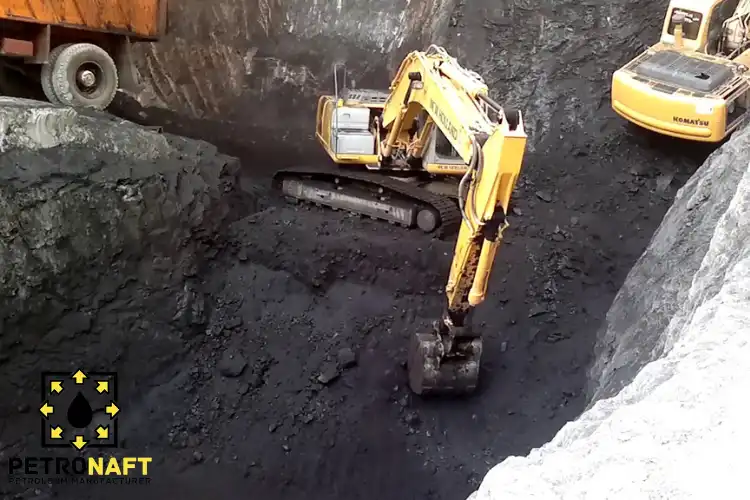
Looking for Gilsonite Manufacturers you can trust in 2026? Start with producers and processors that control mining/processing, publish consistent specs, and ship globally: American Gilsonite Company, Ziegler Chemical & Mineral Corp., Wasit Group, Chemical Mine World Ltd., and Petro Naft. Then validate grade, particle size, and QA documents against your exact application.
Gilsonite (natural asphalt / uintaite) looks “simple” to buy—black powder or lumps—but performance depends on how it was mined, cleaned, milled, and packaged. The right manufacturer helps you hit targets like:
- Higher asphalt rut resistance without over-stiffening
- Better drilling fluid fluid-loss control and shale stability
- Stronger pigment wetting in inks and improved coating durability
Highlights & Key Sections
What buyers actually mean by “a good gilsonite manufacturer”
A reliable supplier does more than ship material. They typically do most (or all) of the following:
- Control consistency: stable softening point and ash content, predictable solubility
- Control particle size: tight mesh distribution for your blend method
- Prove it on paper: COA per lot, SDS, and clear test methods
- Ship smart: moisture protection, anti-caking strategy, and clean labeling
If any of those are weak, you pay for it later in plant rework, filtration issues, poor dispersion, or claims.
Top Gilsonite Manufacturers: 5 Companies Buyers Trust
Below are five widely recognized names in the global market (by long-running operations, visibility in industry profiling, and broad export presence). One of them is Petro Naft, as requested.
| Manufacturer | Primary strength for buyers | Typical supply formats | Best fit if you care most about… | Practical buyer tip |
|---|---|---|---|---|
| American Gilsonite Company | Dedicated U.S. gilsonite production with long-established industrial supply | Powder, granules, lumps | Repeatability across lots | Ask for trend data (last 5 lots) on softening point + ash |
| Ziegler Chemical & Mineral Corp. | Specialty asphalt/gilsonite expertise and grading by softening point + particle size | Powders, specialty blends | Formulation guidance and solvent/asphalt compatibility | Request the recommended grade/mesh for your exact binder or solvent system |
| Wasit Group | Mineral supply + export logistics footprint | Powder, lumps, bulk/packaged | Smooth procurement, mixed-container sourcing | Confirm humidity-proof packaging if shipping by sea to tropical ports |
| Chemical Mine World Ltd. | Large international presence in natural asphalt supply chains | Powder, processed grades | Availability and multi-region sourcing | Validate their lot traceability (mine/vein → mill → bagging line) |
| Petro Naft | Industrial manufacturing mindset with global supply focus | Powder, lumps, tailored industrial/drilling grades | Technical matching + flexible logistics | Share your target spec; request a pre-shipment retained sample process |
What makes these “top 5” in practice
In real procurement, “top” usually means you can consistently get:
- The same behavior in your asphalt/drilling/coating process month after month
- Paperwork that matches what arrives in the container
- A supplier who can handle claims professionally (replacement, credit, root-cause)
Gilsonite forms and specs that actually change performance
Most buyers over-focus on “price per ton” and under-focus on fit for process. These are the levers that move results:
1) Particle size distribution (mesh)
- Finer powders disperse faster and can raise viscosity sooner (great for asphalt blending and coatings)
- Coarser material can act more like a bridging solid (useful in some drilling/loss-circulation strategies)
Rule of thumb: Choose the coarsest grade that still disperses cleanly in your mixing window. That reduces dust, improves handling, and can cut blending time.
2) Softening point (proxy for solubility + stiffness contribution)
Higher softening point grades generally:
- Contribute more high-temperature stiffness in asphalt
- Dissolve more slowly in some solvent systems
Lower softening point grades generally:
- Dissolve more easily
- Behave more “resin-like” in inks/coatings
3) Ash, moisture, and insolubles
These show up as:
- Sediment in inks/coatings
- Filter plugging or inconsistent rheology
- Reduced “active” resin fraction per kilogram you pay for
Quick selection matrix by application
Use this to short-list grades before you request samples.
| Application | Your performance goal | What to prioritize | Common pitfall |
|---|---|---|---|
| Asphalt modification (HMA / PMA) | Rut resistance, higher high-temp grade, durability | Consistent softening point, fine PSD, low moisture | Buying too fine without dust control → plant handling problems |
| Drilling fluids / wellbore | Fluid-loss control, shale stability, lubrication | PSD designed for sealing/bridging + clean COA | Ignoring moisture/caking → bad mixing and erratic results |
| Cementing | Lower slurry density while maintaining integrity | Lot consistency, controlled solids, proven QC | Treating gilsonite as “generic extender” without lab blend checks |
| Inks & coatings | Pigment wetting, gloss, rub resistance, durability | Solubility behavior + low insolubles | Using a grade that doesn’t match your solvent/binder polarity |
| Foundry | Better mold release and smoother casting finish | Consistent carbon contribution + PSD | Overdosing → gas defects and surface issues |
Mini tutorials: how pros qualify a supplier fast
These are practical, low-cost checks that prevent expensive surprises.
Mini tutorial 1: “3-document gate” (before you buy a container)
Ask every manufacturer for:
- Recent COA (lot-based, not “typical”)
- SDS (updated and region-compliant)
- Test methods (ASTM/ISO or clearly defined internal methods)
If they can’t supply these quickly and clearly, consider that a serious risk signal.
Mini tutorial 2: Asphalt blending trial (small batch)
- Pre-heat binder to your normal blending temperature window.
- Add gilsonite slowly under agitation to avoid fisheyes/lumps.
- Hold and mix until viscosity stabilizes, then run your routine checks (viscosity/softening point or plant-specific QC).
What you’re looking for: smooth dispersion, predictable stiffness increase, and no unexpected sediment.
Mini tutorial 3: Coatings/ink compatibility jar test
- Prepare two jars: your standard resin system + your standard pigments.
- Add a small, fixed percentage of gilsonite resin grade to one jar only.
- Mix identically, then compare gloss, settling, and rub-off after 24–48 hours.
Fast insight: You’ll quickly see if the grade behaves like a true compatible resin or acts like an inert filler.
The buyer’s due diligence pack
Use this table as a procurement checklist you can hand to a purchasing team.
| What to request | Why it matters | Red flag |
|---|---|---|
| Retained sample + lot number | Lets you validate disputes and re-order reliably | “We don’t keep samples” |
| Mesh distribution report | Predicts mixing time, dust, dispersion | Only a single mesh number with no distribution |
| Moisture control plan | Prevents caking and handling failures | Bags arrive clumped with no explanation |
| Packing spec (liner, valve bags, pallet wrap) | Sea freight survival | Packaging details are vague or “standard” |
| Claim procedure | Protects you if performance fails | No written claim process |
2026 trends and challenges shaping gilsonite buying decisions
A few shifts are pushing buyers toward more technical procurement (and away from “cheapest ton wins”):
- Tighter performance specs in pavements: More projects want durable mixes that resist rutting in heat while staying workable at the plant. That rewards consistent softening point and controlled milling.
- Cleaner handling expectations: Dust reduction, anti-caking packaging, and traceability matter more—especially for long sea routes and automated bag handling.
- Supply-chain risk management: Buyers increasingly dual-source and qualify second suppliers early, instead of waiting for a disruption.
Conclusion
The best outcomes come from treating gilsonite as a performance additive, not a commodity. Short-list proven names, run a fast qualification trial, and buy against measurable specs—not marketing claims. If you follow the checklists above, you’ll choose Gilsonite Manufacturers that deliver consistent results in asphalt, drilling, cementing, coatings, and industrial formulations.
Executive Summary Checklist
Use this before placing your next order:
- Define your application goal (rut resistance, filtration control, dispersion, etc.)
- Select the right form (powder vs lump) and mesh for your mixing method
- Request COA + SDS + test methods (lot-based, current)
- Run a small trial (asphalt blend, jar test, or mixing/handling simulation)
- Confirm packaging for your route (humidity, caking, bag strength)
- Require lot traceability and retained samples
- Lock in re-order spec ranges (not just a product name)
FAQs
1) Is gilsonite the same as asphalt or bitumen?
Gilsonite is a natural solid asphaltite (uintaite) that behaves like a hard resin. It can blend with petroleum asphalt and many solvent systems, but it’s chemically and physically distinct from refinery bitumen.
2) What mesh size should I buy for asphalt modification?
Most asphalt plants prefer a fine powder that disperses quickly in the binder without long blending cycles. Your best mesh depends on your mixing energy, temperature window, and whether you feed into binder or mix.
3) Can gilsonite replace SBS polymer in modified asphalt?
It can partially replace or complement polymers in some designs by boosting stiffness and rut resistance. It doesn’t behave exactly like an elastomer, so you still need performance testing to confirm cracking and fatigue targets.
4) Why do two “same-grade” gilsonites perform differently?
Because “grade” often hides differences in softening point distribution, ash/insolubles, moisture, and particle size. Those variables drive solubility, dispersion, viscosity rise, and the amount of active resin you actually get.
5) How should gilsonite be stored to prevent caking?
Keep it sealed, dry, and away from heat cycling. Use pallets, avoid direct floor contact, and rotate stock (FIFO). If you ship by sea, insist on moisture barriers and good container desiccation practices.
Sources
- Industry profiling list of major gilsonite companies and competitive landscape framing. MarketResearch.com – Lucintel Gilsonite Market Report page
- Technical explanation of gilsonite behavior, grading approach, and application-oriented notes. Ziegler Chemical & Mineral Corp. – What is Gilsonite?
- Company overview confirming mining/supply/export positioning and product scope including gilsonite. Wasit Group – About Us
- Third-party listing identifying Petro Naft as a manufacturer/exporter supplying gilsonite and related petroleum products. TurkishExporter – Petro Naft company profile