


The Major Commercial Ports for petroleum products are global trading and logistics hubs with deepwater access, large tank farms, blending capability, strong safety/compliance standards, and fast multimodal distribution. The most relied-on clusters include Singapore, Rotterdam/ARA, Fujairah, the US Gulf Coast, and key Northeast Asian and Indian refinery-export gateways.
Highlights & Key Sections
Why petroleum-products ports matter (and what “major” really means)
A “major” petroleum-products port isn’t just a big harbor. It’s a place where you can reliably buy, store, blend, finance, and move cargo at scale—without unpleasant surprises at loading, sampling, or discharge.
What makes a port commercially “major” for refined products:
Terminal density: multiple independent storage options (spot + term)
Blending and additive injection: on-spec control (diesel, gasoline, jet, fuel oil)
Connectivity: pipelines, barges, rail, and truck corridors
Vessel flexibility: product tankers, barges, sometimes VLCC-support via transshipment
Documentation ecosystem: agents, surveyors, labs, customs brokers, inspectors
Risk maturity: HSSE culture, ISPS security, predictable enforcement
Major Commercial Ports: How to Evaluate the Right Petroleum Hub
If you’re a buyer, trader, or distributor, the best port is the one that reduces landed cost risk while protecting quality and schedule. Use this fast framework before you request offers.
A practical 10-minute scoring method
Define the job: import vs export, parcel size, product family (light/middle/heavy distillates).
Set constraints: required spec (EN/ASTM/DEF STAN), max sulfur, flash point, aromatics, etc.
Pick 3 candidate hubs: one “premium reliability” option + two “cost-optimized” options.
Score each hub (1–5): storage access, congestion risk, blending support, and last-mile delivery.
Sanity-check the weakest score: that’s usually where demurrage, claims, or delays are born.
Port-selection scorecard (copy/paste friendly)
| Criterion | What “good” looks like | Score (1–5) |
|---|---|---|
| Storage access | Multiple terminals, transparent nominations, rapid ullage confirmation | |
| Quality control | Independent labs, disciplined sampling, additive/blending controls | |
| Draft & berth | Minimal tidal constraints, flexible berthing windows | |
| Congestion risk | Predictable line-up, strong port call coordination | |
| Distribution | Pipelines/barge network or efficient truck/rail corridors | |
| Compliance | Clear customs, sanctions screening norms, strong ISPS/HSSE | |
| Cost factors | Competitive port dues, barging, heating, nitrogen/blanketing, etc. |
Pro tip: If two hubs tie, choose the one with more independent terminals—it’s your leverage when the market tightens.
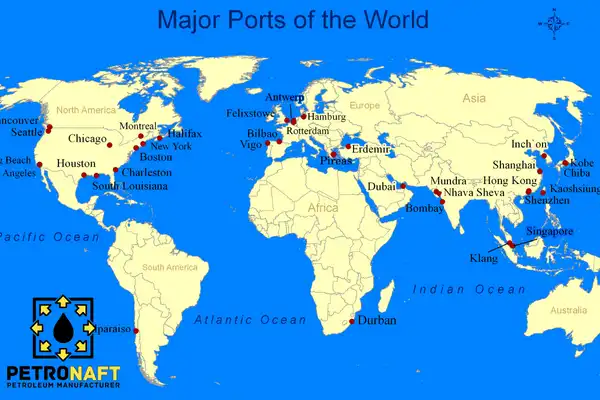
Key global hubs for petroleum products (what each is best for)
Many “ports” operate as clusters (terminals + nearby satellite berths). That’s why professionals often buy the hub, not the pin on the map.
Snapshot table: global hubs buyers commonly shortlist
| Hub / Cluster | Best for | Typical petroleum products | Buyer advantage | Watch-outs |
|---|---|---|---|---|
| Singapore | Trading + bunkering + regional redistribution | Gasoline, diesel, jet, fuel oil, marine fuels | Deep liquidity, blending options, strong services | Tight windows during peak demand; strict procedures |
| Rotterdam / ARA | Europe’s main products gateway | Diesel, gasoline, jet, naphtha, fuel oil | Barge/pipeline reach; large storage ecosystem | Scheduling + documentation discipline is essential |
| Fujairah | Bunkering + Middle East / Africa redistribution | Fuel oil, gasoil/diesel, marine fuels | Fast regional access; strong transshipment | Weather/sea-state can affect anchorage operations |
| US Gulf Coast | Refinery-export scale + variety | Gasoline, diesel, jet, VGO, blendstocks | Huge supply depth; competitive export economics | Port complexity: nominations, terminal rules vary |
| Antwerp–Bruges | Chemical + clean products integration | Diesel, gasoline, petrochemical feedstocks | Integrated logistics, strong inland access | Slotting can be tight in busy periods |
| Ningbo–Zhoushan / Shanghai area | Northeast Asia distribution scale | Gasoline, diesel, jet, fuel oil | Massive downstream demand adjacency | Documentation/compliance can be complex for newcomers |
| Ulsan / Yeosu | Refining-export efficiency | Diesel, gasoline, jet, naphtha | High-quality refinery streams, reliable export routines | Regional weather seasonality; scheduling precision matters |
| Jamnagar/Sikka region | Large refinery export flows | Diesel, gasoline, jet, naphtha | Competitive refinery economics, strong export capability | Requires careful terminal/product segregation planning |
| Algeciras Bay / Gibraltar area | Mediterranean crossroads + bunkering | Marine fuels, gasoil, fuel oil | Strategic location for re-supply and short repositioning | Operational variability by terminal/anchorage conditions |
| Durban / Richards Bay corridor | Southern Africa supply | Diesel, gasoline, jet (varies by route) | Access to regional markets | Weather + berthing constraints can ripple into delays |
Hub deep-dive: what professionals actually use them for
1) Singapore: the “liquidity engine” for refined products
Singapore is often where deals get priced, blended, and re-optimized. If you’re moving products across Southeast Asia or managing prompt shortages, it’s the hub that can “save” a schedule.
Best-fit uses:
Jet and gasoil redistribution into Asia-Pacific
Marine fuels and complex blends where execution quality matters
Inventory balancing: swapping grades, breaking bulk, or consolidating parcels
Practical buyer move:
Ask for terminal flexibility (two acceptable terminals, not one). It reduces last-minute nomination risk.
2) Rotterdam / ARA: Europe’s refined-products workbench
ARA functions like a giant products machine: storage, barges, pipelines, and inland distribution. It’s ideal when your plan includes more than a single discharge—especially if you need to feed multiple inland markets.
Best-fit uses:
Diesel and gasoline regional distribution via barge and pipeline
Spec management (additives, blending, segregations)
Multi-drop delivery strategies that lower total trucking cost
Mini tutorial: cutting inland delivery cost
Discharge into ARA storage → barge to inland terminals → short-haul trucks to final customers.
This often beats “port-to-truck” for large programs.
3) Fujairah: the operational shortcut for MEA flows
Fujairah’s strength is its position and role in bunkering and redistribution. For heavy ends and marine fuels, it’s frequently treated as a “control point” before cargo heads to the next region.
Best-fit uses:
Marine fuels and fuel oil positioning
Diesel/gasoil redistribution into nearby markets
Contingency storage when shipping lanes or schedules change
Buyer reality check:
Confirm anchorage/STS expectations early (weather windows and operational rules can matter).
4) US Gulf Coast: scale, variety, and blendstocks
If your goal is supply depth—especially for gasoline components and middle distillates—the US Gulf is hard to beat. But execution is not “one size fits all”: each terminal has its own nomination rhythm and cut-off rules.
Best-fit uses:
Large export programs of gasoline, diesel, jet
Access to blendstocks (useful for optimizing specs and margins)
Multi-terminal sourcing to secure volume
Practical buyer move:
Build a terminal rulebook per facility (cut-offs, docs, inspection practices). It prevents expensive “small” mistakes.
5) Antwerp–Bruges: clean products with industrial integration
This hub shines when refined products interact with petrochemical logistics: feedstocks, co-mingling controls, and integrated inland distribution.
Best-fit uses:
Clean products plus feedstock adjacency
Programs needing industrial-grade logistics discipline
6) Northeast Asia gateways (Ningbo–Zhoushan / Shanghai)
These areas matter because they sit close to enormous consumption and industrial demand. Commercially, they’re powerful when you already have strong local partners, clear customs routing, and documentation discipline.
Best-fit uses:
Distribution into high-demand zones
Structured programs with predictable documentation paths
7) South Korea export hubs (Ulsan / Yeosu)
These ports are known for refinery-export routines that can be very efficient when schedules are tight and quality requirements are strict.
Best-fit uses:
Jet and middle distillates with stringent specs
Reliable export cargo formation
8) India’s refinery-export gateways (Jamnagar/Sikka region)
This region is commercially significant for large refinery output and export reach—especially when buyers prioritize cost competitiveness and consistent production streams.
Best-fit uses:
Diesel and gasoline export flows
Naphtha and other refinery streams (program-dependent)
9) Mediterranean crossroads (Algeciras Bay / Gibraltar area)
The strength here is geography: it’s a practical repositioning and bunkering zone that supports route optimization.
Best-fit uses:
Marine fuel supply and operational re-sets
Short-notice replenishment for vessels routing between Atlantic and Med
10) Southern Africa supply corridor (Durban / Richards Bay)
These ports matter for regional access and continuity of supply. They often become strategic when inland distribution and reliable discharge matter more than global trading liquidity.
Best-fit uses:
Diesel and gasoline programs feeding regional markets
Structured supply where “last mile” reliability is the differentiator
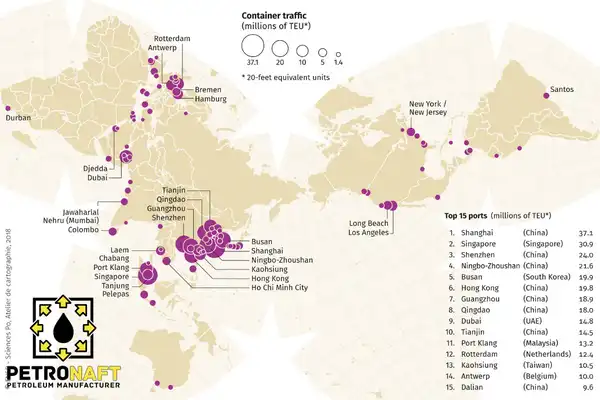
The buyer’s playbook: reduce cost without increasing claims
Ports don’t just change freight—they change risk. Here are the professional moves that prevent the common (and expensive) mistakes.
Quality and custody: the 6 checks that prevent disputes
Agree the standard: EN vs ASTM vs DEF STAN (and the allowed tolerances).
Lock sampling protocol: where, when, and whose seals count.
Control temperature correction: volume disputes often start here.
Manage additives: confirm injection method, recordkeeping, and compatibility.
Specify segregation rules: no “close-enough” co-mingling for sensitive grades.
Require clear COQ/COA pathway: who issues it, and what happens if results conflict.
Mini case example: importing diesel with predictable outcomes
A buyer importing diesel into a price-sensitive market can reduce surprises by:
Choosing a hub with multiple terminal options (flexibility if one terminal is congested)
Booking storage that allows re-testing and additive correction
Using an inspection plan that defines dispute resolution before the vessel berths
This approach often costs slightly more upfront, but it typically reduces demurrage and claims enough to win on total landed cost.
Costs, bottlenecks, and compliance—what experienced teams watch
Even in the best hubs, the same failure patterns repeat.
Common cost drivers:
Demurrage from congestion, paperwork errors, or nomination delays
Heating and handling for heavy products (fuel oil, bitumen-related logistics)
Barging and intra-port moves (often underestimated in complex hubs)
Tank turns and cleaning when switching between product families
Compliance and risk checks that protect deals:
Verify sanctions and counterparty screening processes early
Confirm port state control culture (especially for time-sensitive cargoes)
Align on HSSE expectations for terminal access, PPE, and procedures
Trends shaping petroleum-products hubs (and why it affects buyers)
Two shifts are changing how major hubs compete—and how buyers should plan:
Digital execution and documentation: Port community systems, better slotting, and more standardized data exchange reduce waiting time—if your team’s documents are consistent and clean.
Energy transition pressure: Even petroleum-product ports are investing in emissions monitoring, efficiency upgrades, and alternative-fuel readiness. Buyers increasingly see ESG reporting and carbon transparency becoming part of tender requirements.
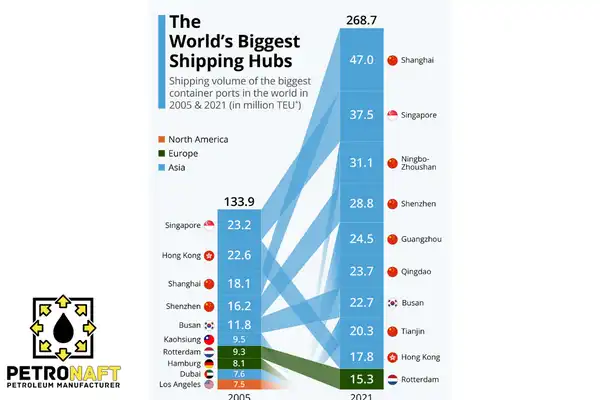
Conclusion: choosing Major Commercial Ports without overpaying for “big names”
The best Major Commercial Ports are the ones that match your cargo type, quality risk tolerance, and delivery plan—not just the ones with the loudest reputation. When you score hubs by storage flexibility, quality control, connectivity, and congestion behavior, you consistently reduce demurrage, avoid off-spec disputes, and improve total landed cost.
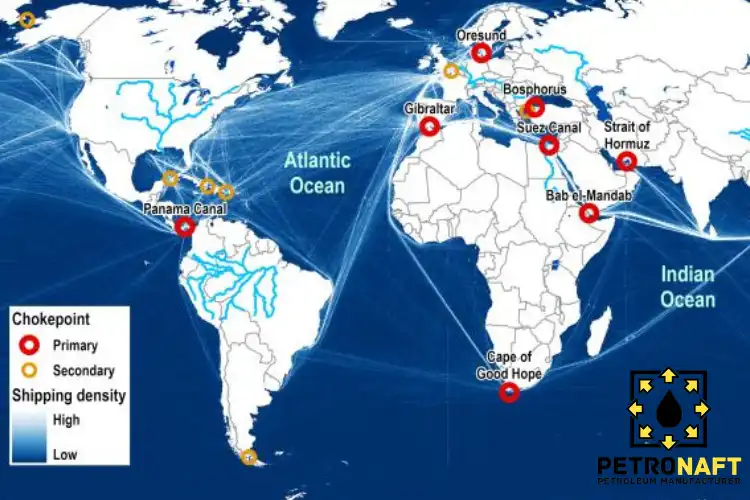
Executive Summary Checklist: port shortlist for petroleum products
Use this checklist before you request offers or commit to a route:
Define product spec (standard + critical limits) and acceptable substitutions
Shortlist 3 hubs: reliability-first, cost-optimized, and contingency option
Confirm storage access, nomination cut-offs, and terminal flexibility
Pre-agree sampling, inspection, temperature correction, and dispute steps
Map distribution: pipeline/barge/truck options and realistic lead times
Stress-test risk: weather, congestion patterns, and operational constraints
Validate compliance: customs pathway, ISPS/HSSE expectations, sanctions screening
Model true landed cost: port dues, heating, barging, tank turns, and demurrage buffers
FAQ
1) What makes a port “major” for petroleum products, not just cargo volume?
A major refined-products port combines storage density, blending capability, inspection services, and strong distribution links. Professionals value predictability and optionality more than raw tonnage.
2) Which hub is best for fast re-trading and blending?
Trading-focused hubs with deep terminal ecosystems and active market participation are typically strongest for re-trading and blending. The key is having multiple terminal options and clear blending governance.
3) How can buyers reduce demurrage risk when selecting a port?
Use terminal flexibility, define documentation cut-offs, and lock inspection/sampling procedures early. Most demurrage comes from nomination timing, paperwork errors, and avoidable coordination gaps.
4) Are bunkering hubs automatically good for importing diesel or jet fuel?
Not always. Bunkering strength helps for marine fuels, but clean products depend heavily on segregation discipline, sampling protocols, and inland distribution. Check terminal suitability by product family.
5) What’s the simplest way to compare ports for total landed cost?
Build a one-page model including freight, port dues, barging, heating, storage days, tank turns, and a demurrage buffer. Then score operational risk separately so “cheap” doesn’t hide expensive delays.
Sources
International Maritime Organization (IMO): Global standards that shape safety, security, and environmental compliance for ships and ports. IMO
Maritime and Port Authority of Singapore (MPA): Official information on Singapore’s port ecosystem, services, and maritime initiatives. MPA Singapore
Port of Rotterdam Authority: Official hub information and port ecosystem context for Europe’s leading products gateway. Port of Rotterdam
OCIMF (Oil Companies International Marine Forum): Industry guidance widely used for tanker operations, terminal interfaces, and risk management. OCIMF