


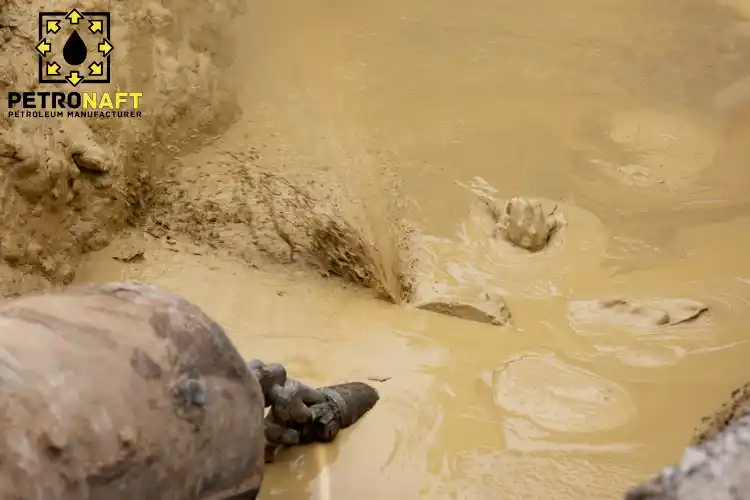
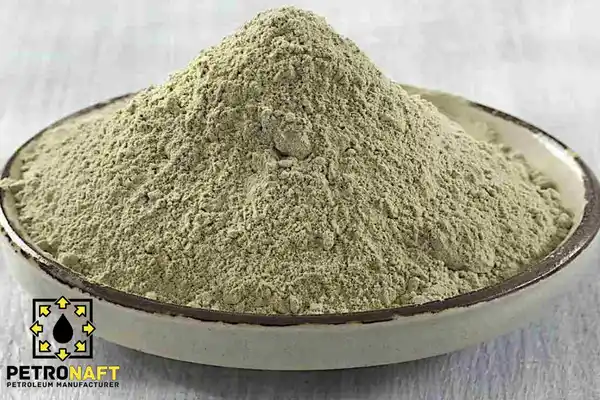
Micronized Bentonite Powder is Bentonite Powder processed to a much finer particle size so it disperses faster, hydrates quicker, and seals smaller pores with less material. That translates into stronger viscosity control, better filtration reduction, and more uniform binding—especially when you manage moisture, dust, and the right mixing order.
Micronized bentonite looks simple on paper (“just a clay”), but in real operations it behaves like a performance additive. The particle size distribution, base type (sodium vs calcium), soluble salts, and moisture pickup can make the difference between a stable system and daily troubleshooting.
What this guide helps you do:
-
Choose the right grade for your application (not just “any bentonite”)
-
Read a COA like a buyer and an operator, not like a brochure
-
Avoid common failure modes (lumps, slow hydration, weak gel, excess dosage)
-
Specify what matters so you can compare suppliers fairly
Highlights & Key Sections
Bentonite Powder: What “Micronized” Really Means
“Micronized” usually indicates the material has been milled and classified to a finer range than standard ground bentonite. In practice, that means:
-
Higher surface area per kilogram
-
Faster wetting and hydration (if you disperse it correctly)
-
Better ability to plug micro-voids in porous media
-
Stronger, quicker rheology build in water-based systems
Particle size: the hidden performance lever
Suppliers often describe size by mesh or by laser diffraction (D50/D90):
-
Mesh is a screening concept and can be misleading for very fine powders.
-
D50 (median size) and D90 (size below which 90% falls) are more useful for micronized products.
Practical implication: two “same mesh” products can behave differently if one has a tighter PSD (fewer oversized particles). In mixing tanks, that often shows up as fewer lumps, faster viscosity build, and less sediment.
Sodium vs Calcium vs Activated: Pick the Right Base
Not all bentonite behaves the same. The base type determines swelling, viscosity, and sealing performance.
Quick comparison table
| Type | Typical behavior in water | Best-fit uses | Watch-outs |
|---|---|---|---|
| Sodium bentonite | High swelling, strong viscosity/gel | Drilling fluids, sealing/lining, slurry walls, waterproofing | Sensitive to high salinity/hardness; needs proper shear |
| Calcium bentonite | Lower swelling, more stable but weaker gel | Adsorption uses, some filtration/clarification, carriers | May require higher dosage for viscosity/sealing |
| Activated bentonite (often acid-activated) | Higher adsorption for oils/pigments | Bleaching/clarifying oils, refining/processing | Not a “thickener”; can change pH; application-specific |
Buyer logic: If your priority is sealing + rheology, start with sodium. If your priority is adsorption/clarification, consider activated or a tailored calcium-based grade.
What Micronization Improves (and What It Doesn’t)
Micronization tends to improve speed and uniformity, but it won’t fix a mismatched chemistry.
Where micronized material usually wins
-
Faster hydration → you reach target viscosity sooner
-
Lower risk of micro-leaks → better pore plugging in porous surfaces
-
Improved binding → stronger green strength in pelletizing and agglomeration
-
More consistent dosing → better control when automation meters powder
Where you still need to engineer the system
-
Saline or hard water: calcium and magnesium ions reduce swelling and viscosity.
-
Poor mixing energy: fine powder can “fish-eye” (dry core lumps) if added wrong.
-
Moisture uptake: ultrafine powders can cake faster in humid storage.
Mini Tutorial: Mix Micronized Bentonite Without Lumps
Most “bentonite problems” are actually mixing sequence problems.
The proven approach (works in plants and on-site tanks)
-
Start with clean water (or your base fluid) and measure pH and hardness.
-
Create a vortex with enough shear (high-speed mixer or eductor).
-
Sprinkle slowly into the moving stream—don’t dump bags into still water.
-
Hydrate time: allow 15–45 minutes depending on grade and temperature.
-
Fine-tune with small additions, then let it fully develop before judging.
Troubleshooting tip:
If you see rubbery “lumps,” reverse the order next time: increase shear first, then slow-feed powder. Lumps usually mean the outer layer hydrated and sealed the inside dry.
Specifications That Matter on the COA
A good purchase spec should protect you from batch variability and “looks fine” surprises.
Core specifications table (industrial-grade)
| Parameter | Why it matters | Typical request |
|---|---|---|
| Moisture (%) | Impacts flowability, caking, dosing accuracy | Set a maximum and test on receipt |
| Particle size (D50/D90) | Predicts hydration speed, dispersion, plugging | Provide PSD method + limits |
| Swelling index | Correlates with sealing/rheology (esp. sodium) | Require min value for your use |
| Viscosity / rheology | Predicts real performance in fluids | Specify method + target range |
| pH (slurry) | Compatibility with additives/process | Keep within your formulation window |
| Soluble salts | Affects swelling and stability | Control if used in water systems |
| LOI / mineral purity | Indicates composition consistency | Use as a consistency check |
| Heavy metals / food-contact limits | Critical for sensitive applications | Only if your use requires it |
Procurement reality: Ask the supplier to state the test standard used. “Viscosity” without method often causes disputes.
Application Playbooks and Real-World Examples
1) Drilling fluids and HDD (water-based)
Goal: build carrying capacity, suspend cuttings, reduce fluid loss, stabilize the bore.
Practical setup
-
Pre-hydrate bentonite before adding polymers.
-
If working with hard water, consider softening or adjusting chemistry first.
-
Track performance by funnel viscosity, gel strengths, and filtration behavior.
Field example:
A contractor struggling with slow viscosity build in winter improved consistency by switching to micronized material and changing addition from “dump and stir” to slow-feed through an eductor. The visible change wasn’t only higher viscosity—it was less settling overnight, which reduced morning rework.
2) Waterproofing, sealing, and civil works
Goal: form a low-permeability barrier by swelling and filling voids.
Where micronized helps
-
Better penetration into micro-pores and fine cracks
-
Faster formation of a continuous gel matrix
Mini checklist for site success
-
Control moisture exposure before placement (bags + pallets + wrapping)
-
Avoid mixing with salty groundwater unless designed for it
-
Do small-scale permeability trials if the soil varies by zone
Practical note: In liners and barriers, material selection is only half the job—compaction/placement and moisture conditioning often decide performance.
3) Pelletizing and agglomeration (iron ore, fertilizers, minerals)
Goal: bind fines into durable pellets with enough green strength and good drying behavior.
How bentonite works here
-
Creates a clay bridge between particles
-
Improves drop number/green strength at low dosage
Plant example:
When ore feed PSD shifted finer, a pellet plant saw unstable green strength. They stabilized output by tightening incoming bentonite PSD and moisture limits, then standardizing dosage based on weekly feed fineness. The “fix” was not more binder—it was more consistent binder quality.
4) Clarification and purification (process liquids)
Goal: remove haze-forming impurities, pigments, or trace organics depending on grade.
What to watch
-
Use the correct type (activated vs standard) for your contaminant.
-
Monitor pH changes; some activation processes can shift acidity.
-
Filter aid strategy matters as much as the clay.
Good practice: Always bench-test with your actual liquid. Adsorption is chemistry-dependent, not marketing-dependent.
5) Foundry and molding sands
Goal: improve green strength and mold stability.
Operational tip
-
Keep moisture control tight; micronized material reacts quickly to humidity swings.
-
Track compactability and permeability—too much fine binder can reduce venting.
Handling, Storage, and Safety in Real Operations
Micronized powders behave like “performance powders,” not like bulk rock.
-
Dust control: Use local exhaust, sealed transfer, and clean bag opening stations.
-
Moisture protection: Store indoors, off the floor, wrapped; rotate FIFO.
-
Flowability: Fine powders can bridge in hoppers—use proper hopper angles and vibration only when appropriate.
-
PPE: Follow the SDS; treat mineral dust as a respiratory irritant and manage exposure.
Operational takeaway: Many user complaints trace back to storage humidity and inconsistent dosing hardware, not the clay itself.
Buying Guide: How to Compare Suppliers Without Guesswork
Ask these questions before you approve a supplier
Do you provide PSD (D50/D90) with method and batch frequency?
What are your moisture controls at packaging and in storage?
Can you supply a recent COA tied to lot numbers on bags?
Do you offer trial quantities and technical guidance for mixing?
What packaging options match my operation (25 kg bags, big bags, bulk)?
Simple decision matrix (useful for fast internal alignment)
| Your priority | What to prioritize in the spec | Common mistake |
|---|---|---|
| Fast viscosity build | PSD + hydration performance + mixing method | Buying only on price/ton |
| Low permeability sealing | Swelling + PSD + soluble salts control | Ignoring water chemistry |
| Strong pellet binding | Consistent PSD + moisture control | Changing binder brand mid-run |
| Clarification/bleaching | Correct activation + adsorption testing | Using “any bentonite” |
Trends and Innovations to Know
Two shifts are shaping bentonite purchasing decisions right now:
Performance under challenging water chemistry: More users need stable behavior in hard or saline water, driving demand for tailored formulations and tighter soluble-salt control.
Better QC and dosing in automated plants: Laser-based PSD control, more consistent milling/classification, and improved dust-managed packaging help plants hit KPIs with less operator intervention.
These trends reward buyers who write clearer specs—and suppliers who prove consistency with data.
Conclusion
Micronized Bentonite Powder delivers the most value when you treat it as an engineered input: define PSD, moisture, swelling/rheology targets, and match the base type to your chemistry and process. Do that, and Bentonite Powder becomes a predictable tool for sealing, thickening, binding, and purification—not a recurring troubleshooting item.
Executive Summary and Practical Checklist
Use this checklist to pick and implement the right product fast:
Define your use case: sealing, rheology, binding, adsorption, or a blend
Choose the base: sodium for swelling/gel, calcium for stability, activated for adsorption
Specify PSD: request D50/D90 + test method
Control moisture: set a max and protect storage/handling
Check chemistry fit: hardness/salinity, pH window, soluble salts
Demand COA discipline: lot traceability + batch frequency
Run a bench or pilot test: using your real water/fluid/ore feed
Standardize mixing: shear first, slow-feed powder, allow hydration time
FAQ
1) What does “micronized” change compared to regular bentonite?
Micronization mainly reduces particle size and tightens distribution, which usually speeds hydration and improves dispersion. You often see faster viscosity build and better pore sealing, assuming you mix correctly and manage moisture.
2) Is sodium bentonite always better for drilling fluids?
It’s often the starting point because it swells more and builds stronger gel, but performance can drop in hard or salty water. In those cases, water treatment and formulation choices matter as much as the bentonite type.
3) Why does bentonite form lumps during mixing?
Most lumps happen when powder hits low-shear zones and hydrates on the outside first, trapping dry cores. Increase shear, create a vortex, and slow-feed into the moving stream to prevent “fish-eyes.”
4) Which specs should I request when buying for waterproofing or sealing?
Prioritize swelling performance, particle size distribution (D50/D90), moisture limits, and soluble salts. Also match the product to your site water chemistry and placement method to avoid permeability surprises.
5) Can bentonite be used for clarification of liquids?
Yes, but the grade matters. Activated bentonites are commonly used for adsorption-driven clarification, while standard grades may help in other process roles. Always bench-test with your exact liquid because adsorption depends on chemistry.
Sources
USGS Mineral Commodity Summaries – Bentonite
Authoritative overview of bentonite production, applications, and global market context published by the U.S. Geological Survey.
https://www.usgs.gov/centers/national-minerals-information-center/mineral-commodity-summariesAPI Specification 13A
Internationally recognized specification framework for drilling fluid materials, including performance and quality testing requirements for bentonite.
https://www.api.org/products-and-services/standardsGeosynthetic Institute (GSI) Resources
Technical guidance and performance concepts for clay liners, bentonite-based barrier systems, and geotechnical containment applications.
https://www.geosynthetic-institute.org/Encyclopaedia Britannica – Bentonite
Concise technical reference explaining the mineralogical nature, properties, and behavior of bentonite as a clay mineral.
https://www.britannica.com/science/bentonite