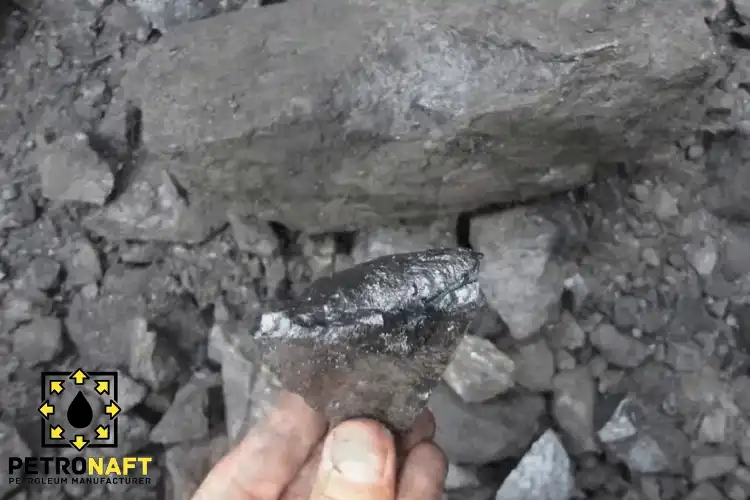
Natural Asphalt Sources are naturally occurring bitumen-rich materials—especially gilsonite—that form when petroleum migrates and solidifies in veins or lakes. For buyers and engineers, the practical takeaway is simple: quality gilsonite can upgrade asphalt binders, improve drilling-fluid sealing, and enhance industrial products—if you match grade, particle size, and solubility to the job.
Natural asphalt sounds straightforward, but performance depends on where it comes from and how it’s processed.
In this guide you’ll learn:
What “natural asphalt” really means (and what it doesn’t)
Where gilsonite deposits occur and why geology affects quality
How extraction and processing create different commercial grades
How to choose the right product for paving, drilling, and industrial use
Highlights & Key Sections
Natural Asphalt Sources: What They Are and Why Gilsonite Matters
Natural asphalt is bitumen that occurs in nature in a concentrated, usable form—often as:
Practical point: If you need a consistent, shippable, blendable modifier, gilsonite is usually the most direct route among natural options.
Where Gilsonite Deposits Occur and How They Form
Gilsonite commonly forms when petroleum migrates upward through fractures, then loses lighter fractions and solidifies in fissures. Over time, it becomes a mineable, solid deposit.
You’ll often hear the most commercialized gilsonite associated with vein systems—because veins let producers mine relatively pure material compared to diffuse bitumen-in-rock formations.
What geology changes for buyers (in plain language)
Purity: More host-rock contamination generally means higher ash/mineral content.
Consistency: Stable vein systems tend to yield tighter quality ranges lot-to-lot.
Processing load: Dirtier run-of-mine material needs more cleaning and tighter screening.
Quick “deposit reality check” for procurement teams
When you evaluate a supplier (or compare origins), ask for:
Recent COA trends (not a single COA): ash, moisture, softening behavior, solubility
Mining method & beneficiation steps: how they control contamination
PSD control: how they keep particle size stable across shipments
Traceability: lot numbers tied to test results and packaging dates
Mini tutorial: How to sanity-check a COA (5 minutes)
Look for ash moving up and down across lots (a contamination signal).
Check solubility reporting method (consistent test approach matters).
Verify particle size is stated as a distribution, not just “powder/granule.”
Confirm moisture limits and packaging type (moisture changes flow and dosing).
Extraction and Processing: From Vein to Product Grade
Most commercial gilsonite supply chains follow a predictable path:
Mining (vein extraction; method depends on depth and geology)
Primary crushing (makes transport and handling practical)
Screening & classification (creates granules vs powders)
Grinding / micronizing (for fast dispersion in binders or fluids)
QC + packaging (keeps dose and performance consistent)
Processing steps and why they matter
Step
What it controls
Why you should care
Crushing
Size reduction
Controls handling and reduces segregation in bulk bags
Screening
Narrow size cuts
More consistent dosing and mixing behavior
Micronizing
Finer powders
Faster dispersion; less “fish-eye” clumping in blends
Magnetic separation / cleaning
Metallic/mineral contamination
Protects equipment and improves end-product appearance/performance
Packaging & palletizing
Moisture pickup, caking
Improves flowability and reduces waste at the point of use
Hands-on note from plant realities: Most performance complaints trace back to inconsistent PSD or moisture pickup—not the idea of gilsonite itself. Tight packaging discipline often fixes “mystery variability.”
Uses and Performance Benefits Across Industries
Gilsonite’s value comes from what it does in blends:
Adds structure (hardness/softening contribution)
Improves film strength and resistance to deformation
Enhances adhesion and water resistance in many formulations
Can reduce the need for some synthetic modifiers in specific designs
1) Asphalt paving and binder modification
Common goals:
Improve rutting resistance in hot climates or heavy traffic
Increase stiffness without jumping to a completely different base binder
Improve moisture susceptibility resistance when paired with good mix design
Real-world example (typical scenario):
A contractor fighting early rutting on a high-load industrial road often tests a gilsonite-modified binder to raise high-temperature performance, then confirms results using a balanced mix approach (rutting + cracking checks). The best outcomes come when they adjust binder content and mix volumetrics, not just “add modifier and hope.”
2) Drilling fluids (wellbore strengthening and sealing behavior)
Gilsonite-based additives are used to help:
Seal micro-fractures and reduce seepage losses
Improve filter cake quality and reduce filtrate invasion (formulation-dependent)
Support wellbore stability in troublesome intervals (depends on the full mud system)
Mini tutorial: Adding powdered gilsonite to a mud system
Pre-check hopper/shear capability and dust management.
Add slowly to avoid floating clumps; maintain steady shear.
Track rheology and filtration before/after, not just visual dispersion.
Optimize in steps; small changes can swing ECD and pumpability.
3) Industrial blends: inks, paints, coatings, and waterproofing
Gilsonite can contribute:
Dark color and strong tinting in certain systems
Improved hardness and abrasion resistance in coatings (system-dependent)
Enhanced water resistance in waterproofing and protective layers
4) Foundry and specialty binders
In certain foundry and carbon-additive style applications, users value:
Binding contribution and green strength (process-dependent)
Consistent volatile behavior (requires quality control and correct grade)
Application Selection Matrix
Use this table to match intent (what you want) to the practical product characteristics you should prioritize.
Over-stiffening if dosage is too high for climate/cracking risk
Improve blend uniformity in binder tank
Finer PSD or pre-dispersed approach; verified solubility test
Clumping if added too fast or at insufficient mixing energy
Reduce seepage / losses in drilling
PSD suited to bridging/sealing strategy; clean product
Dust control, rheology impacts, compatibility with full system
Improve coating hardness / water resistance
Low ash, consistent resin-like behavior, tight QC
Solvent compatibility and dispersion method matter
Reliable industrial batching
Tight COA trendline, packaging that resists moisture pickup
Caking, segregation, inconsistent feed rates
How to Choose the Right Gilsonite Grade (Buyer’s Guide)
Most procurement decisions become easy when you compare products on four levers:
1) Softening behavior (performance lever)
Higher softening contribution generally increases stiffness and heat resistance.
You must balance it against cracking risk in colder climates or thin lifts.
2) Ash/mineral content (cleanliness lever)
Lower ash usually means less contamination and more predictable blending.
Higher ash may still work for some uses, but it changes dosage efficiency.
3) Solubility/compatibility (blendability lever)
Good compatibility helps dispersion and reduces undissolved specks.
Always align the test method and solvent system used in reporting.
4) Particle size distribution (operations lever)
Finer powders disperse faster but demand better dust control.
Coarser granules handle better but may need more time/energy to blend.
Quick decision path (fast and practical)
If your pain is rutting → prioritize consistent softening contribution + clean COA trend.
If your pain is dispersion → prioritize PSD and proven mixing method (wet or dry process).
If your pain is variability → prioritize traceability, lot control, packaging discipline.
Mini Tutorials: Blending Gilsonite in Asphalt
Wet process (binder tank / lab blend)
Best when you want maximum uniformity.
Heat binder to a normal blending window for your plant setup.
Add gilsonite gradually under agitation (avoid “dumping”).
Maintain mixing until the blend looks uniform and tests stabilize.
Run a quick check: viscosity/handling + your agency’s preferred performance tests.
Operational tip: Pre-weighing doses and using a controlled feed prevents most “lump” issues.
Dry process (into the mixer/drum with aggregate)
Best when you want operational simplicity.
Add gilsonite at a consistent point in the mixing sequence.
Keep the addition rate steady to avoid segregation.
Watch mix coating and adjust mixing time if needed.
Validate with plant-mix samples (don’t rely only on lab blend behavior).
Reality check: Dry process success depends heavily on plant configuration and PSD.
Handling, Storage, and Safety
Gilsonite is industrially straightforward, but you should treat it like any fine powdered material.
Do:
Store in dry conditions; keep packaging sealed until use.
Use dust control and PPE during unloading and hopper feeding.
Keep a simple FIFO system so older pallets don’t absorb humidity.
Avoid:
Letting powder sit open near moisture sources (caking and feeding issues follow).
Assuming “one grade fits all” across paving, drilling, and coatings.
Trends and Challenges Shaping Natural Asphalt in 2026
Two big forces keep pushing demand for well-controlled natural modifiers:
Performance-based specifications and balanced mix design: More agencies and owners want proof against both rutting and cracking, which rewards consistent modifier quality and disciplined testing—not guesswork.
Higher recycled content and tougher logistics: High RAP mixes and tighter budgets increase interest in practical modifiers, but also punish variability. Buyers increasingly demand COA trend stability, not just a nominal spec.
Conclusion
Natural Asphalt Sources can deliver excellent real-world performance, but gilsonite only pays off when you treat it like a engineered raw material: validate origin consistency, buy the grade that fits your mixing method, and confirm results with the same tests your job will be judged by. Done right, you get stronger pavements, better sealing behavior in drilling systems, and more robust industrial blends.
Executive Summary Checklist (Use This Before You Buy or Specify)
Define the job goal: rutting resistance, dispersion, sealing, hardness, or batching stability
Request COA trends across multiple lots (not a single certificate)
Prioritize the right levers: softening behavior, ash, solubility method, and PSD
Choose the blending route: wet process vs dry process (based on plant reality)
Run a small trial and measure what matters (performance + handling), then scale
Lock packaging and storage requirements to prevent moisture pickup and caking
FAQs
1) Is gilsonite the same as bitumen or asphalt cement?
No. Gilsonite is a naturally occurring solid asphaltite used as a modifier or ingredient. Asphalt cement is a refined binder grade produced in refineries and specified by paving standards.
2) How do I decide between powder and granule gilsonite?
Powders disperse faster and suit controlled blending, but need stronger dust control. Granules handle cleaner and often suit dry-process additions, but may need more mixing time.
3) Will gilsonite always improve asphalt performance?
Not automatically. It can improve high-temperature resistance, but mix design, climate, binder selection, and dosage control determine whether you also keep cracking risk in check.
4) What quality indicators matter most on a COA?
Look for consistent softening behavior, stable ash/mineral content, a clear particle size distribution, and a compatible solubility method. Lot-to-lot trend stability matters more than a single “good” number.
5) Can gilsonite be used in both drilling and paving from the same product?
Sometimes, but not always. Drilling and paving often prefer different PSD and handling characteristics. Specify the application so the supplier matches grade and processing to your use-case.
Sources
U.S. Geological Survey — Authoritative U.S. geoscience references on energy-related geologic materials and resource reporting practices. USGS
Federal Highway Administration — Practical asphalt materials guidance and performance-oriented pavement engineering references. FHWA
Asphalt Institute — Mix and binder engineering references commonly used across asphalt practice and specifications. Asphalt Institute
ASTM International — Core test standards used to characterize asphaltic materials (softening behavior, penetration, solubility, etc.). ASTM International