


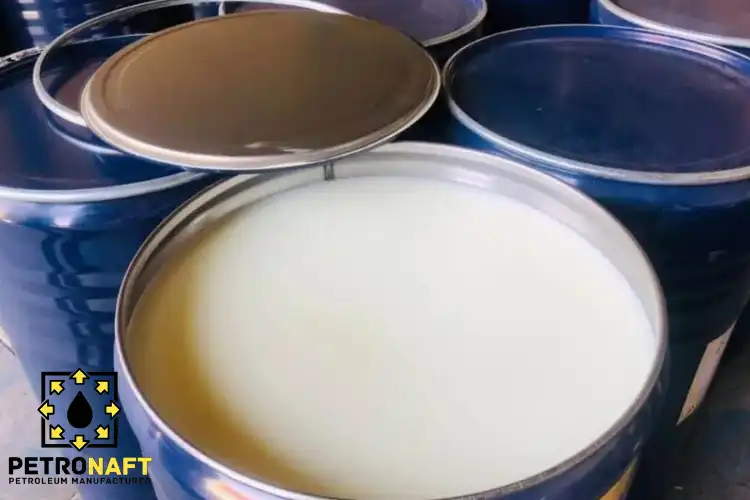
Snow White Petroleum Jelly is a highly refined, low-odor, bright-white petrolatum used as an emollient, moisture barrier, and protective base in cosmetics, pharma ointments, and some industrial applications. The “snow white” label usually signals tighter control on color, odor, and purity—so choosing the right grade and reading the COA correctly matters as much as the price.
Highlights & Key Sections
Snow White Petroleum Jelly: What it is and why “snow white” matters
In simple terms, Snow White Petroleum Jelly is a semi-solid blend of purified hydrocarbons that feels smooth, melts close to skin temperature, and forms a protective film that reduces moisture loss.
What “snow white” typically implies in the market:
- Very light color (better refining and filtration)
- Low odor and taste neutrality (important for lips and sensitive skincare)
- Lower impurity risk (especially when supported by compendial or regulatory compliance)
Quick snapshot table (what buyers usually compare)
| What you care about | What it affects | What to look for on COA / spec |
|---|---|---|
| Color & clarity | “Clean” look in creams, balms, gels | Color limit + visual appearance |
| Odor | Lip products, baby care, fragrance-free lines | Odor: neutral/very low |
| Consistency | Spread, scoop, “drag” on skin | Penetration range (25°C) |
| Melt behavior | Stability in warm climates, shipping | Drop point / melting range |
| Purity controls | Regulatory confidence, brand safety | PAH/UV absorbance compliance + refining history |
| Micro/contamination risk | GMP users and sensitive applications | GMP statement + handling/packaging controls |
Grades of petroleum jelly (and how to pick the right one)
“Snow white” is often a color/appearance descriptor, not a legal grade by itself. Real-grade decisions usually come down to how strictly the product is made and tested.
Common grades you’ll see in trade
| Grade (typical naming) | Best for | Typical buyer requirement | Practical note |
|---|---|---|---|
| Industrial | Rust prevention, lubrication, general-purpose | Basic spec + consistent supply | Cheapest, but not ideal for skincare brands |
| Cosmetic / Personal Care | Creams, lotions, hair styling, lip care | Low odor + color limit + PAH control | Most “Snow White” demand sits here |
| Pharmaceutical / Compendial | Ointment base, medical devices contact, pharmacy manufacturing | Compendial compliance + tighter QC | Often preferred when claims or audits matter |
| Food contact / incidental food use | Packaging, food-related processing (where permitted) | Specific regulatory compliance | Always confirm your exact use case |
Mini tutorial: choose the grade in 60 seconds
- Define the exposure: lips and baby products need stricter odor/color control than hand creams.
- Check your market: some regions require proof of refining history and impurity controls for cosmetics.
- Match texture: pick the penetration range that fits your product (stiffer for hot climates, softer for easy spread).
- Lock compliance: compendial compliance can reduce reformulation and audit pain later.
- Buy with testing: ask for a COA per batch and retain a sample for reference.
Key specifications (and what they mean in real life)
Below are the specs that most often decide whether your batch performs perfectly—or causes complaints.
Core specification table
| Parameter | What it tells you | Typical direction for “snow white” performance | Why it matters |
|---|---|---|---|
| Appearance | Visual cleanliness | Bright white, uniform, no particles | Impacts perceived quality instantly |
| Odor | Refining quality | Very low/neutral | Critical for lip care and fragrance-free lines |
| Penetration at 25°C | Softness/firmness | Controlled range (not too soft, not too hard) | Governs spread, glide, and pick-up |
| Drop point / melting behavior | Heat stability | Suitable for your climate and shipping | Prevents “sweating,” separation, or softening |
| Viscosity (where stated) | Flow at elevated temps | Consistent | Affects processing and filling |
| Residue on ignition | Inorganic residue | Very low | Indicates cleanliness/purity |
| Acid/alkali tests | Chemical neutrality | Pass | Reduces irritation risk and incompatibility |
| PAH control method | Impurity risk management | Compliant + documented | Key for trust and regulatory confidence |
What “good” looks like in production (hands-on perspective)
- For lip balm: low odor matters as much as color. If your balm tastes “waxy” or “petroleum-like,” odor control or refining level is usually the cause—not your flavor.
- For creams: penetration consistency prevents batch-to-batch thickness swings that wreck filling speeds and consumer feel.
- For hot climates: drop point becomes a business KPI. The wrong melt behavior turns into leaky cartons, complaints, and returns.
Uses by industry (with practical examples)
Snow white petrolatum is popular because it’s stable, inert for many formulations, and widely tolerated. Here’s how it’s used in real workflows.
Top applications table
| Industry | Common uses | Why it works | Pro tip |
|---|---|---|---|
| Personal care | Moisturizers, lip care, body balms, hair pomades | Occlusive barrier reduces moisture loss | Balance with lighter oils for less “greasy” feel |
| Pharma / medical | Ointment base, skin protectant, carrier for actives | Stable, compatible with many actives | Confirm compatibility with your API and packaging |
| Baby care | Diaper area protection, chafing prevention | Strong barrier function | Prioritize low odor and strict QC |
| Industrial | Anti-corrosion coating, assembly aid, lubrication | Water-repellent protective film | Don’t reuse open drums; contamination ruins performance |
| Leather & rubber | Conditioning and protection (case-by-case) | Softening and barrier effect | Test first—some rubbers can swell with hydrocarbons |
Case study-style example: stopping “sweating” in a balm
Problem: finished balm shows oil droplets on the surface after shipping.
Common root causes:
- Petrolatum too soft for storage temperature
- Wax ratio too low for climate
- Mixing/filling temps inconsistent
Fix approach (quick steps):
- Choose a slightly firmer penetration range
- Increase structuring wax modestly and cool more predictably
- Standardize fill temperature and cooling time
Formulation and handling tips (mini playbooks)
These aren’t “lab-only” tips—they’re the kind that reduce rework in production.
Playbook 1: building a clean-feel balm
- Start with a snow-white grade known for low odor.
- Add a light ester or a low-viscosity emollient oil to improve slip.
- Use waxes to lock structure for your target shipping temperature.
- Run a simple stability check: 48 hours at warm temperature, then 48 hours at room temp.
Playbook 2: improving cream sensorial feel without losing barrier
If users say “too greasy”:
- Reduce total petrolatum slightly and replace part with lighter emollients.
- Use a properly designed emulsifier system for your oil phase.
- Keep petrolatum as the “barrier backbone,” not the entire feel.
Playbook 3: using petrolatum as an ointment base
- Confirm your active ingredient disperses or dissolves as intended.
- Control shear and temperature; overheating can change texture and processing behavior.
- Ensure packaging compatibility (some plastics handle hydrocarbons better than others).
Purity, safety, and compliance (what professionals double-check)
Snow-white performance is not only about appearance—buyers increasingly demand clear impurity controls and traceability.
What responsible suppliers typically provide:
- Batch COA with defined test methods
- Statement of refining / impurity control approach
- Traceability (batch/lot, production date)
- Contamination controls (packaging cleanliness, sealing, storage guidance)
Trend watch (why this matters more now)
- Stricter scrutiny of mineral-oil-related impurities has pushed brands toward clearer documentation and tighter supplier qualification, especially for leave-on and lip products.
- “Clean beauty” narratives often confuse consumers; brands that proactively explain refining controls and product purpose tend to earn more trust and reduce customer service noise.
Quality control: a simple incoming inspection you can actually run
You don’t need a full lab to catch most bad batches early.
10-minute receiving check (practical)
- Seal and drum condition: dents, leakage, broken seals
- Label match: product name, lot, net weight, manufacturing date
- Appearance check: uniform, no visible specks or discoloration
- Odor check: neutral/very low (especially for lip/baby lines)
- Retain sample: keep a sealed reference sample from every lot
- COA review: confirm penetration and drop point match your internal targets
If you do have a lab, prioritize:
- Penetration at 25°C
- Drop point / melting behavior
- Color and basic purity indicators
Packaging, storage, and shelf-life basics
Poor storage can ruin a perfect batch.
Storage and handling best practices
- Store indoors, away from direct sun and heat sources.
- Keep containers tightly closed to prevent dust pickup and odor absorption.
- Avoid repeated opening in high-traffic areas (cross-contamination happens fast).
- Use clean tools; never dip tools that touched other materials into the main drum.
Typical packaging options:
- Pails (small batches), cartons, and drums (bulk users)
Price: what drives Snow White Petroleum Jelly cost (and how to buy smarter)
Pricing for Snow White Petroleum Jelly varies widely because you’re not just buying a commodity—you’re buying refining quality, documentation, consistency, and risk reduction.
Main price drivers
- Grade and compliance level (industrial vs cosmetic vs compendial)
- Texture band (tighter penetration control often costs more)
- Odor/color requirements (lip-grade expectations increase cost)
- Packaging (small packs cost more per kg than drums)
- Logistics (incoterms, port, seasonality, freight)
- Documentation and audits (GMP-style expectations add cost)
Benchmarking tip (without chasing “too cheap”)
Use a three-quote comparison:
- Quote A: “lowest price”
- Quote B: “best documentation + stable supply”
- Quote C: “balanced”
Then compare landed cost + risk (complaints, returns, audit failures) rather than only unit price.
RFQ checklist (copy/paste for purchasing teams)
- Required grade (industrial / cosmetic / compendial)
- Target penetration range and drop point target
- Color/odor expectations (especially for lip/baby)
- Batch COA required + retained sample policy
- Packaging type and net weight per unit
- Destination port and incoterms
- Monthly volume + forecast horizon
- Needed documents (SDS, COA, origin, compliance statements)
Conclusion + Executive Summary
Snow White Petroleum Jelly performs best when you match grade + texture + compliance to the exact application. Use the COA to control consistency, treat odor and melt behavior as critical specs (not “nice-to-have”), and buy with a simple, repeatable incoming QC routine. When you do that, Snow White Petroleum Jelly becomes a reliable workhorse ingredient—not a source of surprises.
Practical checklist (use this before you approve a supplier)
- Grade matches your end use (cosmetic/pharma/industrial)
- COA provided for every batch (penetration + drop point + color/odor notes)
- Purity/impurity control documented and traceable by lot
- Packaging sealed, clean, and suitable for your handling process
- Retain samples from each lot and track performance feedback
- Compare quotes by landed cost + risk, not unit price alone
FAQ
1) Is Snow White Petroleum Jelly the same as “Vaseline”?
“Vaseline” is commonly used as a generic term, but in trade it can refer to a brand. Snow white describes a highly refined white petrolatum style, and multiple manufacturers can produce it with different specs.
2) Which grade is best for lip balm and baby care?
Most manufacturers choose a high-refining, low-odor cosmetic or compendial grade with tight color and impurity controls. In practice, odor neutrality and batch consistency matter as much as the label.
3) What specification affects “greasy feel” the most?
Texture (often reflected by penetration range) and your overall oil-phase design drive feel. You can keep barrier performance while improving feel by balancing petrolatum with lighter emollients and proper structuring.
4) Why do some batches “sweat” or soften during shipping?
Heat exposure plus a mismatch between melt behavior and your climate is the usual trigger. Selecting the right firmness band, controlling wax structure, and standardizing fill/cooling conditions fixes most cases.
5) How should I store bulk petroleum jelly to keep quality stable?
Store sealed containers indoors, away from heat and sunlight, and minimize drum openings. Use clean tools, prevent dust contact, and keep a retained sample for lot-to-lot comparison.
Sources
- United States Pharmacopeia (USP) – Petrolatum excipient harmonization overview and compendial change context: https://www.usp.org/harmonization-standards/pdg/excipients/petrolatum
- eCFR (U.S. Code of Federal Regulations) – Petrolatum specification framework and UV absorbance limits for regulated use: https://www.ecfr.gov/current/title-21/chapter-I/subchapter-B/part-172/subpart-I/section-172.880
- EUR-Lex – EU cosmetics regulation text used for compliance framing in Europe: https://eur-lex.europa.eu/legal-content/EN/TXT/HTML/?uri=CELEX:02009R1223-20160812
- German Federal Institute for Risk Assessment (BfR) – Risk assessment discussion of highly refined mineral oils in cosmetics and MOAH/MOSH context: https://www.bfr.bund.de/cm/349/highly-refined-mineral-oils-in-cosmetics-health-risks-are-not-to-be-expected-according-to-current-knowledge.pdf
- Peer-reviewed dermatology review (ScienceDirect) – Evidence-based overview of petrolatum history, uses, and safety considerations: https://www.sciencedirect.com/science/article/abs/pii/S0190962223011076