


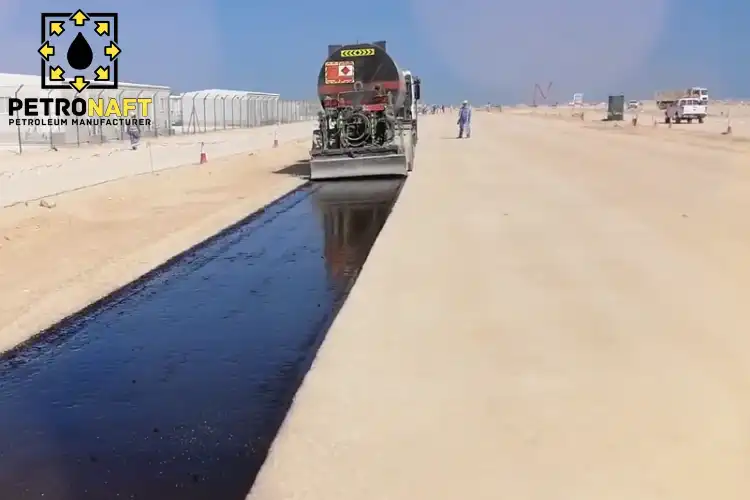
Cutback Bitumen for Prime Coat and Tack Coat performs best when the grade matches the surface, weather window, and construction stage. In practical roadwork, cutback bitumen is usually more suitable for prime coat on absorbent granular bases, while tack coat on existing asphalt often performs better with emulsion-based products or other modern bonding solutions.
- Prime coat and tack coat are not the same treatment
- Grade selection affects penetration, adhesion, and curing speed
- The right product depends on base texture, traffic timing, and local project requirements
- Choosing the wrong viscosity often causes surface failure, weak bonding, or wasted material
Highlights & Key Sections
Why This Topic Matters in Real Projects
Many buyers, contractors, and even non-specialist procurement teams treat prime coat and tack coat as if they need the same binder. That assumption creates avoidable mistakes.
A prime coat must enter the granular base, hold loose fines together, and prepare the surface for the next asphalt layer. A tack coat must create a thin, uniform bond between two already bound layers so they act as one pavement structure.
This difference is small on paper but expensive on site. When the wrong product is selected, the result can be poor adhesion, slippage, patching issues, rework, or delayed paving.
Cutback Bitumen for Prime Coat and Tack Coat: What It Really Means
Cutback Bitumen for Prime Coat and Tack Coat refers to solvent-thinned asphalt binders used to improve workability at lower temperatures. The solvent reduces viscosity so the material can be sprayed more easily and, in the case of prime coat, penetrate a granular base more effectively.
In actual field use, cutback bitumen is generally more useful for prime coat than for tack coat.
Why? Because prime coat needs penetration. Tack coat needs bonding. Those are different engineering jobs.
In simple terms
- Prime coat goes on an unbound granular base
- Tack coat goes between asphalt layers or between asphalt and concrete
- Cutback bitumen is often selected when penetration into the base is important
- Modern tack applications often use alternatives with cleaner handling and stronger layer bonding
Prime Coat vs Tack Coat
| Feature | Prime Coat | Tack Coat |
|---|---|---|
| Surface type | Unbound granular base | Existing asphalt, concrete, or milled surface |
| Main purpose | Penetrate, bind fines, reduce dust, prepare for asphalt overlay | Bond one pavement layer to another |
| Desired behavior | Absorption into the surface | Thin, uniform adhesive film |
| Typical material logic | Lower-viscosity cutback or suitable prime material | Emulsion or bonding-grade material |
| Failure risk if wrong | Poor penetration, weak surface, moisture issues | Delamination, slippage, premature cracking |
This table is often the fastest way to explain the decision to a customer. If the surface still behaves like aggregate, think prime. If it already behaves like pavement, think tack.
Where Cutback Bitumen Still Works Best
Cutback bitumen remains valuable in situations where the base is dry, absorbent, and in need of stabilization before paving.
Common use cases include:
- Rural roads with untreated aggregate base
- Temporary exposure of base before asphalt placement
- Projects where a penetrating prime layer is needed before the first hot mix lift
- Base surfaces with enough void structure to absorb the binder properly
In these situations, the goal is not simply to coat the top. The goal is to create a treated upper zone in the base surface that improves cohesion and helps the first asphalt lift bond more effectively.
Where Cutback Bitumen Is Less Ideal
For tack coat on dense asphalt or concrete, cutback products are often less attractive than modern alternatives. The reason is practical rather than theoretical.
Tack coat must create a consistent bond with minimal pickup, minimal mess, and predictable interface strength. On busy projects, especially in urban work, contractors usually prefer solutions that set faster and behave more cleanly under traffic and construction movement.
This is one of the major shifts in pavement practice today. Buyers increasingly ask not just for a product that works, but for one that fits stricter performance, handling, and compliance expectations.
Main Grades Used for Prime Coat
The most relevant cutback grades for prime applications are usually medium-curing and, in some cases, rapid-curing grades.
| Grade | Typical practical use | Main advantage |
|---|---|---|
| MC-30 | Tight or fine-textured base | Easier penetration on less open surfaces |
| MC-70 | General prime coat work | Balanced viscosity and penetration |
| MC-250 | Heavier prime applications | More asphalt residue with higher body |
| RC-70 | Faster-curing prime needs | Lower viscosity with quicker solvent loss |
| RC-250 | Prime work with schedule pressure | Faster curing in suitable conditions |
The best grade is not always the heaviest or the most expensive. The best grade is the one that matches the actual texture and absorptiveness of the base.
Practical selection logic
- Tight, fines-rich surface: lighter grade often works better
- Open, coarse base: medium or heavier grade may be acceptable
- Fast construction sequence: faster-curing option may be preferred
- Higher residue target: heavier grade may be selected if penetration remains acceptable
How to Choose the Right Grade
1. Start with the surface condition
Look at the base honestly. Is it open and coarse, or tight and dense? Is it dusty, dry, and absorbent? Or is it already partly sealed by fines and compaction?
This first observation often matters more than lab language in a product sheet.
2. Think about the job sequence
A project that will be paved quickly may tolerate a different curing profile than one where the primed base will remain exposed for some time. Construction timing affects grade selection more than many buyers expect.
3. Avoid overestimating viscosity
A common mistake is choosing a heavier grade to “get more asphalt.” That can backfire if the material stays near the surface instead of penetrating. On a tight base, deeper entry usually matters more than a thicker top film.
4. Match performance to approval conditions
In real procurement, technical suitability is only half the decision. The product also needs to fit local specification language, application equipment, and the contractor’s working method.
Typical Application Ranges
These ranges are practical starting points. Final application rates should always be adjusted to surface texture, absorbency, distributor calibration, and project requirements.
| Application | Common working range | Field note |
|---|---|---|
| Prime coat with cutback | 0.08–0.18 gal/yd² | Best for granular, absorbent bases |
| Light prime on tighter base | 0.06–0.10 gal/yd² | Helps reduce surface flooding |
| Heavier prime on open base | 0.12–0.18 gal/yd² | Useful when the base can absorb it |
| Tack on existing asphalt | Thin, uniform film | Too much tack is a common failure cause |
| Tack on milled surface | Slightly higher than smooth surface | Rough texture needs better coverage |
For prime coat, deeper and more even penetration usually matters more than just increasing the spray volume. For tack coat, uniformity matters more than thickness.
Mini Tutorial: How a Contractor Can Make the Right Choice
Here is a simple site-based process that works well in real jobs.
Step 1: Check the surface
Rub the surface by hand or boot. If it behaves like loose or lightly bound aggregate, evaluate prime coat. If it is already a bound pavement layer, evaluate tack coat.
Step 2: Identify the objective
Ask one clear question: do we need penetration or bonding?
- If the answer is penetration, you are likely in prime-coat territory
- If the answer is bonding between lifts, you are in tack-coat territory
Step 3: Pick the viscosity range
For tight surfaces, start lighter. For open surfaces, move to medium or heavier options if needed.
Step 4: Test and control application
A distributor that is not calibrated properly can ruin even a correct material choice. Uneven spray patterns, wrong temperature, and poor timing create more field problems than product quality alone.
Real Examples from Practical Roadwork
Example 1: Granular rural base before first asphalt lift
A road contractor finishes a crushed aggregate base and needs to protect and prepare it before surfacing. This is a classic prime-coat situation. A medium-curing grade such as MC-70 is often a sensible starting point because it offers workable penetration without being too thin for typical base conditions.
Example 2: Dense city overlay with night paving
A contractor is placing a new asphalt lift over an existing urban lane. The priority is fast bonding, low tracking, and clean operation. In this case, cutback bitumen is usually not the first choice for tack, because the real requirement is interface bond performance rather than base penetration.
Example 3: Tight base with too many fines
A buyer assumes a heavier grade will solve the problem, but the material remains near the surface. A lighter grade would likely perform better because the challenge is not adding more binder; it is getting the binder into the base.
These examples show a pattern: grade selection should follow surface behavior, not habit.
Current Trends Shaping Buying Decisions
Two trends are changing how this topic should be handled in content and in real sales conversations.
The first is the move toward lower-emission and cleaner-handling pavement materials. That has changed how many contractors and agencies evaluate cutback products, especially for tack coat applications.
The second is the growing focus on bond performance between asphalt layers. Today, many project teams care more about long-term interface strength, tracking behavior, and application precision than they did in older, more routine specifications.
For suppliers and content publishers, this means one thing: buyers are now looking for guidance, not just product names.
Common Mistakes to Avoid
- Using the same material logic for both prime coat and tack coat
- Selecting a grade by price alone
- Choosing a heavier grade when the base really needs better penetration
- Applying too much material and creating a surface film instead of treatment
- Ignoring equipment calibration and spray consistency
- Treating tack coat like a visible layer instead of a controlled bonding interface
Buyer-Focused Comparison Table
| Buyer need | Better direction |
|---|---|
| Need to stabilize an absorbent granular base | Prime coat with a suitable cutback grade |
| Need bond between old and new asphalt | Tack solution designed for bonding |
| Tight base surface needs penetration | Lighter-viscosity cutback grade |
| Open base with higher absorption | Medium or heavier grade may fit |
| Fast-moving urban overlay job | Cleaner, faster-setting tack option often makes more sense |
| Procurement wants one product for both jobs | Reassess; one product is rarely optimal for both |
Executive Summary Checklist
Before selecting Cutback Bitumen for Prime Coat and Tack Coat, use this checklist:
- Confirm whether the surface is granular base or bound pavement
- Decide whether the job needs penetration or bonding
- For prime coat, match the grade to the base texture and absorptiveness
- For tight surfaces, consider a lighter cutback grade first
- For tack coat, focus on thin and uniform bonding, not heavy application
- Check whether the product suits the contractor’s equipment and schedule
- Avoid one-size-fits-all decisions
- Think in terms of total pavement performance, not only material cost
Conclusion
The best approach to Cutback Bitumen for Prime Coat and Tack Coat is to stop treating prime and tack as interchangeable. Cutback bitumen can still be an excellent solution for prime coat on absorbent granular bases, but the right grade depends on penetration needs, base texture, and job timing. For tack applications, modern bonding requirements often demand a different material strategy. Buyers get the best results when they choose by surface condition and performance goal, not by habit.
FAQ
1) Is cutback bitumen good for both prime coat and tack coat?
It can be used in both contexts in some cases, but it is generally more suitable for prime coat than for tack coat. Prime coat needs penetration into a granular base, while tack coat mainly needs strong interlayer bonding.
2) Which cutback grade is commonly used for prime coat?
MC-70 is often considered a practical starting grade for many prime-coat situations. However, the best choice depends on how open, dry, and absorptive the base surface really is.
3) What happens if the grade is too heavy?
A grade that is too heavy may stay near the surface instead of penetrating into the base. That can reduce the benefit of the prime treatment and lead to inefficient material use.
4) Can one product be used for every road surface?
In theory, some products are marketed broadly, but in practice that is rarely the best choice. Granular base, old asphalt, milled surfaces, and concrete all behave differently and need different treatment logic.
5) What matters most during application?
Surface preparation, correct spray rate, temperature control, and distributor calibration matter most. Even a good material can perform poorly if it is applied unevenly or on a dirty surface.
Sources
- Federal Highway Administration — Technical guidance on tack coat performance, bonding behavior, and pavement layer interaction. FHWA Tack Coat Best Practices
- Whole Building Design Guide / UFGS — Public specification guidance on bituminous prime and tack coats, material selection, and application practices. UFGS 32 12 13 Bituminous Tack and Prime Coats
- ASTM International — Official standards framework for cutback asphalt classifications and selection practice. ASTM Asphalt Specifications Subcommittee Page
- U.S. DOT / ROSA P — Engineering guidance on the role, benefits, and decision-making logic for prime and tack coats. Guidelines for Using Prime and Tack Coats
- U.S. EPA — Technical emissions background relevant to asphalt paving materials and cutback use considerations. EPA AP-42 Asphalt Paving Operations