


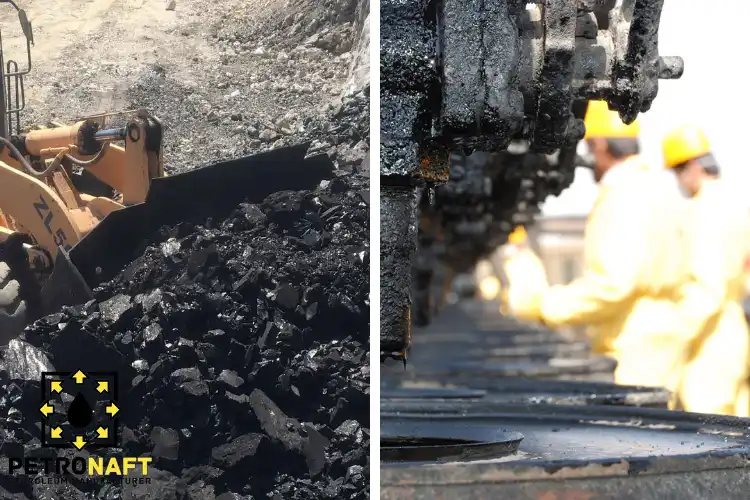
Bitumen vs. Gilsonite is mainly a question of function. Bitumen is usually the primary binder used in asphalt and waterproofing systems, while gilsonite is a harder natural asphaltite often used to increase stiffness, improve resistance to heat and wear, or serve specialty roles in drilling fluids, inks, and industrial coatings.
Highlights & Key Sections
Why this comparison matters
Many buyers, engineers, and general users treat these materials as direct substitutes. That is where costly mistakes start.
They are related hydrocarbon materials, but they do not behave the same way in production, processing, or end use. A better decision comes from matching the material to the job, not from choosing the one that sounds more advanced.
Quick takeaway
- Choose bitumen when you need the main binding material
- Choose gilsonite when you need a hardening or specialty-performance additive
- Use both together only when the formulation and test results support it
Bitumen vs. Gilsonite: What is the real difference?
Bitumen is a heavy petroleum-based binder used widely in road construction, waterproofing, insulation, and industrial applications. It is valued because it coats, binds, seals, and performs across a broad range of grades and formulations.
Gilsonite is a naturally occurring asphaltite. It is harder, more brittle, and more specialized than conventional bitumen. In many real-world formulations, gilsonite is not the base material. It is the performance booster.
That difference matters because a material that improves one property may weaken another. A harder system may resist rutting better, but it can also become less forgiving under cold or repeated stress if the formulation is not balanced well.
Quick comparison table
| Factor | Bitumen | Gilsonite |
|---|---|---|
| Basic identity | Petroleum-based binder | Natural asphaltite |
| Typical role | Main binder | Modifier or specialty additive |
| Texture and behavior | Softer, more workable, more adaptable by grade | Harder, stiffer, more brittle |
| Main value | Binding, coating, sealing | Hardness, heat resistance, specialty performance |
| Common industries | Roads, waterproofing, roofing, industrial binders | Asphalt modification, drilling fluids, inks, coatings, foundry |
| Best buying approach | Buy by grade and application need | Buy by compatibility, purity, and target performance |
| Main risk | Choosing the wrong grade for climate or load | Overusing it and making the system too stiff |
What bitumen does best
Bitumen works best when the job needs a continuous binder phase.
In paving, it holds aggregate together and helps the pavement resist traffic and weather. In waterproofing, it creates a flexible barrier against moisture. In industrial products, it brings adhesion, sealing power, and processability.
This makes bitumen the more universal material. It can be selected in different grades for different climates, traffic levels, and production methods.
Typical bitumen strengths
- Strong binding ability
- Good adhesion to mineral aggregates
- Better flexibility than hard natural asphaltites
- Wide commercial availability
- Easier processing in common asphalt systems
What gilsonite does best
Gilsonite works best when the system needs more than standard binder performance.
Because it is naturally hard and carbon-rich, it is often used to increase stiffness, raise softening behavior, and improve resistance to deformation in selected asphalt and industrial systems. It also has value in drilling fluids, printing inks, paints, and specialty coatings.
In simple terms, bitumen is often the foundation, while gilsonite is often the enhancer.
Typical gilsonite strengths
- Higher hardness
- Useful in heat-resistant formulations
- Helpful in selected asphalt-modification systems
- Valuable in drilling-fluid performance
- Useful in black inks, varnishes, and specialty coatings
Properties that affect buying decisions
Hardness and stiffness
Gilsonite is significantly harder than most paving-grade bitumen. That extra stiffness can be useful in high-temperature environments, heavy-load pavements, and industrial products that need a tougher film or surface.
Bitumen is softer and easier to tailor. That makes it the better starting point when flexibility and broad usability matter.
Flexibility
Bitumen usually offers more flexibility than gilsonite. This is especially important in systems that must tolerate thermal movement, repeated loading, or slight structural movement without becoming too brittle.
Gilsonite can reduce flexibility when used aggressively. That is why dosage and compatibility matter.
Processing behavior
Bitumen is easier to heat, pump, blend, and apply in mainstream construction and industrial systems. It is familiar to refineries, asphalt plants, waterproofing lines, and contractors.
Gilsonite usually requires more formulation control. Buyers should not assume that adding more gilsonite automatically creates a better product.
End-use fit
The best material is the one that solves the real performance problem.
- Need a main binder? Start with bitumen
- Need extra hardness or deformation resistance? Consider gilsonite
- Need a specialty drilling or coating additive? Gilsonite may be the better fit
Uses side by side
| Application | Bitumen | Gilsonite |
|---|---|---|
| Road paving binder | Excellent fit | Usually used as a modifier, not the main binder |
| Waterproofing membranes | Excellent fit | Limited, usually secondary |
| Roofing systems | Common | Sometimes used in specialty formulations |
| Asphalt performance modification | Base material | Performance additive |
| Drilling fluids | Not a standard choice | Widely used specialty additive |
| Printing inks and dark coatings | Limited role | Strong fit |
| Foundry and specialty industrial products | Limited role | Strong fit |
Real-world example 1: A road contractor in a hot region
A contractor sees rutting on a heavily trafficked road and asks whether gilsonite is better than bitumen.
The practical answer is no. Gilsonite is not simply “better.” The road still needs bitumen as the base binder. Gilsonite may be added in a controlled way if the goal is to improve stiffness and reduce permanent deformation.
The smart move is not to switch materials blindly. The smart move is to redesign the binder system around the climate, traffic, and aggregate.
Real-world example 2: A waterproofing buyer
A buyer sourcing material for waterproofing membranes often needs flexibility, adhesion, and reliable sealing performance.
In that case, bitumen is usually the natural first choice because it functions as the primary waterproofing binder. Gilsonite may help in a specialty blend, but it is rarely the material you start with when the product must remain workable and flexible.
Real-world example 3: An oilfield additive inquiry
A drilling-fluid supplier asks whether standard bitumen can replace gilsonite in a fluid-loss-control application.
Usually, the answer is no. Gilsonite has a more established fit in that niche because of how it behaves in drilling systems. This is a good reminder that material selection is not only about chemistry. It is about performance inside a very specific operating environment.
Mini tutorial: How to choose the right one
Use this fast decision framework before buying.
Step 1: Define the role
Ask this first:
Is the material the main binder, or is it an additive?
If it is the main binder, bitumen is usually the first candidate. If it is an additive for hardness or specialty performance, gilsonite may be worth testing.
Step 2: Identify the failure you want to prevent
Match the material to the problem.
- Soft pavement in hot weather
- Excessive rutting
- Poor coating hardness
- Fluid-loss issues in drilling
- Need for darker, stronger specialty films
This step removes guesswork and prevents overbuying the wrong product.
Step 3: Check the trade-off
A gain in one property can cause a loss in another.
For example:
- More stiffness can mean less flexibility
- More hardness can mean higher brittleness
- Better high-temperature behavior can create low-temperature risk
This is one of the most common mistakes in material selection.
Step 4: Request the right technical data
Before approving a supplier, ask for:
- Softening behavior
- Ash content
- Solubility profile
- Penetration or viscosity data where relevant
- Recommended dosage range
- Compatibility guidance for your formulation
Step 5: Test before scaling
Even a strong material can fail in the wrong formula.
Run a lab trial, a pilot batch, or a plant-scale test before full commercial use. This is especially important when gilsonite is introduced into an asphalt binder, coating system, or drilling-fluid package.
Current industry trends that make this topic more important
Two market trends make the bitumen–gilsonite comparison more relevant today.
First, pavement producers are using more recycled asphalt materials and more performance-oriented mix design. That means binder balance matters more than ever. A formulation must resist rutting, cracking, and aging at the same time.
Second, infrastructure owners are under pressure to deliver longer service life in hotter, heavier-duty conditions. That pushes buyers toward performance modifiers, but it also increases the risk of over-stiffening the system. In this environment, gilsonite works best as a deliberate engineering choice, not as a blanket upgrade.
Common mistakes to avoid
- Treating gilsonite as a direct replacement for bitumen
- Buying only on price without matching the application
- Ignoring brittleness risk in stiff formulations
- Skipping compatibility tests
- Assuming one successful use case applies to every industry
- Using generic supplier language instead of measurable performance data
Best choice by buyer type
| Buyer type | Better starting point | Why |
|---|---|---|
| Road contractor | Bitumen | It is the primary paving binder |
| Asphalt modifier buyer | Bitumen plus controlled gilsonite use | Performance must be balanced |
| Waterproofing producer | Bitumen | Flexibility and sealing are critical |
| Drilling-fluid supplier | Gilsonite | It has a stronger specialty role |
| Ink or black-coating producer | Gilsonite | It offers hardness and specialty resin value |
Executive Summary
Bitumen is usually the core binder. Gilsonite is usually the hard, specialty material added when a system needs more stiffness, heat resistance, or niche functionality.
That is the simplest way to make the right commercial decision.
Practical checklist
- Confirm whether you need a main binder or a modifier
- Start with bitumen for general binding and waterproofing roles
- Consider gilsonite for harder, more specialized performance
- Watch the stiffness-versus-flexibility trade-off
- Ask suppliers for real technical data, not only marketing claims
- Validate dosage and compatibility through testing
- Choose based on end-use conditions, not product popularity
In Bitumen vs. Gilsonite, the best answer is rarely which one is universally better. The better material is the one that matches the application, processing conditions, climate, and performance target with the least compromise.
FAQ
1) Is gilsonite the same as bitumen?
No. Gilsonite is a natural asphaltite, while bitumen is generally the petroleum-based binder used as the main binding phase in many construction and industrial systems.
2) Can gilsonite replace bitumen in asphalt?
Not as a simple one-to-one replacement. In most paving systems, bitumen remains the primary binder and gilsonite is used only when a controlled performance adjustment is needed.
3) Which one is better for hot climates?
For standard asphalt systems, bitumen is still the base material, but gilsonite can be useful as a modifier when the goal is to improve stiffness and rutting resistance in hot conditions.
4) Why is gilsonite used in drilling fluids?
Gilsonite has specialty behavior that makes it useful in selected drilling-fluid systems, especially where fluid-loss control or shale-related performance is important.
5) Which one should a buyer choose first?
Start with the application. If you need the main binder, choose bitumen first. If you need a hardness or specialty-performance additive, evaluate gilsonite with proper testing.
Sources
- Asphalt Institute Glossary — A trusted industry reference for asphalt terminology, including binder-related definitions used in paving and industrial applications. Asphalt Institute Glossary
- U.S. Geological Survey, Definition and World Resources of Natural Bitumens — A foundational geological and technical source for understanding natural bitumens and asphaltites such as gilsonite. USGS Bulletin 1944
- Encyclopaedia Britannica: Gilsonite — A concise reference explaining what gilsonite is and where it is commonly used in industry. Britannica: Gilsonite
- SLB Energy Glossary: Gilsonite — A practical oilfield source covering gilsonite’s role in drilling-fluid applications. SLB Energy Glossary
- Asphalt Pavement Alliance / NAPA Survey on Recycled Materials and Warm-Mix Asphalt Usage 2022 — A useful industry source for current asphalt-market trends such as rising recycled material use and performance-focused production. 2022 Industry Survey