


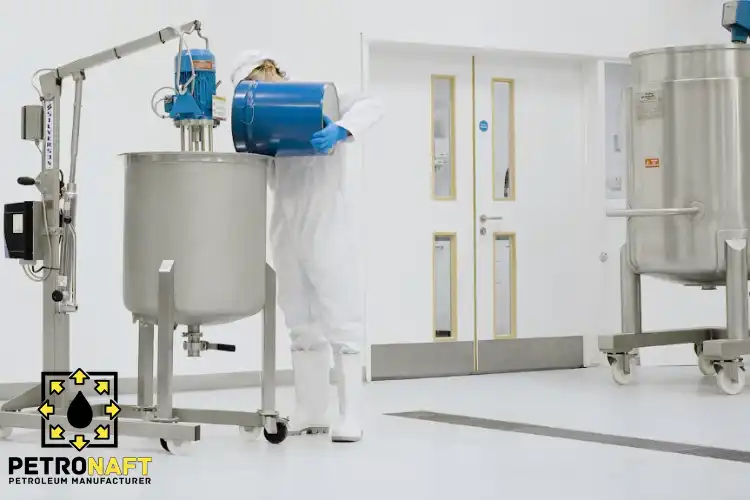
Paraffin wax is widely used in packaging, cosmetics, and manufacturing because it provides moisture resistance, smooth texture, lubrication, gloss, and controlled melt behavior. When the right grade is selected for the process and end use, it can improve product performance, processing efficiency, and formulation stability across a wide range of industrial applications.
Paraffin wax is not a one-purpose material. It can act as a barrier, texture modifier, processing aid, binder component, and surface enhancer. That versatility explains why it appears in coated papers, creams, hot-melt adhesives, molding systems, polishing compounds, and even thermal-energy applications.
| Sector | What paraffin wax does best | Typical value to the end user |
|---|---|---|
| Packaging | Builds water and grease resistance, improves sealability and surface finish | Longer shelf life, cleaner handling, better product protection |
| Cosmetics | Forms an occlusive film, improves glide, and stabilizes texture | Better skin feel, reduced moisture loss, richer consistency |
| Manufacturing | Adjusts flow, lubrication, release, and thermal behavior | Faster processing, cleaner surfaces, more consistent output |
Highlights & Key Sections
Industrial Applications of Paraffin Wax Across Packaging, Cosmetics, and Manufacturing
The strongest commercial advantage of paraffin wax is that one material can solve several formulation problems at once. It can block moisture, tune viscosity, improve slip, add gloss, and support smoother processing. For buyers and formulators, that often means simpler formulations and fewer additives.
Packaging: where paraffin wax delivers immediate value
In packaging, paraffin wax is mainly used to create a hydrophobic barrier. This makes it useful in coated paper, wraps, interleaves, corrugated materials, and specialty packaging systems that need resistance to moisture, oil, or both.
A practical example is wax-coated paper used for bakery items, confectionery, or takeaway food. The wax layer helps reduce fiber porosity, improves moisture resistance, and allows the package to maintain shape and cleanliness during short-term exposure to humidity, grease, or condensation.
Another important point is that performance depends not only on the wax itself but also on coating design. Coating thickness, structure, and wax type all affect water resistance, grease barrier, flexibility, and migration behavior. That is why successful packaging formulas rely on optimization rather than simply using more wax.
What paraffin wax commonly improves in packaging
- Moisture resistance
- Grease resistance
- Surface smoothness and gloss
- Heat-seal support in some multilayer systems
- Short-term product protection during storage and transport
Mini case: choosing wax for coated food paper
Suppose a converter needs a paper wrap that resists butter or sauce splash while still running efficiently on standard equipment. The best starting point is not necessarily the hardest wax. It is a suitable wax system with the right melt profile, balanced coating weight, and validation for barrier performance, handling, and compliance. This avoids the common mistake of solving one problem while creating another.
| Packaging use | Why paraffin wax is used | What buyers should verify |
|---|---|---|
| Food wrap and coated paper | Moisture and grease barrier | Food-contact suitability, migration, odor, coat weight |
| Corrugated and industrial liners | Water resistance and handling durability | Melt point, flexibility, application method |
| Wax blends for specialty papers | Surface performance and print/process balance | Compatibility with other coating components |
Current packaging trend
Packaging is moving toward PFAS-free, recyclable, and paper-based barrier systems. This does not remove paraffin wax from the market, but it does make selection more strategic. Today, the challenge is to deliver water and oil resistance while also supporting recyclability goals, repulpability targets, and food-safety expectations.
Cosmetics: texture, protection, and sensory performance
In cosmetics and personal care, paraffin wax is valued because it helps create a protective film over the skin and supports a smooth, rich feel. In practice, this means better glide during application, reduced moisture loss, and improved texture in creams, balms, sticks, and protective skincare products.
This is especially useful in products designed for dry, stressed, or weather-exposed skin. Paraffin wax is rarely used alone. It usually works alongside oils, humectants, emulsifiers, and other structure-builders to create the final texture and performance profile.
A simple example is a hand cream designed for cold weather. Without enough structure, the product may feel thin and disappear too quickly. With a properly balanced wax phase, the formula can feel richer, remain on the skin longer, and provide a more protective afterfeel. That often improves both user satisfaction and repeat purchase potential.
Where paraffin wax shows up in cosmetics
- Creams and ointments
- Lip care products
- Protective balms and sticks
- Barrier-support skincare
- Texture-building systems in semisolid formulations
| Cosmetic goal | How paraffin wax helps | Best purchasing focus |
|---|---|---|
| Rich cream texture | Builds body and structure | Color, odor, refinement level |
| Skin protection | Supports an occlusive film | Purity, stability, consistency |
| Glide and payoff | Improves spread and application feel | Crystal structure, compatibility |
Manufacturing: more than just a coating material
Manufacturing uses of paraffin wax are broader than many buyers expect. It is commonly used in lubricants, greases, adhesives, sealants, polishes, molding systems, and specialty compounds because it can change how a system flows, cools, releases, or finishes.
One clear example is hot-melt adhesives. In these systems, paraffin wax helps control viscosity, open time, set speed, and application behavior. That makes it an important performance-control component rather than a simple filler.
Another major use is in binder systems for powder and metal injection molding. In these applications, paraffin wax improves feedstock flowability, which helps with mold filling, dimensional consistency, and smoother debinding. When the wax content is selected properly, production becomes more stable and scrap risk can be reduced.
A newer innovation area is thermal-energy storage. Paraffin wax is increasingly used as a phase-change material because it can store and release heat during melting and solidification. This opens opportunities in temperature-management systems and energy-efficiency applications, which makes paraffin wax relevant not only in traditional industries but also in newer technical fields.
Common manufacturing roles
- Hot-melt adhesive modifier
- Lubrication and surface-finish aid
- Binder component in injection molding feedstocks
- Polish and protective coating ingredient
- Phase-change thermal storage medium
How to choose the right paraffin wax grade
The best buying decisions usually come from matching wax properties to process conditions, not from focusing on price alone.
Check these points first
- Required melt or congealing range
- Needed hardness or penetration profile
- Oil content tolerance
- Color and odor expectations
- Contact with food, skin, or sensitive substrates
- Compatibility with polymers, oils, resins, or emulsifiers
- Packaging, storage stability, and supply consistency
| Application | Grade priorities | Why it matters |
|---|---|---|
| Paper and board coatings | Stable melt profile, suitable barrier behavior, controlled migration | Impacts coating quality and compliance |
| Cosmetics | High purity, low odor, clean appearance, sensory fit | Affects user feel and brand perception |
| Hot-melt adhesives | Consistent viscosity behavior and crystallization | Controls line speed, bond behavior, and set time |
| Injection molding binders | Predictable melting and flow | Supports mold filling and debinding stability |
| PCM systems | Narrow melt range and thermal repeatability | Determines storage efficiency and cycle performance |
Simple buyer workflow
- Define the end use clearly.
Decide whether the wax is needed for barrier performance, texture, lubrication, release, thermal storage, or a mix of these functions. - Match the process temperature.
A wax that looks good on paper can still fail in production if its melt behavior does not suit the actual equipment. - Set compliance requirements early.
Food-contact, cosmetic, and industrial applications do not follow the same qualification path. - Run small-scale validation.
Test barrier, adhesion, migration, viscosity, stability, or sensory feel before scaling up. - Lock the commercial specification.
Include melt point, oil content, color, odor, packaging format, and acceptable variation in the purchase specification.
Common mistakes that reduce performance
- Choosing wax by melt point only
- Ignoring migration and compliance checks in packaging
- Assuming one wax grade works equally well in all sectors
- Overloading wax to force barrier improvement
- Skipping compatibility trials with emulsifiers, resins, or polymers
- Treating paraffin wax as interchangeable across all formulations
The most successful Industrial Applications of Paraffin Wax depend on accurate grade selection, not simply on using more material. When paraffin wax is matched to the substrate, formulation, and operating temperature, it delivers reliable value in packaging, cosmetics, and manufacturing. When it is mismatched, it can create process, stability, or compliance problems that reduce both technical and commercial performance.
Executive Summary Checklist
- Confirm whether the target is barrier, texture, lubrication, release, or thermal storage
- Choose the melt range based on the real process, not just the datasheet headline
- Verify odor, color, and purity for cosmetic-facing products
- Verify migration and food-contact suitability for packaging uses
- Test compatibility with starches, emulsifiers, resins, polymers, or oils
- Use pilot trials to optimize coat weight or dosage
- Write a purchase specification with measurable limits
- Reassess wax choice if recyclability, PFAS-free packaging, or energy-efficiency targets are part of the project
FAQs
1) Is paraffin wax suitable for food packaging?
Yes, in specific applications and under defined regulatory conditions. The correct wax grade, coating design, and compliance review are essential before it is used in direct or indirect food-contact packaging.
2) Why is paraffin wax used in cosmetics?
It helps reduce moisture loss from the skin surface and improves texture, glide, and richness in creams, balms, and similar products. It is especially useful in protective and semisolid formulations.
3) What makes paraffin wax useful in hot-melt adhesives?
Paraffin wax helps control viscosity, flow, crystallization, and setting behavior. This makes adhesive application more efficient and helps manufacturers manage performance on faster production lines.
4) Is paraffin wax still relevant as sustainable packaging grows?
Yes, but it must now meet higher expectations. Buyers increasingly look for barrier performance that also supports recyclability goals, cleaner chemistries, and better overall packaging compliance.
5) What is a smart first test plan before buying in bulk?
Start with tests that match the application. For packaging, focus on migration and barrier performance. For cosmetics, check stability and feel. For industrial uses, test viscosity, compatibility, and process behavior under real conditions.
Sources
- U.S. FDA Food Contact Substances Inventory — official reference for food-contact substance uses and application conditions.
- 21 CFR 178.3710 Petroleum Wax — U.S. regulatory text covering petroleum wax requirements for specific food-contact related uses.
- WHO JECFA Paraffin Wax — international reference describing paraffin wax as a refined hydrocarbon mixture used in approved food-related applications.
- Wax Coatings for Paper Packaging Applications — peer-reviewed research on how wax type and coating structure affect packaging barrier performance.
- ECHA Substance Information on Paraffin Waxes — European substance profile summarizing industrial product-use categories and technical context.