


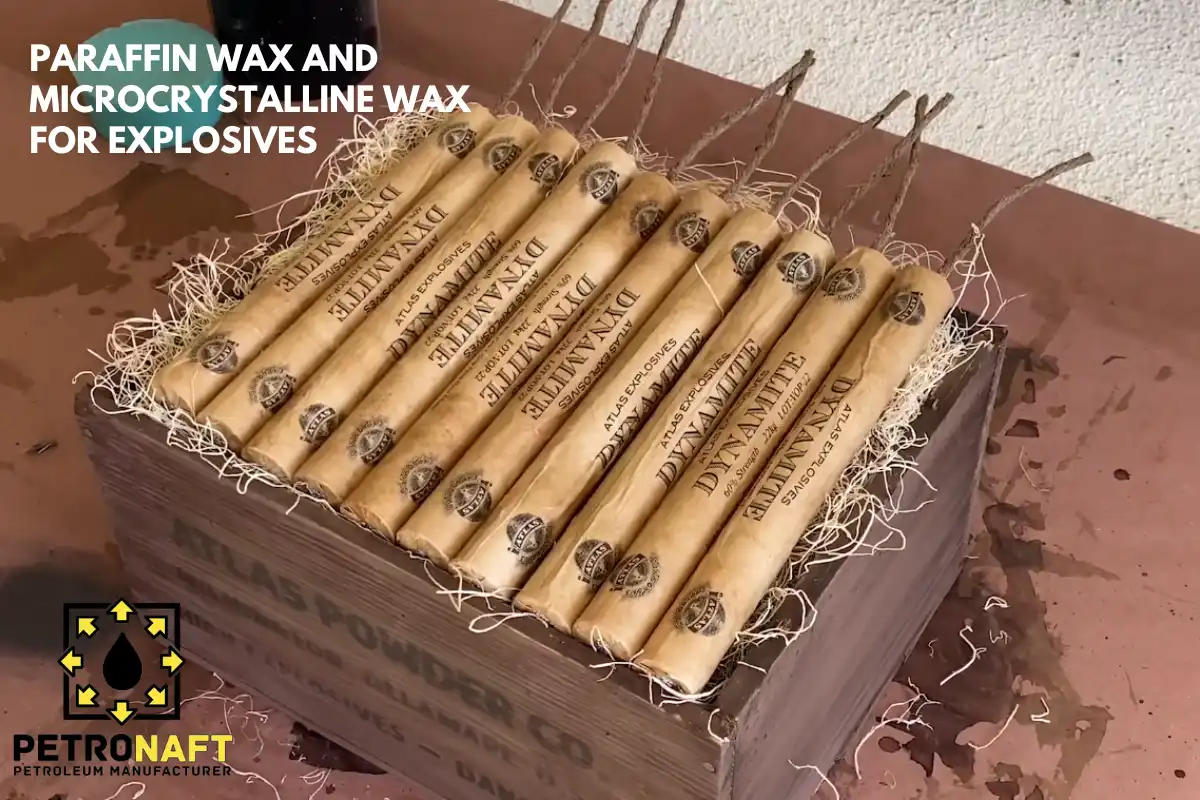
Paraffin Wax and Microcrystalline Wax for Explosives are selected for controlled physical performance, not for general wax substitution. Their value depends on melting behavior, hardness, adhesion, oil content, purity, compatibility, and compliance with regulated application requirements. Buyers should specify grades through test-backed properties, not product names alone.
Highlights & Key Sections
In explosives-related industries, wax selection is a technical and safety-sensitive purchasing decision. Paraffin wax and microcrystalline wax can support coating, binding, moisture resistance, processing consistency, and desensitization functions in approved systems. However, they must be evaluated only within authorized industrial, regulatory, and safety-controlled environments.
This article explains the practical differences between both waxes, the properties that matter most, and how procurement teams can define a responsible specification without relying on vague descriptions or unsafe assumptions.
What Role Do These Waxes Play in Explosives-Related Applications?
Paraffin and microcrystalline waxes are used as functional hydrocarbon materials in approved explosives-related systems where controlled physical behavior is required.
In this context, waxes are not energetic materials. Their role is usually related to how a finished or intermediate industrial material behaves during storage, handling, processing, or use under authorized conditions.
Common high-level functions may include:
- Coating or surface protection to improve moisture resistance or reduce unwanted interaction with the surrounding environment.
- Binding or structuring support where a wax phase helps influence consistency, cohesion, or physical stability.
- Phlegmatizing support in specific approved systems, where a compatible material reduces sensitivity during handling and transport.
- Barrier performance where hydrophobic wax properties help limit water exposure.
- Process consistency where controlled melting, congealing, and hardness improve repeatability.
These uses require qualified formulation control, hazard classification, and compliance review. Wax choice should never be treated as a simple commodity swap in explosives-related applications.
How Are Paraffin Wax and Microcrystalline Wax Different?
Paraffin wax is generally more crystalline, cleaner in structure, and more brittle. Microcrystalline wax is usually more flexible, adhesive, and oil-retentive.
The main distinction is structural. Paraffin wax contains more straight-chain hydrocarbons, while microcrystalline wax contains more branched and cyclic hydrocarbons. That difference affects hardness, melting behavior, flexibility, oil retention, adhesion, and compatibility.
| Selection Factor | Paraffin Wax | Microcrystalline Wax | Why It Matters |
|---|---|---|---|
| Crystal structure | Larger, more defined crystals | Smaller, less defined crystals | Affects brittleness, texture, and surface behavior |
| Hardness | Often harder and more brittle | Often tougher and more flexible | Influences handling and durability |
| Adhesion | Lower adhesive character | Higher adhesive character | Important for coating and binding behavior |
| Melting behavior | Usually sharper and more defined | Usually broader and more gradual | Affects thermal response and process control |
| Oil affinity | Generally lower | Generally higher | Important for compatibility with hydrocarbon phases |
| Barrier behavior | Good moisture resistance | Good moisture resistance with better flexibility | Useful where water resistance and integrity matter |
| Specification focus | Melting point, oil content, color, penetration | Drop melting point, penetration, viscosity, oil content | Helps buyers request the right tests |
Neither wax is automatically “better.” The better choice depends on the exact performance target, approved formulation requirements, regulatory constraints, and quality control plan.
Which Properties Matter Most When Selecting Wax?
The most important properties are melting behavior, oil content, hardness, viscosity, adhesion, purity, and batch consistency.
For industrial buyers, the best specification is one that translates performance needs into measurable acceptance criteria. Generic descriptions such as “high quality paraffin wax” or “industrial microcrystalline wax” are not enough for technical purchasing.
Melting, Drop Melting, and Congealing Behavior
Melting behavior determines how the wax responds to heat and cooling. In regulated industrial applications, this affects consistency, process repeatability, storage expectations, and final material performance.
Buyers should distinguish between:
- Melting point for standard petroleum wax behavior.
- Drop melting point for higher-viscosity waxes such as many microcrystalline grades.
- Congealing point for understanding when a wax develops resistance to flow during cooling.
A wax with the wrong thermal profile may soften too early, fail to distribute consistently, or create handling problems under expected storage or processing conditions.
Oil Content
Oil content affects hardness, flexibility, surface feel, compatibility, migration risk, and consistency. Lower oil content often supports cleaner, more rigid wax behavior, while higher oil content can increase softness or plasticity.
For explosives-related procurement, oil content should be treated as a controlled technical parameter. Buyers should request a certificate of analysis and confirm the test method used.
Needle Penetration and Hardness
Needle penetration is a practical indicator of wax consistency. A lower penetration value generally indicates a harder wax, while a higher value indicates a softer material.
Hardness matters because it can influence:
- handling strength
- surface durability
- resistance to deformation
- coating integrity
- blend behavior
- storage stability
For technical purchasing, hardness should be specified as a tested range rather than a subjective description.
Viscosity and Flow Behavior
Viscosity affects how a wax behaves in the molten state. This is especially important when wax must coat, disperse, or interact consistently with other approved materials.
Microcrystalline wax often has higher viscosity and stronger internal structure than paraffin wax. That can be helpful where adhesion and flexibility are required, but it may also require tighter process control.
Purity, Color, Odor, and Refining Level
Fully refined paraffin wax is commonly selected where low oil content, light color, and cleaner appearance are required. Microcrystalline wax may range from darker industrial grades to highly refined grades, depending on feedstock and refining process.
For sensitive technical use, buyers should define acceptable limits for:
- color
- odor
- oil content
- ash or inorganic impurities
- moisture
- mechanical contamination
- packaging cleanliness
- batch-to-batch variation
The goal is not only to buy wax, but to buy predictable wax.
When Is Paraffin Wax the Better Choice?
Paraffin wax is often preferred when a cleaner, more crystalline, more defined melting profile is required.
It can be suitable when the application benefits from a relatively sharp melting range, good water resistance, lower oil content, and a firm crystalline structure. In procurement terms, paraffin wax is often easier to define through familiar commercial grades and standard petroleum wax test values.
Paraffin wax may be the better starting point when the buyer needs:
- a harder and more brittle wax profile
- cleaner appearance and low odor
- lower oil content
- controlled melting behavior
- cost-effective industrial availability
- straightforward specification and testing
However, paraffin wax can be too brittle or insufficiently adhesive for some applications. If flexibility, tack, or stronger surface attachment is important, microcrystalline wax may be more suitable.
When Is Microcrystalline Wax the Better Choice?
Microcrystalline wax is often preferred when flexibility, adhesion, toughness, and oil retention are more important than sharp crystallinity.
Its finer crystal structure gives it a different mechanical profile from paraffin wax. It is commonly used where the wax phase must resist cracking, improve cohesion, or provide stronger binding and coating behavior.
Microcrystalline wax may be the better option when the application needs:
- better adhesion
- improved flexibility
- stronger cohesive behavior
- higher viscosity
- broader thermal response
- greater oil compatibility
- reduced brittleness
The trade-off is that microcrystalline wax can be more variable by grade. Buyers should pay close attention to drop melting point, penetration, viscosity, oil content, and supplier consistency.
Should Paraffin and Microcrystalline Wax Be Used Together?
In some approved industrial systems, both waxes may be used to balance hardness, flexibility, adhesion, and melting behavior.
A blend can sometimes combine the cleaner crystalline structure of paraffin wax with the toughness and adhesive character of microcrystalline wax. This does not mean buyers should create or adjust blends without authorization. In explosives-related applications, any blend must be controlled by qualified technical teams, validated testing, and applicable safety regulations.
From a procurement perspective, the safest approach is to ask:
- Is the buyer sourcing a single wax grade or a pre-approved wax blend?
- Are the acceptance criteria defined by tested properties?
- Has the material been validated for the intended regulated application?
- Is the supplier able to maintain consistent batches?
- Are storage, labeling, and transport requirements clear?
The answer should come from the approved specification, not from general online guidance.
How Should Buyers Specify Paraffin Wax and Microcrystalline Wax for Explosives?
Buyers should specify wax by application role, test method, acceptance range, compliance requirements, and documentation—not by keyword alone.
For Paraffin Wax and Microcrystalline Wax for Explosives, the purchasing process should be more controlled than ordinary wax buying. A clear technical specification reduces quality disputes, safety risks, and supply inconsistencies.
A Practical Selection Framework
- Define the approved application role
Clarify whether the wax is intended for coating, binding support, barrier performance, consistency control, or another authorized function. - Choose the wax family
Use paraffin wax when crystallinity, firmness, and clean melting behavior are priorities. Use microcrystalline wax when adhesion, flexibility, and toughness are priorities. - Set measurable property ranges
Include relevant requirements such as melting or drop melting point, congealing point, oil content, penetration, viscosity, color, odor, and form. - Require documentation
Ask for a technical data sheet, safety data sheet, certificate of analysis, batch number, production date, and applicable compliance declarations. - Request representative samples
Test samples under the buyer’s approved quality system before commercial shipment. - Confirm packaging and logistics
Specify slab, granule, pellet, or bag form as needed. Confirm packaging cleanliness, palletization, labeling, and storage conditions. - Review supplier consistency
Evaluate whether the supplier can maintain the same grade, refinery source, test method, and quality profile over repeat orders.
What Are Common Specification Mistakes?
The most common mistake is buying by product name instead of performance specification.
In technical wax procurement, two products with the same general label can behave differently. This is especially true for microcrystalline wax, where refining level, viscosity, penetration, and oil affinity can vary significantly.
Avoid these mistakes:
- Using “paraffin wax” or “microcrystalline wax” without test ranges.
- Ignoring oil content and penetration values.
- Assuming all melting point methods produce the same result.
- Treating a supplier data sheet as a substitute for batch-specific analysis.
- Replacing one wax grade with another without technical approval.
- Choosing only by price when consistency and documentation matter.
- Overlooking storage temperature, packaging, and contamination control.
- Using consumer-grade wax terminology for industrial procurement.
A good wax specification should be narrow enough to protect performance but practical enough for reliable sourcing.
What Safety and Compliance Issues Should Buyers Consider?
Explosives-related materials are regulated, safety-sensitive, and application-specific. Wax procurement must stay within authorized industrial and legal controls.
Buyers should not rely on general wax data alone. They should verify the intended use with qualified safety, regulatory, and technical personnel. Requirements may differ by country, industry, transport classification, storage rules, and end-use approval.
Key considerations include:
- applicable dangerous goods regulations
- site licensing and authorized use
- transport and storage classification
- supplier safety data sheets
- compatibility with approved materials
- contamination prevention
- heat and ignition-source control
- dust and fume precautions during handling
- batch traceability
- change-control procedures
Wax may appear low-risk as a general industrial material, but its use in explosives-related systems places it inside a much stricter safety context.
Buyer’s Checklist for Technical Wax Procurement
Use this checklist before approving a paraffin or microcrystalline wax grade for explosives-related industrial use.
- The application role is clearly defined and authorized.
- The wax family is selected based on performance need, not habit.
- The technical data sheet includes relevant tested properties.
- The certificate of analysis is required for each batch.
- Test methods are named and consistent.
- Melting or drop melting behavior is appropriate for the application.
- Oil content is controlled.
- Penetration or hardness is specified.
- Viscosity is reviewed where molten behavior matters.
- Color, odor, and impurity expectations are defined.
- Packaging format supports safe and clean handling.
- Supplier change-control expectations are documented.
- Regulatory and safety teams have reviewed the intended use.
- No unapproved substitution is allowed.
Conclusion
Paraffin wax and microcrystalline wax serve different technical purposes in approved explosives-related applications. Paraffin wax is usually chosen for cleaner crystallinity, firmness, and defined melting behavior, while microcrystalline wax is selected for flexibility, adhesion, toughness, and oil affinity.
The best sourcing decision depends on measurable properties, validated compatibility, batch consistency, and regulatory control. For Paraffin Wax and Microcrystalline Wax for Explosives, buyers should prioritize documented specifications, qualified suppliers, and safety-reviewed application requirements over generic product labels.
FAQs
1. Is paraffin wax the same as microcrystalline wax?
No. Both are petroleum-derived hydrocarbon waxes, but they differ in structure and performance. Paraffin wax is generally more crystalline and brittle, while microcrystalline wax is usually more flexible, adhesive, and oil-retentive.
2. Which wax is better for explosives-related applications?
There is no universal better option. Paraffin wax may suit applications needing firmness and defined melting behavior, while microcrystalline wax may suit applications needing flexibility and adhesion. The approved specification should decide.
3. What documents should buyers request from suppliers?
Buyers should request a technical data sheet, safety data sheet, certificate of analysis, batch number, test methods, packaging details, and any required compliance documents. For regulated use, supplier consistency and traceability are especially important.
4. Can paraffin wax and microcrystalline wax be blended?
They can be blended in some approved industrial systems, but blend design must be handled by qualified technical teams under controlled safety and regulatory procedures. Buyers should not change wax ratios or grades without formal approval.
5. What is the most important property to check first?
Start with the property that controls the application’s main performance need. For many buyers, this means melting or drop melting behavior, oil content, and penetration. For coating or binding behavior, adhesion and viscosity may also be critical.
Sources
- UNECE Manual of Tests and Criteria — Relevant for dangerous goods classification context and the technical concept of phlegmatization in regulated explosives-related materials. (unece.org)
- ASTM D127: Standard Test Method for Drop Melting Point of Petroleum Wax — Relevant because drop melting point is commonly used for petrolatums and microcrystalline waxes. (ASTM International | ASTM)
- ASTM D721: Standard Test Method for Oil Content of Petroleum Waxes — Relevant for defining and controlling oil content in petroleum wax specifications. (ASTM International | ASTM)
- ASTM D1321: Standard Test Method for Needle Penetration of Petroleum Waxes — Relevant because needle penetration is a key measure of wax hardness and consistency. (ASTM International | ASTM)
- PubChem, National Institutes of Health: Hydrocarbon Waxes and Microcrystalline Wax Records — Relevant for general chemical and physical background on petroleum-derived wax materials. (pubchem.ncbi.nlm.nih.gov)