


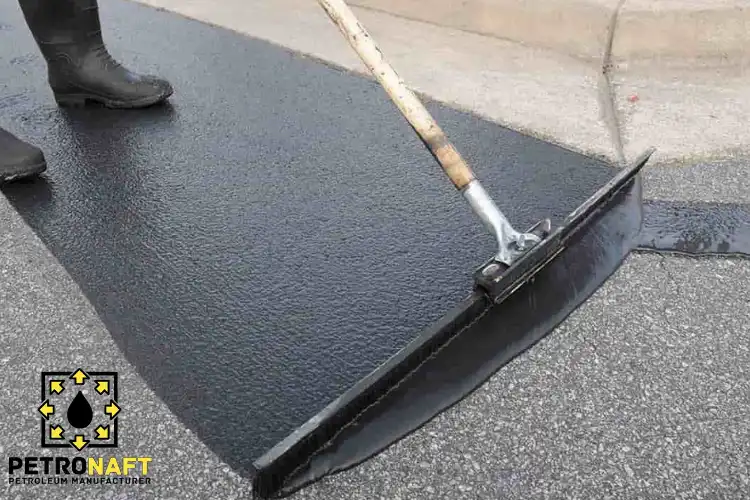
A Gilsonite Sealer is a gilsonite-modified asphalt coating that restores a deep-black finish and shields asphalt from water, UV, traffic abrasion, and light fuel/oil drips. When you clean thoroughly, repair cracks, and apply thin, even coats, it can slow oxidation and raveling and help extend maintenance intervals.
Highlights & Key Sections
Why this matters (and what you’ll get from this guide)
Asphalt doesn’t “suddenly fail”—it slowly ages. Oxygen, sun, water, and repeated tire scrubbing harden the binder, loosen aggregate, and turn a smooth surface into a dusty, gray, crack-prone one.
In this article, you’ll learn:
- What gilsonite does inside a sealer (and what it can’t do)
- Where it performs best for driveways, parking lots, and industrial yards
- A practical, step-by-step application mini tutorial
- Buying/spec questions that help you avoid “looks good for 30 days” sealcoats
- Troubleshooting when sealers peel, track, or wear too fast
What Is a Gilsonite Sealer?
A Gilsonite Sealer is typically an asphalt-based sealcoat enhanced with gilsonite (a naturally occurring solid hydrocarbon often used to harden and improve asphalt binders). Think of gilsonite as a performance “booster” that can improve film toughness and wear resistance when the formula and installation are done right.
What it usually is not:
- A structural repair product (it won’t fix base failure, pumping, or deep alligator cracking)
- A substitute for crack sealing and patching
- A miracle “one thick coat” solution (thick coats tend to fail faster)
Common product formats (what you’ll see in the market)
| Format | Best for | Advantages | Watch-outs |
|---|---|---|---|
| Water-based asphalt emulsion with gilsonite | Most driveways + parking lots | Lower odor, easier cleanup, good day-to-day durability | Needs dry weather + proper cure time |
| Gilsonite-modified “high-solids” sealcoat | Higher traffic areas | Thicker protective film potential; better abrasion resistance | More sensitive to mixing, coverage rate, and surface prep |
| Contractor blends (emulsion + additives + sand) | Parking lots, retail, ramps | Tailored skid resistance and wear | Wrong sand or over-sanding can reduce adhesion |
Practical takeaway: Performance is less about the label and more about surface preparation, correct dilution/additives, and thin-coat discipline.
How Gilsonite Helps Asphalt Last Longer
A good sealer does two jobs: it slows aging and reduces surface damage. Gilsonite can help by improving the cured film’s hardness and resistance to scuffing—especially where tires twist (turning lanes, entrances, tight parking rows).
Where you’ll notice the biggest benefits
- UV and oxidation defense: Helps reduce the “gray, chalky” look that signals binder aging.
- Wear zones: Better resistance where tires scrub (think: drive-thrus, loading bay turns).
- Water control: Sealing micro-voids helps limit water intrusion that accelerates cracking.
- Cosmetics that matter: A darker, more uniform finish improves perceived property condition.
What it won’t fix
- Cracks wider than a hairline without crack filling
- Potholes or raveled areas missing aggregate
- Drainage problems (standing water will shorten any sealer’s life)
- Soft asphalt from fuel saturation (needs cleaning + spot prep)
Gilsonite vs Other Sealers (Quick Comparison)
If you’re choosing between common options, use this as a decision shortcut.
| Sealer type | Typical use | Strengths | Weak points |
|---|---|---|---|
| Gilsonite-modified asphalt emulsion | Driveways, parking, light–medium traffic | Strong wear potential, good aesthetics, balanced protection | Prep-sensitive; can fail if applied thick or on dirty/oily surfaces |
| Basic asphalt emulsion sealer | Light duty surfaces | Cost-friendly, easy to apply | Faster wear in high-scrub zones |
| Acrylic / polymer decorative coatings | Walkways, specialty looks | Color options, cleaner appearance | Not always ideal for heavy tire scrub; substrate must be compatible |
| Coal-tar based sealers (where permitted) | Some commercial lots | Strong chemical resistance | Increasing restrictions in many regions; careful compliance needed |
Rule of thumb: If you want durable blacktop protection without stepping into heavily regulated options, gilsonite-enhanced asphalt systems are often a strong middle ground—when specified and installed correctly.
Where It Works Best (and When to Choose a Different Approach)
Best-fit applications
- Residential driveways with moderate use
- Apartment/retail parking lots seeking improved wear in turning areas
- Industrial yards with frequent light-to-medium vehicle movement (not heavy point loads)
- Asphalt surfaces exposed to intense sun or seasonal wet-dry cycling
Situations where you should rethink sealing first
- New asphalt: Fresh pavement needs time to cure and release oils; sealing too early can trap volatiles and reduce bonding.
- Failing base/subbase: If the surface flexes, cracks reflect through quickly.
- Persistent ponding: Fix grading or drainage; sealcoat is not a waterproof “pool liner.”
- Heavy trucking at slow turns: Consider higher-duty surface treatments, reinforced patching, or specialized systems.
Quick decision filter
- If your surface has mostly hairline cracking and is structurally sound → sealing is usually worth it.
- If your surface has widespread alligator cracking → patch/rehab first, then seal.
Mini Tutorial: How to Apply It for Long-Lasting Results
A “great product” can fail in one season with sloppy prep. These steps are what professionals repeat—because they work.
Step 1: Inspect like a contractor (10 minutes that saves money)
Walk the pavement and mark:
- Cracks (hairline vs wider openings)
- Oil spots (dark, slick, or soft areas)
- Raveling (loose aggregate)
- Low spots holding water
Mini case snapshot: A retail lot that looked “fine” kept peeling near entrances. The real issue wasn’t the sealer—it was invisible tire grime and a few oily drip zones at the front row. After deep cleaning + spot priming, the next application bonded and wore evenly.
Step 2: Clean until the rinse water runs clear
For best adhesion:
- Sweep debris and remove weeds from edges
- Degrease oil spots; scrub aggressively
- Pressure wash if needed (then allow full drying)
- Remove loose aggregate from raveled areas
Pro tip: The pavement should feel slightly textured, not dusty or slick. If you can rub black residue onto your hand easily, it’s not clean enough.
Step 3: Repair before you seal
Do these first:
- Crack filling: Use a compatible crack filler for wider cracks; feather edges.
- Patching: Repair potholes and severely raveled sections.
- Spot priming: Treat oil-stained zones so the sealer can bond.
Step 4: Mix and apply in thin, controlled coats
Most failures come from thick coats and uneven coverage.
Use this approach:
- Mix thoroughly (settling is normal; separation is not)
- Apply two thin coats instead of one heavy coat
- Maintain a consistent edge; avoid puddling
- Add traction aggregate only if needed (ramps, slopes, frequent foot traffic)
Tools that match the job
| Area | Best tools | Why it works |
|---|---|---|
| Driveways | Squeegee + wide brush for edges | Better control; pushes sealer into texture |
| Parking lots | Squeegee for first coat, spray for second | Uniform finish and efficient coverage |
| Tight corners/curbs | Brush detail work | Prevents thin “missed” strips that fail early |
Step 5: Cure time is not optional
Typical success conditions:
- Dry forecast (no rain during cure)
- Warm-enough temperatures for the product to set properly
- Keep traffic off until fully cured (especially tire turning)
Simple rule: If it still feels soft or tacky, it’s not ready for vehicles—turning tires will tear it.
Buying Guidance: What to Ask Before You Choose a Sealer
If you’re sourcing for a project, ask these questions. Good suppliers answer clearly.
Specification questions that separate “good” from “cheap”
- What is the base system (water-based emulsion, high-solids blend, etc.)?
- What are the recommended coverage rates and number of coats?
- What additives are recommended (sand, polymer, fibers), and at what range?
- What surface prep is required for oil spots and oxidized pavements?
- What quality documents are available (batch consistency, safety, handling guidance)?
A practical selection matrix
| Your priority | Choose a formula that emphasizes | Why |
|---|---|---|
| Maximum wear resistance | Tough film + balanced solids + controlled sand addition | Better performance in tire-scrub areas |
| Fast reopening | Faster curing profile + disciplined thin coats | Downtime is often the real cost |
| Best appearance | Even spray finish coat + good mixing control | Uniform color, fewer streaks |
| DIY friendliness | Water-based, easy mixing, clear instructions | Reduces application errors |
Cost, Coverage, and ROI: The Smart Way to Think About Price
Sealer pricing isn’t just “per bucket.” Real cost depends on:
- Surface roughness (rough surfaces “drink” material)
- Prep intensity (oil spots and crack repair add labor)
- Number of coats (two thin coats usually beat one thick coat)
- Downtime (closed stalls cost money)
A quick planning formula (simple and effective)
- Measure total area
- Plan for two thin coats on traffic zones
- Add a waste factor for texture, edges, and overlaps
- Budget labor for cleaning and crack work (often the biggest performance driver)
Cost levers table
| Lever | Low-cost move | High-value move | Impact |
|---|---|---|---|
| Surface prep | Quick sweep only | Deep clean + oil spot treatment | Massive effect on adhesion |
| Coats | One heavy coat | Two thin coats | Improves cure + durability |
| Additives | Random sand | Correct gradation traction additive | Prevents slickness without weakening film |
| Scheduling | Same-day traffic | Controlled cure window | Prevents tracking and tearing |
Troubleshooting: Why Sealers Fail (and How to Fix It)
| Symptom | Likely cause | Fast fix | Prevention next time |
|---|---|---|---|
| Peeling or flaking sheets | Dirt, dust, or oil contamination | Remove loose film; re-clean; recoat | Deep cleaning + oil spot priming |
| Streaks and color variation | Poor mixing or uneven application | Recoat thin and uniform | Mix longer; maintain wet edge |
| Tracking (black marks on shoes/tires) | Not cured; coat applied too thick | Keep traffic off; allow cure | Thin coats; respect weather window |
| Rapid wear in turns | High scrub + insufficient film build | Add a second coat in wear zones | Reinforce entrances/turn lanes |
| Slippery when wet | Too smooth; wrong additives | Apply a traction topcoat | Use appropriate traction aggregate |
Trends Shaping Pavement Sealers Right Now
Two big forces are changing what buyers request and what contractors specify:
- Regulatory pressure and indoor-air expectations: Demand is shifting toward lower-odor, water-based systems and clear handling documentation, especially for public sites and commercial properties.
- Climate stress + heavier mixed traffic: More freeze-thaw swings, heat waves, and delivery traffic push owners toward tougher blends, better prep standards, and targeted reinforcement in high-scrub zones instead of “one formula everywhere.”
Practical takeaway: Expect more projects to specify performance by traffic zone (entrances, turns, loading areas) rather than applying the exact same approach across the entire site.
Conclusion: When a Gilsonite Sealer Is the Right Call
If your pavement is structurally sound and you care about both appearance and wear performance, a Gilsonite Sealer can be a strong, durable asphalt protection option. The biggest results come from disciplined prep, crack repair, thin-coat application, and controlled curing—not from trying to “make it thicker” or skipping cleaning to save a day.
Executive Summary & Practical Checklist
Use this checklist before you buy or apply:
- Confirm the pavement is structurally sound (no widespread alligator cracking)
- Fix drainage/ponding areas before sealing
- Remove oil contamination (degrease + scrub; spot-prime if needed)
- Fill cracks and patch damaged sections first
- Choose the right system for traffic zones (reinforce entrances/turns)
- Mix thoroughly; follow recommended dilution/additives
- Apply two thin, even coats (avoid puddles and thick edges)
- Add traction where needed (ramps, slopes, frequent foot traffic)
- Protect cure time—no early traffic, especially turning tires
- Plan re-seal timing based on wear zones, not just the calendar
FAQ
1) How long does a gilsonite-enhanced sealer typically last?
On a well-prepped, sound surface, performance often lasts longer in appearance and wear than basic sealcoats—especially outside turning lanes. Real life depends on traffic, UV exposure, and whether you applied thin coats and allowed full curing.
2) Can I apply sealer over small cracks without filling them?
Hairline cracks may be bridged cosmetically, but wider cracks move and will reflect through. Filling cracks first improves durability and reduces water entry, which is one of the fastest paths to crack growth.
3) Is it safe to use on driveways with occasional fuel drips?
Light drips are usually manageable if you clean promptly and treat stained spots before sealing. Repeated fuel saturation can soften asphalt; in those areas, deep cleaning and targeted repair matter more than any topcoat.
4) What’s the biggest mistake DIY users make?
Applying one thick coat to “make it stronger.” Thick coats trap moisture, cure unevenly, and tear under tire turning. Two thin coats with good prep almost always win.
5) Can it be applied in cold weather?
Most sealcoats need conditions warm enough to dry and cure properly, plus a rain-free window. If temperatures are borderline, you risk tracking, slow cure, and premature wear—so timing the job is part of performance.
Sources
Federal Highway Administration Pavement Preservation — Practical guidance on preventive maintenance approaches that extend pavement service life. FHWA Pavement Preservation
Asphalt Institute — Technical education and references on asphalt materials, handling, and pavement performance fundamentals. Asphalt Institute
National Asphalt Pavement Association — Industry best practices and resources for asphalt pavements, maintenance, and performance considerations. NAPA
ASTM International — Standards framework commonly used for testing and specifying asphalt-related materials and coatings. ASTM International