


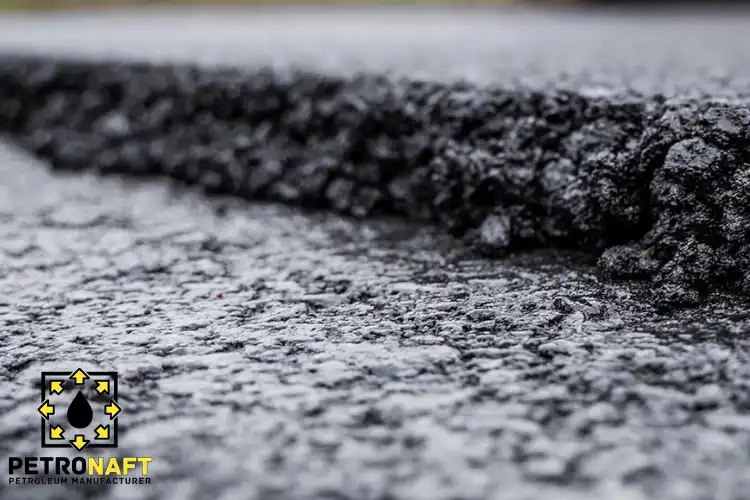
Asphalt Made Of a blend of crushed stone, sand, and mineral filler held together by a petroleum-based (or sometimes modified) binder called asphalt cement. In a finished pavement, aggregates make up most of the mass, while the binder glues particles together and gives flexibility, durability, and water resistance.
Asphalt looks simple from the outside, but its performance is engineered. A driveway that resists cracking, a highway that resists rutting, and a parking lot that doesn’t ravel all come down to the same question: what’s in the mix, and how well it’s designed and compacted.
In this guide, you’ll learn:
- The core ingredients and what each one does
- What “bitumen/asphalt binder” really is (and why grades matter)
- How asphalt mixes are designed in practice (with mini tutorials)
- Mix types you’ll see in real quotes—and how to choose
- What recycled content and additives mean for durability and value
Highlights & Key Sections
Asphalt Made Of: Core Ingredients and Their Roles
Think of asphalt pavement as a stone skeleton held together by a sticky, flexible glue. Get the skeleton right and the glue right, and you get strength + longevity.
The four building blocks (in plain language)
- Aggregates (stone + sand): provide structure and load-carrying strength
- Asphalt binder (bitumen): coats and bonds aggregates, adds flexibility and waterproofing
- Mineral filler: improves stiffness and stability, helps the binder “grab” the aggregate
- Air voids: small, controlled gaps that influence durability and moisture resistance
Typical composition at a glance
| Component | Typical share (by weight) | What it mainly controls | If it’s off, you often see… |
|---|---|---|---|
| Coarse aggregate (crushed stone) | ~45–65% | Strength, rut resistance, texture | Rutting (too rounded), segregation (poor gradation) |
| Fine aggregate (sand) | ~20–40% | Workability, compactability, smoothness | Shoving/rutting (too much), harsh mix (too little) |
| Mineral filler (dust, fines) | ~2–8% | Stiffness, binder film support | Brittleness (too much), bleeding (too little) |
| Asphalt binder (bitumen) | ~4–7% | Flexibility, durability, water resistance | Cracking/raveling (too low), bleeding/flushing (too high) |
| Air voids (after compaction) | ~3–5% (target range varies) | Longevity, moisture resistance | Raveling/oxidation (too high), bleeding (too low) |
Real-world note: Two mixes can have the “same ingredients” yet behave very differently because gradation, binder grade, additives, and compaction quality change everything.
Aggregates: The “skeleton” that carries the load
Aggregates are most of the mix, so they dominate performance.
What matters most when you’re buying or specifying
- Shape & angularity: Crushed, angular stone locks together better than rounded stone, improving rut resistance.
- Gradation: The particle-size distribution controls density, permeability, and workability.
- Cleanliness & durability: Clay contamination and weak rock can cause stripping (loss of bond) and premature raveling.
Mini tutorial: How to “read” aggregate gradation like a pro (fast)
- Ask for the nominal maximum aggregate size (NMAS). Smaller NMAS usually gives smoother surfaces; larger NMAS can handle heavier loads.
- Match NMAS to lift thickness. If the lift is too thin for the stone size, compaction suffers and permeability rises.
- Check whether the mix is “dense-graded” or “gap-graded.” Dense-graded is common for general paving; gap-graded can boost rut resistance but needs tighter control.
Example: A residential driveway often benefits from a smaller NMAS for smoothness and easier compaction, while industrial yards may use a coarser, more stone-on-stone structure for rut resistance.
Asphalt Binder 101: What “bitumen” really is
The binder is the dark, sticky part people think of as “asphalt.” Technically:
- Asphalt binder (bitumen) is the black, viscous hydrocarbon binder.
- Asphalt mix (asphalt concrete) is binder + aggregates + filler + air voids.
Why binder “grade” matters (and why cheap can get expensive)
Binder is selected for climate and traffic:
- Hotter climates and heavy traffic need binders that resist softening and rutting.
- Colder climates need binders that resist thermal cracking.
- Stop-and-go areas (intersections, bus lanes) punish the binder the most.
Common binder upgrades you’ll see
- Polymer-modified binder (PMB): boosts elasticity and rut/crack resistance (often worth it for heavy-duty zones).
- Anti-strip agents / hydrated lime: improves moisture resistance and reduces stripping risk.
- Rejuvenators: help restore flexibility when recycled binder is present (useful with higher RAP).
Field reality: Many early failures blamed on “bad asphalt” are really binder selection + compaction + drainage issues working together.
Additives and modifiers: Small percentages, big impact
Additives are typically used in small amounts, but they can change performance dramatically.
| Additive type | Why it’s used | Where it pays off most |
|---|---|---|
| Anti-strip / lime | Improves moisture resistance | Wet climates, poor aggregate chemistry, high rainfall |
| Polymers (PMB) | Better rut + crack resistance | High traffic, hot climates, heavy loads |
| Warm-mix technologies | Lower production temp, better workability | Long hauls, cool weather paving, nighttime work |
| Fibers (cellulose/mineral) | Stabilizes binder in certain mixes | Stone-rich mixes, rut-resistant surfacing |
| Rejuvenators | Helps balance aged binder | Higher RAP content mixes |
How asphalt mix is designed: A practical walkthrough
Asphalt mix design isn’t guesswork—it’s controlled engineering to balance:
- Strength vs. flexibility
- Workability vs. stability
- Cost vs. life-cycle durability
Step-by-step: What a good mix design process looks like
- Define the job conditions
- Traffic level (cars vs. trucks vs. industrial)
- Climate (hot summers, freeze-thaw, coastal moisture)
- Layer role (surface vs. base vs. leveling)
- Select aggregates
- Choose durable stone and a gradation that compacts well
- Pick binder grade
- Match expected pavement temperatures and loading severity
- Set target volumetrics
- Binder content, voids in mineral aggregate, air voids targets
- Verify performance
- Rut resistance and cracking resistance checks (methods vary by spec)
- Lock the Job Mix Formula (JMF)
- This becomes the reference for production QC/QA
Mini tutorial: Choosing a mix as a buyer (driveway to heavy-duty)
Use this simple decision path:
- Residential driveway
- Prioritize: smooth finish, crack resistance, water control
- Ask for: smaller NMAS surface mix, good compaction plan, proper base and drainage
- Commercial parking
- Prioritize: durability, oil/fuel resistance considerations, rut resistance at entrances
- Ask for: surface mix designed for turning traffic; consider modified binder at high-stress zones
- Industrial yard / logistics
- Prioritize: rut resistance and shear strength
- Ask for: stone-rich, rut-resistant options (often with modified binder) and strict density targets
Quick reality check: Even the best mix fails if the base is weak or drainage is poor. Asphalt is tough, but it’s not magic.
Mix types you’ll see in quotes (and what they’re made of)
Different mixes use the same core ingredients but change gradation, binder type, additives, and air void structure.
| Mix type | What’s different about composition | Typical use | Buyer “watch-outs” |
|---|---|---|---|
| Dense-graded hot-mix asphalt (HMA) | Standard gradation + conventional temps | Most roads, lots, driveways | Quality hinges on gradation + compaction |
| Warm-mix asphalt (WMA) | Additives/process reduce temp; same ingredients | Same uses as HMA, more flexible logistics | Great for longer hauls/cool weather; still needs density |
| Stone matrix asphalt (SMA) | High stone content + stabilizers; often modified binder | Highways, heavy traffic, rut-prone lanes | Higher cost, high performance when done right |
| Open-graded friction course (OGFC) | More interconnected voids for drainage/noise | Highway surfaces | Needs proper maintenance; not ideal for slow traffic areas |
| Porous asphalt | Designed void structure for stormwater | Parking lots, low-speed areas | Needs clean stone base + maintenance to prevent clogging |
| Cold mix (emulsion-based) | Emulsion binder; lower energy | Patching, low-traffic roads | Great for repairs; not the same as premium surface paving |
| High-RAP mix | More recycled material, often needs balancing | Many applications when engineered | Ask about rejuvenation strategy and performance checks |
Recycling, RAP, and today’s biggest asphalt trend: doing more with less
One of the biggest shifts in asphalt is circularity:
- Reusing reclaimed asphalt pavement (RAP)
- Using reclaimed asphalt shingles (RAS) where permitted
- Adding rejuvenators to balance aged binder
- Improving plant controls so recycled content stays consistent
Practical takeaway: Higher recycled content can be excellent when the mix is engineered correctly. The risk is inconsistency—especially if stockpiles, fractionation, or binder blending controls are weak.
What buyers should ask when recycled content is involved
- How is RAP processed (screened, fractionated, consistent stockpiles)?
- How is binder contribution from RAP accounted for?
- Is a rejuvenator used when needed, and how is it dosed?
- What performance checks are used to confirm cracking/rutting balance?
Trend to watch: “Low-carbon asphalt” programs increasingly focus on warm-mix production, optimized hauling logistics, higher recycling, and smarter QC—often delivering both sustainability and better paving windows.
Quality clues: How to tell if the mix is right (before problems show up)
On-site signs of a healthy mix
- Consistent appearance: minimal segregation (no “stone piles” or “sand streaks”)
- Good workability: lays evenly without excessive raking or tearing
- Proper compaction window: rollers achieve density without crushing aggregate
- Tight joints: longitudinal joints are dense and well sealed
Early warning signs
- Tender mix (shoves under roller): can indicate too much binder, wrong temperature, or gradation issues
- Raveling soon after placement: often compaction, binder content, or moisture susceptibility
- Bleeding/flushing: usually too much binder or too low air voids
Mini tutorial: A simple compaction-focused acceptance mindset
- Confirm target thickness and mat temperature range.
- Watch the rolling pattern (breakdown → intermediate → finish).
- Pay attention to joints—they’re the weak point if not compacted well.
- Don’t ignore drainage. Standing water is a pavement killer.
Case snapshot: A parking lot that raveled within one winter often traces back to a combination of high air voids (under-compaction) + moisture sensitivity. The fix is rarely “more asphalt”—it’s usually better density control and moisture resistance measures.
Cost vs. performance: Where spending a little more pays back
Here are the upgrades that often provide the best return:
- Modified binder at high-stress zones: intersections, loading docks, tight turns
- Warm-mix for better density in cool conditions: reduces risk of under-compaction
- Better aggregates (durable, angular): improves rut and polish resistance
- Moisture resistance additives when needed: cheaper than early repairs
The buyer’s rule of thumb: If the site has heavy loads, tight turning, or harsh climate swings, you want a mix engineered for that reality—not a generic “one-size” recipe.
Conclusion: what matters most about Asphalt Made Of
At the ingredient level, asphalt is straightforward: aggregates + binder + filler + controlled air voids. In practice, Asphalt Made Of the right components in the right proportions—paired with proper binder grade, smart additives, and excellent compaction—determines whether you get a pavement that lasts years longer or one that needs early fixes.
Executive Summary Checklist (Use this before you buy or specify asphalt)
- Define the job: traffic level, turning loads, climate, surface vs. base layer
- Match mix type to use: dense-graded for general, SMA for rut resistance, porous for drainage needs
- Confirm binder strategy: grade and whether modification is needed for stress zones
- Check aggregate quality: angularity, durability, cleanliness, and gradation control
- Plan for compaction: thickness, temperatures, rolling pattern, and joint quality
- If RAP is used: ask how consistency and binder balancing are managed
- Don’t skip drainage: water control is as important as mix design
FAQ
1) Is asphalt the same thing as bitumen?
Bitumen is the binder (the “glue”). Asphalt pavement is the full mix: bitumen + aggregates + filler + air voids. People often use the words interchangeably, but engineers separate the terms for clarity.
2) What’s the difference between asphalt and concrete roads?
Asphalt pavements are flexible and rely on binder-coated aggregate structure; concrete pavements are rigid slabs. Asphalt is usually faster to place and easier to maintain in stages, while concrete can offer long life in certain applications.
3) Does asphalt contain oil?
The binder is derived from petroleum refining (and can also be modified with polymers or other additives). The majority of the pavement is still mineral aggregate—stone and sand—not liquid oil.
4) Can recycled asphalt be as durable as new asphalt?
Yes—when the recycled material is consistent and the binder blending is engineered properly. The key is controlling stockpiles, accounting for aged binder, and using the right balancing approach (sometimes including rejuvenators).
5) How long does asphalt take to “cure”?
Asphalt becomes traffic-ready once it cools enough to hold shape, often within hours depending on conditions. Full curing (oxidation and hardening over time) continues for weeks to months, so heavy loads are best minimized early when possible.
Sources
- Federal Highway Administration (FHWA) – Warm Mix Asphalt Technologies and Research — Practical overview of warm-mix methods, why lower temperatures matter, and implementation considerations.
- National Asphalt Pavement Association (NAPA) – Asphalt Pavement Industry Survey on Recycled Materials and Warm-Mix Asphalt Usage (IS-138, 2023) — Industry survey data on RAP/WMA adoption and how recycled materials are used in asphalt production.
- ASTM International – ASTM D6373 Standard Specification for Performance-Graded Asphalt Binder — The core performance grading framework that underpins modern binder selection by climate and pavement temperatures.
- Asphalt Institute – US State Binder Specifications — Clear reference point connecting common binder specifications and how PG binder requirements are structured.
- National Asphalt Pavement Association (NAPA) – The Carbon Footprint of Asphalt Pavements (SIP-109, March 2024) — Background on typical mix assumptions and how materials choices connect to emissions and sustainability discussions.