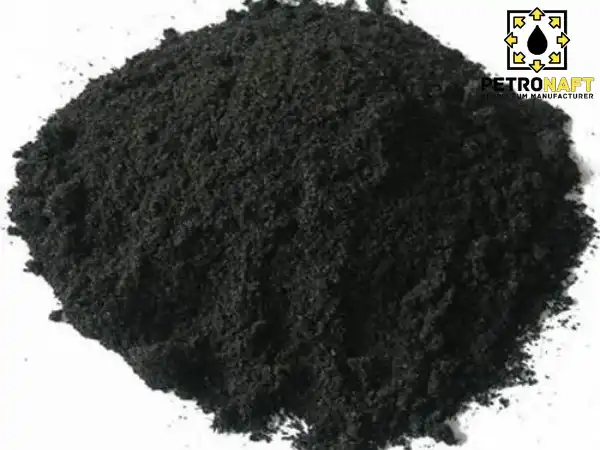
Rubber Asphalt Cost Guide: rubberized asphalt usually costs about 5–20% more per ton than a comparable conventional mix, but it can deliver net savings when agencies allow thinner overlays, longer life, and fewer crack-related repairs. Your real number depends on the rubber process (wet/dry), binder content, lift thickness, plant setup, haul distance, and local spec requirements.
In this guide, you’ll learn:
What rubber asphalt really includes (and why “rubber” isn’t one product)
Practical price ranges and how contractors actually bid it
The cost drivers you can control (and the ones you can’t)
A mini tutorial to estimate tonnage, budget, and ROI
Proven ways to reduce cost without sacrificing performance
Highlights & Key Sections
Rubber Asphalt Cost Guide: Typical Price Ranges
Rubber asphalt is most often priced as a premium over your local baseline (dense-graded HMA or polymer-modified HMA). That’s because rubber-modified binders typically increase binder handling complexity and/or binder content.
Quick reference table (how bids commonly land)
What you’re buying
How it’s usually priced
Typical first-cost outcome
Best use case
Rubberized dense-graded mix
Baseline + modifier premium
+5% to +15%
General resurfacing where cracking resistance matters
Asphalt rubber gap-graded (wet process)
Higher binder content + specialty handling
+10% to +25%
Reflective cracking control, high-stress overlays
Open-graded rubberized surface (noise/splash)
Specialty aggregate + QC + placement sensitivity
+10% to +30%
Urban noise corridors, wet-weather performance
Engineered crumb rubber (modern dry process)
Often priced closer to polymer-modified
Near parity to +10%
When plant simplicity and scale matter
A reality check: rubber can be cheaper in some categories
In a statewide bid-price comparison (public sector), rubberized asphalt was reported as ~2.8% less in some maintenance/preservation categories, but up to ~18.5% more in rehabilitation categories—showing why the project type and spec matter as much as the material.
What “Rubber Asphalt” Actually Means (and why it changes cost)
If two suppliers both say “rubberized asphalt,” they may be selling different technologies with different costs.
Type
How rubber is added
Cost impact
What to watch
Wet process (asphalt rubber)
Rubber reacts/swells in hot binder (often higher rubber %)
Choose gap/open/dense based on objective (cracks vs noise vs both)
Additives
Medium
Yes
Specify only what you need; require documentation of benefit
QC/QA regime
Medium
Partly
Align acceptance tests with true performance goals
Mini tutorial: Estimate rubber asphalt cost in 10 minutes
You don’t need a full pavement design to build a working budget. You need area, thickness, density, and a realistic price model.
Step 1: Convert your project to tons
Use this quick formula:
Tons = Area (ft²) × Thickness (ft) × Density (lb/ft³) ÷ 2,000
Typical compacted asphalt density often lands around ~145 lb/ft³ for budgeting (confirm with your local mix design).
Shortcut for lane-miles:
A 12-ft lane-mile at 1 inch thickness is about 383 tons.
Step 2: Apply a price model that matches how bids work
Instead of guessing a “universal price per ton,” use:
Rubberized price = Local baseline price × (1 + premium)
For a fast budget, use a premium band:
Conservative: +10%
Typical: +5% to +20%
Complex urban/open-graded: +15% to +30%
Step 3: Add the “hidden” project costs that derail budgets
Most misses come from:
Traffic control and phasing
Milling, tack coat, leveling courses
Compaction resources (rollers + QC staffing)
Mobilization (especially for small jobs)
Worked example (simple overlay budget)
Assume:
2 lane-miles (one direction), 12 ft lane width
1.5 in overlay
145 lb/ft³ density
Baseline mix price = 100 (use your local currency or rate)
Rubber premium = 12%
Tonnage:
1 lane-mile at 1 inch ≈ 383 tons
At 1.5 inch: 383 × 1.5 ≈ 575 tons per lane-mile
For 2 lane-miles: 575 × 2 ≈ 1,150 tons
Material budget index:
Rubberized price factor = 1.12
Material cost index = 1,150 × 100 × 1.12 = 128,800 (index units)
Now you have a solid baseline to compare contractor quotes and evaluate savings levers.
Where rubber asphalt can actually save money
Rubber asphalt’s “savings” rarely show up on the per-ton line. They show up when you buy performance per dollar.
1) Thinner overlays (less tonnage, faster paving)
Some agencies treat certain asphalt rubber overlays as structurally equivalent to thicker conventional overlays in specific rehabilitation scenarios, and rubberized systems are often used specifically to resist reflective cracking. When thickness can be reduced—sometimes dramatically—the project cost can drop even if the per-ton price rises.
Real-world pattern you’ll see in bids:
Higher per-ton cost
Lower total tons
Lower cost per square yard (especially on rehab overlays)
2) Longer life and fewer crack-related repairs
Rubber modification is widely used to improve resistance to cracking and rutting. If you can delay a major mill-and-fill cycle by even one season in a harsh climate or heavy-traffic corridor, the life-cycle math shifts quickly.
3) Noise benefits (sometimes replacing other spend)
Rubberized surfaces are frequently selected for noise mitigation. Even a few decibels matter on a logarithmic scale. In some jurisdictions, this can reduce pressure for additional mitigation measures in sensitive corridors.
Practical insight: If your project is on an urban corridor, treat noise performance as a “budget line.” When it’s a requirement, rubberized asphalt can be cheaper than building around the problem later.
How to reduce rubber asphalt cost without losing performance
These are the moves that consistently lower total project cost while keeping the technical intent intact.
Optimize the spec (not the marketing)
Write requirements around performance targets (cracking, rutting, noise, friction), not brand names.
Avoid stacking modifiers “just in case.” Extra additives often compound cost without measurable benefit.
Prequalify production (this prevents expensive surprises)
Require a trial production run and document:
Mixing temperature range
Target density achievement
Haul-time limit and placement temperature window
Confirm the plant has real experience with your chosen rubber process.
Use the right rubber approach for your objective
If the job is primarily reflective cracking control, a gap-graded rubber overlay may be justified.
If the job is primarily constructability + scale, modern dry-process engineered crumb rubber can be attractive.
If the job is noise + spray reduction, open-graded rubberized surfaces can be worth the premium—if you budget for maintenance planning.
Reduce risk pricing in your bid package
Contractors price uncertainty. Lower it by specifying:
Clear acceptance criteria
Approved alternates (where appropriate)
Realistic temperature/haul constraints
Traffic control windows that match compaction needs
Buyer’s decision matrix: When rubber asphalt is worth it
Scenario
Rubber asphalt value
Why
High reflective cracking risk (jointed concrete below, or cracked base)
High
Crack resistance is often the main economic driver
Urban noise corridor
High
Noise reduction can be a project objective, not a bonus
Heavy truck routes with rutting history
Medium–high
Better high-temp performance can reduce deformation
Short, small jobs far from plant
Medium–low
Mobilization + temperature sensitivity can inflate cost
Low-volume roads with limited budget
Medium
Can be worth it if you can reduce thickness or extend life
Common mistakes that inflate cost (and how to avoid them)
Mistake: Buying “rubber” without defining the performance goal
Fix: Decide if your priority is cracking, noise, skid resistance, or a combo—then choose the mix type.
Mistake: Long hauls without a temperature plan
Fix: Stage trucks, tighten scheduling, and validate compaction temps in a pilot section.
Mistake: Over-specifying additives
Fix: Require justification (lab or historical performance) for each additive.
Mistake: Treating rubber asphalt like standard HMA in rolling patterns
Fix: Plan roller strategy and verify target density early.
Conclusion
If you treat rubber asphalt as a simple “premium material,” you’ll miss the real opportunity. The smartest way to use this Rubber Asphalt Cost Guide is to price total installed performance: tonnage, thickness substitution, traffic-control realities, and the cost of future cracking or noise mitigation. When specs and execution are aligned, rubber asphalt can be a high-ROI surfacing choice—not just a greener one.
Executive Summary Checklist
Use this checklist before requesting quotes:
Define the objective: cracking control, rutting resistance, noise, friction, or multiple.
Choose the right category: dense-graded rubberized, gap-graded (wet), open-graded, or engineered dry process.
Confirm whether thinner overlays are allowed/acceptable for your design intent.
Estimate tonnage (area × thickness × density) and budget using a premium band (+5% to +20% is a common planning range).
Prequalify plant capability and require a trial run for temperature + density achievement.
Control haul risk: delivery pacing, placement temperature, and compaction window.
Keep additives purposeful—don’t stack modifiers without evidence.
Align acceptance testing with performance goals (not just tradition).
Document a maintenance plan if using open-graded surfaces.
FAQ
1) Is rubber asphalt always more expensive than conventional asphalt?
Not always. It’s often higher per ton, but some project categories can be near parity, and thinner overlays or longer life can reduce total cost.
2) What cost premium should I assume for budgeting?
A practical planning band is +5% to +20% over your local baseline mix, then refine based on mix type, haul distance, and plant readiness.
3) Does rubber asphalt reduce road noise enough to matter?
Yes, especially in urban corridors. Even small dB reductions are meaningful because decibels are logarithmic, and field results vary by mix type and speed.
4) Wet process vs dry process: which is cheaper?
Dry-process engineered systems can reduce production complexity at the plant, while wet-process asphalt rubber may carry higher binder-handling costs but can deliver strong overlay performance. The “cheaper” option depends on your spec and local supply chain.
5) Can rubber asphalt reduce overlay thickness?
In some applications, agencies allow thinner rubberized overlays for reflective cracking control and performance targets. Thickness allowance is one of the biggest levers for total project savings.