


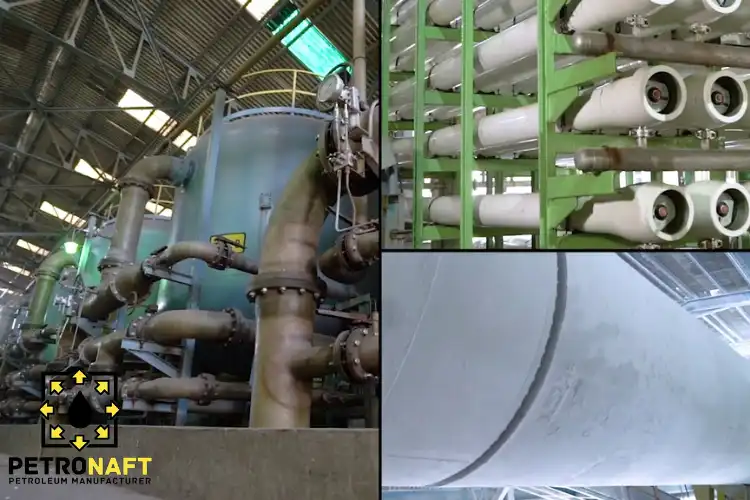
Caustic Soda Uses in Chemical Industry range from pH control and neutralization to producing detergents, pulp, alumina, and thousands of intermediates. Because sodium hydroxide is a strong, fast-acting alkali, it improves yield, removes impurities, and cleans equipment—when you select the right grade, concentration, and safety controls for your process.
In practical terms, caustic soda is valuable because it:
- Raises pH quickly and predictably
- Neutralizes acids and acid gases
- Breaks down organics (fats, proteins) for cleaning and processing
- Drives key reactions (saponification, hydrolysis, salt formation)
Below is a buyer-and-engineer friendly guide to applications, selection, and safe use—so the chemical benefit translates into real operational results.
Highlights & Key Sections
Caustic Soda Uses in Chemical Industry
Caustic soda acts as a base, reagent, catalyst (in some systems), and process utility. The table below is a quick “at-a-glance” map of where value is typically created.
| Industry / Unit Operation | What NaOH does | Typical form used | What to watch |
|---|---|---|---|
| Chlor-alkali & downstream chemicals | Feedstock/utility; pH control; makes sodium salts | 50% liquid, flakes | Carbonate pickup from air, purity needs |
| Pulp & paper (Kraft) | Delignification; fiber cleaning | 50% liquid | Handling volume, scaling control |
| Alumina refining (Bayer) | Dissolves alumina from bauxite | Concentrated solution | Temperature/corrosion management |
| Detergents & surfactants | Neutralization; salt formation; pH setpoint | 50% liquid, flakes | Trace metals, consistent assay |
| Water & wastewater | Neutralization; alkalinity addition | 25–50% liquid | Overfeed risk, mixing safety |
| Textiles | Mercerization; scouring | Liquid or solid | Fiber damage if overdosed |
| Food processing (where permitted) | pH adjustment; peeling/cleaning aid | Food-grade solution | Strict specs, documentation |
| Metal cleaning / surface treatment | Degreasing; oxide removal in controlled steps | Liquid, blends | Hydrogen generation with some metals |
Why caustic soda works so well (chemistry without the headache)
Sodium hydroxide (NaOH) dissociates in water into Na⁺ and OH⁻. That OH⁻ is the “working tool”:
- It neutralizes acids (OH⁻ + H⁺ → H₂O)
- It shifts equilibria toward deprotonated forms (often improving solubility or reaction rate)
- It breaks ester bonds in fats and oils (saponification), making it a strong cleaner and an essential reagent in many syntheses
A practical mental model: NaOH is a fast, strong lever for pH and reactivity—great for performance, unforgiving on safety and materials.
High-value applications (with real plant logic)
1) Neutralization and pH control (the most common utility use)
You’ll see NaOH wherever acidity is unavoidable:
- Acidic wash streams
- Scrubber effluents
- Reactor vent absorption systems
- Wastewater equalization tanks
Operational win: stable pH prevents corrosion, protects downstream biology (in WWTPs), and keeps reactions in their optimal window.
Common pitfall: treating pH like a “number only.” In real systems, buffering, mixing time, and CO₂ absorption can shift pH after dosing.
2) Making sodium salts and intermediates (core chemical production)
Many products start as an acid and finish as a sodium salt:
- Organic acids → sodium carboxylates
- Phenols → sodium phenoxides (key intermediates)
- Sulfonic acids → sodium sulfonates (surfactants)
Mini case example (practical):
A specialty surfactant line often improves batch consistency by using metered 50% NaOH instead of manual solid addition. You reduce operator variability, avoid undissolved solids, and tighten endpoint control (pH and conductivity).
3) Pulp & paper (Kraft pulping)
In Kraft pulping, caustic soda is central to removing lignin and freeing cellulose fibers. Plants value:
- Reliable concentration
- Low contamination
- Consistent delivery (large, continuous consumption)
Where performance shows up:
- Improved delignification stability
- Reduced off-spec pulp brightness/strength swings
- Better liquor balance when dosing stays consistent
4) Alumina refining (Bayer process)
In Bayer digestion, NaOH dissolves alumina-containing minerals, separating them from many insoluble impurities.
Why buyers care about consistency:
Small fluctuations in concentration can change digestion efficiency and scaling behavior. In high-temperature caustic service, materials selection and corrosion monitoring become part of the “real cost” of caustic.
5) Cleaning-in-place (CIP) and industrial degreasing
Caustic soda dissolves fats, oils, and protein deposits—especially when paired with heat and surfactants.
Where it shines:
- Food and beverage (where allowed and properly validated)
- Chemical reactors and transfer lines
- Tank farm cleaning programs
Practical insight: cleaning performance depends more on time + temperature + turbulence + concentration than on concentration alone. Many plants save cost by optimizing those four variables instead of simply “adding more caustic.”
6) Textiles (mercerization, scouring, and pH adjustment)
NaOH improves cotton fiber properties during mercerization and supports scouring by removing natural waxes and oils.
Key control points:
- Concentration and contact time (to avoid fiber damage)
- Rinse efficiency (to prevent downstream reactivity issues)
- Effluent neutralization plan (because this stream can be highly alkaline)
Buyer guide: choosing the right grade and form
The best “spec” is the one that matches your process sensitivity, handling setup, and total delivered cost.
Common commercial forms
| Form | Typical use case | Advantages | Watch-outs |
|---|---|---|---|
| 50% liquid (caustic lye) | Continuous dosing, large plants, automation | Easy metering, less dust, consistent dissolution | Freezing risk in cold climates, needs compatible storage |
| 25–32% liquid | Smaller utilities, easier pumping in some setups | Lower freezing point, easier dilution | More freight per kg NaOH |
| Flakes / pearls / prills (solid) | Smaller batches, remote sites | Lower freight water, long shelf life | Dust/handling risk, dissolution heat, operator variability |
Spec checklist (what procurement should request)
- Assay (NaOH % by mass)
- Carbonate (Na₂CO₃) limit (important for sensitive reactions and scaling control)
- Chloride and sulfate limits (process-dependent)
- Iron and heavy metals (critical for color-sensitive products, electronics, some catalysts)
- Production route / cell technology if you need low impurities (common request: “membrane-grade”)
- Packaging (bulk, IBC, drum, bag) and temperature limits for transport/storage
- Documentation: COA, SDS, regulatory statements relevant to your market
Mini tutorials (hands-on, plant-friendly)
Tutorial 1: Quick dosing math for neutralization
When you dose NaOH, think in equivalents:
- 1 equivalent of NaOH neutralizes 1 equivalent of acid (H⁺).
- In water/wastewater, acidity/alkalinity is often reported as mg/L as CaCO₃.
Rule of thumb:
To add alkalinity using NaOH:
mg/L NaOH ≈ (mg/L as CaCO₃) × 0.8
Example: If your stream needs +100 mg/L as CaCO₃ alkalinity, target about 80 mg/L NaOH (then fine-tune with jar testing or online pH control).
Reality check: always validate with your actual buffering system and mixing conditions; pH endpoints can drift after dosing.
Tutorial 2: Safer dilution procedure (prevents violent heat release)
NaOH dissolution is strongly exothermic. Use this sequence:
- Fill the tank with the required amount of water first
- Start agitation
- Add caustic slowly (solid or concentrated liquid) into the water
- Control temperature; pause if the solution heats rapidly
- Verify final concentration by density or titration method (as your QA system defines)
Never add water into concentrated caustic in an uncontrolled way—this is a common burn and splash scenario.
Tutorial 3: Preventing carbonate-related issues (simple controls)
NaOH absorbs CO₂ from air and forms sodium carbonate. That matters for:
- Tight pH control
- Scale formation
- Some syntheses and salts production
Practical controls:
- Use closed storage and minimize headspace air exchange
- Consider nitrogen blanketing for sensitive applications
- Reduce long storage time for partially used containers
- Keep transfer lines sealed; fix vacuum leaks that pull in air
Safety and materials compatibility (non-negotiable)
NaOH is a corrosive alkali. Typical industrial hygiene references set a ceiling exposure limit around 2 mg/m³ for sodium hydroxide aerosols/mist in workplace air, so control mist generation and use proper ventilation and PPE.
Essential handling practices
- Wear chemical-resistant gloves, face shield + goggles, and protective clothing
- Use closed transfer where possible (pumps, hard piping, dry-break couplers)
- Install emergency eyewash and shower near handling areas
- Train teams on first aid: immediate flushing with water is critical for exposures
Compatibility quick table (rule-of-thumb)
| Material | Typical compatibility with NaOH | Notes |
|---|---|---|
| HDPE / PP | Good | Common for drums, IBCs, some piping |
| PVC (process-dependent) | Often good | Verify temperature limits |
| Carbon steel | Often used | Watch concentration/temperature and stress corrosion risk |
| Stainless steel | Condition-dependent | Can be used, but evaluate stress corrosion and process temperature |
| Aluminum / zinc / galvanized | Poor | Reacts; can generate hydrogen and damage equipment |
| Brass / bronze | Poor to variable | Evaluate carefully; often avoided |
If you’re unsure, treat compatibility as an engineering decision—not a guess. One failed gasket, valve, or alloy choice can erase the savings of a “cheaper” product grade.
Quality, compliance, and what “good supply” really means
For chemical plants, caustic soda is both a commodity and a risk multiplier. The best suppliers reduce variation and surprises.
What “good” looks like operationally:
- Consistent assay that matches your control loop assumptions
- Predictable impurity profile (especially carbonate and iron)
- Stable logistics and temperature management (avoids solidification or delayed unloading)
- Clean, complete documentation aligned with your market requirements
Buying tip: specify your “must-have” metrics only. Over-specifying can raise cost without improving performance. Tie every limit to a real process risk (color, scale, catalyst poisoning, compliance, or safety).
Trends shaping caustic soda specifications and demand
Two trends increasingly affect how plants buy and use NaOH:
- Process electrification and energy efficiency pressure: chlor-alkali production is energy-intensive, so producers and buyers increasingly focus on supply stability, energy-linked pricing risk, and consistent quality to avoid rework and downtime.
- Stricter environmental control and water reuse: tighter discharge limits and more closed-loop water systems push plants toward more precise pH control, better automation, and cleaner chemical inputs to reduce scaling and secondary contamination.
These trends reward plants that treat caustic soda as a managed input—not just a line item.
Executive Summary & Practical Checklist
If you want caustic soda to deliver performance (not problems), use this checklist:
Process fit
- Define the job: neutralization, reaction, cleaning, salt formation, or impurity removal
- Choose form: 50% liquid for metering, solid for smaller/remote use, lower % liquid for cold conditions
Quality
- Set assay target and acceptable variance
- Decide impurity limits that actually matter (carbonate, iron, chloride)
- Require COA + SDS and any market-specific regulatory statements
Safety and equipment
- Confirm compatible materials (tanks, seals, pumps, hoses, fittings)
- Use closed transfer and control aerosols
- Train on dilution and emergency response
Control
- Validate dosing with jar tests or plant trials
- Use mixing and residence time as “real levers” for stable pH and cleaning performance
When you align specification + handling + control strategy, Caustic Soda Uses in Chemical Industry become a reliable advantage instead of a recurring headache.
FAQ
1) What is the most common industrial use of caustic soda?
pH adjustment and neutralization is the most widespread use because many industrial streams become acidic during reaction, washing, or gas scrubbing. NaOH gives fast, controllable alkalinity with simple dosing hardware.
2) Is 50% caustic soda always better than solid flakes?
Not always. 50% liquid is ideal for automated metering and large consumption, while flakes can be cost-effective for small batches or locations without bulk handling systems. The best choice depends on safety, labor, and total delivered cost.
3) Why does caustic soda sometimes cause scaling problems?
NaOH can absorb CO₂ from air and form sodium carbonate, which contributes to deposits in certain systems. High hardness water and poor mixing can also create localized high pH zones that accelerate scaling.
4) What should I specify when purchasing caustic soda for sensitive chemical production?
Focus on consistent assay, low carbonate (if relevant), and low metals (especially iron) if your product is color- or catalyst-sensitive. Also specify packaging, temperature constraints, and documentation requirements.
5) How dangerous is caustic soda in normal plant handling?
It is highly corrosive and can cause severe skin and eye burns. With closed transfer, correct PPE, proper dilution procedures, and emergency wash stations, plants manage risk effectively—but it requires disciplined execution.
Sources
- OSHA Chemical Data: Sodium Hydroxide — Regulatory-oriented exposure and hazard reference used to support workplace handling guidance.
- CDC/NIOSH Pocket Guide: Sodium hydroxide — Industrial hygiene reference used for exposure limit context and hazard characteristics.
- NIH PubChem: Sodium Hydroxide — Chemical identity and safety-related reference used to cross-check technical fundamentals.
- ECHA Substance Information: Sodium hydroxide — EU-facing classification and labeling reference used for compliance context.
- ILO/WHO International Chemical Safety Card: Sodium hydroxide — Safety card reference used for practical handling and transport context.