


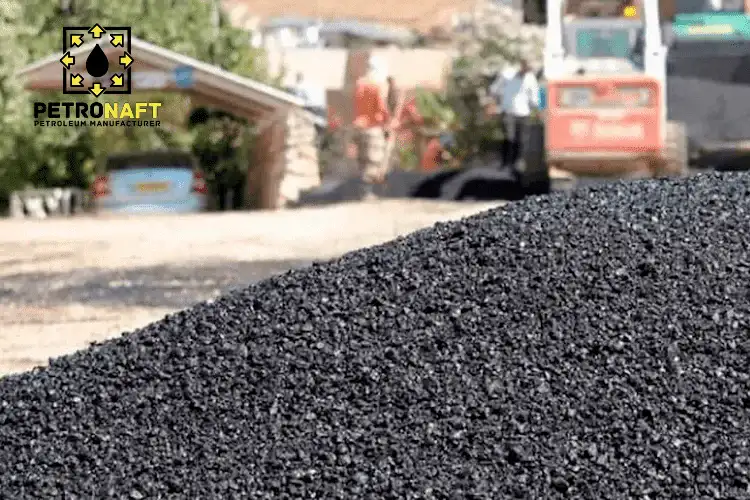
Adding Gilsonite to Asphalt produces a stiffer, more rut-resistant mix that carries heavier traffic with less thickness and fewer failures. Properly dosed, natural asphalt hardens the binder, improves moisture and fatigue performance, and can cut life-cycle costs while keeping standard plant equipment and procedures.
Gilsonite is a naturally occurring solid bitumen with a very high asphaltene content and softening point. When you blend it into paving binders or mixes, it behaves like an ultra-hard, highly compatible bitumen fraction, rather than a foreign polymer or filler. That’s why it can upgrade conventional binders without completely changing plant operations.
For agencies, contractors, and industrial asset owners, the big question isn’t “Is Gilsonite interesting?” but “Where, how, and how much should we use to genuinely improve mix performance and economics?” This guide walks through the mechanics, design steps, and decision points that matter in real projects.
Highlights & Key Sections
What Is Gilsonite and How Does It Interact with Asphalt Binder?
Gilsonite is a hard, brittle, glassy natural asphalt (often called an asphaltite). It is mined, crushed, and supplied as powder or granules that dissolve directly into bitumen. Chemically, it is rich in asphaltenes and resins, so it behaves like a high-grade, very hard bitumen rather than a synthetic additive.
Because its chemistry is bituminous, Gilsonite blends are usually:
Fully compatible with standard paving binders
Stable under normal hot storage times when properly dispersed
Able to raise binder grade (PG or penetration) without introducing a separate polymer phase
How Does Gilsonite Change Asphalt Rheology and Durability?
When you add Gilsonite, you effectively shift the binder toward a harder, more elastic spectrum:
Higher viscosity and stiffness at high temperatures – This improves rutting resistance and load-carrying capacity under slow or standing loads.
Improved rutting and fatigue resistance in tests – Dynamic shear rheometer, MSCR, Marshall, resilient modulus, and fatigue tests consistently show stronger, more rut-resistant binders and mixes when Gilsonite is added within an optimum range.
Limited impact on low-temperature cracking when dosed correctly – Studies using PG grading and BBR tests found no significant loss of thermal cracking resistance at moderate addition levels.
Better aging resistance – Gilsonite’s dense structure and high aromatic content help slow oxidative aging, preserving stiffness and strength over time.
In other words, Gilsonite pushes the binder to behave like a high-modulus, high-grade bitumen while keeping the chemistry “all asphalt.”
Which Gilsonite Forms and Dosages Are Typical in Pavement Work?
Gilsonite for paving usually comes as:
Micronized powder – Fast dissolution in binder, ideal for wet-process modification
Granules/chips – Can be added directly to the pugmill or drum for dry-process mixes
Pellets – Easier handling and metering, especially in automated feeding systems
Typical engineering practice based on lab studies and field projects:
Wet-process binder modification
Add about 4–8% Gilsonite by weight of binder for dense-graded HMA.
Some studies found an optimum around 4–6% for balancing rutting resistance and flexibility.
Dry-process mix modification
Add 5–15% Gilsonite by weight of the binder content, usually as powder or granules blended with hot aggregates.
Higher levels are more common in stone mastic asphalt (SMA) and heavy-duty surfaces.
Actual dosage should come from performance tests (rutting, fatigue, moisture, and cracking) rather than a fixed recipe.
Why Do Engineers Add Gilsonite to Asphalt in Modern Mix Designs?
The core reason engineers add Gilsonite to Asphalt mixes is to push performance beyond what standard binders (even higher grades) can deliver, especially under heavy traffic and hot climates, while keeping mix designs and plant operations familiar.
From a performance point of view, Gilsonite-modified mixes typically show:
Higher Marshall stability and resilient modulus
Improved rutting resistance in dynamic creep and wheel-tracking tests
Lower moisture sensitivity and improved indirect tensile strength
Better fatigue life in flexural and indirect fatigue tests
What Performance Gains Can You Expect in the Field?
Actual performance will depend on climate, traffic, structure, and construction quality, but lab and project data support several consistent trends:
Rutting and shoving
Stronger resistance to wheel-path deformation, especially at intersections, bus lanes, and ramps.
Fatigue cracking
Better ability to withstand repeated loads in flexible base and binder courses when the structure is properly designed.
Moisture damage
Lower loss of strength after moisture conditioning; this is critical for wet climates and freeze–thaw cycles.
Thickness reduction potential
The higher modulus allows designers to consider thinner base or binder layers for the same structural number in some designs, subject to local standards.
Table 1 – Typical Effects of Gilsonite on Mix Performance
| Mix property | Effect of well-designed Gilsonite modification | Why it matters on site |
|---|---|---|
| High-temperature rutting | Noticeably higher resistance to permanent deformation | Less wheel-path rutting, fewer safety and drainage issues |
| Fatigue cracking | Improved fatigue life at intermediate temperatures | Longer service life on heavily trafficked pavements |
| Moisture susceptibility | Higher retained strength after conditioning | Reduced stripping, more stable performance in wet regions |
| Aging and oxidation | Slower stiffness loss and property degradation over time | Better long-term ride and fewer early overlays |
| Structural efficiency | Higher modulus for a given layer thickness | Potential thickness savings in some structural designs |
Key Lab Evidence on HMA Performance
| International reference |
|---|
| Performance Evaluation of Hot Mix Asphalt (HMA) Containing Bitumen Modified with Gilsonite (2017) – Landmark experimental study showing significant improvements in Marshall stability, resilient modulus, moisture resistance, and rutting performance at optimized Gilsonite contents. Read the article |
How Should You Add Gilsonite to Asphalt in Practice?
What’s the Difference Between Wet and Dry Processes?
Wet-process (binder modification)
Gilsonite dissolves in the binder in a dedicated tank or modified asphalt plant.
You heat the binder to the target temperature, then add Gilsonite gradually under strong agitation until fully dissolved.
Use full Superpave or equivalent binder testing (PG, DSR, MSCR, BBR) to verify grade and performance.
Dry-process (mix modification)
Gilsonite goes directly into the mixer with hot aggregates (much like fibers or some warm-mix additives).
It softens and partially dissolves into the film around each aggregate particle.
You still need performance testing on the final mix (Marshall, indirect tensile, rutting, fatigue, Cantabro, etc.).
In practice, wet-process gives more precise control over binder properties; dry-process can be simpler to adopt at drum or batch plants with minimal hardware changes.
How Do You Design a Gilsonite-Modified Mix Step by Step?
Lab-scale binder design
Define project conditions
Traffic loading (ESALs, heavy axles) and climate (high/low pavement design temperatures).
Select base binder and target grade
Decide whether Gilsonite alone will raise the grade or will complement an existing polymer-modified binder.
Choose initial Gilsonite dosages
Typical trial levels: 3, 5, and 7% of binder for dense-graded HMA; extend to 10% for SMA or heavy-duty sections.
Blend and test
Prepare modified binders and run PG grading, MSCR, and BBR to see whether the target grade and Jnr, m-value, and creep stiffness criteria are met.
Screen for storage stability
Verify that the modified binder remains homogeneous during storage at plant conditions.
Lab-scale mix design
Develop a control mix
Design a conventional HMA/SMA mix that meets volumetric requirements and performance specs.
Introduce Gilsonite
For wet-process, use the modified binder in the same mix design.
For dry-process, add Gilsonite with aggregate and adjust binder content if needed.
Run performance tests
Marshall or gyratory stability, indirect tensile strength, moisture sensitivity, rutting, and fatigue.
Optimize content
Choose the lowest Gilsonite dose that meets or exceeds performance targets while keeping acceptable workability and low-temperature flexibility.
Field production checklist
Confirm plant settings (temperature, mixing time, feed calibration).
Closely monitor workability during paving and compaction.
Take field cores for density, air voids, and performance verification.
Where Does Gilsonite-Modified Asphalt Deliver the Most Value?
Which Projects Are Ideal Candidates?
Gilsonite shines when you need higher stiffness and durability without a full redesign of the pavement structure or plant:
Urban arterials and bus lanes with heavy stop-and-go loads
Truck routes, ports, and logistics hubs carrying high axle loads
Airport taxiways and aprons where static loads and fuel spills are concerns
Industrial yards subject to turning and standing heavy equipment
Long, hot-climate corridors where high pavement temperatures drive rutting
In climates with very cold winters, you may still use Gilsonite, but you must pay extra attention to low-temperature performance and consider lower dosages or softer base binders.
How Does Gilsonite Support Sustainable, High-RAP or RCA Mixes?
Recent research has shown that Gilsonite can help balance stiffness and durability when you incorporate reclaimed asphalt pavement (RAP) or recycled concrete aggregate (RCA):
With RAP and soft binder – A soft rejuvenated binder can recover stiffness and rutting resistance when blended with Gilsonite, producing a more balanced high-RAP mixture.
With RCA – Gilsonite-modified binders combined with RCA aggregates have demonstrated acceptable permanent deformation and fatigue resistance for thick asphalt layers in hot climates when designed by volume rather than mass.
This aligns with a broader industry trend toward high-performance, lower-impact pavements using recycled materials.
International Study on Gilsonite and RCA
| International reference |
|---|
| Mechanical Performance of Gilsonite-Modified Asphalt Mixture Containing Recycled Concrete Aggregate (2021) – Experimental study evaluating rutting, fatigue, moisture damage, and durability of Gilsonite-modified mixes with RCA, with guidance on climate and layer thickness limitations. Read the article |
What Are the Main Risks, Limits, and Troubleshooting Points?
Can You Overdose Gilsonite?
Yes. If you push content too high without adjusting the base binder, you may see:
Increased stiffness that reduces low-temperature flexibility
Higher risk of reflective cracking on thin overlays
More difficult compaction and potential density problems
Mitigation strategies:
Pair higher Gilsonite contents with softer base binders or rejuvenators, especially in cold climates or thin lifts.
Verify low-temperature performance using PG and BBR tests, not just high-temperature rutting resistance.
What If the Mix Feels Too Dry or Difficult to Compact?
If field crews report harsh mixes:
Check that the effective binder content hasn’t been reduced too aggressively when Gilsonite was added.
Consider slightly increasing total binder content or using a softer base binder grade.
Verify aggregate gradation; a gap-graded or coarse skeleton may require more binder even with Gilsonite.
Does Gilsonite Work with Other Modifiers?
Gilsonite often complements, rather than replaces, other modifiers:
With SBS polymers – Studies show that several parts of Gilsonite can substitute one part of SBS for high-temperature performance, lowering cost while keeping good rutting resistance.
With warm-mix additives – Gilsonite’s high softening point pairs well with warm-mix technologies that lower production temperature and improve workability.
With fibers and rubber – Gilsonite can enhance stiffness and aging resistance while fibers or rubber contribute to crack resistance and texture.
The key is to design with full performance testing; don’t assume additive effects are simply additive.
How Does Gilsonite Compare with Other Asphalt Modifiers and Current Trends?
The push for high-performance and sustainable pavements has triggered a wave of research into polymers, nanomaterials, bio-binders, and hybrid modifiers. A recent state-of-practice review highlights the need to balance performance, cost, and environmental impact across this growing toolbox.
Gilsonite sits in an interesting middle ground:
Table 2 – Gilsonite vs Common Modifier Options (Qualitative Comparison)
| Parameter | Gilsonite | SBS polymer | Crumb rubber |
|---|---|---|---|
| Material origin | Natural asphalt | Synthetic polymer | Recycled tire rubber |
| High-temp rutting resistance | High | Very high | High |
| Low-temp flexibility | Moderate–good (with proper design) | Very good | Good |
| Plant changes needed | Low–moderate | Moderate–high | Moderate |
| Suitability with high RAP/RCA | Good (with soft binder) | Good (but often higher cost) | Good, but compaction sensitive |
| Typical cost level | Moderate | High | Moderate |
In many markets, Gilsonite is attractive because it:
Offers strong rutting and durability gains
Can work with recycled materials and hybrid systems
Requires relatively modest changes to existing plant setups
At the same time, it fits neatly into emerging trends like high-modulus base layers, extended pavement life designs, and lower-thickness structures when verified by mechanistic–empirical analysis.
What Practical Checklist Should You Use Before Approving Gilsonite-Modified Mixes?
Use this checklist as a quick decision tool for owners, consultants, and contractors.
Project suitability
Traffic level and loading justify higher-performance mixes
Climate includes sustained high pavement temperatures or slow loads
Structure and layer thickness can benefit from higher modulus
Design and testing
Target binder grade defined (PG or local specification)
Trial Gilsonite dosages selected for binder and/or mix
Binder tests (PG, DSR, MSCR, BBR) confirm grade and performance
Mix tests (stability, rutting, fatigue, moisture) meet or exceed control mix
Production and construction
Plant feeding and mixing procedures documented for Gilsonite form used
Temperatures and mixing times validated in trial runs
Compaction requirements verified in the field with trial sections
Specification and QA
Gilsonite content and type clearly stated in the job specification
Acceptance criteria (binder and mix tests) defined in contracts
Monitoring plan for early performance and potential adjustments in future projects
Used methodically, this checklist helps translate lab gains from the addition of Gilsonite to Asphalt into reliable, repeatable field performance.
What Are the Most Common Questions About Gilsonite in Asphalt?
What percentage of Gilsonite is typically added to asphalt?
Most dense-graded mixes use roughly 4–8% Gilsonite by weight of binder, with some heavy-duty or SMA designs going higher after testing. The exact percentage should come from performance-based mix design rather than a fixed rule of thumb, especially in very hot or very cold climates.
Can Gilsonite replace polymer modifiers like SBS?
In some cases, Gilsonite can partially replace SBS, especially when high-temperature rutting resistance is the main focus. However, SBS often provides superior low-temperature flexibility and elasticity, so many designers use Gilsonite alongside polymers or in hybrid systems instead of treating it as a full one-to-one substitute.
Is Gilsonite-modified asphalt more brittle in cold climates?
If the base binder is already hard, aggressively increasing stiffness with Gilsonite can reduce low-temperature cracking resistance. That’s why cold-region projects usually pair Gilsonite with a softer base binder, lower dosages, or additional modifiers and always verify performance using low-temperature binder and mix tests.
Does Gilsonite work well with high RAP mixes?
Yes, Gilsonite often pairs well with high RAP when you also use a softer or rejuvenated binder. The soft binder balances old RAP stiffness, while Gilsonite recovers rutting resistance and structural capacity. As always, high-RAP, Gilsonite-modified mixes should be validated through moisture, rutting, and fatigue testing before widespread use.
What mixing temperatures are recommended when using Gilsonite?
You generally work within the upper range of normal hot-mix temperatures, high enough to fully dissolve or soften Gilsonite but not so high that you over-age the binder. Typical binder tank temperatures fall in the same range used for other high-grade or polymer-modified binders, with plant trials used to fine-tune settings.
Will Gilsonite slow down production at the asphalt plant?
When properly planned, Gilsonite should not significantly reduce plant throughput. Micronized powder fed into a wet-process system or dosed at the drum/batch in a dry process integrates quickly into the mix. Most production issues arise from inconsistent feeding or inadequate mixing time, both of which can be solved with clear procedures.
Does Gilsonite affect storage stability of modified binders?
Because Gilsonite is a bituminous material rather than a separate polymer phase, it generally shows better storage stability than many polymer-modified binders. That said, long storage times at high temperature can still lead to some settlement or viscosity increase, so it is good practice to limit storage times and keep tanks well agitated.
Is Gilsonite-modified asphalt environmentally friendly?
Gilsonite is a naturally occurring hydrocarbon, and its use can support sustainability when it enables thinner structures, longer service life, or higher RAP and RCA contents. Like any hydrocarbon material, its overall environmental profile depends on mining, transport, and how well it extends pavement life compared with alternatives.
Can Gilsonite be added directly at the job site instead of at the plant?
For quality control, Gilsonite is best added at the asphalt plant where temperatures, mixing time, and feed rates are controlled and documented. Adding it directly on site makes it very difficult to ensure uniform dispersion and dosage, and it can lead to inconsistent performance and failed quality tests.
How should I specify Gilsonite-modified asphalt in a tender document?
A robust specification will define the form of Gilsonite, the allowable dosage range, required binder grade, and performance tests for both binder and mix. It should also outline production procedures, acceptance criteria, and any special requirements for high RAP, RCA, or extreme climates so that bidders can design and document compliant mixtures.
Which Sources Were Used for This Article?
Sources