

Asphalt Recycling turns old pavement into new road materials by reprocessing reclaimed asphalt pavement (RAP) or recycling in place. Done right, it cuts binder and aggregate demand, lowers hauling and landfill, and can match virgin-mix performance—often at a lower cost—when you control RAP quality, mix design, and paving temperature.
If you’re planning a paving job (road, yard, parking lot, or driveway), the “best” recycling approach depends on three things:
Distress type (cracking, rutting, stripping, base failure)
Depth of damage (surface only vs. structural)
Your constraints (budget, downtime, emissions targets, haul distances)
Below is a practical, buyer-friendly guide you can actually use on a project.
Highlights & Key Sections
Asphalt Recycling: What It Is and Why It Works
Asphalt is unusually recyclable because it’s a blend of aggregate + bitumen binder. When you mill an old asphalt layer, you reclaim both:
Aggregate (still valuable, already graded)
Aged binder (still binder—just stiffer)
Recycling works when you treat RAP like a real material, not “free rock”:
You measure RAP variability (gradation, binder content, moisture)
You balance aged and new binder (grade selection, blending, rejuvenation)
You control temperature and moisture (production + compaction)
A quick reality check with industry-scale numbers (useful for proposals)
Recent national reporting shows that reclaimed asphalt is overwhelmingly reused, and producers incorporate meaningful RAP percentages in new mixes—saving large volumes of binder and virgin aggregate while avoiding landfill. In Europe, industry figures also show most reclaimed asphalt is reused in new mixes, with a smaller portion going into unbound layers.
Those trends matter because they prove two things buyers care about:
Supply chains and specs already exist
Recycling can be standardized—not experimental
Recycling methods and when to use each
Use this table to pick a method in minutes, not meetings.
| Method | Best for | Typical treatment depth | Big advantages | Watch-outs | Who usually buys it |
|---|---|---|---|---|---|
| Central plant recycling (RAP in new HMA/WMA) | Most resurfacing & rehab | Mix-specific | High control, high performance potential | RAP variability, aged binder stiffness | DOTs, municipalities, commercial owners |
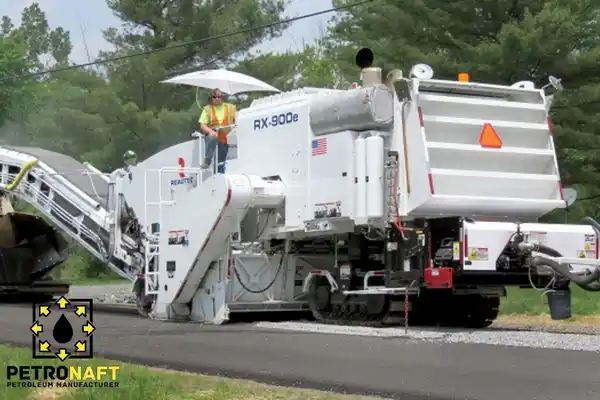
| Hot In-Place Recycling (HIR) | Surface defects, raveling, light cracking | ~20–50 mm | Minimal hauling, fast turnaround | Not for deep structural failures | Cities, route maintenance contractors |
| Cold In-Place Recycling (CIR) | Moderate distress, oxidation, cracking | ~50–100+ mm | Big cost/CO₂ cuts, reuses existing layer | Needs correct emulsions/foamed binder design | Agencies, industrial sites |
| Full-Depth Reclamation (FDR) | Base failures, deep fatigue | 150–300+ mm | Rebuilds structure without full removal | Requires good geotech + moisture control | Rural roads, heavy-duty access roads |
| RAP as unbound base/shoulder | Low-cost base & shoulders | N/A | Simple, fast, uses stockpiles | Dust/moisture sensitivity; compaction matters | Farms, industrial yards, temporary roads |
Rule of thumb:
If the base is failing, don’t “surface recycle your way out.” Use CIR/FDR or rebuild structure.
How much RAP can you use in new asphalt mixes?
There isn’t one safe number. The right RAP level is the one that meets performance targets after you account for:
Climate (cold cracking risk vs. rutting risk)
Traffic (ESALs, braking/turning loads)
Layer position (surface vs. base)
RAP binder stiffness and blending behavior
A practical RAP decision matrix
| RAP level (by mix mass) | Typical binder strategy | Typical application fit | Common risk | Practical mitigation |
|---|---|---|---|---|
| 0–15% | Usually no major binder changes | Surface & base | Minimal | Standard QC, consistent RAP |
| 15–30% | Often grade adjustment or blending checks | Surface (many cases), base | Stiffer mix → cracking | Fractionated RAP, adjust virgin binder grade |
| 30–50% | Often softer binder and/or recycling agent | Base, binder course; sometimes surface | Low-temp cracking, variability | Tight RAP management + performance tests |
| 50%+ (high RAP) | Usually engineered blending + additives | Base/binder, specialty projects | Durability if poorly designed | Performance-based design, strict plant control |
Real-world case insight (high-RAP + warm mix)
A documented European field case produced a surface course using 50% RAP with a bio-based warm-mix additive, supported by lab testing and jobsite cores. The practical takeaway isn’t “everyone should do 50% in surface”—it’s that high-RAP becomes realistic when you pair it with the right temperature strategy, compaction window, and verification testing.
Mini tutorial: Build a high-confidence RAP plan in 7 steps
Use this workflow whether you’re a contractor, an owner’s rep, or a municipality.
Classify the pavement problem
Rutting? cracking? stripping? base failure?
Sample correctly
Take representative millings/cores (not one “pretty” pile).
Characterize RAP
Gradation, binder content, moisture, contaminants.
Decide processing
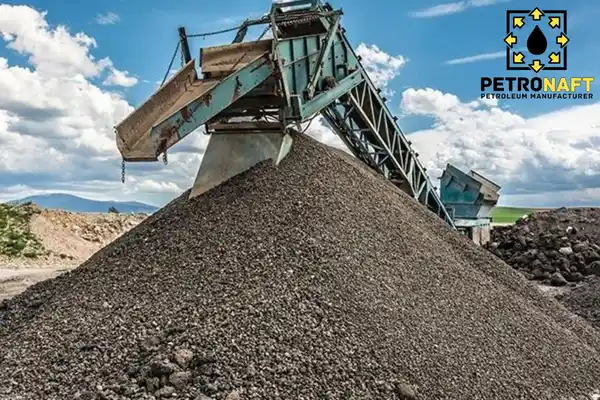
Screen/crush; consider fractionated RAP (more consistent).
Choose the binder strategy
Adjust virgin binder grade and/or use a recycling agent when needed.
Select production approach
HMA vs WMA; check temperature limits to protect binder and compaction.
Verify with performance tests
Rutting + cracking performance tests beat “it looks good” every time.
If you only do two things, do these: (a) fractionate RAP and (b) require performance testing. Those two decisions prevent most expensive failures.
Quality control that prevents surprises
RAP problems usually show up as one of these:
Inconsistent density (compaction issues)
Early cracking (too stiff, poor blending, or low fresh binder)
Moisture damage (wet RAP, stripping, poor adhesion)
Rutting (over-softening or weak structure)
QC checkpoints that actually move the needle
| Project stage | What to check | What “good” looks like | Quick fix if it’s not |
|---|---|---|---|
| RAP stockpile | Moisture + segregation | Stable moisture, no “all fines on top” | Improve drainage, manage pile building/loading |
| RAP processing | Gradation consistency | Tight range across samples | Fractionate, adjust crusher/screen setup |
| Mix design | Cracking + rutting performance | Balanced performance, not just volumetrics | Adjust binder grade, add agent, tweak RAP % |
| Plant production | Temps + feed accuracy | Stable temps, stable RAP feed | Calibrate feeders, manage wet RAP, WMA if needed |
| Paving | Compaction window | Density achieved before mix cools | Adjust rolling pattern, haul temps, laydown rate |
Field-proven tip: Wet RAP is a silent budget killer. It spikes fuel use, destabilizes production, and can force temperature decisions that age the binder.
Cost, carbon, and ROI: what to expect
Recycling economics come from four buckets:
-
Less virgin binder (the most expensive ingredient)
-
Less virgin aggregate
-
Less hauling (especially for in-place methods)
-
Less disposal/landfill
Recent industry-scale reporting in the U.S. links RAP use to conserving millions of tons of binder and tens of millions of tons of aggregate annually, with multi-billion-dollar estimated material value. European reporting similarly highlights large reclaimed asphalt volumes being reused or recycled each year.
Mini tutorial: a 5-minute savings estimate (good for budgets and proposals)
You only need five inputs:
-
Planned mix tonnage (T)
-
RAP percentage (R)
-
Estimated RAP binder content (Bᵣ) – commonly ~4–6% (verify!)
-
Binder price per ton (P)
-
“Effective binder replacement factor” (E) – start conservative (e.g., 0.7) until proven
Estimate saved virgin binder (tons):
T × R × Bᵣ × E
Example (simple, not a promise):
-
10,000 tons of mix
-
25% RAP
-
5% RAP binder
-
E = 0.7
Saved binder ≈ 10,000 × 0.25 × 0.05 × 0.7 = 87.5 tons
Multiply by your binder price to get a rough savings range.
Use this as a screening tool, then refine with real mix design results.
Buying recycled asphalt: what to ask suppliers and contractors
If you’re buying millings, RAP, recycled base, or a recycling service, ask these questions up front. It prevents scope fights later.
Questions that separate pros from guessers
-
What is the source of RAP (highway surface, base, airport, unknown mix)?
-
Do you provide recent RAP test results (gradation, binder content, moisture)?
-
Is RAP fractionated? If yes, what sizes and how stored?
-
What is your moisture management plan for RAP stockpiles?
-
How will you adjust binder grade or use a recycling agent at higher RAP?
-
What performance tests will the mix meet (cracking + rutting)?
-
What is your temperature/compaction plan (especially in cool weather)?
-
What warranty or performance responsibility is included (and what isn’t)?
For driveways and private yards (common buying intent)
Recycled asphalt millings can work well when you:
-
Place in thin lifts
-
Compact thoroughly
-
Control drainage (water is the enemy)
-
Accept that it behaves more like a bound granular layer than “fresh blacktop”
If you want a cleaner, longer-lasting surface, consider a proper asphalt surface layer over a well-compacted recycled base.
Current trends (and why they matter for your project)
Two trends are reshaping specifications and buyer expectations:
-
Higher RAP with smarter chemistry: More projects use softer binders, recycling agents, or rejuvenators to balance cracking resistance—especially as owners push circular-economy targets.
-
Warm-mix growth for workability and emissions: Lower-temperature production can widen the compaction window and support higher RAP without over-aging the binder.
A third trend is quietly growing fast:
-
Performance-based acceptance: Agencies and sophisticated owners increasingly prefer performance tests (cracking + rutting) over “recipe-only” specs—because performance-based specs make high RAP safer.
Troubleshooting: common problems and practical fixes
Problem: mix cracks early
-
Likely causes: too stiff (aged binder dominates), insufficient fresh binder, poor blending, cold compaction.
-
Fixes: lower virgin binder grade, reduce RAP %, add recycling agent, use WMA for workability, tighten temperature control.
Problem: mix strips or raveling shows up
-
Likely causes: moisture damage, wet aggregates/RAP, poor adhesion.
-
Fixes: dry/cover stockpiles, add anti-strip, improve drainage, confirm volumetrics and air voids.
Problem: plant production swings
-
Likely causes: RAP moisture changes, feeder variability, stockpile segregation.
-
Fixes: manage stockpile building/loading, fractionate, recalibrate feeders, stabilize moisture.
Problem: rutting
-
Likely causes: structural weakness, over-softening, poor compaction.
-
Fixes: verify structure first, re-balance binder strategy, improve density/rolling pattern.
Conclusion
Asphalt Recycling is not a single technique—it’s a toolbox. The winning projects treat RAP like a designed material, pick the right recycling method for the distress depth, and prove performance with practical testing. When you combine disciplined stockpile management, smart binder strategy, and tight production control, recycling becomes a reliable way to cut costs and materials without sacrificing pavement life.
Executive Summary Checklist
Use this as a pre-bid and pre-production checklist:
Confirm pavement distress depth (surface vs. structural) before choosing a method
Sample RAP representatively; test gradation, binder content, moisture, contaminants
Decide on RAP processing (fractionate if variability is high)
Set a binder strategy for the chosen RAP level (grade adjustment and/or recycling agent)
Require performance tests for cracking + rutting (not just volumetrics)
Plan moisture and temperature control at the plant (wet RAP plan included)
Lock a compaction plan (rolling pattern + temperature window + density target)
Document QC/QA responsibilities in the contract (who tests what, when, and what happens if it fails)
FAQ
1) Is recycled asphalt as strong as new asphalt?
It can be, if the mix is designed and verified for performance. The risk is usually cracking from overly stiff aged binder or variability from poorly managed RAP—both are controllable with proper testing and binder strategy.
2) What’s the difference between RAP and asphalt millings?
“Asphalt millings” are the milled material coming off the road. RAP usually refers to processed, managed reclaimed asphalt (often screened/crushed and sometimes fractionated) that’s ready for consistent reuse.
3) Does warm-mix asphalt help with higher RAP?
Often yes. Lower temperatures can reduce additional binder aging and improve workability/compaction, which is especially helpful when RAP makes the mix stiffer.
4) Can I use recycled asphalt for a driveway?
Yes—commonly as a cost-effective surface or base—if you compact it well and manage drainage. For a smoother, longer-lasting finish, a fresh asphalt surface over a recycled base is usually better.
5) What’s the biggest failure risk in asphalt recycling projects?
Variability. RAP moisture swings, segregation, and inconsistent gradation can cause production instability and performance issues. Fractionation, tight stockpile practices, and performance testing reduce that risk dramatically.
Sources
National Asphalt Pavement Association industry survey summarizing RAP/RAS and warm-mix usage, including material conservation and market adoption trends. Asphalt Pavement Industry Survey on Recycled Materials and Warm-Mix Asphalt Usage: 2023
U.S. Federal Highway Administration overview of RAP, including success criteria and guidance pointers for high-RAP and in-place recycling approaches. FHWA – Asphalt Pavement Recycling with Reclaimed Asphalt Pavement
European Asphalt Pavement Association figures summarizing reclaimed asphalt availability and how it’s reused/recycled across reporting countries. EAPA – Asphalt in Figures 2023
Peer-reviewed case study demonstrating a high-RAP warm-mix surface course and jobsite verification testing. Warm-Mix Asphalt Containing Reclaimed Asphalt Pavement: A Case Study in Switzerland