

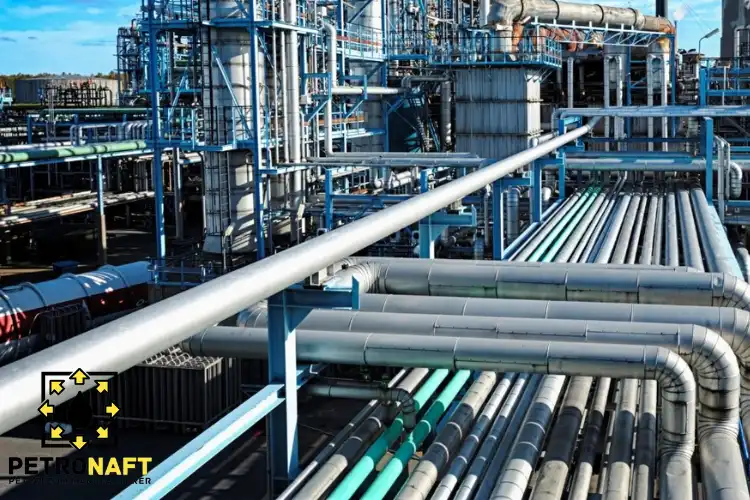
Bitumen Blowing Technology upgrades straight-run bitumen into oxidized (blown) grades by injecting air into hot bitumen under controlled temperature and mixing. The result is a material with a higher softening point, lower penetration, and better heat resistance—ideal for roofing membranes, waterproofing systems, pipe coatings, and industrial mastics where “stays put under heat” matters.
Highlights & Key Sections
Why this matters (in plain terms)
If you’re buying, producing, or specifying oxidized bitumen, you care about three outcomes:
- Heat stability: less flow and slump at elevated temperatures
- Durability: better aging performance for many industrial uses
- Consistency: repeatable grades for manufacturing lines and job sites
In this guide, you’ll see how the process works, what to control, where it’s used, and how to choose the right grade without guesswork.
Bitumen Blowing Technology: How the Process Works
At its core, the process is controlled oxidation. You heat bitumen to a target range, inject air through a reactor, and hold conditions until the product hits the required properties.
Typical process flow (what actually happens in a plant)
- Feed preparation: preheat straight-run bitumen; filter if needed to protect pumps and spargers
- Oxidation (“blowing”) reactor: inject air through spargers while mixing to maximize contact
- Reaction control: manage temperature, airflow, pressure, and residence time to reach grade
- Off-gas handling: cool/condense vapors; scrub or treat off-gases before release
- Finishing: stabilize, de-aerate, filter, then transfer to storage/packing
What changes inside the bitumen
Oxidation and condensation reactions gradually increase higher-molecular-weight fractions. Practically, you’ll observe:
- Softening point rises (better heat resistance)
- Penetration drops (harder material at 25°C)
- Viscosity increases (impacts pumping, blending, and end-product processing)
- Elastic response may change depending on feedstock and severity
The levers that control product grade
Two plants can run “air blowing” and still get different results if they don’t control the right knobs.
The parameters that matter most
- Temperature: drives reaction speed and final stiffness
- Air rate (and distribution): affects oxidation intensity and uniformity
- Residence time: longer time typically increases hardness and softening point
- Mixing efficiency: prevents hot spots and uneven blowing
- Feedstock selection: crude source and base bitumen grade heavily influence outcomes
- Pressure and foaming control: impacts gas-liquid contact and stability
Quick reference table: what to adjust when a property is off
| If you need more… | Typical adjustment direction | Why it works | Watch-outs |
|---|---|---|---|
| Higher softening point | Increase severity (time and/or temp) | Pushes oxidation/polymer growth | Risk of over-hardening, brittleness |
| Higher penetration (softer) | Reduce severity | Less oxidation | May reduce heat stability |
| Better batch consistency | Improve mixing + air distribution | Eliminates gradients | Reactor internals may need upgrade |
| Lower odor/smoke tendency | Improve off-gas handling + tighter control | Prevents overheating and captures volatiles | Requires good condensers/scrubbers |
| Faster throughput | Optimize air dispersion / consider catalyst route | Improves mass transfer or reaction rate | Corrosion, handling, and approvals |
Understanding grade notation (how buyers actually choose)
Many oxidized bitumen grades are sold as pairs like 90/40 or 115/15—commonly interpreted as:
- Softening point (°C) / Penetration (dmm at 25°C)
So a 115/15 grade generally means higher heat resistance and harder binder than 90/40.
Application-driven selection (a buyer-friendly shortcut)
| Application | What you prioritize | Typical grade direction | Why it’s chosen |
|---|---|---|---|
| Roofing membranes | Heat stability + processability | Higher softening point / lower penetration | Reduces flow on hot roofs |
| Waterproofing sheets | Dimensional stability + durability | Mid-to-high softening point | Better performance under load/heat cycles |
| Pipe coatings | Adhesion + thermal stability | Mid range, tuned for coating process | Helps coating stay intact during service |
| Mastics & sealants | Handling + set behavior | Application-specific | Balances workability and final stiffness |
| Industrial boards / insulation facings | Heat stability + compatibility | Often higher softening point | Supports manufacturing and service temps |
Real-world tip: Always choose by service temperature + manufacturing method, not just “harder is better.” Over-hard product can crack in cold conditions or during flexing.
Mini case examples (what “good” looks like)
Example 1: Roofing membrane line stabilizes summer performance
A membrane producer experienced roll blocking and slump during hot-weather storage. They shifted to a higher softening point oxidized grade and tightened incoming QC to keep penetration within a narrow band. Result: fewer defects, smoother line speed, and less temperature sensitivity in shipping containers.
Example 2: Pipe coating manufacturer reduces rework
A coating line saw inconsistent thickness and edge lifting. The root cause was batch-to-batch viscosity drift in oxidized bitumen. After switching to a supplier with stronger process control (consistent softening point + viscosity window), the plant reduced rework and improved coating uniformity.
Key benefits (and the trade-offs you should know)
Benefits that drive most purchasing decisions
- Higher heat resistance: improves stability under hot service and storage
- Better dimensional stability: valuable for membranes and coatings
- Controlled hardening: allows manufacturing-grade repeatability
- Improved resistance to flow: reduces sag and deformation
Trade-offs (when you should reconsider)
- Lower low-temperature flexibility in some formulations
- Higher viscosity can complicate pumping and blending
- Over-oxidation risk can create brittleness and cracking in certain uses
Practical rule: If your application involves frequent bending, cold climates, or impact loading, you may need formulation support (e.g., modifiers or blends) instead of simply increasing oxidation severity.
Batch vs continuous blowing (and why it matters commercially)
Your technology choice impacts quality, cost, and lead time.
| Option | Best for | Strengths | Limitations |
|---|---|---|---|
| Batch reactor | Multi-grade production, smaller volumes | Flexible, easier grade switching | More variability if controls are weak |
| Continuous unit | High volume, steady demand | Consistent output, efficient | Less flexible, higher capex |
| Enhanced gas dispersion designs | Upgrading older plants | Better contact, faster blowing | Requires retrofit planning |
| Catalyst-assisted routes (where allowed) | Throughput-driven operations | Shorter cycle time | Corrosion, handling, approvals, product compatibility |
Buyer implication: If you need tight tolerances, ask how the producer controls air distribution, temperature uniformity, and end-point determination (not just “we blow to spec”).
Quality control: what to test before you buy
A strong COA helps, but it’s not enough if your application is sensitive. Request a test package that matches your use case.
Core tests that translate to real performance
- Softening point (heat resistance indicator)
- Penetration at 25°C (hardness indicator)
- Viscosity at application temperature (pumpability and processing)
- Flash point (handling safety margin)
- Ductility or tensile-type flexibility indicator (depends on your product)
- Solubility / impurities screen (cleanliness and consistency)
QC table: what each result tells a buyer
| Test result | What it signals | Why you care |
|---|---|---|
| Softening point | High-temp stability | Predicts flow resistance in heat |
| Penetration | Stiffness at 25°C | Impacts handling and end stiffness |
| Viscosity | Processability | Predicts pumping, mixing, coating behavior |
| Flash point | Safety margin | Reduces risk during heating and application |
| Flexibility indicator | Crack resistance | Important for membranes and dynamic uses |
| Impurities/solids | Cleanliness | Protects filters, nozzles, surface finish |
Procurement best practice: Define acceptance as a property window, not a single number. This keeps your manufacturing stable.
Practical mini tutorial: specify a blown bitumen grade in 15 minutes
Use this when you want to move fast but stay technically correct.
Step 1: Define the real service temperature
- What’s the hottest surface temperature the product will see?
- Consider: rooftop temps, black surfaces, storage in containers, process line temperatures.
Step 2: Choose softening point based on “no-flow” need
- Higher service temperature → higher softening point
- Leave margin for heat spikes and transport.
Step 3: Set penetration for handling and flexibility
- Lower penetration → harder, more heat-stable
- Too low → can become brittle for certain applications.
Step 4: Set a viscosity window at your processing temperature
- Specify it at the temperature you actually pump or coat.
- This prevents “it meets softening point but runs badly on the line.”
Step 5: Add safety and cleanliness requirements
- Minimum flash point appropriate for your heating practice
- Maximum insolubles/solids to protect equipment and appearance.
Step 6: Validate with a small trial
- Run a short production trial or a lab blend test.
- Confirm: coating behavior, roll stability, adhesion, cracking resistance (as relevant).
Safety & environmental essentials (what good plants do)
Oxidation is exothermic and can produce fumes and off-gases. Strong operations design for control, not reaction.
Operational controls that reduce risk
- Temperature control with redundancy: prevents runaway and over-oxidation
- Foam management: avoids carryover into off-gas lines
- Gas detection where needed: protects people during maintenance and sampling
- Off-gas treatment: condenser + scrubbing/abatement suited to local requirements
- Hot work discipline: strict permit and isolation practices around reactors and tanks
Trends shaping modern blowing units (and why buyers benefit)
- Advanced process control + online property estimation to reduce batch variability
- Energy recovery and heat integration because fuel and power costs keep rising
- Stricter emissions expectations pushing better capture, treatment, and monitoring
- Cleaner handling systems (improved filtration and closed transfer) to reduce contamination and odor complaints
Troubleshooting quick guide (production and end-use)
Use this table to diagnose common issues fast.
| Symptom | Likely cause | What to do next |
|---|---|---|
| Softening point too low | Under-oxidation or weak feedstock | Increase severity or adjust feed selection |
| Product too brittle | Over-oxidation or too hard grade | Reduce severity; consider blend/modifier strategy |
| Viscosity too high for pumping | Severity too high or cooling issues | Adjust end-point; review storage temperature |
| Strong odor/smoke | Overheating, poor off-gas capture | Improve temperature control and abatement |
| Batch-to-batch drift | Inconsistent airflow/mixing/end-point | Audit spargers, mixing, and end-point method |
| Excess solids/dirty product | Feed contamination or poor filtration | Improve filtration and tank hygiene |
Conclusion
Bitumen Blowing Technology is most valuable when you need a predictable, heat-stable oxidized binder for membranes, waterproofing, coatings, or industrial compounds. The best results come from controlling temperature, air dispersion, mixing, and end-point testing—and from specifying grades by service temperature and process needs, not just by “hardness.”
Executive Summary: buyer-ready checklist
Use this as your practical closeout before requesting quotes or running production.
- Define application + service temperature (include transport/storage heat exposure)
- Pick target grade window (softening point + penetration, plus viscosity at your process temperature)
- Request QC package (heat resistance, hardness, viscosity, safety margin, flexibility indicator, cleanliness)
- Confirm consistency controls (air distribution, mixing, end-point determination, filtration)
- Review packaging and logistics (bulk, drums, blocks; melting behavior and storage guidance)
- Run a short trial (line speed, coating behavior, roll stability, cracking resistance where relevant)
FAQ
1) Is oxidized (blown) bitumen the same as regular paving bitumen?
No. Oxidized grades are produced by controlled oxidation to raise softening point and reduce penetration. Paving grades focus more on road performance and are typically not “blown” to the same end-point.
2) What’s the fastest way to choose the right grade?
Start with maximum service temperature, then set a softening point target with margin. After that, choose penetration and viscosity windows that match your manufacturing method and flexibility needs.
3) Can blown bitumen replace polymer-modified binders?
Sometimes, but not always. Blown grades improve heat stability, while polymers can add elasticity and crack resistance. Many products use blends or modifiers depending on performance targets.
4) Why do two suppliers’ “same grade” behave differently on the line?
Feedstock differences and process control can shift viscosity, volatility, and consistency even if headline numbers match. That’s why a viscosity window and a short trial run are important.
5) What are the biggest production risks in air blowing?
Temperature runaway, foaming/carryover, and poor off-gas handling are the main ones. Good design relies on robust temperature control, stable air distribution, and well-sized abatement systems.
Sources
- Global industry body with technical resources and market guidance on bitumen products and applications: Eurobitume
- Authoritative test standard publisher for bitumen properties such as softening point, penetration, flash point, and ductility: ASTM International
- Practical engineering guidance and technical publications for asphalt/bitumen materials and handling: Asphalt Institute
- Worker-safety reference for hazardous gases and industrial exposure controls relevant to hot processing environments: Occupational Safety and Health Administration (OSHA)