

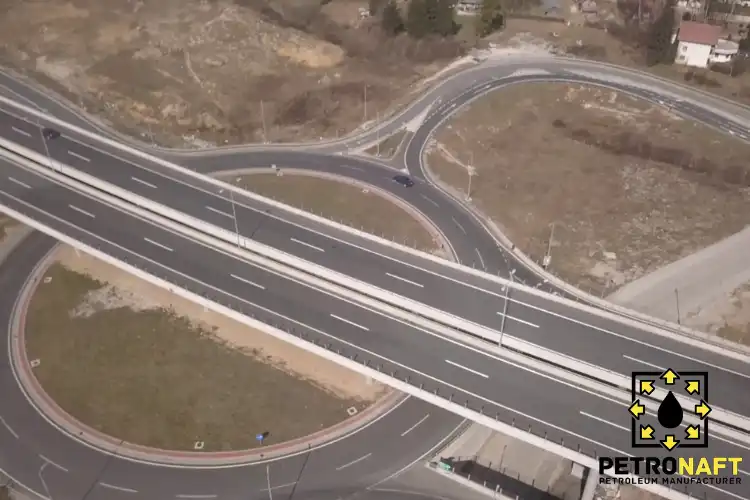
Bitumen Emulsion for Road Construction is a cold-applied asphalt binder dispersed in water. Choose rapid-, medium-, or slow-setting (and cationic/anionic) grades based on aggregate, temperature, and opening time. Used correctly, it improves bonding, enables chip seals and slurry/micro surfacing, supports recycling, and cuts heat, fumes, and energy compared with hot binders.
Road owners like emulsions for one simple reason: they deliver durable results with faster, safer, often lower-carbon construction—when the right type is matched to the job.
In this guide, you’ll learn:
- What each emulsion type does (and where it fails)
- How to select a grade for common road works
- Practical application steps and field-proven checks
- What to specify when buying, so you don’t get “a drum of problems”
Highlights & Key Sections
Bitumen Emulsion for Road Construction: What It Is and Why It’s Used
A bitumen emulsion is tiny bitumen droplets suspended in water using an emulsifier (a “bridge” molecule). That water makes the binder sprayable and workable at much lower temperatures than hot bitumen.
What matters on site is what happens next: the emulsion sets (starts to separate) and breaks (bitumen droplets coalesce), leaving a continuous bitumen film that bonds aggregate or layers together.
Why contractors choose emulsions:
- Less heating required → safer handling and fewer fumes
- Excellent for pavement preservation (seals and thin treatments)
- Enables cold techniques like cold mixes and recycling
- Better workability for spray and mix-in-place processes
Field reality: Most emulsion failures come from surface moisture, dust, wrong grade selection, or opening to traffic too early—not from “bad bitumen.”
Types of Bitumen Emulsion You’ll See in Real Projects
You’ll usually decide based on two “levers”:
- Electrical charge (compatibility with aggregate)
- Cationic (positive): commonly preferred with many aggregates and modern practices
- Anionic (negative): still used depending on local materials and tradition
- Setting rate (how fast it breaks/sets)
- Rapid-setting (RS): breaks quickly for chip seals/surface dressing
- Medium-setting (MS): good for mixes with aggregate (cold mixes, patching)
- Slow-setting (SS): best where you need more mixing time or penetration (prime-like roles, slurry systems depending on design)
Quick comparison table
| What you’re choosing | Best when you need… | Typical uses | Common mistake |
|---|---|---|---|
| Cationic vs anionic | Reliable coating with your aggregate chemistry | Most spray & mix applications | Assuming one works everywhere without aggregate compatibility checks |
| RS vs MS vs SS | Control over break time and workability | Chip seals (RS), cold mixes (MS), longer work time (SS) | Picking “fast” to open sooner, then losing adhesion due to incomplete break |
Where Emulsions Are Used in Road Construction
1) Tack coat (bonding between asphalt layers)
Tack coat is the “glue” between layers. When you get tack right, you reduce slippage, shoving, and delamination.
Best practice:
- Spray a uniform, thin film—no stripes, puddles, or dry gaps
- Let it break fully before paving (unless your spec allows otherwise)
Mini tutorial: Tack coat done right (8 steps)
- Sweep and blow clean (dust is the #1 bond killer)
- Patch leaks and remove loose material
- Calibrate the sprayer (rate + nozzle angle + bar height)
- Spray evenly; overlap minimally
- Watch for full break (color change + no pickup on boot)
- Keep traffic off unless permitted
- Pave promptly after break (avoid contamination)
- Cut cores later to verify bond if the project is critical
2) Prime-type functions (stabilizing absorptive bases)
On granular bases, the goal is to reduce dust, lightly bind fines, and improve bonding. Emulsions can help when a hot prime isn’t desirable or feasible.
Key warning: Highly absorptive bases can “drink” binder unevenly. Control with proper surface preparation and realistic expectations.
3) Chip seal / surface dressing (fast protection and skid resistance)
Chip seal uses spray-applied emulsion + stone chips to create a thin wearing surface that seals, restores texture, and delays bigger rehab.
Where it shines:
- Rural roads and secondary networks
- Early-life preservation to keep water out
Where it struggles:
- High shear areas (tight turns, intersections) unless properly designed
- Poor sweeping/rolling discipline (chips fly off, then complaints begin)
4) Slurry seal and micro-surfacing (thin, mix-applied surface renewal)
These are mix systems using emulsion + graded aggregate + fillers/additives.
- Slurry seal: seals and improves surface; usually lower structural contribution
- Micro-surfacing: handles heavier traffic and can correct minor rutting with multi-layer design
Practical insight: If you need to correct rutting or open to traffic quickly, micro-surfacing often outperforms basic slurry—but only with strict mix control and proper weather windows.
5) Cold mix patching and maintenance mixes
Emulsions enable cold mixes for patching and utility reinstatement.
What makes a cold patch succeed:
- Correct gradation and binder content (too rich → bleeding; too lean → raveling)
- Compaction, even for “temporary” repairs
- Water management (wet holes fail fast)
6) Cold recycling (in-place or plant)
Cold recycling uses emulsion as a binder (often with active fillers) to reuse reclaimed asphalt and base materials.
Why buyers care: Recycling can reduce virgin binder demand and hauling—often the biggest cost and schedule wins on network-scale programs.
How to Choose the Right Emulsion Grade
Think like a risk manager: you’re balancing workability vs return-to-traffic time vs bond performance.
Selection matrix (fast, practical)
| Project condition | Better direction | Why |
|---|---|---|
| Cool weather / short work window | Faster setting | You need break before traffic/paving |
| Very dusty surface or weak cleanliness control | Don’t “speed up”; improve prep | Fast break on dust gives false early strength then debonds |
| Coarse aggregate, spray application (chip seal) | Rapid-setting focus | You want quick chip retention |
| Mix-in-place needs time to coat and mix | Medium/slow setting focus | Too-fast break prevents full coating |
| High traffic + shear stress | Consider polymer-modified systems | Better cohesion and resistance to scuffing |
Three questions to answer before you buy:
- What’s the aggregate type and cleanliness?
- What’s the minimum realistic break/cure time before traffic or paving?
- Are you optimizing for adhesion (bond) or cohesion (internal strength) — or both?
Application Conditions That Make or Break Performance
Even the best emulsion can’t compensate for poor conditions. Focus on these four:
- Surface cleanliness: dust, mud, and loose fines stop bonding
- Moisture: damp is sometimes tolerable; wet is usually failure
- Temperature and humidity: they control evaporation and break behavior
- Traffic control: opening too early causes tracking, peeling, and chip loss
Common problems and quick fixes
| Symptom on site | Likely cause | Quick fix |
|---|---|---|
| Tracking/pickup on tires | Opened before full break | Extend curing, improve traffic control |
| Poor chip retention | Wrong setting speed or weak rolling/sweeping | Adjust grade, improve rolling plan and early sweep timing |
| Streaks/striping | Bad nozzle setup or bar height | Recalibrate sprayer, replace worn nozzles |
| Debonding between lifts | Dusty surface or under-applied tack | Improve cleaning, verify application uniformity |
Quality Control Checks Professionals Actually Use
A strong QC routine prevents expensive disputes because you can prove what happened.
| QC check | What it tells you | Why it matters |
|---|---|---|
| Visual stability (no major separation) | Storage/handling health | Separation can cause inconsistent application |
| Viscosity/consistency | Sprayability and mix behavior | Too thick → streaking; too thin → run-off |
| Sieve/particle screening | Oversize particles or coagulation | Predicts nozzle clogs and poor uniformity |
| Residue properties | “What’s left after water” | Closest indicator of binder performance |
| Adhesion/coating checks | Compatibility with aggregate | Predicts stripping and raveling |
Hands-on tip: Always keep a simple “job-site jar test” habit—sample, label, and compare day-to-day. It catches handling issues early.
Buying and Specifying: What to Ask Your Supplier (So You Get the Right Product)
For procurement and technical approvals, don’t buy “emulsion” as a generic commodity. Buy it as a performance-controlled material.
Include these in your RFQ / submittal requirements:
- Intended use (tack coat, chip seal, slurry/micro, cold mix, recycling)
- Preferred setting rate and any traffic opening constraints
- Aggregate type and any known adhesion risks
- Storage conditions (temperature range, maximum storage duration)
- Required QC documentation (batch ticket + key test results)
- Delivery packaging (bulk, drums, IBC) and pump/handling compatibility
A buyer-friendly rule: If the supplier can’t clearly explain why a grade fits your use case, you’re buying risk.
Trends That Are Shaping Emulsion Use
- Network-scale pavement preservation programs: Agencies increasingly treat chip seals and slurry/micro systems as planned lifecycle tools, not “quick fixes,” because they’re cost-effective when timed early.
- Performance-driven emulsions: Polymer modification and smarter additive packages help emulsions resist scuffing, rut polishing, and moisture damage—especially important on heavier traffic corridors.
- Smarter application control: Modern distributors use improved calibration, rate control, and data logging to reduce streaking and over-application—making outcomes more consistent and audit-friendly.
Conclusion
If you match the emulsion’s charge and setting behavior to your aggregate, climate, and construction method—and you control surface cleanliness, moisture, and curing—you get reliable bonding and surface performance. Done well, Bitumen Emulsion for Road Construction becomes a high-ROI tool for tack, sealing, thin surfacing, and recycling without the downsides of hot-applied binders.
Executive Summary Checklist (Practical)
Use this before ordering or spraying:
- Define the treatment: tack, chip seal, slurry/micro, cold mix, recycling
- Confirm aggregate type, moisture sensitivity, and cleanliness plan
- Choose setting rate based on mixing time and return-to-traffic needs
- Ensure weather and surface moisture conditions are workable
- Calibrate distributor/mixing equipment and verify uniform application
- Require batch QC documentation and keep labeled job-site samples
- Don’t open to traffic until break/cure requirements are met
- Inspect early performance (tracking, chip retention, raveling) and correct fast
FAQ
1) What’s the difference between rapid-, medium-, and slow-setting emulsions?
It’s mainly how quickly the emulsion breaks and bonds. Rapid-setting is ideal for spray + stone applications, medium-setting suits mix-in-place needs, and slow-setting provides more working time where mixing and wetting are critical.
2) Can bitumen emulsion be applied on a damp surface?
Light dampness may be acceptable in some systems, but free water is a major risk. If water blocks adhesion, the emulsion can break unevenly and leave a weak, strip-prone film.
3) Why does chip seal sometimes lose stone after opening to traffic?
Common causes include opening too early, insufficient rolling, dusty chips, or a grade that breaks too slowly/quickly for the conditions. Chip retention depends on correct binder, clean aggregate, and disciplined construction sequence.
4) Is polymer-modified emulsion worth the cost?
Often yes for high traffic, high shear, or moisture-sensitive environments. The added cohesion and adhesion can reduce raveling and scuffing, especially where thin treatments face heavy turning or braking forces.
5) How should asphalt emulsion be stored to avoid separation or damage?
Store within the supplier’s recommended temperature band, avoid freezing, and use gentle circulation when needed. Long storage, extreme heat, or aggressive pumping can destabilize the emulsion and cause inconsistent performance.
Sources
- Federal Highway Administration guidance on pavement preservation treatments and construction checklists used widely in practice. Pavement Preservation Checklist Series.
- Asphalt Institute manual reference for emulsion selection, handling, testing, and field applications. MS-19: The Basic Asphalt Emulsion Manual.
- ASTM International specifications defining performance requirements and test methods for emulsified asphalt materials used in road construction. Standard Specification for Cationic Emulsified Asphalt.