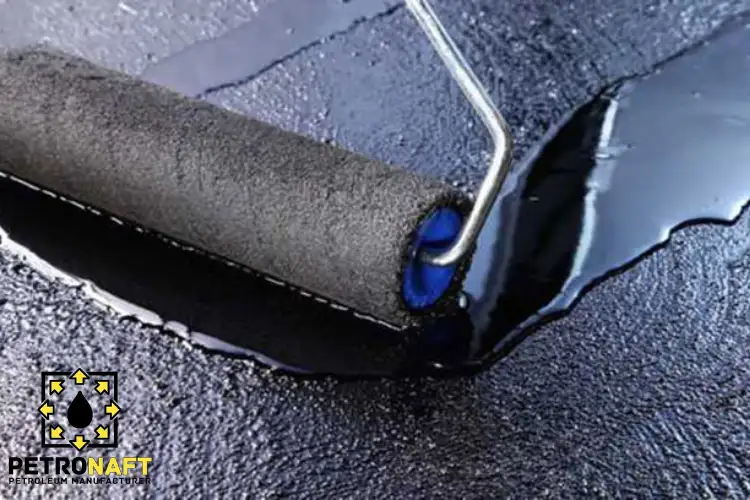
Bitumen Paint Production is the controlled blending of bitumen binder, solvent or water phase, fillers, and performance additives to achieve a protective coating with stable viscosity, fast-enough drying, and reliable film build. A good production setup focuses on three things: clean raw materials, repeatable mixing/dispersion, and a QA routine that catches instability before the product reaches site.
Highlights & Key Sections
What bitumen paint is and why production discipline matters
Bitumen paint is used as a protective, waterproofing, or anti-corrosion coating on common substrates like steel, concrete, masonry, and wood (depending on the grade). It’s popular because it’s cost-effective and forms a moisture-resistant film.
Where things go wrong in the real world is rarely “bad bitumen.” It’s usually:
Inconsistent solids and viscosity from batch to batch
Poor dispersion (settling, grit, weak coverage)
Solvent loss or emulsifier imbalance (skin, separation, rework)
Weak QA (problems discovered by the customer, not the factory)
If you build production around repeatability, you reduce claims, protect your brand, and make procurement teams far more comfortable placing repeat orders.
Product families you can manufacture
Bitumen paint “formulas” change depending on whether you want quick drying, low odor, high film build, or compatibility with certain surfaces.
1) Solvent-based bitumen paint
Best for: fast drying, cooler weather application, strong wetting on steel and old concrete.
Watch-outs: VOC limits in some markets, flammability, solvent balance.
2) Water-based bitumen emulsion paint
Best for: lower odor, lower flammability risk, compliance-friendly in many markets.
Watch-outs: freeze–thaw stability, drying time in high humidity, compatibility with some primers/topcoats.
Best for: better flexibility, crack-bridging, and durability in temperature cycling.
Watch-outs: higher cost, tighter processing window, and more sensitive QC.
Bitumen Paint Production Workflow (From Raw Materials to Packed Drums)
A high-performing plant runs the same “movie” every batch. Here’s the workflow used by disciplined manufacturers.
Step 1: Define the target performance (before you touch a mixer)
Write the target spec in plain language:
Application method: brush / roller / spray
Typical dry film build per coat
Dry-to-touch expectation at a defined temperature range
Storage stability target (e.g., “no hard settling in normal storage”)
Surface type and environment (buried, marine splash, indoor, roof, etc.)
This prevents a common trap: optimizing for “looks good in the lab” but failing on site.
Step 2: Raw material acceptance checks (simple, but powerful)
At minimum, record for every incoming lot:
Visual cleanliness (no debris, no unexpected gel)
Binder consistency at defined temperature
Solvent identity and evaporation behavior (for solvent grades)
Filler dryness (wet filler can ruin stability and dry time)
Emulsion pH and stability indicators (for water-based)
Mini-tutorial: the fastest stability predictor
If you have recurring settling issues, run a quick “jar stress test” on each new filler lot: mix a small sample at production solids, let it stand 24–48 hours, then check for hard-pack vs soft settling. This single test can save full-batch rework.
Typical formula structure
Below are typical building blocks. Exact percentages depend on your market, price point, and performance targets.
Core formulation table (purpose + tuning levers)
Component
What it does
Typical impact when increased
Practical notes
Bitumen binder
Waterproofing + film body
Higher film build, slower drying, higher viscosity
Control temperature during transfer to avoid localized overheating
Solvent (or water phase)
Application viscosity + drying profile
Lower viscosity, faster leveling
Too much solvent can cause shrinkage, pinholes, and low DFT
Fillers/extenders
Cost control + film build + thixotropy
Higher solids, better build, more settling risk
Filler particle size distribution matters more than people expect
Adhesion promoters
Better bonding to difficult substrates
Stronger adhesion, fewer peel failures
Especially valuable on smooth steel and dense concrete
Anti-settling/thixotropic additive
Storage stability + sag control
Better anti-sag, less hard-pack
Overuse can hurt brushability and hiding
Defoamer/wetting aid
Process stability + surface quality
Fewer pinholes, better substrate wetting
Particularly important for water-based systems
Polymer modifier (optional)
Flexibility, crack-bridging
Better durability, better thermal cycling
Requires tighter control of dispersion and compatibility
Production equipment that actually matters
You don’t need the most expensive setup, but you do need the right functions covered.
Minimum recommended configuration
Jacketed mixing vessel (temperature control is a quality tool, not a luxury)
High-shear disperser (for wetting fillers and stabilizers)
Transfer pump sized for viscous fluids
Inline strainer/filter (catches unmixed particles before packaging)
Calibrated scale system (batch accuracy drives repeatability)
Basic lab kit (viscosity cup or rotational viscosity, density, solids, drying checks)
Practical rule-of-thumb
If your product settles hard, or customers complain about grit:
It’s usually dispersion energy + filler selection + addition order, not “add more solvent.”
The real production process (order of addition + control points)
Different plants use different sequences, but high-quality output usually follows this logic.
A) Solvent-based bitumen paint process (typical)
Charge solvent (partial) into the vessel
Start agitation and add wetting/thixotropic system (let it fully activate)
Add bitumen binder gradually while maintaining a stable temperature band
Add fillers/extenders slowly under enough shear to avoid clumps
Add adhesion and performance additives
Adjust viscosity with remaining solvent to hit the target window
Filter/strain, then package
Key control points
Temperature spikes can create local gelling or long-term instability
Adding fillers too fast creates “fish eyes” and grit that never truly disappears
Late solvent correction should be small—big corrections usually mean the batch was off earlier
B) Water-based bitumen paint process (typical)
Verify water phase conditions (temperature, pH range, clean tank)
Adjust solvent balance or coalescence; review humidity sensitivity
Stand stability
Returns for separation
Layering, hard settling, inconsistent color
Improve anti-settle system; adjust filler ratio and particle size
Troubleshooting guide (real-world issues)
Problem: Hard settling that won’t re-mix
Likely causes:
Filler too coarse or too dense for the current stabilizer package
Insufficient shear during dispersion
Solids too high for the viscosity window
Fix strategy:
Reduce the “heavy filler fraction” and replace with better-balanced extenders
Improve wetting order (wetting package first, then filler)
Add controlled thixotropy rather than “more filler”
Problem: Skinning in the drum
Likely causes:
High volatility solvent fraction + headspace oxygen exposure
Packaging delays while warm
Inadequate anti-skin approach (when used)
Fix strategy:
Package at controlled temperature
Reduce headspace, improve sealing discipline
Revisit solvent balance for drying without aggressive surface skin
Problem: Sagging on vertical surfaces
Likely causes:
Viscosity measured at one condition but low yield stress in reality
Over-thinning for spray
Too little anti-sag structure
Fix strategy:
Build thixotropy (not just “thicker”)
Provide separate spray grade vs brush grade if your market demands both
Problem: Poor adhesion on steel
Likely causes:
Surface contamination in the field (oil, salts, dust)
Insufficient wetting/anchoring in the coating design
Application over incompatible old coatings
Fix strategy:
Publish a simple surface prep guide for customers
Include an adhesion promoter system appropriate to your substrate mix
Recommend a compatible primer when needed (and test it)
Buyer-focused section: what professionals look for before purchasing
If you’re selling to contractors, distributors, or industrial maintenance teams, they typically want predictable performance more than fancy wording.
What to include in your technical data sheet
Coverage range per coat (realistic, not marketing-only)
Recommended dry film build per coat
Dry-to-touch and recoat guidance (with temperature/humidity caveats)
Surface prep basics and substrate limitations
Storage, shelf life, and transport temperature guidance
Compatibility notes (especially with topcoats and membranes)
What to provide with each shipment
Batch number traceability
A simple certificate of analysis (viscosity, solids, density, basic stability check)
Safety documentation aligned with your market requirements
Trends and innovations shaping bitumen paint manufacturing
Two shifts are increasingly common in 2024–2026 market behavior:
Lower-odor, compliance-friendly products: Many buyers now prefer water-based or reduced-solvent solutions, especially for enclosed spaces and public-sector projects. This pushes manufacturers to improve emulsion stability and humidity-tolerant drying.
Data-driven QC and process control: Plants are moving toward tighter batching automation, inline viscosity monitoring, and standardized release sheets to reduce claims and support larger distribution footprints.
If you build your process around repeatability and documented QC, you’ll be better positioned for both premium accounts and large tenders.
Conclusion
In practice, Bitumen Paint Production succeeds when you treat it like a controlled manufacturing process—not a “mix it until it looks right” operation. Define the target spec, control addition order and dispersion, and run a release checklist that catches viscosity drift, solids errors, and settling risk early. That is how you consistently ship a coating that applies easily and performs in the field.
Correct addition order followed: wetting/stabilizers → binder/emulsion → fillers → final adjustments
Dispersion validated: no grit, no unmixed lumps, stable viscosity trend
QC passed: viscosity, density, solids/non-volatiles, drying screen, stand stability
Packaging discipline: filtration/straining, controlled fill temperature, sealed containers, clear labeling
Traceability ready: batch record + COA + safety documentation
FAQ
1) Can bitumen paint be sprayed, or is it only for brush/roller?
Many grades can be sprayed, but spray performance depends on viscosity profile, filtration, and anti-sag behavior. A “brush grade” often needs adjustment to avoid runs and tip clogging when sprayed.
2) Why does bitumen paint sometimes stay tacky for too long?
Common reasons are high humidity, low temperature, overly heavy film build, or an imbalanced volatile phase. The fix is usually formula tuning plus clearer application guidance on coat thickness and conditions.
3) What causes separation or layering inside the drum?
Separation is typically driven by filler density, poor wetting/dispersion, or insufficient structure for suspension. A stability-focused dispersion step and better-balanced fillers usually outperform “just increase viscosity.”
4) Is water-based bitumen paint always lower performance than solvent-based?
Not automatically. Water-based systems can perform very well when properly stabilized and matched to the environment. The main vulnerabilities are freeze damage, humidity-sensitive drying, and compatibility with certain substrates/topcoats.
5) How do I reduce customer complaints without making the paint more expensive?
Start with process control: weighing accuracy, dispersion energy, filtration, and a simple QC release sheet. These reduce variability and failures faster than adding costly modifiers.
Sources
Industry-standard test methods for solvent-bearing bituminous compounds used to structure practical QC checkpoints — ASTM D6511/D6511M
Specification framework for asphalt-based protective roof coatings that informs composition limits and performance thinking — ASTM D2824/D2824M
Test methods covering emulsified bitumens used as protective coatings, relevant to water-based product design — ASTM D2939
Global guidance for selecting protective paint systems for corrosion environments, useful for performance targeting — ISO 12944-5
Hazard communication requirements that underpin labeling, SDS discipline, and worker safety in coating plants — OSHA 29 CFR 1910.1200