


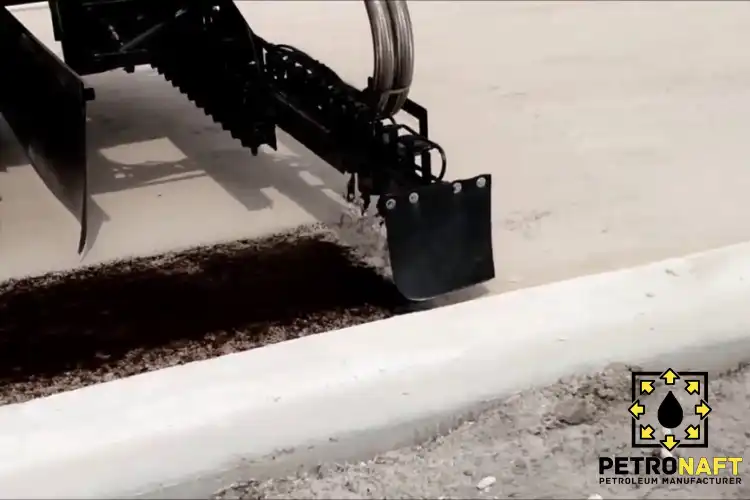
Cutback Bitumen vs Asphalt Types comes down to speed and logistics: cutback works cold and penetrates well for priming or remote patching, but it releases solvents (VOC), carries higher fire risk, and is restricted in many specs. For most paving, modern emulsions, warm mix, or hot mix deliver cleaner handling and longer-term durability.
Highlights & Key Sections
What “cutback bitumen” really is (and why it behaves differently)
Cutback bitumen is asphalt cement “cut back” (diluted) with a volatile petroleum solvent so it becomes sprayable or mixable at lower temperatures.
What that means in the field:
- Low-temperature application (often no heating or only mild warming)
- Curing by evaporation (solvent leaves, binder stiffens)
- High penetration into dusty or granular surfaces (useful for priming)
The trade-off is the solvent:
- VOC emissions and odor
- Flammability and storage/handling risk
- Regulatory/spec restrictions in many regions and projects
What counts as “asphalt types” in real projects
When contractors say “asphalt,” they usually mean one of these binder-and-mixture systems:
- Hot Mix Asphalt (HMA): produced and placed hot; best structural performance for most roads.
- Warm Mix Asphalt (WMA): similar to HMA, but produced at lower temperatures to reduce fumes and energy use.
- Cold Mix Asphalt: workable at ambient temps; often for pothole and small repairs.
- Asphalt Emulsions (cationic/anionic): asphalt droplets in water with an emulsifier; common for tack, prime (in some specs), surface treatments.
- Polymer-Modified Asphalt (PMB): improved rutting and cracking resistance; used for heavy traffic and harsh climates.
- Specialty mixes: SMA, porous asphalt, mastic asphalt—chosen for specific performance goals.
Cutback Bitumen vs Asphalt Types: Quick Comparison
Use this table to match the material to the job (and avoid expensive rework).
| Factor that matters on-site | Cutback bitumen (RC/MC/SC) | Emulsions | Cold mix asphalt | WMA/HMA |
|---|---|---|---|---|
| Typical application temperature | Ambient to mild warming | Ambient | Ambient | Hot (WMA lower than HMA) |
| How it “sets” | Solvent evaporates | Water breaks/evaporates, emulsion breaks | Binder sets slowly; depends on formulation | Cooling and compaction |
| Best for | Prime coat (where allowed), remote spraying, some patch mixes | Tack, surface dressing, fog seals, slurry/micro | Potholes, small repairs | Structural overlays, new paving |
| Main risks | VOC, flammability, curing variability | Moisture sensitivity during break, weather window | Early raveling if trafficked too soon | Logistics, plant access, temperature control |
| Environmental profile | Typically worst (solvent) | Typically better (water-based) | Varies by formulation | Better than cutback; energy use depends |
| Performance ceiling | Limited for heavy structural layers | Great for bonding/seals; not structural by itself | Limited vs hot/warm mixes | Highest for long-life pavements |
Pros and cons by use case (the way buyers actually decide)
1) Prime coat on granular base
Prime coat is about stabilizing dust and improving adhesion before placing a bound layer.
Cutback advantages
- Penetrates granular base well
- Can be practical in remote areas with limited heating equipment
Cutback drawbacks
- VOC and fire concerns
- Cure time can be inconsistent (wind, temperature, base absorption)
When emulsions win
- Many specs prefer emulsions for lower emissions
- Better alignment with modern site safety expectations
Real example
- A rural base course with high dust content often fails early if priming is skipped. A properly applied prime (cutback where allowed, or the specified emulsion) reduces dusting and helps the first layer bond instead of “sliding” under traffic.
2) Tack coat between asphalt layers
Tack is about bond strength between layers—one of the most underrated factors in pavement life.
- Cutback can work as a tack, but it’s often not the best choice in modern specs.
- Emulsions dominate because they bond well with lower fumes and easier handling.
Mini rule
- If your core samples show slippage cracks or delamination, your “problem” might not be the mix—it’s often poor tack rate, dirty surface, or trafficking before proper set.
3) Patching and small-area maintenance
If you need something workable without a plant:
- Cold mix is designed for this.
- Some cutback-based mixes can be used, but they may be restricted and can smell strongly.
Best practice for durability
- Keep patch edges square, clean and dry
- Use the right tack/edge sealing approach
- Compact more than you think you need (patches fail from low density)
4) Surface treatments and sealing
For chip seals, fog seals, and rejuvenation:
- Emulsions and specialized binders are usually the first choice.
- Cutback use is often limited by VOC policies and project specs.
RC vs MC vs SC: picking the right cutback grade
Cutback types differ mainly by solvent volatility and curing speed.
| Type | Curing speed | Typical solvent family | Where it can make sense |
|---|---|---|---|
| RC (Rapid Curing) | Fast | More volatile (e.g., naphtha-like) | Fast turn-around spraying where allowed |
| MC (Medium Curing) | Medium | Kerosene-like | Prime/patch work needing more working time |
| SC (Slow Curing) | Slow | Diesel-like / less volatile | Mixing applications; longer working window |
Practical selection logic
- If the job needs fast opening, RC is the concept—but confirm legal/spec acceptance first.
- If you need penetration and time, MC/SC concepts may fit—but cure time and odor become bigger issues.
Mini tutorial: how to choose and apply the right binder without guesswork
This is a field-ready workflow that reduces “trial-and-error” costs.
Step 1: Start with the spec and compliance reality
Before performance debates, confirm:
- Is cutback allowed on this project?
- Are there VOC limits, safety restrictions, or local bans?
- What test standard and grade is required?
If cutback is restricted, your real comparison becomes emulsion vs WMA/HMA vs cold mix.
Step 2: Define the job goal (not the product)
Pick one primary goal:
- Bonding (tack)
- Penetration/dust control (prime)
- Structural strength (paving)
- Quick repair (patching)
Step 3: Match to the weather window
Use a simple weather sanity check:
- If rain is likely soon, avoid applications that can be ruined by water before set.
- In cold conditions, confirm whether the binder will break/cure in time.
Step 4: Control the surface (this is where most failures start)
Do not skip:
- Cleaning: dust, loose aggregate, and moisture kill bonding.
- Temperature check: even “ambient” materials have minimum workable ranges.
- Uniform distribution: streaks cause weak spots and bleeding.
Step 5: Verify set/cure before trafficking
Quick field checks:
- No tracking on tires
- No shiny “wet” areas
- Uniform appearance (no dark puddles)
Micro case study
- A contractor applied tack on a dusty milled surface and opened traffic immediately. The overlay later showed slippage cracking in wheel paths. The fix wasn’t a stronger mix—it was cleaning, correct application rate, and allowing proper set.
Performance and durability: what changes over 6–36 months
If you care about long-life performance, focus on these mechanisms.
Oxidation and aging
- Cutback relies on solvent evaporation; once cured, the remaining binder can still age like other asphalts.
- Over-application can leave too much binder at the surface, increasing bleeding risk.
Moisture and stripping sensitivity
- Poor bonding layers trap water paths.
- A good tack system and clean interface often outperform “premium mix” upgrades.
Rutting vs cracking balance
- Heavy traffic and high temperatures favor polymer-modified binders and well-designed HMA/WMA.
- Low temperatures and thermal cycling require mixes and binders optimized for cracking resistance.
Buyer and engineer considerations: cost isn’t just the invoice price
When comparing materials, include total installed cost drivers:
- Mobilization and equipment availability
- Traffic control and cure/set time
- Rework risk due to weather
- Safety controls (flammable storage, PPE, permits)
- Compliance documentation
Quick procurement checklist (ask suppliers for this)
- Product grade and standard (and what it is tested to)
- Typical application temperature range
- Recommended spray/mix rates by use case
- Storage and handling requirements (flammability classification, shelf life)
- Safety documentation and transport classification
- Local compliance notes (VOC / environmental limits)
- Compatibility guidance (aggregates, existing surfaces, emulsions)
Common problems and fixes (fast troubleshooting)
Problem: tracking and pickup
- Causes: too high application rate, insufficient set time, cool temperatures
- Fix: reduce rate, allow more set time, use blotter sand where appropriate
Problem: poor bond / delamination
- Causes: dusty surface, wet surface, under-application, traffic too soon
- Fix: clean/dry surface, calibrate distributor, verify uniform coverage, enforce set time
Problem: bleeding/flushing
- Causes: over-application, low-void mix, heat, slow curing
- Fix: correct rates, consider different binder system, improve surface texture
Problem: raveling in patches
- Causes: insufficient compaction, wrong patch material for traffic, edge loss
- Fix: better compaction, correct mix selection, edge sealing and proper tack
Industry trends affecting this choice right now
- Lower-emission binders and processes: Many agencies and industrial clients push toward emulsions and WMA to reduce fumes, VOC concerns, and energy use.
- Smarter maintenance systems: Polymer-modified emulsions, rejuvenators, and performance-based specifications are increasingly used to stretch maintenance budgets without sacrificing safety.
Executive Summary Checklist
Use this before you finalize material selection or a purchase order:
- ✅ Confirm whether cutback is permitted by spec and local rules
- ✅ Define the job goal: prime, tack, patch, or full paving
- ✅ Check weather and opening-to-traffic timeline
- ✅ Decide the system:
- Structural layer → WMA/HMA (often with PMB where needed)
- Bonding/seal work → emulsion-based systems
- Remote quick repairs → cold mix (or approved alternatives)
- Prime in special cases → cutback only if allowed and justified
- ✅ Control the surface: clean, dry, uniform application
- ✅ Verify set/cure before trafficking
- ✅ Document rates, temperatures, and field checks for QA and claims prevention
FAQs
1) Is cutback bitumen the same as asphalt cement?
No. Cutback is asphalt cement diluted with a volatile solvent to reduce viscosity. Asphalt cement is the base binder used in hot/warm mixes without that solvent dilution.
2) Why do some projects restrict cutback bitumen?
Main reasons are VOC emissions, odor, and higher fire/handling risks. Many owners prefer emulsions or warm mix solutions to reduce environmental and safety impacts.
3) Can cutback replace tack coat emulsions?
Sometimes it can function as a tack, but it’s often not preferred in modern specifications. Emulsions typically provide strong bonding with easier compliance and lower fumes.
4) What’s the biggest mistake when using any tack/prime system?
Applying over dust or moisture and opening traffic too soon. Surface preparation and verified set time are often more important than the exact product brand.
5) How do I choose between cold mix and hot/warm mix for repairs?
Cold mix is best for small, fast repairs without plant access. For high-traffic or larger patches, hot/warm mix with proper compaction usually delivers longer life and fewer repeat repairs.
Sources
- ASTM International standards repository for asphalt and cutback material test methods and classifications — ASTM International
- AASHTO specifications library used widely by road authorities for asphalt materials and construction guidance — AASHTO
- Pavement engineering guidance and best practices for asphalt construction and maintenance — FHWA Pavement
- Technical manuals and engineering references on asphalt binders, mixes, and field practices — Asphalt Institute
- Industry performance and construction guidance for asphalt pavements and maintenance systems — National Asphalt Pavement Association