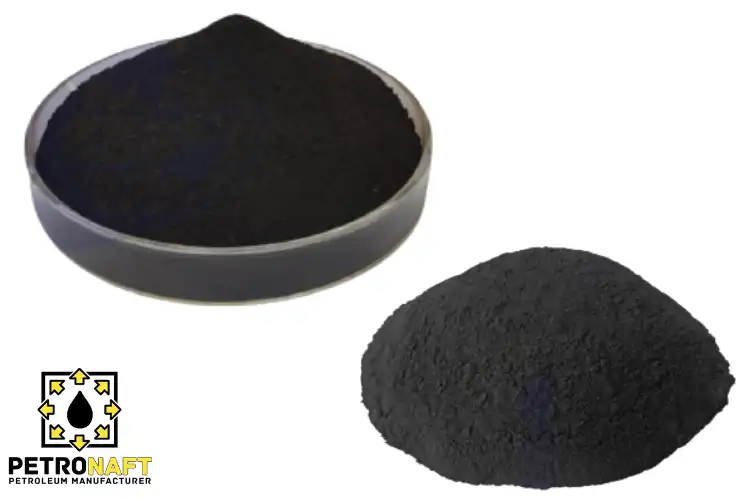
Gilsonite Powder is a high-value natural asphaltite used in asphalt modification, drilling fluids, inks, coatings, and other industrial systems. This article explains its core properties, practical applications, buying criteria, and performance trade-offs in clear, professional terms so manufacturers, procurement teams, and technical users can make smarter decisions.
Most buyers do not search for Gilsonite Powder just to learn what it is. They want to know what it does in real production.
In practice, it is selected because it can help:
Increase stiffness in asphalt binders
Improve rutting resistance in hot climates
Support fluid-loss control in drilling systems
Deepen black color in inks and coatings
Raise hardness and water resistance in industrial formulations
Replace part of more expensive ingredients in selected systems
That mix of performance and versatility makes it useful to manufacturers, contractors, formulators, and procurement teams.
Highlights & Key Sections
What Is Gilsonite Powder?
Gilsonite Powder is made by grinding solid gilsonite into a controlled particle size so it can disperse, melt, or blend more easily in industrial processes.
Gilsonite itself is a naturally occurring solid hydrocarbon often classified as asphaltite. It is black, brittle, glossy, and rich in carbon-based heavy fractions, which is why it behaves differently from ordinary mineral fillers.
Powder form matters because it improves handling and speed during production.
For example:
A coarse grade may suit slower melt processes
A fine grade usually disperses faster
A narrower particle-size range often gives more consistent mixing
A cleaner grade can reduce unwanted residue in sensitive formulations
Gilsonite Powder Properties at a Glance
Property
What it means in practice
Why buyers care
Deep black color
Produces a rich dark tone
Valuable in inks, coatings, mastics, and black compounds
Hard and brittle structure
Breaks easily but adds body and stiffness
Useful when harder finished products are needed
Thermoplastic behavior
Softens under heat
Helps in hot-process blending and melt-based systems
Hydrocarbon compatibility
Works well in many oil-based formulations
Important for asphalt, drilling, inks, and coatings
Water resistance
Resists moisture penetration
Useful in waterproofing and protective films
Carbon-rich composition
Adds structure and performance
Supports durability, hardness, and film integrity
These properties explain why one material can serve both road construction and specialty coatings.
H2: Gilsonite Powder Uses & Applications
1) Asphalt and Road Construction
This is one of the most important commercial uses.
Gilsonite Powder is commonly added to asphalt binders and hot-mix asphalt to improve stiffness and high-temperature performance. In many cases, it helps roads resist rutting under heavy traffic and hot weather.
That does not mean more is always better.
When the dosage is too high, the binder can become too stiff, especially in colder service conditions. That is why experienced formulators balance gilsonite with the base binder grade, climate, traffic load, and any polymer system already in use.
Mini tutorial: how to evaluate it for asphalt
Use this sequence:
Define the real problem first: rutting, heat, deformation, or cost pressure
Test the base binder before modification
Run a dosage comparison instead of assuming one standard percentage
Check high-temperature gain and low-temperature trade-offs
Confirm storage stability before scaling up
A smart buyer looks at total pavement performance, not just additive price.
2) Drilling Fluids and Oilfield Systems
In oilfield operations, Gilsonite Powder is often used where fluid-loss control, seepage reduction, and wellbore support matter.
Its value is practical. In the right drilling system, it can help create a tighter filter cake and reduce losses into permeable or fractured formations. That can support drilling efficiency and reduce non-productive time.
What drilling teams usually check
Particle-size distribution
Compatibility with the mud system
Thermal stability at expected conditions
Interaction with other lost-circulation materials
Formation-specific performance in lab tests
A useful rule for buyers is simple: evaluate Gilsonite Powder as part of the whole mud design, not as a standalone fix.
3) Inks, Paints, and Coatings
Gilsonite Powder is also valued in black inks, industrial paints, and protective coatings.
It can contribute to:
Deeper black tone
Better gloss
Greater hardness
Improved rub resistance
Better water and chemical resistance in suitable systems
This is why it has long been attractive in solvent-based and specialty industrial formulations where appearance and durability both matter.
Real example
If a black coating looks flat, marks too easily, and lacks body, adding the right gilsonite grade may improve film richness and surface strength. But if the coating already suffers from brittleness, the formula may need resin balancing rather than simply more gilsonite.
4) Foundry and Industrial Blends
Gilsonite Powder can also be used in foundry-related applications and in selected industrial compounds where carbon content, controlled particle size, and binding contribution are useful.
Depending on the formulation, it may support:
Surface quality
Carbon contribution
Controlled burn behavior
Better blend consistency
It also appears in mastics, sealants, waterproofing compounds, and specialty black blends.
Key Advantages and Main Limitations
Advantages
Strong black color
Good hardness contribution
Useful water resistance
Broad industrial versatility
Good fit for many oil-based systems
Can improve cost-performance when used correctly
Limitations
Overuse can increase brittleness
Not ideal for every water-based system
Grade selection matters greatly
Performance depends on formulation balance
Cheap, inconsistent material can create process problems
That balance is exactly why technical buying matters.
How to Choose the Right Grade
Not every Gilsonite Powder grade performs the same way. A road contractor, drilling-fluid supplier, and coatings manufacturer may all need different specifications.
Buying factor
Why it matters
What to ask
Mesh size
Affects dispersion and feeding
What particle-size range do you guarantee?
Ash content
Higher ash can reduce performance in sensitive systems
What is the typical and maximum ash level?
Softening point
Influences process temperature and blending behavior
What is the softening range?
Purity and consistency
Helps prevent batch-to-batch variation
Do you provide a certificate of analysis for each batch?
Solubility or compatibility
Critical in inks, coatings, and oil-based blends
Which solvents or binders is this grade designed for?
Application match
Reduces trial-and-error cost
Which industries already use this grade successfully?
A professional buyer should request technical data, not only a quotation.
Practical Buying Mistakes to Avoid
Many purchasing problems come from choosing by price alone.
Common mistakes include:
Buying a fine powder for a process that needs a slower-melting grade
Ignoring ash content in sensitive formulations
Using the same grade for asphalt and coatings without testing
Scaling from lab to plant without dispersion checks
Treating gilsonite as a universal substitute for resin or bitumen modifiers
Overlooking low-temperature performance in pavement applications
The cheapest material can easily become the most expensive if it causes downtime, rejection, or reformulation.
Current Trends Making Gilsonite Powder More Relevant
Two market trends are keeping this material commercially important.
First, pavement engineers continue looking for cost-effective ways to improve rutting resistance and binder performance under heavier traffic and hotter service conditions.
Second, formulators across coatings, construction, and oilfield products are under more pressure to improve durability and reduce premature failure. That creates stronger demand for performance ingredients that add hardness, sealing value, and service life without forcing a complete redesign.
This makes Gilsonite Powder especially relevant where performance-per-cost matters more than simply choosing the lowest-priced raw material.
Quick Comparison: Where It Delivers the Most Value
Industry
Main purpose
Typical value
Asphalt
Binder modification
Better stiffness and rut resistance
Drilling fluids
Fluid-loss and sealing support
Better wellbore control in suitable systems
Inks
Color and body enhancement
Richer black tone and improved rub resistance
Coatings
Hardness and protection
Better film durability and water resistance
Foundry and specialty blends
Carbon and structural contribution
Improved blend function in targeted uses
Mini Checklist for Technical Evaluation
Before approving a purchase, confirm these points:
The target application is clearly defined
The mesh size matches your process
The ash level is acceptable for the formula
Softening behavior fits your manufacturing temperature
Lab testing reflects real production conditions
The grade has consistent batch documentation
Performance is judged against total formulation cost, not raw-material price alone
Executive Summary
Gilsonite Powder is a performance-focused industrial material, not just a black powder filler. Its main strengths are hardness, black color, water resistance, thermoplastic behavior, and compatibility with many hydrocarbon-based systems.
It is especially useful in asphalt modification, drilling fluids, inks, coatings, and industrial blends where the right grade can improve durability, processing, and cost-efficiency. For most buyers, the best results come from matching Gilsonite Powder to the exact application, particle size, and formulation goal rather than buying on price alone.
FAQs
1) Is Gilsonite Powder the same as bitumen?
Not exactly. Gilsonite is a naturally occurring asphaltite, while bitumen often refers more broadly to petroleum-derived or naturally occurring bituminous materials. They are related, but gilsonite is typically harder, more brittle, and used more as a performance additive than a base binder.
2) Why is Gilsonite Powder used in asphalt?
It is mainly used to improve stiffness and rutting resistance, especially in hot climates and under heavy traffic loads. The key is proper dosage, because too much can reduce flexibility at lower temperatures.
3) Does Gilsonite Powder dissolve in water?
No. It is generally not water-soluble and is more suitable for hydrocarbon-based systems or heat-processed formulations. Its water resistance is one reason it is useful in coatings, waterproofing, and bituminous products.
4) What industries commonly buy Gilsonite Powder?
The main buyers are in road construction, drilling fluids, cementing support products, inks, paints, coatings, foundry applications, sealants, and specialty industrial manufacturing.
5) What should buyers check before placing an order?
They should review mesh size, ash content, softening range, purity, compatibility with the intended formulation, and batch consistency. A certificate of analysis and small-scale trial are usually worth requesting before full-volume purchase.
Explore more posts related to the topic or product(s) mentioned, categorized under this tag: