

Gilsonite Powder for Coatings improves dark industrial and protective coatings by increasing film hardness, deepening black color, and strengthening water resistance when the grade and formula are selected correctly. It works best in solvent-based and bituminous systems, not as a universal additive for every paint, so performance depends on compatibility, particle size, and dispersion quality.
Many buyers and formulators ask the same practical question: does gilsonite genuinely improve a coating, or does it only darken the formula?
In the right system, it does much more than add color. It can help create a denser, tougher film, support moisture resistance, and reduce pressure on more expensive resin components. In the wrong system, it can create settling, roughness, excessive stiffness, or color limitations. That is why grade selection matters as much as price.
Highlights & Key Sections
At a Glance: What Gilsonite Adds to Coatings
| Property | What it improves | Best-fit applications | Main caution |
|---|---|---|---|
| Film hardness | Tougher surface, better scratch feel | Primers, maintenance coatings, asphaltic enamels | Too much can reduce flexibility |
| Water resistance | Better barrier effect in dark systems | Waterproofing, pipe coatings, masonry protection | Needs compatible binder and solvent package |
| Color depth | Richer black and fuller appearance | Black primers, underbody coatings, protective paints | Not suitable for white or pastel systems |
| Cost efficiency | Partial resin-cost optimization | Industrial dark coatings | Cheap grade selection can hurt finish quality |
| Film body | Higher build and denser look | High-build protective coatings | Can increase viscosity or settling |
Why Gilsonite Powder for Coatings Works in Dark Formulations
Gilsonite is a naturally occurring hydrocarbon resin with a deep black color and a naturally hard character. In coating formulations, that combination is valuable because one raw material can contribute to both film performance and visual depth.
This is why formulators often use it in:
- Black primers
- Asphaltic and bituminous coatings
- Metal maintenance coatings
- Waterproofing compounds
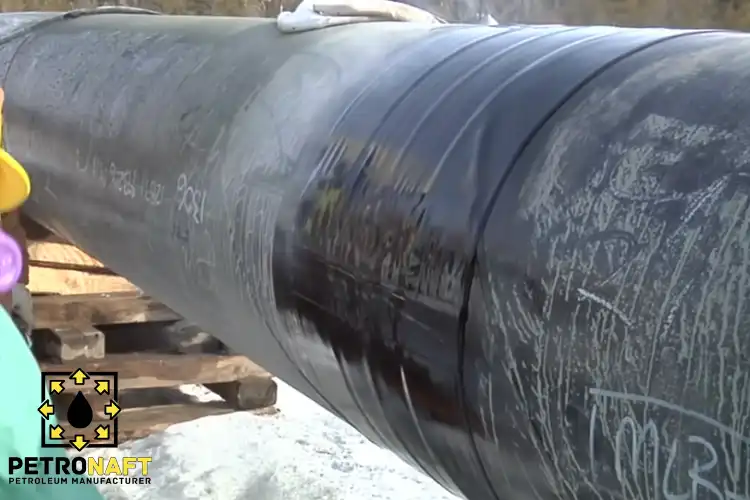
- Pipe and structural protection systems
- Dark enamels and industrial finishes
In practical terms, gilsonite often performs three jobs at once:
- It acts as a resin modifier
- It enhances black color and opacity in dark formulas
- It improves the body and toughness of the dried film
That multifunctional role is one reason it remains commercially attractive, especially in cost-sensitive industrial coatings.
Main Benefits of Gilsonite Powder for Coatings
1) Higher hardness and better handling resistance
When a coating feels too soft after drying, marks too easily, or blocks during stacking, gilsonite can help. In many dark solvent-based formulas, it increases film firmness and gives the coating a tougher surface feel.
A common real-world example is a black steel primer used on fabricated parts. The coating may dry on time, but the surface still prints under pressure during storage. A carefully selected gilsonite grade can improve stack resistance without forcing a complete redesign of the formula.
2) Better water and weather resistance
Protective coatings need more than a nice finish. They need to resist moisture, maintain film integrity, and reduce the risk of premature coating failure. Gilsonite helps by supporting a denser, more resistant film in suitable dark formulations.
This benefit becomes more useful in:
- Pipe coatings
- Roof maintenance systems
- Foundation and masonry protection
- Structural steel maintenance coatings
- Waterproofing compounds
The key is to evaluate the full formula, not only the raw material itself. Good water resistance still depends on binder choice, surface preparation, film thickness, and curing conditions.
3) Deeper black shade and stronger visual impact
Black coatings sell on appearance as much as performance. A black primer or maintenance finish that looks weak, grayish, or flat can disappoint the customer even if it passes technical tests.
Gilsonite helps many dark coatings look richer and fuller. This matters in products such as:
- Black industrial enamels
- Protective coatings for steel
- Underbody and chassis coatings
- Bituminous maintenance paints
In commercial terms, this visual improvement can support both product acceptance and perceived quality.
4) Useful resin-cost optimization
In many industrial formulas, buyers look for materials that improve performance without driving the formula cost too high. Gilsonite can help reduce part of the cost burden by contributing hardness, color depth, and film body in one ingredient.
That does not mean it should be treated as a cheap filler. High-performance results depend on selecting the right ash level, softening point, and particle size. A low-cost but poor-quality grade can easily create more problems than savings.
5) Better body for high-build protective coatings
Some coatings need to form a strong, dense layer more than they need decorative flexibility. Gilsonite performs well in this type of environment because it helps create body and barrier character in dark protective films.
This is especially relevant when the target is protection against moisture, weather exposure, or surface wear rather than perfect decorative clarity.
Where It Works Best — and Where It Does Not
| Application | Suitability | Why |
|---|---|---|
| Black metal primers | Excellent | Supports hardness, color depth, and body |
| Pipe and underground coatings | Excellent | Fits dark barrier-style protection |
| Roof and waterproofing compounds | Very good | Helps build dense, moisture-resistant films |
| Steel maintenance coatings | Very good | Useful in rugged, dark industrial systems |
| Clear coatings | Poor | Natural black color changes appearance |
| White and pastel paints | Poor | Color contamination is unavoidable |
| Standard decorative water-based paints | Limited | Water insolubility and dispersion challenges |
| Specialty hybrid systems | Possible | Requires careful formulation and testing |
How to Evaluate a Gilsonite Grade Before Buying
A professional buyer should never assess gilsonite by price alone. The smarter approach is to judge whether the grade fits the actual coating system.
Focus on these technical points:
- Softening point: affects processing behavior and film properties
- Ash content: can influence gloss, smoothness, and cleanliness of finish
- Particle size: affects dissolution, dispersion, and processing speed
- Solubility behavior: must match the intended solvent package
- Application goal: performance improvement, color depth, or cost control
A useful rule is simple:
if you do not know exactly why you are adding gilsonite, you should not add it yet.
Mini Tutorial: How to Test Gilsonite in a Coating Formula
A small, disciplined lab trial usually gives better answers than a large production gamble.
Step 1: Define one target only
Choose a single development goal first:
- Increase hardness
- Improve black depth
- Improve water resistance
- Lower cost without losing performance
Trying to solve everything in one trial usually hides the real result.
Step 2: Keep a clean control sample
Prepare your current formula with no changes. This control sample is essential. Without it, you cannot measure whether gilsonite truly improved the coating.
Step 3: Start with moderate incorporation
Do not overload the formula on the first trial. Begin with a moderate adjustment and observe how the coating responds. That lets you study viscosity, gloss, hardness, and settling before pushing the system further.
Step 4: Check process behavior early
Watch for these warning signs during development:
- Poor wetting
- Seed formation
- Rough drawdowns
- Fast settling
- Excessive viscosity rise
- Loss of flexibility
If one of these appears, the issue may be the grade or process method, not the concept itself.
Step 5: Test the properties that matter commercially
Use practical tests, not just visual impressions.
Check:
- Dry time
- Film hardness
- Adhesion
- Water spot resistance
- Block resistance
- Gloss and appearance
- Corrosion or humidity resistance when relevant
Step 6: Make the decision with business logic
The best formula is not always the one with the highest lab performance. The best formula is the one that gives enough technical benefit to justify cost, processing, compliance, and supply reliability.
Real Examples of When Gilsonite Makes Sense
Case 1: Black primer for fabricated steel parts
A manufacturer needs a black primer that looks richer and resists marking during packaging. Gilsonite can help because it increases body and improves the hardness feel of the dry film. The formulator still needs to monitor flexibility and settling.
Case 2: Protective coating for pipe or metal structures
A dark protective coating used in outdoor or underground service often benefits from a denser film and stronger barrier character. In this situation, gilsonite fits well because decorative color freedom matters less than toughness and water resistance.
Case 3: Waterproofing or maintenance coating
A coating designed to resist moisture on masonry, concrete, or roofing surfaces often needs more body and a more robust film. Gilsonite can support this goal, especially in black or dark protective systems where appearance flexibility is not the top priority.
Current Market Trends That Matter
The coatings industry now faces two strong pressures.
The first is lower-VOC and lower-emission formulation design. Buyers, regulators, and downstream users increasingly expect safer and cleaner systems. That means gilsonite should be evaluated as part of a broader formulation strategy, especially when solvent choice affects compliance and market acceptance.
The second is the demand for multifunctional raw materials. Manufacturers want ingredients that do more than one job. Gilsonite remains relevant because it can support color, film body, and protective performance at the same time.
These trends do not make gilsonite universal. They make careful selection more important.
Common Mistakes to Avoid
- Buying only on price and ignoring ash content
- Using gilsonite in light-colored coatings
- Expecting it to behave like a drop-in resin for every system
- Skipping settling and dispersion tests
- Overloading the formula until flexibility suffers
- Ignoring powder handling and housekeeping standards
- Assuming black color alone means good coating performance
A strong coating comes from the full formula, not one ingredient.
Executive Summary Checklist
Use this checklist before approving a grade or placing a purchase order:
- Confirm the coating is dark enough to benefit from gilsonite
- Match the grade to the binder and solvent system
- Review softening point, ash content, and particle size
- Run a control sample and a comparison sample
- Test hardness, adhesion, water resistance, and settling
- Check whether the formula becomes too brittle at higher use levels
- Review VOC and compliance implications of the final system
- Ensure safe storage and handling of powdered material
For dark industrial and protective systems, Gilsonite Powder for Coatings can be a smart performance and cost tool when the grade, process, and formulation are aligned. For clear, pale, or standard decorative water-based paints, it is usually the wrong starting point.
FAQ
1) Is gilsonite mainly a resin or a color additive?
Gilsonite behaves mainly as a natural hydrocarbon resinous material, but in coatings it also contributes strong black color. That dual role is one reason it is valuable in dark industrial systems.
2) Can gilsonite replace carbon black completely?
Not in every case. It can support color depth and reduce reliance on some other darkening components, but full replacement depends on tint strength targets, gloss requirements, and the final performance profile.
3) Is gilsonite suitable for water-based coatings?
Usually not as a simple direct addition. Because it is naturally dark and not water-soluble, it works more easily in solvent-based, bituminous, or specially engineered hybrid systems.
4) Which grade properties matter most when buying gilsonite for coatings?
The most important screening points are softening point, ash content, and particle size. These three factors strongly influence processability, finish quality, and final coating performance.
5) What is the biggest risk of using too much gilsonite?
Excessive loading can make the film too stiff, increase settling, reduce flexibility, and create a rougher finish. Controlled lab testing is the safest way to find the right level.
Sources
- A trusted overview of gilsonite as a natural hydrocarbon material with recognized industrial applications. Britannica – Gilsonite
- A technical research source on gilsonite structure and composition, useful for understanding why it behaves the way it does in industrial systems. ScienceDirect – Structural Characterization of Gilsonite Bitumen by Advanced Nuclear Magnetic Resonance Spectroscopy
- A patent reference showing gilsonite’s use in asphaltic and protective coating compositions. Google Patents – Asphaltic Paint Composition
- A regulatory source relevant to VOC considerations in coating formulation and market compliance. U.S. EPA – Architectural Coatings: National Volatile Organic Compounds
- A current European regulatory reference useful for understanding lower-emission expectations in paints and varnishes. European Commission – EU Ecolabel for Paints and Varnishes