
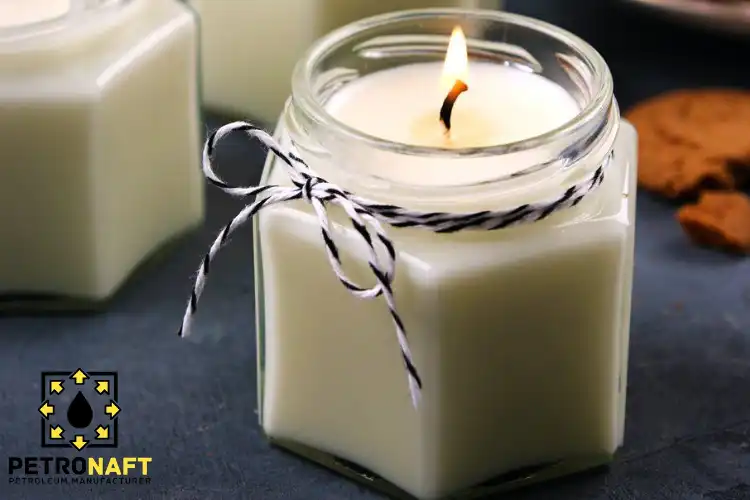
Paraffin Wax for Candle projects gives strong scent throw, bright color, and budget-friendly performance for both hobbyists and brands. With the right melting point, oil content, and wick choice, you can pour clean-burning container, pillar, and tealight candles that look professional and burn safely.
Highlights & Key Sections
Understanding Paraffin Wax in Candle Making
Paraffin wax is a petroleum-derived mixture of saturated hydrocarbons, typically with 20–40 carbon atoms. It melts over a narrow temperature range, usually between about 48–65°C depending on grade, and solidifies with a hard, crystalline structure ideal for molding stable candles.
Its behavior in a candle is driven by three key factors:
-
Melting point range – how well the candle holds shape and resists slumping.
-
Oil content – affects hardness, opacity, and how cleanly it burns.
-
Needle penetration (hardness) – indicates whether wax suits pillars, tapers, or soft container candles.
Because paraffin can be refined to predictable specs and blends easily with dyes and fragrances, it remains the workhorse of the global candle market, especially in mass-produced scented and decorative candles.
Paraffin Wax for Candle Projects: Choosing the Right Grade
Paraffin for candles is broadly sold as:
-
Fully refined – very low oil content (typically <0.5%), high purity, low odor, and good color stability. Excellent for premium container and pillar candles with strong fragrance loads.
-
Semi-refined – slightly higher oil content (around 0.5–1.5%), softer and more flexible, often chosen for cost-effective container candles and blends.
When selecting wax, match the melting point to the candle type:
| Candle Type | Typical Wax MP Range* | Grade Preference | Why It Works |
|---|---|---|---|
| Container jar | 48–54°C | Semi or fully refined | Soft enough to adhere to glass, reduced shrinkage |
| Votive | 54–58°C | Fully refined | Holds shape out of container, good scent throw |
| Pillar / taper | 56–62°C | Fully refined, harder | Resists bending, keeps edges sharp |
| Tealight | 54–58°C | Fully refined | Controls melt pool in metal or plastic cup |
*Typical practical ranges derived from commercial paraffin waxes used for candles.
Practical tip:
If you want one “do-it-all” paraffin for testing, start with a fully refined grade around 56–58°C. It works for small pillars, votives, and many container candles when you adjust wick size and fragrance load.
Performance Compared with Other Candle Waxes
Paraffin’s main competitive advantages:
-
Outstanding scent throw – it dissolves many fragrance molecules and releases them efficiently when burning.
-
Sharp colors and finishes – works well with most candle dyes and pigments.
-
Low cost and wide availability – produced at scale as a refinery by-product, so it’s usually cheaper than soy or beeswax.
At the same time, buyers increasingly compare paraffin with vegetable-based waxes:
| Wax Type | Scent Throw | Burn Time vs Paraffin | Cost Trend | Sustainability Perception |
|---|---|---|---|---|
| Paraffin | Strong to very strong | Baseline | Lowest for most grades | Fossil-derived, criticized for VOCs |
| Soy | Medium–strong | ~30–50% longer | ~15–30% higher cost | Renewable, “cleaner burn” positioning |
| Beeswax | Mild honey scent | Longer than paraffin | Premium pricing | Natural, often marketed as non-toxic |
| Coconut | Medium–strong | Similar to soy | Mid to high | Plant-based, popular in luxury blends |
Data on burn time and cost differences come from market comparisons between paraffin and soy wax suppliers.
Reality check:
Paraffin is still the dominant wax in global candle manufacturing due to its cost-to-performance ratio, even as eco-friendly candles gain share.
Safety, Health, and Regulations You Should Know
Emissions and indoor air quality
When any candle burns, the flame generates:
-
Soot and ultra-fine particles
-
Volatile organic compounds (VOCs) from both wax and fragrance
-
Combustion gases like CO and NOx in small amounts
Studies show that paraffin candles can release VOCs such as benzene and toluene, and that paraffin-based or heavily fragranced candles may emit more pollutants than some alternatives.
However, recent expert reviews suggest that emissions from typical household candle use tend to remain below known harmful thresholds, especially in ventilated rooms and when candles are properly wicked.
Practical risk-reduction tips
-
Use unscented or lightly scented paraffin if you’re sensitive to fragrance.
-
Burn candles in well-ventilated spaces and avoid clusters of many candles in small rooms.
-
Trim wicks to 5–6 mm before lighting to reduce soot.
-
Extinguish with a snuffer, not by blowing hard, to minimize smoke.
Regulatory and labeling framework
Professional candles must satisfy fire-safety and labeling standards in many markets:
-
ASTM F2417 – fire safety for candles.
-
ASTM F2058 – safety labeling (warnings like “Burn within sight”, “Keep away from things that catch fire”).
-
Additional standards cover candle accessories and containers.
If you sell paraffin candles, align your packaging and testing procedures with the relevant ASTM and local consumer-safety requirements, and keep documentation from your wax and fragrance suppliers.
Trend: Air-quality research and scented products
Research has increasingly focused on indoor air quality from scented products, including candles and wax melts. Recent work shows that scented wax melts can generate fine particles via reactions between fragrance terpenes and ozone, sometimes at levels comparable to other household pollution sources.
For candle makers, this trend means:
-
Growing demand for “clean burn” claims backed by data.
-
Opportunities for low-soot, low-VOC paraffin blends and responsibly formulated fragrance oils.
Step-by-Step: How to Make a Paraffin Container Candle
Here’s a practical mini-tutorial you can follow or adapt for small-batch production.
Example project: 8-oz scented container candle
Target spec
-
Wax: fully refined paraffin, melting point ~54–56°C
-
Fragrance load: 6–8% by weight
-
Container: 8-oz glass tumbler, heat-resistant
-
Wick: cotton or cotton-paper core sized for ~7–8 cm diameter
1. Calculate your batch
For one 8-oz (approx. 226 g) candle at 8% fragrance:
-
Wax: 208 g
-
Fragrance: 18 g
Scale this calculation linearly for multiple candles.
2. Prepare equipment
-
Double boiler or wax melter
-
Thermometer with range up to at least 100°C
-
Wick centering tools or sticks
-
Pouring pitcher
-
PPE: heat-resistant gloves, eye protection
3. Melt and condition the wax
-
Heat wax slowly to 10–15°C above its melting point (for a 54°C wax, aim for ~64–70°C).
-
Avoid overheating; prolonged exposure much above 90°C darkens wax and can degrade additives.
4. Add fragrance and dye
-
Cool wax slightly to the recommended fragrance addition temperature (commonly 60–70°C for paraffin; check fragrance supplier).
-
Stir fragrance for 2–3 minutes with gentle but thorough motion.
-
Add liquid dye or chips sparingly; paraffin takes color efficiently, so test small amounts first.
5. Wick and pour
-
Pre-wick containers with adhesive tabs; ensure wicks are centered and straight.
-
Pour wax slowly to avoid air bubbles, leaving 5–10 mm headspace from the rim.
-
For glass adhesion, some makers pour slightly cooler (e.g., 60–62°C) to reduce shrinkage rings.
6. Cool and repour if needed
-
Let candles cool at room temperature on a flat surface, away from drafts.
-
Paraffin often shrinks around the wick; top up with a second pour using slightly warmer wax (about 3–5°C warmer than the first).
7. Cure and test
-
Allow at least 24–48 hours of curing before test burns; complex fragrances may benefit from a longer cure.
-
Conduct a full burn test: 3–4 hours per cycle until the candle is finished, recording melt-pool diameter, flame height, and any sooting.
Troubleshooting Common Paraffin Candle Issues
Quick diagnosis table
| Problem | Likely Cause | Fast Fix |
|---|---|---|
| Tunneling | Wick too small, short burn times | Upsize wick; burn 3–4 hours the first time |
| Excessive soot / smoke | Wick too large, drafts, excess fragrance | Downsize wick; trim to 5 mm; reduce fragrance % |
| Wet spots on glass | Temp swings, wax pulling from container | Warm glass before pouring; cool more slowly |
| Cracks / sink holes | Wax cooled too fast, high shrinkage | Pour slightly cooler; use a controlled second pour |
| Poor hot throw | Low fragrance %, wrong wax/fragrance combo | Increase fragrance within safe limit; test new oils |
Mini case study: fixing tunneling in a paraffin jar candle
A small home brand poured 30-cl paraffin jar candles with a conservative wick size to avoid soot. Customers reported tunnelled candles after several burns. By moving one wick size up, instructing buyers to burn at least 3 hours on the first use, and slightly increasing fragrance from 6% to 7%, they:
-
Eliminated tunneling on test burns
-
Improved hot throw
-
Maintained acceptable soot levels
Buying and Sourcing Quality Paraffin Wax
What to look for in a spec sheet
When evaluating paraffin suppliers, pay attention to:
-
Melting point and congealing point – determine suitable candle types and behavior in different climates.
-
Oil content – lower oil generally means harder, cleaner wax; higher oil can add flexibility for containers.
-
Needle penetration – indicates hardness at 25°C; useful for matching wax to tapers vs containers.
-
Color and odor – tight specs matter for white candles and subtle fragrances.
-
Certification and documentation – MSDS, food-contact approvals (if relevant), and compliance with local regulations.
Pricing and market dynamics
Paraffin wax benefits from large-scale petroleum refining, which keeps its price lower and more stable than many natural waxes. Soy wax, for example, often costs 15–30% more, influenced by agricultural cycles and crop yields.
At the same time, the global candle market—valued in the multi-billion-dollar range—shows rapid growth in eco-friendly candle segments, especially soy and blended waxes.
For buyers, this means:
-
Paraffin remains attractive for mass-market and price-sensitive lines.
-
Blends and natural waxes can command higher price points in premium and wellness-oriented ranges.
Paraffin Blends and New Trends in Candle Making
Candle manufacturers increasingly use paraffin blends to balance performance, cost, and sustainability positioning:
-
Paraffin–soy blends – retain strong scent throw and smooth tops while allowing “vegetable wax” claims.
-
Paraffin–coconut blends – popular in luxury segments for creamy appearance and good cold/hot throw.
-
Paraffin with additives – low-smoke, low-odour formulations designed to meet stricter indoor air-quality expectations.
Two notable trends:
-
Health-conscious consumers – asking about VOCs, soot, and respiratory impacts, pushing brands to publish test data and choose cleaner formulations.
-
Sustainability storytelling – even when using paraffin, brands highlight recyclable packaging, responsible sourcing, and carbon-offset initiatives.
For businesses, being transparent about wax type, additives, and test methods builds trust and supports long-term brand positioning.
Conclusion: Is Paraffin Wax for Candle Making Right for You?
In summary, Paraffin Wax for Candle projects is a practical, high-performance choice when you need strong scent throw, vivid color, and competitive pricing. Its predictable melting behavior and wide range of grades make it suitable from hobby-scale pours to industrial production lines.
That said, it’s not a one-size-fits-all answer. If your customers prioritize eco-labels and minimal emissions, consider paraffin blends or alternative waxes for certain collections, while keeping paraffin for value-oriented or highly scented lines. With good ventilation, proper wicking, and adherence to safety standards, paraffin candles can remain a reliable part of a modern, professionally managed product portfolio.
Candle Maker’s Practical Checklist for Paraffin Wax
Use this checklist before your next pour:
-
□ Confirm candle type and match wax melting point accordingly.
-
□ Choose fully or semi-refined grade based on hardness, cost, and target market.
-
□ Verify spec sheet: oil content, needle penetration, color, and odor.
-
□ Select the correct wick size and type for vessel diameter and wax blend.
-
□ Define fragrance load (usually 4–10% for paraffin, depending on supplier limits).
-
□ Control temperatures for melting, fragrance addition, and pouring.
-
□ Allow sufficient cooling and curing time before test burns.
-
□ Conduct full burn tests and adjust wick, fragrance, or pour temp as needed.
-
□ Apply safety labeling aligned with relevant standards in your market.
-
□ Document every batch for traceability and repeatable quality.
FAQs about Paraffin Wax for Candle Making
1. Is paraffin wax safe to use in candles at home?
For most people, paraffin candles used occasionally in ventilated rooms are considered low-risk, though they do emit small amounts of soot and VOCs. People with asthma, allergies, or chemical sensitivities should be more cautious, choose unscented or low-fragrance candles, and prioritize fresh air circulation.
2. What melting point paraffin is best for container candles?
Container candles work best with softer paraffin, typically in the 48–54°C melting-point range. This allows the wax to adhere better to glass, reduces cracking, and creates an even melt pool. For very hot climates or large jars, moving slightly higher in melting point plus upsizing the wick can improve stability.
3. How much fragrance oil can I add to paraffin wax?
Most paraffin waxes comfortably hold 4–10% fragrance by weight, but the safe maximum depends on the specific wax and fragrance system. Exceeding supplier recommendations can cause sweating, soft candles, or smoking wicks, so always follow technical data sheets and run test burns before scaling production.
4. Can I mix paraffin with soy, coconut, or beeswax?
Yes. Blending paraffin with vegetable waxes is common and helps tune burn profile, hardness, appearance, and marketing claims. Start with small pilot batches—such as 70/30 or 60/40 ratios—and note changes in melting point, scent throw, and wick requirements before committing to full-scale production.
5. Why do my paraffin candles soot or develop large flames?
Excess soot usually points to an over-wicked candle, too much fragrance or dye, or drafts disrupting the flame. Choose a smaller wick, keep the wick trimmed to about 5 mm, reduce fragrance load if it exceeds recommended levels, and advise users not to burn candles near vents or open windows.
Sources
-
Industrial paraffin wax properties and candle applications – Overview of paraffin wax chemistry, melting behavior, and typical uses in candles and other industries. Sigma-Aldrich – Paraffin Wax Product Overview
-
Specification and testing methods for paraffin candle wax – Explains ASTM methods for oil content, needle penetration, and melting/congealing points relevant to candle wax selection. Khavaran Paraffin – Requirements for Paraffin Wax as Candle Wax Base
-
Practical guidance on paraffin types for candles – Discusses fully refined vs semi-refined paraffin, oil content ranges, and advantages for different candle formats. Hywax – Best Types of Paraffin Wax for Candles
-
Market role of paraffin vs eco-friendly candle waxes – Provides data and analysis on the global candle and eco-friendly candle markets, highlighting paraffin’s continued dominance and the rise of soy and other natural waxes. Transparency Market Research – Candle Market Report and Credence Research – Eco-Friendly Candle Market
-
Health and safety considerations for scented candles – Summarizes current evidence on candle emissions, indoor air quality, and practical safety recommendations for home users. Good Housekeeping – Are Candles Bad for Your Health? and ACS – Wax Melts and Indoor Air Study