


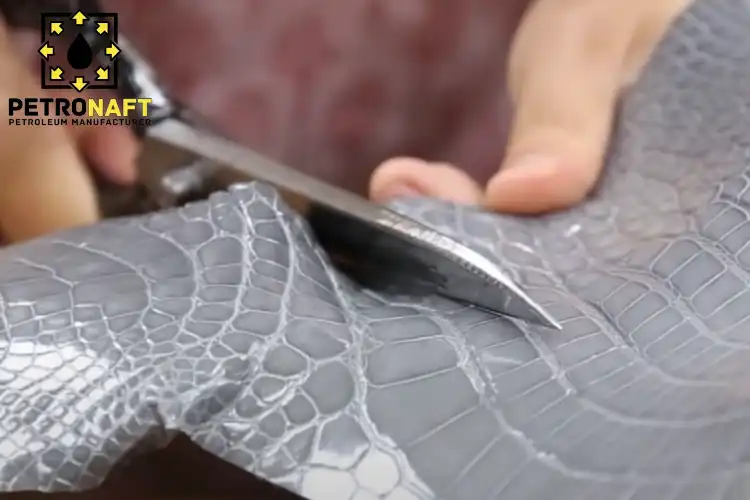
PE Wax for Leather Finishing helps leather manufacturers improve slip, rub resistance, anti-blocking, surface feel, and finish uniformity. It works best as a performance additive in topcoats and effect coats, where small, well-balanced additions can make leather feel cleaner, last longer, and perform better without sacrificing flexibility or appearance.
PE Wax for Leather Finishing is most effective when used to solve a clear finishing problem such as tackiness, weak scuff resistance, uneven hand feel, or blocking during stacking and packing. Instead of treating it as a default ingredient, skilled formulators use it as a precise surface-control tool inside a well-built finishing system.
Highlights & Key Sections
Why PE Wax Matters in Leather Finishing
Leather buyers do not judge a finish by lab data alone. They notice how it feels in the hand, how it resists rubbing, and whether the surface stays attractive after transport, storage, and use.
PE wax helps improve those practical outcomes by supporting:
- smoother slip and lower surface friction
- better dry and wet rub behavior
- stronger anti-blocking performance
- improved scratch and mar resistance
- a drier, cleaner, more premium touch
- more controlled gloss and surface character
That makes it especially useful for footwear leather, bags, belts, wallets, upholstery, and other articles that face constant handling.
PE Wax for Leather Finishing: Uses, Benefits & Best Practices
PE wax is usually added to the finishing layer where surface performance matters most. In many factories, that means the topcoat rather than the base coat.
Main uses
- topcoats for better slip and less tack
- effect coats for a waxy or drier touch
- pigmented finishes that need stronger scuff resistance
- packed leather articles that must resist blocking
- commercial articles that need consistent handling quality
Main benefits
| Benefit | What it improves in practice | Typical value for the buyer |
|---|---|---|
| Slip control | Reduces drag and tack | Cleaner handling and better feel |
| Rub resistance | Helps the surface resist wear | Longer-lasting appearance |
| Anti-blocking | Prevents surfaces from sticking together | Safer packing and storage |
| Surface touch | Creates a drier or waxier hand | Better perceived quality |
| Mar resistance | Reduces visible handling marks | Fewer complaints and returns |
A useful way to think about PE wax is this: the binder builds the film, while the wax fine-tunes the film’s surface behavior.
Where It Works Best
PE wax performs best in articles where the finish must survive handling, rubbing, stacking, and daily contact.
Strong fit applications
- shoe upper leather: improves rub resistance and reduces tack after finishing
- bags and small leather goods: creates a cleaner, drier hand and better scratch control
- belt leather: improves handling feel and helps reduce sticking in packed stock
- upholstery leather: supports a more durable touch when balanced with flexible binders
Real example
A footwear finisher had a pigmented topcoat that looked good on the production line but became tacky after stacking in warm storage. Instead of rebuilding the full recipe, the lab adjusted the topcoat with a compatible PE wax dispersion and reduced the blocking issue while keeping the desired gloss close to target. That is a classic case where PE wax adds value quickly and economically.
How PE Wax Improves Leather Surface Performance
PE wax mainly changes what happens at or near the finish surface.
It can:
- lower friction
- toughen the top surface
- reduce surface tack
- improve release between finished pieces
- support a more durable tactile effect
In simple terms, it helps leather feel more finished and behave more reliably in real use.
That matters because many finish complaints are surface complaints, not structural leather defects. Customers often describe them as sticky feel, poor rub fastness, scratchy appearance, or marks after packing.
How to Choose the Right PE Wax
Not all PE waxes behave the same way. Selection should depend on the article type, finish system, and target performance.
What to evaluate before choosing
| Selection factor | What to look for | Why it matters |
|---|---|---|
| Wax hardness | Harder for tougher surfaces, softer for gentler feel | Controls touch and durability balance |
| Product form | Dispersion or emulsion for easy incorporation | Affects processing and stability |
| Compatibility | Good fit with the binder and additives | Reduces defects and instability |
| Finish type | Topcoat, effect coat, or correction layer | Determines how visible the effect will be |
| End-use | Footwear, bag, upholstery, garment | Changes the performance priority |
Practical buying rule
Choose the lowest effective dosage that solves the problem.
That simple rule prevents many common mistakes. Overuse can reduce adhesion, flatten gloss too much, or make the leather feel dry and artificial.
Best Practices for Using PE Wax
The best results come from controlled trial work, not guesswork.
A practical mini tutorial
- Identify the exact problem first.
- Build the binder and color system correctly.
- Add PE wax only after the base mix is uniform.
- Make two or three small trial variations.
- Apply them with the same method used in production.
- Let the finish dry fully before judging performance.
- Compare feel, rub resistance, blocking, gloss, and adhesion together.
This approach saves money because it shows whether PE wax is really solving the target issue or only masking it.
What to test after application
- dry rub
- wet rub
- blocking
- scratch visibility
- hand feel
- gloss
- adhesion
- flexing behavior
A finish that feels excellent but fails on adhesion is not a good finish. A finish that resists rubbing but feels too dry may also miss the market. Balance matters.
Common Problems and How to Fix Them
| Problem | Likely reason | Better action |
|---|---|---|
| Surface feels too dry | Wax level is too high | Reduce dosage or choose a softer grade |
| Finish loses adhesion | Incompatibility or overload | Rebalance binder and wax system |
| Blocking still happens | Film is too soft or under-dried | Improve cure and film design |
| Gloss drops too much | Wax is over-correcting the surface | Lower wax level |
| Rub resistance stays weak | Wax choice is too soft or not well matched | Use a harder, better-targeted grade |
Quick troubleshooting logic
If the leather still blocks, do not blame the wax first. Check drying conditions, binder softness, and total finish design. PE wax helps, but it cannot fix every film-formation problem on its own.
PE Wax vs Other Common Wax Options
| Additive | Main strength | Best use case | Limitation |
|---|---|---|---|
| PE wax | Slip, rub resistance, anti-blocking | Durable commercial finishes | Can feel too dry if overused |
| Carnauba wax | Hard shine and polished look | Dressy, glossy finishes | Less flexible in feel tuning |
| Paraffin-type wax | Softer waxy touch | Fashion effects and warmer feel | Lower scratch resistance |
| Silicone modifier | Very smooth hand and elegant slip | Premium touch correction | Must be balanced carefully with the full system |
For many commercial leather articles, PE wax stands out because it offers a strong mix of tactile improvement and practical durability.
What Buyers Should Ask Suppliers
A smart buyer should never ask only for “a PE wax for leather.” That is too broad.
Instead, ask:
- Is it suitable for water-based leather finishing?
- What surface properties does it improve most?
- Is it better for topcoat or effect coat use?
- What dosage range is usually effective?
- How does it affect gloss and hand feel?
- Does it support anti-blocking performance?
- What compatibility notes should the lab know?
- Does it align with current chemical-management expectations?
These questions help buyers avoid expensive lab delays and poor fit between product and application.
Industry Trends That Matter Now
Two current trends make PE wax more relevant today.
First, water-based finishing systems continue to gain importance. Manufacturers want lower-emission, safer, and more regulation-friendly finishing technologies, so additives that work well in waterborne systems have become more attractive.
Second, buyers increasingly care about chemical management, not just appearance and price. Leather brands and manufacturers now pay more attention to restricted substances, fluorine-free strategies, and cleaner formulation pathways. In that environment, PE wax often becomes part of a more practical surface-performance solution.
Another important trend is smarter binder engineering. Modern finishing performance depends more and more on how waxes, acrylics, polyurethanes, and hybrid systems work together. The best results now come from system design, not single-ingredient thinking.
Buying, Formulating, and Application Tips
For buyers, PE wax is a strong option when the target is more than cosmetic feel. It becomes especially valuable when you need fewer handling complaints, better anti-blocking, and stronger surface durability.
For formulators, PE wax works best when added with a clear purpose and tested in tight comparison trials. Start small, measure results, and protect the binder-wax balance.
For production teams, consistency matters more than chasing maximum wax effect. Stable mixing, proper drying, and repeatable application conditions often decide whether the wax delivers its real value.
Executive Summary Checklist
Use this checklist before approving a formula or ordering a product:
- define the exact surface problem first
- use PE wax mainly as a surface-performance additive
- test it in the finish layer where the issue appears
- keep dosage as low as possible while still effective
- evaluate feel, rub resistance, blocking, gloss, and adhesion together
- match wax hardness to the article type
- confirm compatibility with the binder system
- check buyer compliance requirements before scale-up
- judge results only after full drying
- choose performance balance over maximum wax effect
When used correctly, PE Wax for Leather Finishing can improve leather quality, customer satisfaction, and production reliability without forcing a full redesign of the finishing system.
FAQ
1) What is PE wax used for in leather finishing?
PE wax is mainly used to improve slip, rub resistance, anti-blocking, scratch behavior, and surface feel. It is most often added to topcoats and effect coats where surface performance strongly affects product quality.
2) Does PE wax make leather waterproof?
No. PE wax can help the surface resist minor moisture contact and improve water beading, but it does not make leather fully waterproof. True water resistance depends on the entire leather construction and finish system.
3) Is PE wax suitable for water-based leather finishes?
Yes. Many PE wax products are designed for water-based systems and fit well into modern leather-finishing processes. The key is choosing a grade that is compatible with the binder and the rest of the formula.
4) Can too much PE wax harm the finish?
Yes. Excess wax can reduce adhesion, flatten gloss, create an overly dry touch, or make the finish look unnatural. That is why small trial steps and full performance testing are essential.
5) Is PE wax better than carnauba wax?
It depends on the target. PE wax is often better for rub resistance, anti-blocking, and practical durability, while carnauba may be preferred for certain gloss and polish effects. The better choice depends on the leather article and desired finish style.
Sources
- Leather Naturally offers a technical overview of modern leather processing and finishing, including finish structure, application methods, and common finishing materials. Leather Naturally – Modern Cow Leather Processing
- Leather Working Group explains current chemical-management expectations that influence material selection in leather manufacturing. Leather Working Group – Chemical Management
- Michelman provides technical information on wax-based surface-performance additives used to improve rub, mar, block, and slip properties. Michelman – Michem Lube 190
- Münzing presents a leather-finishing wax dispersion reference relevant to water-based formulation and practical wax selection. Münzing – SÜDRANOL 340
- MDPI publishes current research on advanced leather-finishing polymer systems, useful for understanding how waxes work within broader finish design. MDPI – Acrylic–Urethane Hybrid Polymer Dispersions in Leather Finishing