


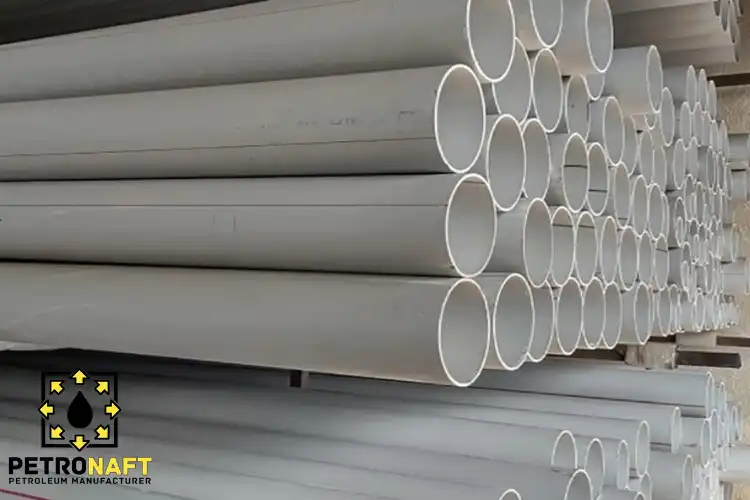
Polyethylene (PE) Wax for PVC improves processing stability and finished-part quality by acting mainly as an external lubricant that reduces melt-to-metal friction, helps control fusion, and lowers plate-out risk when properly selected. The “best” grade depends on your PVC recipe, line speed, and surface requirements—so matching wax chemistry and melt behavior to your process matters more than picking a brand.
PVC processors typically add PE wax to:
- Increase output and reduce torque/amps
- Improve release and surface finish (gloss, slip)
- Reduce die build-up and sticking on rolls
- Stabilize processing window when formulations vary (including recyclate)
Highlights & Key Sections
Polyethylene (PE) Wax for PVC: What It Does in a Formulation
In PVC compounding and conversion, PE wax primarily works as an external lubricant. That means it forms a thin lubricating layer at the metal interface (barrel, screw, die, calender roll), which:
- Lowers friction and shear heat at the wall
- Helps the melt flow more consistently through dies/roll gaps
- Improves release from tooling and reduces sticking
- Can improve surface uniformity by reducing micro-tearing and melt fracture
Important: Too much external lubrication can delay fusion and weaken mechanical properties. The goal is a balanced lubricant package, not “more wax.”
Types of PE Wax Used in PVC
Not all PE waxes behave the same. Two grades with the same “melting point” can perform very differently due to oxidation level, molecular weight, and melt viscosity.
Common PE wax categories (practical view)
| Type | Typical behavior in PVC | Best for | Watch-outs |
|---|---|---|---|
| Non-oxidized PE wax | Strong external lubrication, high slip | Rigid profiles, pipes, injection molding release | Can delay fusion if overdosed |
| Oxidized PE wax (OPE) | External lubrication + better compatibility/wetting | High-gloss profiles, calendering, sheet | Higher polarity can change balance with Ca-stearate |
| Micronized PE wax powder | Faster dispersion, strong surface effects | Dry blends, high-speed extrusion | Dust handling; choose dust-reduced grades if possible |
| Prilled/granulated PE wax | Cleaner handling, consistent feeding | Large-volume compounding lines | May disperse slower than micronized powder |
| Emulsifiable PE wax (specialty) | Used mainly in coatings, dispersions | Niche PVC surface systems | Not a default choice for melt processing |
Rule of thumb:
- If you fight die build-up/plate-out, oxidized or more compatible waxes often help.
- If you need release and output, non-oxidized PE wax often leads—until fusion suffers.
Internal vs External Lubrication: Where PE Wax Fits
PVC processing needs both:
- Internal lubricants: reduce friction within the melt (polymer-polymer). They help fusion and flow.
- External lubricants: reduce friction between melt and metal. They help release and reduce sticking.
PE wax is mostly external. It works alongside common PVC lubricant systems such as:
- Metal soaps (e.g., calcium stearate)
- Ester waxes (often more internal/compatibilizing)
- Specialized processing aids (acrylic processing aids for fusion/gelation control)
Quick “symptom to direction” guide
| Symptom on the line | Usually indicates | What to try first |
|---|---|---|
| High torque/amps, overheating at die | Too much wall friction / unstable flow | Increase external lubrication slightly or adjust wax type |
| Poor fusion, low impact strength | Too much external lubrication or weak internal | Reduce PE wax or add internal lubricant/processing aid |
| Plate-out / die build-up | Lubricant imbalance, polarity mismatch, additives migrating | Switch wax type (often oxidized), adjust metal soap ratio |
| Sticking to rolls (calender) | Insufficient external lubrication at surface | Use oxidized PE wax or fine particle wax; adjust dosage |
Grade Selection: The 6 Specs That Actually Matter
Suppliers may list many parameters, but these six drive real performance in PVC.
| Spec | What higher values usually do | Why you care in PVC |
|---|---|---|
| Softening/melting point | Better high-temperature release and stability | Helps maintain lubrication at processing temps |
| Melt viscosity (at a set temp) | More “body,” slower migration | Can reduce over-lubrication and improve stability |
| Molecular weight (average) | Stronger film, less volatility | Often improves consistency and reduces odor |
| Acid number (oxidized grades) | More polarity/compatibility | Can reduce plate-out and improve wetting |
| Density/crystallinity | Harder wax film | Affects slip, scuff resistance, and release feel |
| Particle size (powders) | Faster dispersion, stronger surface impact | Impacts dry blend quality and surface finish |
Mini tutorial: choose a grade in 10 minutes (buyer + process view)
- Identify your PVC type: rigid (uPVC) or flexible (plasticized).
- List your process: profile extrusion, pipe, calendered sheet, injection, compounding/pelletizing.
- Define the pain: plate-out, fusion delay, die pressure instability, gloss inconsistency, release.
- Pick wax family:
- Plate-out/gloss issues → often oxidized PE wax
- Release/output focus → often non-oxidized PE wax
- Set a starting range and run short trials (see dosage table below).
- Lock changes with one-variable testing (change wax type or dosage, not five additives at once).
Recommended Starting Dosage Ranges by PVC Application
Dosage depends on total lubricant package, filler level, stabilizer system, and shear history. Use these as starting points, then optimize.
| PVC product/process | Main goal | Typical PE wax choice | Starting dosage (phr) |
|---|---|---|---|
| Rigid profiles (uPVC) | Output + surface, reduce die build-up | Oxidized or balanced grade | 0.2–0.6 |
| Pipe extrusion | Stable pressure, reduce friction | Non-oxidized (or balanced) | 0.1–0.4 |
| Calendered sheet/film | Roll release + gloss control | Oxidized, fine particle | 0.2–0.7 |
| Injection molding (fittings) | Demolding + cycle time | Higher softening point, external | 0.2–0.5 |
| Cable compounds (often plasticized PVC) | Process stability, surface feel | Use cautiously; may not be primary | 0.05–0.2 |
| High-filled PVC compounds | Prevent sticking, maintain flow | More compatible oxidized options | 0.2–0.8 |
Practical note: In high-speed profile lines, you may need more “compatible” wax rather than more wax. Overdosing often causes fusion delay or weak weld lines.
Two Real-World Scenarios (What We’d Do on a Plant Trial)
Case 1: Profile extrusion with plate-out + dull surface
Situation: You see increasing die build-up and a “hazy” surface after a few hours. Output drops and you stop to clean.
Likely causes (common mix):
- External lubrication migrates and deposits
- Polarity mismatch with stabilizer/metal soap system
- Fine filler changes (especially if you increased CaCO₃ or recyclate)
Trial plan (one shift):
- Step 1: Replace part of non-oxidized wax with oxidized PE wax at the same total phr.
- Step 2: Keep stabilizer constant for the first run.
- Step 3: Track die pressure, amps, and gloss at start/2h/4h.
- Step 4: If fusion weakens, slightly increase internal lubricant or processing aid rather than adding more PE wax.
What “success” looks like:
- Lower cleaning frequency
- Stable die pressure curve
- More consistent gloss from hour 1 to hour 6
Case 2: Injection molded PVC fittings sticking in the mold
Situation: Parts resist ejection, cycle time increases, and you see scuffing at ejector marks.
Trial plan (fast):
- Step 1: Add a higher-softening-point external PE wax at 0.2 phr (or increase current wax by +0.1 phr).
- Step 2: Confirm the wax disperses well in the compound (avoid “specks”).
- Step 3: Measure ejection force (even a simple qualitative scale helps) and surface defects.
If sticking improves but strength drops:
- You likely over-lubricated externally. Reduce wax slightly and adjust internal lubrication or processing aid to restore fusion.
Troubleshooting Matrix: Symptoms → Adjustments
| Problem | Most common root cause | PE wax-related fix | Non-wax fix to consider |
|---|---|---|---|
| Fusion delay, weak impact | Too much external lubrication | Reduce PE wax or use more compatible oxidized grade | Increase processing aid or internal lubricant |
| Die build-up / plate-out | Lubricant imbalance, migration | Shift to oxidized PE wax; adjust particle size | Check stabilizer compatibility; review fillers |
| Low gloss / haze | Surface micro-tearing, instability | Fine particle oxidized wax; optimize dosage | Improve gelation/fusion, adjust processing aid |
| High amps/torque | Wall friction too high | Increase external lubrication modestly | Check screw condition, temperature profile |
| Fish-eyes/specks | Poor dispersion | Use micronized wax or improve mixing time | Review feeding, blend temps, and order of addition |
Buying Checklist: What to Ask Before You Commit to a Grade
When you source Polyethylene (PE) Wax for PVC, request these practical details (not just a glossy TDS):
- Softening/melting point range and test method
- Melt viscosity at a defined temperature
- Acid number (for oxidized grades) and tolerance range
- Particle size distribution (if powder) and dust-controlled format options
- Typical recommended dosage window for your PVC process
- Batch-to-batch consistency controls (COA parameters)
- Regulatory needs (if relevant): low odor, food-contact, indoor air/VOC targets
Procurement tip: Consistency is a hidden cost killer. A wax that performs “almost the same” can still shift fusion and force you to chase settings every week.
Quality Control: Simple Incoming Tests That Prevent Bad Runs
You don’t need a huge lab to reduce risk. Even a small QC checklist catches most surprises.
| Test | What it protects you from | What to look for |
|---|---|---|
| Softening/melting point (DSC or ring & ball) | Unexpected release/fusion shifts | Tight range, stable peak shape |
| Melt viscosity (set temperature) | Output instability, migration risk | Consistent values vs. historical |
| Acid number (oxidized grades) | Plate-out or compatibility surprises | Stable within supplier tolerance |
| Particle size (powders) | Dispersion issues, specks | No sudden shift to coarse fraction |
| Moisture & contamination | Splay, defects, “black specs” | Low moisture, clean appearance |
| Color/odor check | Visible defects and customer complaints | Consistent color, controlled odor |
Industry Trends That Affect PE Wax Choices
- Higher recycled content in PVC compounds increases formulation variability. Many processors now choose waxes with tighter consistency and better compatibility to keep fusion stable despite feedstock swings.
- Cleaner handling and housekeeping matters more on modern high-output lines. Dust-reduced micronized waxes, prills, and controlled particle formats help plants reduce airborne dust and improve dosing accuracy—without changing the chemistry.
Executive Summary Checklist
Use this to make your selection decision practical and fast:
- Define your PVC process (profile/pipe/calender/injection) and the top 1–2 pain points
- Confirm whether you need stronger external lubrication (release/output) or better compatibility (plate-out control)
- Choose wax family:
- Non-oxidized for strong external slip and release
- Oxidized for better wetting/compatibility and often improved plate-out control
- Start at a conservative dosage (see table) and run one-variable trials
- Track: amps/torque, die pressure stability, fusion indicators, surface finish, cleaning frequency
- Lock the grade only after repeatability across batches and raw-material variation
Bottom line: The best Polyethylene (PE) Wax for PVC is the one that balances lubrication and fusion for your exact line—while staying consistent batch after batch.
FAQs
1) Is oxidized PE wax always better for PVC than non-oxidized?
Not always. Oxidized grades often improve compatibility and can reduce plate-out, but non-oxidized wax can deliver stronger release and slip. Your process and lubricant package decide which performs best.
2) Can too much PE wax reduce PVC strength?
Yes. Over-lubrication can delay fusion and reduce mechanical performance (impact, weld line strength). Start low, measure fusion indicators, and tune internal/external balance.
3) What’s the fastest way to tell if my wax is causing fusion delay?
If torque/amps drop unusually while impact/weld strength worsens, and you need higher temps to fuse, external lubrication may be too high. Reduce PE wax slightly or switch to a more compatible grade.
4) Does particle size matter if the wax chemistry is the same?
Yes. Finer powders disperse faster and can change surface effects, gloss, and plate-out behavior. Particle size shifts can explain why “the same wax” suddenly behaves differently.
5) Should flexible PVC compounds use PE wax?
Sometimes, but often at lower levels and only when you need specific surface slip or processing help. Many flexible PVC systems rely more on other lubricants and plasticizer-optimized additives.
Sources
- Comprehensive overview of PVC additives and lubricant mechanisms used in processing. Ullmann’s Encyclopedia of Industrial Chemistry – Polyvinyl Chloride (PVC)
- Practical formulation guidance covering lubrication balance, fusion behavior, and processing aids in PVC. PVC Handbook (Hanser Publications)
- Detailed reference on waxes and lubricant classes used across plastics, including PVC processing effects. Plastics Additives Handbook (Hanser Publications)
- Industry program covering PVC sustainability and evolving processing challenges that influence additive choices. VinylPlus (European PVC industry)