


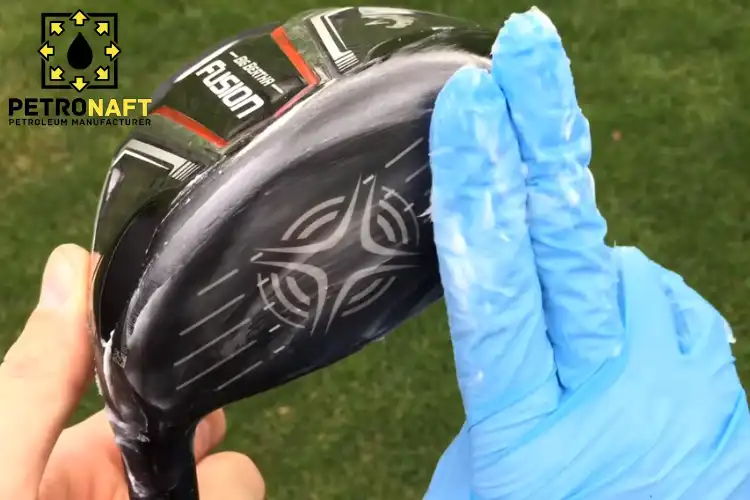
Petroleum Jelly for Coatings is best used as a moisture-resistant barrier, sealing aid, and corrosion-control component in specialty protective systems. It performs especially well on irregular metal surfaces, threaded parts, fittings, and temporary preservation jobs where flexibility, water repellency, and easy surface contact matter more than hardness or decorative appearance.
Many people assume every coating must dry into a hard film to be effective. In real industrial use, that is not always true.
On valves, flanges, couplings, stored metal parts, and pitted steel, a softer barrier can solve a problem that a rigid coating struggles with. Petroleum jelly stands out because it stays workable, wets complex surfaces, and helps block water from reaching vulnerable areas.
Highlights & Key Sections
Petroleum Jelly for Coatings: Where It Fits Best
Petroleum jelly is a semi-solid hydrocarbon material with strong water-repellent behavior. In coating-related applications, that gives it practical value as a barrier layer, a formulation ingredient, or a sealing medium in corrosion-protection systems.
It is usually not the best choice for a glossy decorative finish or a high-abrasion standalone topcoat. Its real strength lies in protection, conformity, and ease of use on difficult geometries.
| Function | What it does well | Typical use |
|---|---|---|
| Moisture barrier | Repels water and limits direct contact with metal | Temporary rust prevention |
| Surface wetting | Spreads over rough, threaded, or pitted areas | Fittings, bolts, valves, joints |
| Flexible sealing | Stays soft instead of cracking | Wrapped systems and maintenance repairs |
| Carrier medium | Holds waxes, inhibitors, or soft additives | Specialty corrosion compounds |
| Gap filling | Reaches pits and crevices better than rigid films | Aged steel and irregular metal profiles |
Why buyers and engineers use it
The real advantage of petroleum jelly is not hardness. It is contact.
A hard coating can look impressive on a flat test panel. But on a rough flange, a bolt assembly, or a repaired section of pipe, the better question is whether the material actually reaches and seals the vulnerable areas.
That is where petroleum jelly earns its place. It helps create close contact with the substrate, especially where edges, pits, and threads make uniform protection harder to achieve.
Key benefits
- Resists moisture well
- Adapts to rough and uneven metal surfaces
- Remains flexible during service
- Helps seal threads, joints, pits, and edges
- Works well in maintenance systems and temporary protection
- Can support layered corrosion-control designs
Main limitations
- Low resistance to abrasion when exposed directly
- Can collect dust in open environments
- Usually needs reinforcement for strong UV or mechanical stress
- Not ideal when a hard, paint-like finish is required
- Must be matched carefully to temperature and service conditions
Common applications
1) Corrosion protection on valves, flanges, and fittings
This is one of the strongest use cases.
Petrolatum-based compounds and tape systems are widely used where metal shapes are awkward and full coverage matters more than cosmetic appearance. On bolts, couplings, fittings, and flanges, petroleum jelly-based systems can cover recesses and uneven profiles better than many rigid alternatives.
Example:
A maintenance team needs to protect a flange assembly with exposed bolts and light surface pitting. A hard coating may bridge over pits and leave weak points. A petrolatum-rich layer followed by a protective overwrap can create better contact and longer-lasting sealing.
2) Temporary protection during storage and transport
Petroleum jelly can help preserve metal parts before installation or sale. It is useful when the goal is to keep moisture away during shipping, warehouse storage, or standby inventory periods.
Good candidates include:
- Threaded connectors
- Spare machine parts
- Metal tools
- Machined components
- Export-packed steel items
This approach works best when the part can be cleaned before final use or painting.
3) Maintenance work on aged or pitted steel
Older assets often fail in the details. Pits, sharp edges, rough weld zones, and uneven surfaces create coating weak points.
Petroleum jelly-based protective systems work well here because they are more forgiving. Instead of relying on a perfect film build over a perfect substrate, they focus on close surface contact and barrier performance.
4) Multi-layer protective systems
In many industrial settings, petroleum jelly works best as one layer in a larger system.
A typical logic looks like this:
- Inner petrolatum-rich layer for contact, sealing, and moisture resistance
- Optional filler or paste for pits and irregularities
- Outer wrap or protective layer for UV resistance, mechanical durability, or handling strength
This layered approach is often more reliable than expecting one material to do everything.
Standalone coating or formulation ingredient?
The answer depends on the application.
In simple preservation tasks, petroleum jelly may act almost like the coating itself. In more advanced systems, it is better understood as a functional ingredient that improves surface wetting, softness, barrier behavior, and flexibility.
That distinction matters for purchasing.
A buyer looking for a direct substitute for epoxy or polyurethane may be disappointed. A buyer looking for a barrier-sealing medium in a corrosion-control system may find it highly effective.
How to choose the right type
Not every grade or system serves the same purpose. Purity, consistency, softness, color, service environment, and system design all affect suitability.
| Buying question | Why it matters | What to look for |
|---|---|---|
| Is appearance important? | Some applications need a cleaner-looking material | White or refined petrolatum |
| Is the surface exposed outdoors? | UV and handling can damage soft films | Add an outer protective layer |
| Is the metal rough or pitted? | Conformability becomes critical | Softer, surface-wetting system |
| Will the part face abrasion? | Soft barriers wear faster | Reinforced or layered solution |
| Does the system run warm? | Semi-solid materials have service limits | Check temperature suitability carefully |
Mini tutorial: how to use it more effectively
A weak application can make a good product look bad. A strong application often comes down to basic discipline.
Step 1: Remove what is loose
Do not apply over loose rust, flaking coating, scale, or dirt. The system does not need a showroom finish, but it does need a reasonably sound surface.
Step 2: Treat pits, threads, and recesses first
If the surface has pits, gaps, or threaded sections, work the material into those areas before building the full protective layer. This prevents hidden voids.
Step 3: Build continuous coverage
The goal is uninterrupted barrier contact. Missed edges, skipped bolts, or thin spots can become the first failure points.
Step 4: Add outer protection when needed
If the part will face sunlight, abrasion, or rough handling, use a protective outer layer instead of leaving the petrolatum-rich layer fully exposed.
Step 5: Inspect the edges and transitions
Many failures start at ends, overlaps, corners, and geometry changes. Spend extra time there.
Practical buying insight: when it is the right choice
Choose petroleum jelly-based protection when the job rewards:
- Flexibility
- Moisture sealing
- Easy conformity to irregular metal
- Field-friendly maintenance application
- Temporary or intermediate corrosion protection
Do not choose it first when the job mainly requires:
- High gloss
- Hard decorative film
- Strong abrasion resistance
- Solvent-resistant finish appearance
- Long-term exposed service without system reinforcement
Comparison: petroleum jelly vs hard-film coatings
| Property | Petroleum jelly-based protection | Hard-film coating |
|---|---|---|
| Surface conformity | Excellent | Moderate on rough shapes |
| Moisture barrier | Strong | Strong when film is intact |
| Abrasion resistance | Limited | Usually better |
| Rework and repair | Easy | Often more labor-intensive |
| Decorative finish | Poor | Good to excellent |
| Use on pitted profiles | Often advantageous | Can be less forgiving |
Industry trends that make this topic more relevant
Two current trends explain why this subject still matters.
First, the coatings market continues to push toward smarter corrosion-control systems rather than one-product-fits-all thinking. Buyers increasingly evaluate how barrier layers, inhibitors, fillers, and top protection work together instead of expecting a single material to solve every service condition.
Second, lower-emission and performance-balanced protective technologies continue to gain importance across industrial coatings. That shift makes specialized barrier materials and hybrid system design more relevant, especially in maintenance-focused applications.
Common mistakes to avoid
- Expecting petroleum jelly to behave like a hard architectural or industrial paint
- Using it without cleaning loose contamination first
- Leaving a soft protective layer exposed where abrasion is severe
- Ignoring service temperature limits
- Failing to protect edges, overlaps, and threaded areas
- Choosing on price alone without considering system design
Executive Summary Checklist
Use this checklist before specifying or buying a petroleum jelly-based protective solution:
- Is the main goal moisture exclusion or corrosion delay?
- Is the surface rough, pitted, threaded, or geometrically complex?
- Does the application benefit from flexibility more than hardness?
- Will the system need an outer layer for UV or abrasion protection?
- Can the substrate be cleaned before use or repainting?
- Have service temperature and handling conditions been reviewed?
- Is this a barrier-sealing job rather than a decorative finishing job?
Conclusion
Petroleum Jelly for Coatings is most valuable when used as a flexible barrier and sealing component, not when treated like a universal hard-film coating. It performs best in corrosion-control systems, temporary metal preservation, and irregular-surface protection where close contact and water resistance matter most. When matched to the right job and applied correctly, it can be a highly practical and commercially smart solution.
FAQ
1) Is petroleum jelly a real coating material?
Yes, in some applications it functions directly as a protective barrier layer. In more advanced systems, it acts as part of a broader corrosion-control formulation rather than as a decorative finish coat.
2) Can petroleum jelly help prevent rust?
Yes. Its main value is creating a moisture-resistant barrier that reduces water contact with the metal surface. That makes it useful for temporary protection and specialty maintenance work.
3) Is it suitable for outdoor use?
It can be, but exposed outdoor service often requires an added outer protective layer. Soft barrier materials usually perform better when protected from direct UV and mechanical wear.
4) Is white petrolatum better than regular petrolatum?
Not in every case. White petrolatum may be preferred where appearance, cleanliness, or formulation purity matters, while industrial suitability depends more on the full system and service conditions.
5) What is the biggest buyer mistake?
The most common mistake is expecting petroleum jelly to replace every industrial coating type. It is excellent for sealing and flexible barrier protection, but not ideal for every finish, environment, or performance target.
Sources
- USP monograph defining petrolatum as a purified semisolid hydrocarbon material and giving the clearest baseline description for technical use. USP Petrolatum
- PubChem reference record useful for core terminology, material identity, and general technical characterization of petrolatum. PubChem: Petrolatum
- AMPP technical resource explaining how protective coatings reduce corrosion by isolating metal from its environment. AMPP: Protective Coatings for Corrosion Control
- Denso technical product page showing real industrial use cases for petrolatum-based anti-corrosion tape systems on pipes, joints, and fittings. Denso Tape Anti-Corrosion Petrolatum Tape
- Paint.org technical material highlighting the continuing industry shift toward lower-emission, performance-oriented corrosion-protection technologies. Waterborne Industrial Coatings