

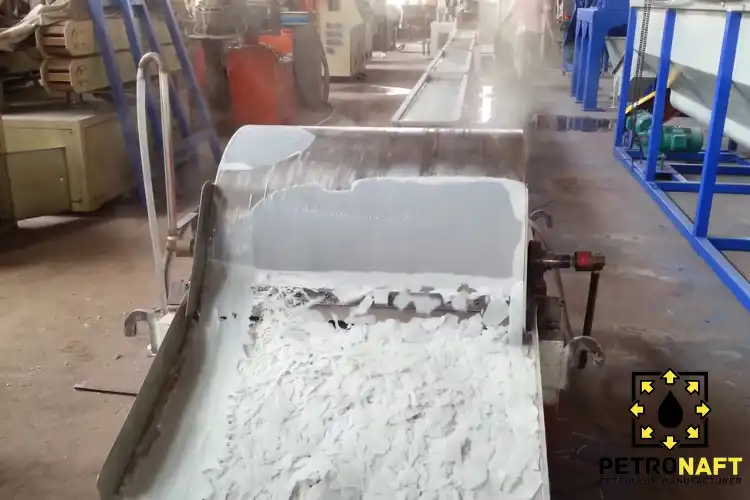
Polyethylene Wax for Coatings is a low-molecular polyolefin additive that boosts scratch and abrasion resistance, reduces friction and blocking, and tunes gloss or matting. Pick the right form—micronized powder, oxidized wax, or wax emulsion—based on your system (waterborne, solventborne, UV, powder) and the surface effect you need.
In this guide, you’ll learn:
- Which PE wax grades fit each coating type (with a simple “if-then” table)
- How to add wax without haze, seeds, or loss of clarity
- What to check on a spec sheet before you buy
Highlights & Key Sections
Polyethylene Wax for Coatings: What It Does (In Plain Terms)
Think of polyethylene wax as a surface engineer for coatings. In most formulas, it migrates (in a controlled way) toward the top layer during drying/curing and helps you tune the surface.
Here’s what it’s usually chosen for:
- Scratch / mar / abrasion resistance (hard, wear-friendly surface feel)
- Slip + lower coefficient of friction (COF) (less scuffing, better handling)
- Anti-blocking (less sticking in stacks, rolls, and tight packaging)
- Gloss control or matting support (depending on grade and particle size)
- Water repellency and stain resistance support (especially in some systems)
Real-world examples (common buyer intent):
- Wood clearcoat: reduce chair-leg scuffs and burnish marks.
- Can/coil coating: improve rub resistance and reduce scuffing in conveying.
- Waterborne wall paint: boost block resistance so doors/windows don’t stick.
- OPV / printing varnish: improve rub and slip to reduce set-off.
Why Formulators Choose It: Benefits You Can Actually Test
Most coating decisions come down to test results. PE wax benefits usually show up in these checks:
- Scratch / mar tests: better resistance, especially on high-contact surfaces.
- Taber abrasion: improved wear in many pigmented and clear systems.
- COF (slip): smoother handling, fewer scuffs in packing and transport.
- Blocking tests: reduced tack/stick when stacked under heat/pressure.
- Rub tests (MEK rub / dry rub for inks & OPVs): less surface damage.
A practical way to judge value (quick ROI thinking):
- If you’re losing product to handling damage, blocking returns, or field scratches, wax is often a low-cost fix per liter of coating compared to resin upgrades.
Polyethylene Wax Types Used in Coatings
Not all “PE wax” behaves the same. The differences that matter are polarity, hardness, melt point, and particle size.
1) Non-oxidized polyethylene wax (more non-polar)
Best when you want:
- Strong slip and rub resistance in compatible systems
- Minimal interaction with polar binders (sometimes a plus, sometimes a problem)
Watch-outs:
- Can show poor compatibility in very polar systems → haze, seeding, or weak anchoring.
2) Oxidized polyethylene wax (more polar)
Best when you need:
- Better compatibility with polar resins (many acrylics, some PUDs, some epoxies)
- Easier emulsification (common in waterborne wax emulsions)
Typical wins:
- Better “balance” between slip and clarity/compatibility.
3) Acid- or anhydride-modified PE wax (functionalized)
Best when you want:
- Improved anchoring or reactivity with certain binders/crosslinkers
- Stronger pigment wetting/dispersing support in some systems
4) Micronized PE wax powders (particle-engineered)
Best for:
- Powder coatings and high-solids where you want “dry” surface structuring
- Matting, abrasion resistance, and controlled slip
Key variable:
- Particle size distribution (too coarse can telegraph or reduce clarity).
5) Wax emulsions / dispersions (ready-to-use for waterborne)
Best for:
- Waterborne acrylics, PUDs, architectural coatings, OPVs
- Fast, consistent incorporation without specialized milling equipment
Buyer tip:
- Compare on wax solids, particle size, and ionic character (anionic/nonionic/cationic), not just “% active.”
Grade Selection: The Practical If-Then Guide
Use this table as a starting point, then fine-tune by testing (two or three candidates is usually enough to land the right one).
| Your coating system / use | Best wax form to start with | What to prioritize | Typical starting dose* | Common pitfall |
|---|---|---|---|---|
| Waterborne acrylic / wall paint | PE wax emulsion (often oxidized/modified) | Block resistance, slip, stability | 0.2–1.0% wax solids | Foam, incompatibility with thickeners |
| Waterborne PUD clearcoat (wood/industrial) | Fine PE wax emulsion/dispersions | Clarity, mar resistance | 0.2–0.8% wax solids | Haze if particle size too large |
| Solventborne 2K PU / alkyd | Micronized PE wax powder or solvent dispersion | Rub, scratch, COF | 0.1–1.0% | Poor dispersion → “seeds” |
| UV-curable clear | Very fine wax dispersion (low haze grade) | Slip without clarity loss | 0.1–0.5% | Cure inhibition (rare), surface defects if overdosed |
| Powder coating (general industrial) | Micronized PE wax powder | Scratch, abrasion, slip | 0.2–1.5% | Over-matting / texture shift |
| OPV / inks | Fine wax dispersion/emulsion | Rub, anti-setoff, slip | 0.2–1.0% | Plate/roller issues if particle too coarse |
*Dose depends on resin, pigment volume concentration (PVC), and the exact surface target.
What to Look for on a Spec Sheet (Grade Guide in One Table)
This is where buyers save time—and avoid “it looked fine in the lab, failed in production.”
| Spec / property | What it tells you | Why it matters in coatings |
|---|---|---|
| Melting/softening point | Hardness & heat resistance trend | Higher values often improve mar/scratch, can affect flow |
| Density / crystallinity | Hardness, slip feel | Often correlates with abrasion resistance and COF impact |
| Viscosity (at set temp) | Molecular weight trend | Impacts migration, processing, and dispersion behavior |
| Acid number / polarity | Compatibility potential | Higher polarity generally helps anchoring in polar systems |
| Particle size (powder/emulsion) | Clarity vs texture | Finer = better clarity; coarser = more texture/matting |
| Solids (emulsions) | Active dose economics | Lets you compare true cost-in-use |
Fast rule:
- If your system is polar and waterborne, oxidized/modified grades and stable emulsions usually behave better.
- If you need maximum slip in a compatible solvent system, non-oxidized PE wax can be very effective.
Mini Tutorials: How to Add PE Wax Without Defects
Mini tutorial 1: Waterborne acrylic clear (add wax emulsion cleanly)
Goal: improve slip + block resistance without haze.
- Pre-mix your coating base to stable viscosity (don’t chase final viscosity yet).
- Add wax emulsion slowly under moderate shear (avoid vortexing air).
- Mix 10–20 minutes, then let stand 30 minutes.
- Adjust final rheology (thickener last, especially associative types).
- Apply drawdown and check:
- Clarity/haze
- Slip feel
- Block resistance after 24 h + warm stack test
Pro tip:
- If you see foam: reduce shear, adjust defoamer timing, or use a more compatible emulsion type.
Mini tutorial 2: Solventborne PU (use micronized wax without “seeds”)
Goal: improve scratch/abrasion on a clear or pigmented PU.
- Option A (best): use a ready-made wax dispersion designed for your solvent system.
- Option B (powder): pre-disperse the micronized wax into a portion of resin/solvent under high shear.
Steps (Option B):
- Wet the powder into solvent/resin blend (avoid dumping).
- High-shear disperse to a smooth grind.
- Filter a small sample and check for undispersed particles.
- Add to the batch and re-check gloss/clarity.
Pro tip:
- “Seeds” often come from poor wetting or too coarse particle size, not from the wax itself.
Mini tutorial 3: Powder coating (simple dosing workflow)
Goal: keep extrusion stable while improving mar resistance.
- Dry blend wax into the premix.
- Start low (0.2–0.4%), then step up in small increments.
- Track:
- Extrusion torque
- Gloss / haze
- Scratch resistance and COF
Pro tip:
- If texture shifts too much, switch to a finer wax or reduce dose.
Troubleshooting Table: Fix Problems Fast
| Symptom | Likely cause | Practical fix |
|---|---|---|
| Haze in clearcoat | Particle size too large or incompatibility | Switch to finer emulsion/dispersion; lower dose; increase polarity (oxidized grade) |
| “Seeds” / specks | Poor dispersion or agglomerates | Improve pre-wetting; use dispersion; raise shear time; filter |
| Slip not improving | Wrong wax type or dose too low | Try harder/higher-melt wax; increase dose stepwise; verify migration timing |
| Blocking still present | Wax not reaching surface or binder too tacky | Use better-emulsified grade; adjust coalescent; check cure/dry schedule |
| Gloss dropped too much | Overdose or wax too coarse | Reduce dose; choose finer grade; separate “slip” vs “matting” targets |
Industry Trends That Affect Your Choice (Discover-Friendly, Real-World Relevant)
- Waterborne growth + faster line speeds: more demand for stable wax emulsions that don’t foam, don’t destabilize rheology, and still deliver block resistance under rapid drying.
- PFAS scrutiny: many formulators now prefer PTFE-free surface solutions, pushing innovation in engineered PE wax particles and modified wax dispersions to maintain scratch/slip performance without fluorinated additives.
Top 10 Companies in This Field
Below are widely recognized global players supplying polyethylene waxes and PE-wax-based surface additives for coatings, inks, and related formulations.
| Company | Where they’re strong | What they’re known for in coatings waxes |
|---|---|---|
| BASF | Global | Broad wax portfolios used for surface protection, slip, and wear resistance |
| Clariant | Global | Coatings-focused wax additives and polyethylene wax grades for surface effects |
| Honeywell | Global | Polyethylene wax performance additives used for rub, mar, abrasion, and COF control |
| Mitsui Chemicals | Global | Low molecular weight polyolefin/PE wax families used in coatings and related applications |
| Michelman | Global | PE wax emulsions/dispersions widely used in waterborne coatings and OPVs |
| BYK | Global | Coatings additive “wax systems” (emulsions, dispersions, micronized waxes) for surface tuning |
| Lubrizol | Global | Wax additive technologies and dispersions for slip, durability, and surface feel |
| Sasol | Global | Synthetic wax technologies commonly used as coating additives for durability and surface effects |
| SCG Chemicals | Asia + global export | Polyethylene homopolymer wax products used across formulation industries (including coatings-adjacent uses) |
| Petro Naft | Turkey + international supply | Industrial supply and grade support for petroleum-based materials and specialty wax solutions for demanding applications |
Executive Summary & Practical Checklist
If you want reliable results with Polyethylene Wax for Coatings, match the wax to your system and add it the right way.
Selection checklist (copy/paste for your next lab run):
- Define your primary target: scratch, slip/COF, blocking, matting, or clarity-safe durability
- Choose the form:
- Waterborne → start with wax emulsion/dispersions
- Solvent/UV → dispersion or very fine micronized wax
- Powder → micronized wax powder
- Check the spec sheet:
- Melting point/softening point, polarity (acid number), particle size, and solids
- Start with a controlled dose:
- 0.2–1.0% wax solids (waterborne) or 0.1–1.0% (solvent/UV), 0.2–1.5% (powder)
- Validate with the right tests:
- Scratch/mar, COF, blocking, rub/abrasion—then confirm appearance (gloss/haze)
- Troubleshoot logically:
- Haze/seeds → particle size/dispersion/compatibility; Slip not moving → wax type/dose/migration timing
FAQ
1) Does PE wax reduce gloss in clear coatings?
It can. Fine particle waxes and compatible emulsions minimize gloss loss, while coarser or higher-dose waxes can add haze or texture. Always screen two particle sizes at a fixed dose.
2) What’s the difference between oxidized and non-oxidized PE wax in coatings?
Oxidized grades are more polar, so they typically anchor and disperse better in polar/waterborne systems. Non-oxidized grades often maximize slip but can be less compatible in polar binders.
3) Can I use PE wax in waterborne coatings without milling?
Yes—use a stable wax emulsion or dispersion made for waterborne systems. Add it under moderate shear, then adjust final rheology after it fully incorporates.
4) Why do I see “seeds” after adding micronized wax?
Usually the wax didn’t wet/disperse properly, or the particle size is too coarse for your film thickness and clarity needs. Pre-disperse, increase shear time, or switch to a dispersion grade.
5) Is PE wax compatible with UV-curable coatings?
Often, yes—especially as specialized dispersions. Start low, verify cure and surface appearance, and watch for over-dosing that can create surface defects or reduce clarity.
Sources
- BASF’s Luwax® product overview describing wax functions and application areas — BASF Luwax®.
- Clariant’s coatings wax resource summarizing where wax additives are used in coatings — Clariant Waxes for Coatings.
- Honeywell technical data sheet showing PE wax use in solvent-borne coatings to improve rub/mar/abrasion and COF — Honeywell A-C® 617A TDS (PDF).
- Mitsui Chemicals Hi-WAX™ product information noting coating-related applications for low molecular weight polyolefin waxes — Mitsui Chemicals Hi-WAX™.
- Lubrizol’s primer on wax additive technologies and benefits in coatings/inks — Lubrizol Wax Additives Technology & Benefits (PDF).