


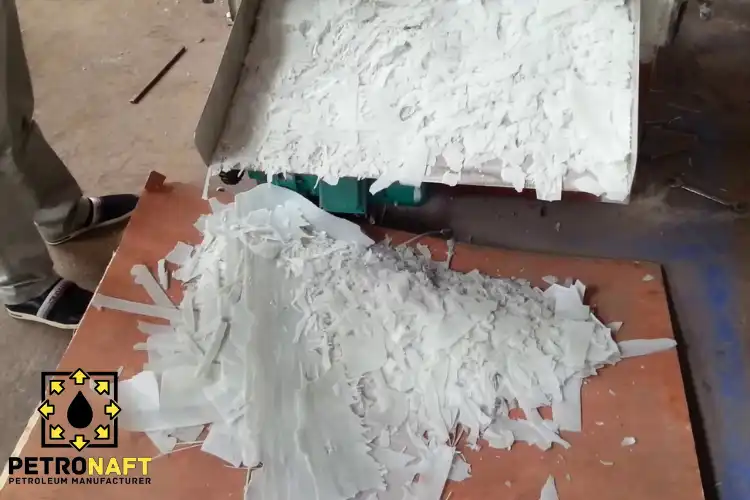
Polyethylene Wax in the Plastic Industry improves melt flow, reduces die friction, boosts pigment dispersion, and upgrades surface finish—especially in PVC, masterbatch, and polyolefin compounding. The right grade (non-oxidized vs. oxidized, viscosity, melting range) can cut defects like die build-up and specks while enabling faster, more stable production.
If you’ve ever chased a stubborn processing issue—plate-out on PVC profiles, inconsistent color strength in masterbatch, or scuff marks on molded parts—polyethylene (PE) wax is one of the simplest levers you can pull. It’s not a “magic powder,” but when you match the wax chemistry to your resin and process, the improvement is often immediate and measurable.
Highlights & Key Sections
Polyethylene Wax in the Plastic Industry: What It Does (and Why Buyers Care)
Polyethylene wax is a low-molecular-weight polyethylene material that behaves like a highly controlled “micro-lubricant” inside a melt. In plastics, it mainly acts in three practical ways:
- Lubrication (internal + external): helps the polymer flow and reduces friction against metal surfaces
- Dispersion + wetting: helps pigments, fillers, and additives distribute more evenly
- Surface engineering: improves slip, gloss, scratch/abrasion behavior, and release
The simple mental model
Think of PE wax as a traffic controller for your melt:
- Inside the melt, it reduces internal drag so chains move more easily.
- At the metal interface, it reduces sticking and shear hotspots.
- Around pigments/fillers, it helps particles “separate and spread” instead of clumping.
The value for buyers and processors is direct: higher throughput, fewer defects, less downtime, and more consistent product appearance.
Where PE Wax Delivers the Biggest Wins
1) Rigid PVC (pipes, fittings, profiles, sheets)
In PVC, the lubricant package decides whether you get stable fusion or a nightmare of plate-out and torque spikes. PE wax commonly supports:
- Smoother extrusion and better die release
- More stable fusion window (less “too sticky / too dry” behavior)
- Improved surface gloss and reduced die lines
- Lower risk of overheating from friction
Real-world example: A profile line that shows periodic die build-up often benefits from a small adjustment: slightly higher external lubrication (often supported by PE wax) while keeping fusion stable with the rest of the lube system.
2) Color & additive masterbatch (PE, PP, PVC carriers)
Masterbatch performance is basically a dispersion test. PE wax is frequently used to:
- Improve pigment wetting (less specking)
- Increase color strength consistency
- Reduce filter pressure or screen-pack loading
- Improve pellet appearance and handling
Quick indicator: If you see “pepper” specks in a film or injection part, you’re usually fighting incomplete pigment breakdown—not just poor mixing. A well-matched wax can reduce agglomeration risk.
3) Polyolefin compounding (PE/PP + fillers)
In filled compounds, you want flow without losing mechanical balance. PE wax can help:
- Reduce melt viscosity and power draw
- Improve filler dispersion (CaCO₃, talc, etc.)
- Improve surface slip and reduce blocking
4) Engineering blends & specialty compounds (select use)
In some blends (ABS, PA, etc.), PE wax may be used carefully for surface and processing effects, but compatibility matters more. Oxidized or functionalized grades often behave better here than purely nonpolar grades.
Types of Polyethylene Wax and What They’re Good At
Not all PE waxes behave the same. Choosing correctly is where you gain E-E-A-T credibility with technical buyers.
| Type of PE Wax | What’s different | Best-fit use cases | Typical “tell” in production |
|---|---|---|---|
| Non-oxidized PE wax | Mostly nonpolar; strong external lubrication | PVC external lubrication, release, surface finish | Less sticking to metal, cleaner die behavior |
| Oxidized PE wax | More polar; better wetting/compatibility | Pigment dispersion, filler wetting, polar systems | Higher color consistency, fewer specks |
| Low-viscosity grades | Flows easily at processing temps | High-throughput extrusion/compounding | Lower torque and smoother amperage |
| Higher melting / harder grades | Better rub/scratch contribution | Surface durability, anti-blocking, slip control | Reduced scuffing, improved handling |
Practical note: Buyers often compare waxes using a small set of specs (melting/softening point, viscosity at a defined temperature, density, acid number for oxidized grades, and particle form). Specs don’t tell the whole story—but they prevent bad mismatches.
A Buyer’s “Spec Sheet” for Fast, Correct Sourcing
When a purchasing team asks “Which PE wax should we buy?”, technical teams can answer quickly by using this short checklist.
Ask these five questions
- Resin system: PVC? PE/PP? Filled compound? Masterbatch carrier?
- Primary goal: lubrication, dispersion, surface slip/gloss, or release?
- Process: extrusion (pipe/profile/film), injection, calendering, compounding?
- Constraints: odor, migration, regulatory (food-contact), recyclate compatibility?
- Form preference: pastilles, powder, flakes (handling + dosing strategy)
What to request from a supplier (minimum)
- Technical data sheet with: melting/softening point, viscosity, density, and (if oxidized) acid number
- Recommended dosage range and target application (PVC lube vs dispersion vs surface)
- Batch-to-batch consistency statement and QA methods
- Packaging, storage guidance, and safe handling notes (especially for powders)
How to Choose the Right Grade (A Practical Selection Matrix)
Use this table to narrow options in minutes.
| Your process & goal | Start with | Why it works | What to watch |
|---|---|---|---|
| Rigid PVC profile/pipe: die release + stable extrusion | Non-oxidized PE wax (external lubrication leaning) | Reduces metal friction and sticking | Too much can reduce fusion or cause plate-out depending on system balance |
| Masterbatch: higher color strength + fewer specks | Oxidized PE wax (dispersion leaning) | Better wetting around pigment/filler surfaces | Overuse can shift rheology; validate MFI/torque |
| Filled PE/PP: lower torque + better filler distribution | Low-viscosity non-oxidized or lightly functional wax | Helps flow and reduces agglomeration | Monitor slip/bloom and downstream printing/lamination needs |
| Surface durability: scuff resistance / rub | Higher-melting, harder wax grade | Contributes to surface behavior | Ensure it doesn’t haze clear parts or over-slip film |
Mini Tutorial 1: Dialing In PE Wax for Rigid PVC Extrusion (No Guesswork)
This is a field-friendly method that works even without advanced lab gear.
Step-by-step (1–2 shifts)
- Baseline your line: record throughput (kg/h), melt temp, torque/amperage stability, and visible surface defects.
- Define the pain: is it die build-up, dull surface, unstable fusion, or plate-out?
- Start low: adjust PE wax in small increments rather than “big swings.”
- Run a controlled trial: keep other lubricant components constant if possible.
- Measure what matters:
- surface gloss/appearance
- die cleanliness after a fixed run time
- torque and temperature stability
- dimensional stability of the profile/pipe
A practical rule
If you fix sticking but suddenly see under-fusion symptoms (rough surface, poor mechanical performance), you likely pushed external lubrication too far relative to internal lubrication. Rebalance rather than reverting blindly.
Mini Tutorial 2: Cleaner Masterbatch Dispersion (Speck Reduction Strategy)
Specks usually come from pigment agglomerates surviving compounding. PE wax can help—but only if you treat it correctly.
Mini workflow
- Pre-blend smartly: combine pigment + wax + a small portion of carrier resin before the main feed (even simple pre-mixing helps).
- Use wax to improve wetting: oxidized PE wax often performs better for pigment wetting than purely nonpolar wax.
- Watch the filter pressure: if pressure climbs quickly, you’re not breaking down agglomerates or you’re forming gels.
- Verify with a quick “rub-out” test: smear a thin film; look for peppering and streaks.
Don’t skip this check
If your wax improves dispersion but hurts final part appearance (haze, surface slip too high), you may need a wax grade change rather than a dosage increase.
Troubleshooting Guide: Symptoms, Causes, Fixes
| Symptom on line or part | Likely cause | How PE wax can help | Quick action |
|---|---|---|---|
| Die build-up / sticking | Too much adhesion at metal interface | Increase external lubrication effect | Try a grade with stronger external lubrication and micro-adjust dosage |
| Plate-out in PVC | Lubricant imbalance or incompatibility | Use a wax that matches resin polarity | Evaluate oxidized vs non-oxidized and rebalance overall lube package |
| Specks in color parts | Pigment agglomeration | Improve wetting/dispersion | Trial an oxidized grade; improve pre-mix strategy |
| Haze in clear applications | Wax crystallization / incompatibility | Switch to a clearer-compatible grade | Reduce dosage; consider a different melt/viscosity profile |
| Poor print/lamination | Excess slip/migration | Choose controlled-slip wax | Use lower dosage or alternative wax designed for low migration |
Quality, Handling, and Compliance Notes Buyers Appreciate
Storage and handling (practical)
- Keep wax dry and sealed to avoid contamination.
- For powders, manage dust (clean dosing, extraction where needed).
- Standardize dosing method (gravimetric feeder beats manual addition for consistency).
Environmental handling matters more now
Plastic processors increasingly face scrutiny on pellet/powder loss across the plant. This affects audits, customer expectations, and sometimes contracts—especially when working with large converters or international brands.
Best practice: treat wax pastilles/powders like resin pellets—contain spills immediately and train operators on “no loss” habits.
Trends Shaping PE Wax Use Right Now
1) Higher recycled content, tighter processing windows
As PCR content rises, melt behavior becomes less predictable (odor, viscosity spread, contaminants). Processors often use wax to stabilize:
- flow and torque,
- surface appearance,
- dispersion of additives (odor reducers, color correction systems).
2) Smarter wax chemistry (functional and catalyst-driven)
More formulations now use functionalized or more precisely engineered waxes to target:
- lower migration,
- better dispersion,
- improved performance at lower dosage.
These trends matter for Discover and AI-driven discovery because they connect directly to modern manufacturing goals: efficiency + consistency + sustainability pressure.
Conclusion
When you treat it as a technical tool—not a generic “additive”—Polyethylene Wax in the Plastic Industry becomes a reliable way to improve throughput, surface quality, and dispersion across PVC, masterbatch, and polyolefin compounding. The fastest wins come from matching wax polarity and viscosity to your resin system, then validating with simple, controlled trials.
Executive Summary Checklist
Use this before approving a grade or changing dosage:
- Define the primary goal: lubrication, dispersion, surface, or release
- Match wax type to need: oxidized for wetting/dispersion; non-oxidized for lubrication/release
- Confirm key specs: melting/softening range, viscosity, density, (acid number if oxidized)
- Trial with small steps and fixed conditions (don’t change multiple variables at once)
- Track outcomes: torque/amperage stability, die cleanliness, surface appearance, defect rate
- Validate downstream needs: printing, lamination, odor, migration, regulatory constraints
- Standardize dosing and handling to reduce variability and plant losses
FAQ
1) Is oxidized polyethylene wax always better for dispersion?
Not always, but oxidized grades often wet pigments and fillers more effectively due to higher polarity. If dispersion is your main goal, it’s a strong starting point—then you confirm by filter pressure, speck reduction, and color strength stability.
2) Can PE wax replace the full lubricant package in PVC?
No. PVC lubrication works as a balanced system (internal + external + stabilizers and other additives). PE wax can be a key piece, but replacing everything typically causes fusion instability, plate-out, or inconsistent mechanical performance.
3) Why does PE wax sometimes cause haze in clear plastics?
Haze can happen if the wax crystallizes as a separate phase or if compatibility is limited at your dosage. Switching to a different melting/viscosity profile or reducing dosage often fixes it without sacrificing processing gains.
4) What’s a realistic way to test PE wax performance without a lab?
Run controlled line trials: record torque/amperage, melt temperature stability, die cleanliness after a fixed time, and visual defect rates. For masterbatch, add a quick rub-out check and track filter pressure trends during compounding.
5) Does PE wax help when using recycled plastics?
Often yes. Recycled streams can widen viscosity variation and worsen surface defects or dispersion issues. The right wax can stabilize processing and appearance, but you should also control contamination and moisture to avoid misattributing problems.
Sources
- Technical data sheet describing typical properties and common plastics uses (PVC external lubrication and masterbatch dispersion) — Honeywell A-C® 617 Technical Data Sheet (PDF)
- Official safety and handling reference with material characteristics and industrial precautions — BASF Luwax® A Powder Safety Data Sheet (PDF)
- Manufacturer overview of wax functions as lubricants, release agents, and dispersing aids across industrial applications — Clariant Waxes for Special Applications
- Industry technical guide explaining how polymer lubricants work and how to select grades for plastics — SpecialChem Polymer Additives: Lubricants Guide
- Industry-led program and best-practice framework for preventing pellet/flake/powder loss during handling — Operation Clean Sweep