

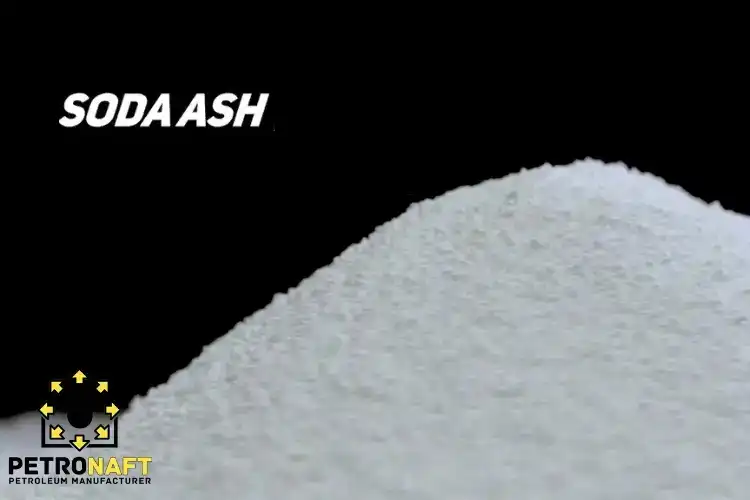
Soda Ash for Water Treatment: is one of the most practical ways to raise pH and add buffering alkalinity, helping stabilize water chemistry, improve process performance, and reduce corrosion risk. When you estimate dose correctly, mix and feed it properly, and follow basic safety controls, soda ash delivers reliable pH control across drinking water, wastewater, and industrial systems.
- Best for: steady pH lift + buffering (alkalinity)
- Common goals: corrosion control, improved coagulation, neutralization, process stability
- Key success factors: target pH/alkalinity, dose verification, clean solution prep, safe handling
Highlights & Key Sections
What soda ash does in water treatment
Soda ash (sodium carbonate) is an alkaline salt that dissolves in water and increases pH while also increasing alkalinity (buffering capacity). That second part matters: alkalinity helps resist rapid pH swings, so the system stays stable when flow or influent quality changes.
In practical terms, soda ash helps you:
- Push acidic water closer to neutral
- Maintain a steadier pH setpoint under variable conditions
- Improve downstream chemistry where pH sensitivity is high (coagulation, adsorption, disinfection efficiency, metals precipitation)
Soda ash vs other pH/alkalinity adjusters (quick selection)
| Chemical option | What it’s best at | Key trade-off | Typical use case |
|---|---|---|---|
| Soda ash (sodium carbonate) | Raises pH and adds buffering alkalinity | Can create scaling risk if overdosed in hard waters | Stable pH control, corrosion reduction, process buffering |
| Caustic soda (sodium hydroxide) | Fast pH increase, small dose volumes | Less buffering; higher handling hazard | Quick neutralization, high-pH targets |
| Sodium bicarbonate | Gentle alkalinity boost, mild pH lift | May require higher mass to reach higher pH | Soft buffering, taste-sensitive applications |
| Lime-based alkalinity | Adds alkalinity and can assist hardness removal | Slurry handling, scaling, solids management | Softening, large plants with solids handling capacity |
Soda Ash for Water Treatment: where it fits (real-world applications)
Soda ash shows up wherever operators want predictable pH control without “knife-edge” swings.
Common applications:
- Corrosion control support: Raising pH/alkalinity helps reduce aggressive, corrosive water behavior in distribution or process lines.
- Coagulation optimization: Many coagulants perform best in a tighter pH range; soda ash helps hold that range during flow spikes.
- Neutralization: Treating acidic influent (industrial wastewater, RO permeate polishing, scrubber blowdown) to meet internal targets.
- Metals precipitation support: Certain metals precipitate more effectively in controlled pH bands, improving removal consistency.
Mini case example: stabilizing a variable influent
A plant sees influent pH swing between 6.0 and 7.2 due to intermittent acidic washdowns. Operators install:
- A small mixing tank for soda ash solution
- A metering pump tied to an online pH signal (with a deadband)
- A static mixer at the injection point
Result: pH stays within a tighter control window, chemical spend becomes more predictable, and downstream performance stabilizes.
pH and alkalinity basics (the part that prevents overdosing)
pH tells you how acidic/basic the water is right now. Alkalinity tells you how strongly the water can resist change. If you raise pH without sufficient alkalinity, you can get “bounce”: pH climbs briefly, then drops again as conditions shift.
A practical way to think about it:
- Low alkalinity: pH responds dramatically to small chemical changes
- Adequate alkalinity: pH changes more slowly and predictably
- Too much alkalinity (or too high pH): you can trigger scaling, especially in hard water
Common target strategy (simple and effective)
- Set a pH target based on your process need (corrosion, coagulation, discharge limits).
- Set a minimum alkalinity target that keeps pH stable during normal variability.
- Validate with a short trial and adjust with measured data.
Dosage: how to estimate, verify, and control
There is no universal “one-size” dose because raw water chemistry varies widely. The fastest way to get a reliable dose is: estimate → bench test → field trim.
Step-by-step mini tutorial (operator-friendly)
- Define the target
- Pick your pH setpoint and acceptable range (example: 7.2–7.6).
- Measure key inputs
- pH, alkalinity, hardness, temperature, flow variability.
- Run a quick bench check
- Add small measured increments to a known sample volume, mix, then re-test pH and alkalinity.
- Calculate a starting feed rate
- Convert the needed alkalinity increase into a soda ash dose (then adjust for purity).
- Commission carefully
- Start low, hold, measure, then step up until you hit stable control.
Fast estimating rule (good for a first pass)
If your goal is mainly to increase alkalinity (buffering), a practical starting estimate is:
- Soda ash (mg/L) ≈ alkalinity increase (as CaCO₃, mg/L) × 1.06 ÷ purity
This works as a field-friendly approximation because soda ash contributes alkalinity in a predictable way. You still need to verify with tests, especially in hard waters or when you target a tight pH band.
Worked example (simple numbers)
You want to increase alkalinity by 30 mg/L (as CaCO₃) in a stream. Your soda ash is 99% assay.
- Dose ≈ 30 × 1.06 ÷ 0.99
- Dose ≈ 32 mg/L soda ash (starting estimate)
You then validate that dose with measured pH/alkalinity and adjust to match your real setpoint.
Quick dosing conversion table
| What you know | What you can estimate | Notes |
|---|---|---|
| Desired alkalinity increase (mg/L as CaCO₃) | Soda ash dose (mg/L) | Use the 1.06 factor, then correct for purity |
| Flow (m³/h) + dose (mg/L) | kg/h chemical demand | Useful for bulk consumption planning |
| Solution strength (%, w/w) | Pump feed rate | Keep solution stable to prevent crystallization/clogging |
Preparing and feeding soda ash solution (without clogs or surprises)
Soda ash dissolves well, but poor prep can cause operational headaches. Most plants avoid extremes and keep solutions in a stable, pumpable range.
Practical mixing procedure
- Fill the tank with water first (reduces clumping).
- Add soda ash slowly under agitation to control dust and improve wetting.
- Mix until clear or uniformly dissolved (small haze can indicate impurities or hardness interactions).
- Keep the tank covered to reduce contamination and moisture pickup.
- Use a screened suction or a simple inline strainer to protect metering pumps.
Where to inject
- Choose a point with good turbulence (static mixer or downstream of a pump).
- Avoid injecting where scale can form easily (dead legs, low-flow corners).
- Use backflow prevention and proper chemical injection fittings.
Troubleshooting table (operators actually use)
| Symptom | Likely cause | Fix that works |
|---|---|---|
| pH swings up and down | Control loop too aggressive; low alkalinity buffering | Add deadband, slow response time, confirm alkalinity target |
| Pump or line plugging | Solution too strong for temperature; crystallization | Lower concentration, keep tank above minimum temperature, improve mixing |
| Scale near injection point | Overfeed; hard water + high pH micro-zone | Improve mixing, move injection point, trim dose |
| Cloudy solution | Hardness interaction or insolubles | Use softer make-up water, add filtration/settling, verify product quality |
| Chemical use higher than expected | Influent variability; poor measurement points | Check sampling location, recalibrate sensors, do short jar tests |
Safety, storage, and handling (what good plants standardize)
Soda ash is alkaline and can irritate eyes, skin, and airways, especially as dust. Safe handling is straightforward when teams apply consistent basics.
Safety essentials
- Wear eye protection and gloves during handling and mixing.
- Control dust during bag opening and charging (slow pour, local ventilation where possible).
- Rinse splashes with plenty of water and follow your site’s chemical response plan.
- Keep acids and incompatible chemicals separated to prevent heat and gas release.
Storage best practices
- Store in a dry area; moisture causes caking and flow problems.
- Keep bags or big bags sealed until use.
- Use first-in/first-out rotation and protect packaging from punctures.
Quality and compliance essentials (buyer-focused)
If you treat potable water or any sensitive product stream, don’t buy by price alone. Standard procurement checkpoints include:
- Consistent assay (purity) and low insolubles
- Trace metals control appropriate to the application
- Documentation for batch consistency (certificate of analysis, lot traceability)
- Packaging that matches your handling method (bags, big bags, bulk)
Choosing the right grade and format (so your system runs smoothly)
Not all soda ash behaves the same in operations. Particle size and bulk density change how it pours, dissolves, and feeds.
Selection guidance
- Dense vs light: Dense typically flows better and can reduce dusting; light may dissolve quickly but can dust more during handling.
- Solution feeding vs dry feeding: Most precise pH control systems prefer solution feed with metering pumps.
- Packaging:
- Bags: flexible for smaller sites
- Big bags: reduces handling time for mid-sized users
- Bulk: best for high-volume users with silo systems
Buyer checklist (what professionals ask suppliers)
- Is the assay consistent across lots?
- What’s the typical moisture range?
- Are insolubles controlled tightly enough for small metering pumps?
- Can the supplier support stable lead times and documentation?
- Does the product perform consistently in your make-up water quality?
When soda ash is the wrong tool
Soda ash is excellent for buffered pH control, but other options win in specific cases.
Choose an alternative when:
- You need an instant, sharp pH jump with minimal added alkalinity (often a hydroxide-based option fits).
- You run a process where added sodium load is a major constraint (some plants evaluate different alkalinity sources).
- You already fight scaling and your water is hard; in that case, you may need a different strategy or tighter control.
Trends that are shaping pH control right now
Two forces are pushing plants to modernize pH control programs:
- Tighter discharge expectations and process reliability goals: Operators need stable control under variable influent, not just “passable averages.”
- Smarter dosing systems: Online sensors, better control logic (deadbands, rate limits), and remote monitoring reduce chemical waste and pH oscillation—especially in facilities with rapid flow swings.
These shifts favor chemicals and programs that deliver predictable, buffered control with clear verification steps—exactly where soda ash often performs well.
Executive Summary Checklist (keep this as your operating standard)
- Define pH and alkalinity targets based on the process need.
- Measure pH, alkalinity, hardness, temperature, and variability before setting dose.
- Start with an estimate, then validate by bench testing and measured field tuning.
- Prepare solution by adding chemical to water under mixing; avoid overly strong solutions.
- Inject into turbulent flow and avoid low-flow dead zones.
- Use stable control settings (deadband + sensible response time).
- Prevent clogs with screening/straining and temperature-aware concentration limits.
- Standardize PPE, dust control, dry storage, and lot documentation.
- Verify performance routinely (pH + alkalinity), not pH alone.
- Re-check targets when influent or downstream chemistry changes.
FAQs
1) Can soda ash replace caustic soda for pH adjustment?
Sometimes, but not always. Soda ash adds buffering alkalinity, which often improves stability, while caustic can raise pH faster with smaller volumes. The best choice depends on response speed, safety constraints, and whether you need buffering.
2) Does soda ash increase alkalinity as well as pH?
Yes. That’s one of its main advantages: it raises pH and increases alkalinity, helping resist pH swings when flow or influent chemistry changes.
3) What’s the biggest operational mistake with soda ash dosing?
Overfeeding in hard water or injecting into poor mixing zones. That can create localized high pH and trigger scaling near injection points, even if the bulk pH looks acceptable.
4) How do I prevent soda ash solution from crystallizing or plugging lines?
Avoid overly strong solutions, account for temperature swings, keep good agitation, and protect metering systems with simple strainers. If plugging persists, lower concentration and improve injection turbulence.
5) Is soda ash safe for drinking-water applications?
It can be, when you select a grade appropriate for potable treatment and maintain proper documentation and controls. Always follow local requirements for drinking-water additive acceptance and verify product consistency by lot.
Sources
- Health-based guidance on water quality and treatment objectives — anchor link: https://www.who.int/publications/i/item/9789241549950
- Corrosion control and water quality management references used by utilities — anchor link: https://www.awwa.org/Resources-Tools
- Chemical identity, properties, and hazard information for sodium carbonate — anchor link: https://pubchem.ncbi.nlm.nih.gov/compound/Sodium-carbonate
- Workplace exposure and chemical safety guidance for alkaline dusts — anchor link: https://www.cdc.gov/niosh/