


Most recycled used oil is collected, cleaned, and transformed into new base oils, industrial fuels, or refinery feedstock. After you drop off your oil, specialists test, pre-treat, and re-refine it in multi-stage processes, turning a hazardous waste into high-quality lubricants and energy while cutting emissions and conserving resources.
Highlights & Key Sections
What actually happens to your oil after you drop it off?
Once you pour used oil into a drum at the workshop or recycling point, it enters a surprisingly sophisticated supply chain.
Typical journey of a batch of recycled used oil:
Collection and consolidation
Collected from garages, fleets, factories, and public drop-off points
Moved by licensed transporters to depots or directly to re-refineries
Pre-treatment
Oil is tested (water, metals, halogens, flash point)
Water and sludge are separated by settling, centrifuges, or filters
Processing route decision
High-quality streams → re-refining into base oil
Mixed/low-quality streams → industrial fuel after cleaning
Contaminated streams → hazardous waste treatment
Final products
New base oils for lubricants
Fuel for kilns, boilers, and industrial furnaces
Refinery or petrochemical feedstock
Example: A typical day at a re-refining hub
Imagine a regional re-refinery receiving 30–40 tanker loads of used oil per day from hundreds of workshops and fleets. Each load is sampled, logged, and blended into compatible tanks. The plant then runs continuously, distilling and hydrotreating the feed to produce base oils that can be blended into engine oils meeting modern OEM and API standards.
How is used oil defined, collected, and kept safe?
What counts as “used oil” in practice?
Regulators such as the US EPA define used oil as any petroleum or synthetic oil that has been used and then contaminated by dirt, metals, or chemicals during service.
Common examples include:
Engine and gear oils
Hydraulic and turbine oils
Industrial lubricants (compressor, circulation, metalworking fluids)
In the European Union, waste lubricating oil is treated as hazardous waste and was already the largest liquid hazardous waste stream, about 1.6 million tonnes in 2017.
Because of its toxicity and energy content, used oil must be:
Stored in labelled, closed, leak-proof containers
Separated from solvents, antifreeze, and other hazardous liquids
Tracked with documentation from generator to final recycler
Who actually collects your used oil?
Key players include:
Generators – garages, fleets, factories, power plants
Collection centers – public/municipal sites accepting small volumes
Transporters and marketers – licensed firms consolidating and moving oil
Re-refiners and processors – plants that clean and upgrade the oil
Burners – facilities using treated oil as fuel for energy recovery
For businesses, choosing licensed collectors and keeping records of volumes and destinations is essential for regulatory compliance and ESG reporting.
How is recycled used oil turned back into high-quality base oils?
What are the main process steps inside a re-refinery?
While each plant has its own configuration, a modern re-refinery typically follows four core stages:
-
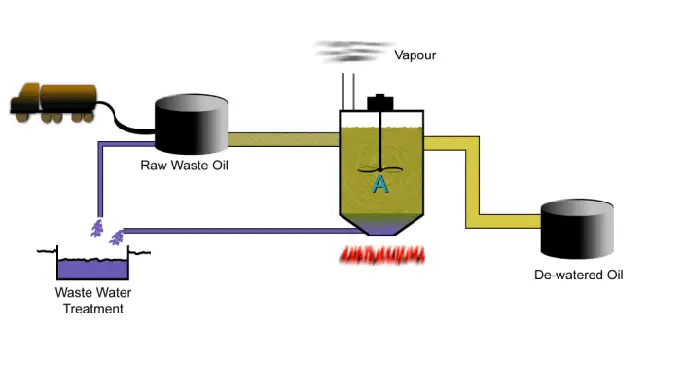
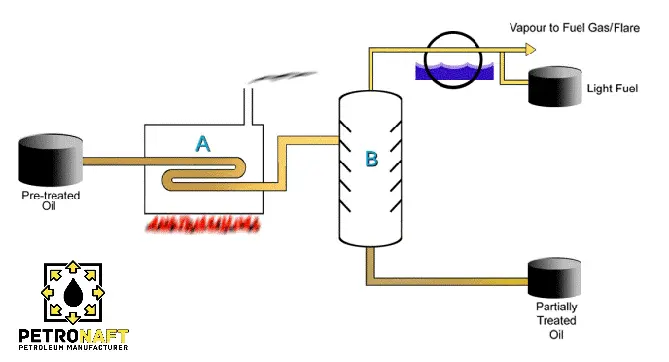
Dehydration and de-sludging
-
Heat and settling/centrifuges remove free water, sludge, and solids.
-
-
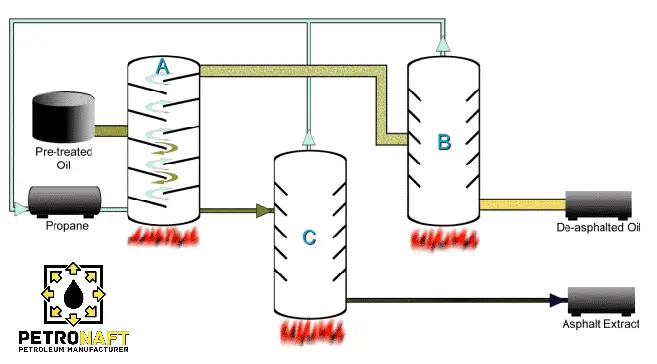
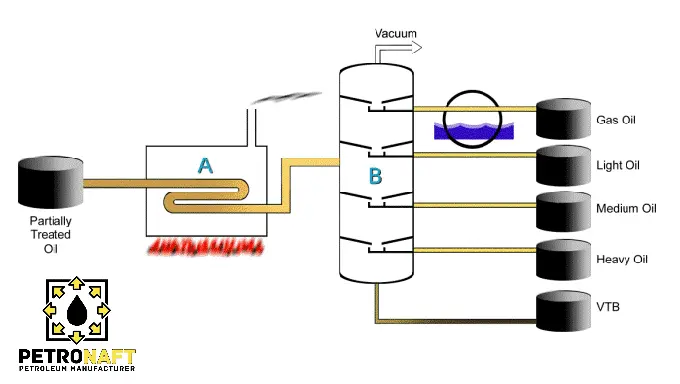
Vacuum distillation
-
At low pressure, light hydrocarbons and water boil off first.
-
The remaining oil is separated into cuts: light, middle, and heavy fractions.
-
-
Hydrotreating / hydrotreatment
-
Oil fractions are treated with hydrogen over catalysts.
-
This removes sulfur, nitrogen, and other contaminants, improving color, stability, and odor.
-
-
Finishing and blending
-
Refined base stocks are polished (e.g., clay or adsorption finishing).
-
Finished base oils are blended with additive packages for engine or industrial oils.
-
The result is a re-refined base oil (RRBO) that can meet demanding specifications comparable to virgin Group I or Group II base oils, depending on the technology used.
How is fuel oil produced from used oil?
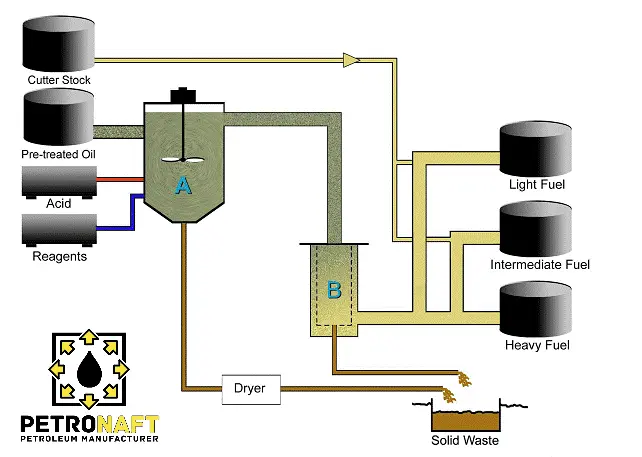
Not all streams are suitable for high-spec base oil. Some are processed into industrial fuel:
-
Water removal and filtration to avoid equipment damage
-
Viscosity adjustment (blending with lighter fuels if needed)
-
Specification testing (metals, chlorine, ash, calorific value)
These treated fuels feed:
-
Cement and lime kilns
-
Industrial boilers and furnaces
-
Some marine and stationary engines, depending on local rules
Studies show that where re-refining capacity is limited, a high share of used oil still goes to fuel. Policy and technology improvements aim to shift as much as possible toward closed-loop re-refining.
What products are made from recycled used oil?
Re-refined base oils from recycled used oil enter many everyday and industrial products.
Which lubricants can contain re-refined base oils?
Depending on quality and approval, applications include:
-
Passenger car motor oils (PCMO) meeting API/ILSAC specs
-
Heavy-duty diesel engine oils (HDEO)
-
Hydraulic fluids and gear oils
-
Industrial circulation and turbine oils
-
Metalworking and process oils
Many reputable lubricant brands already sell products using blends of virgin and re-refined base oils, often 30–50% recycled content, while still meeting OEM and warranty requirements.
Where does used oil end up as fuel or feedstock?
Typical outlets for non-re-refined streams:
-
Industrial fuel in kilns and furnaces, replacing heavy fuel oil
-
Refinery feedstock, where treated used oil is co-processed with crude
-
Specialized thermal equipment (e.g., in controlled diesel engine tests for research)
In well-regulated markets, direct burning in small space heaters is restricted or closely controlled because of localized air-quality impacts.
How does the mass balance of a used-oil batch look?
Illustrative example only – actual ratios vary by plant, regulation, and feed quality.
| Output route | Approx. share of a good-quality stream | Typical use |
|---|---|---|
| Re-refined base oil | 55–65% | New lubricants |
| Light fractions & gas | 5–10% | Internal fuel/process gas for the plant |
| Industrial fuel from heavier cuts | 20–30% | Kilns, boilers, industrial furnaces |
| Residues, sludge, and losses | 5–10% | Hazardous waste treatment, paving binders* |
*In some regions, certain residues are used in construction binders under strict rules.
Why does re-refining used oil matter for climate and resource savings?
How big is the climate advantage?
Re-refining offers major energy and emissions benefits:
The US EPA estimates that re-refining used oil to lubricant quality needs about one-third of the energy required for refining crude oil.
EPA data also show that roughly 1 gallon of used oil can yield about the same lubricating oil as 42 gallons of crude, when properly re-refined.
The European re-refining association (GEIR) reports that using waste oils instead of virgin crude in base-oil production can cut CO₂ emissions by up to 71% and reduce fine particles by as much as 90% compared with conventional refining
These gains are amplified when you avoid uncontrolled burning or dumping, which can contaminate soil and water for decades.
How does re-refining support the circular economy?
From a circular-economy perspective:
Waste oil is one of the largest volumes of non-aqueous hazardous waste worldwide.
Re-refining can, in principle, regenerate the same molecules indefinitely, turning a linear “take-make-dispose” chain into a loop.
European and global policy reviews highlight used-oil recycling targets as a key tool to reduce imports of crude and strengthen resource security.
Which policies and market trends are shaping the future of recycled used oil?
How are governments steering used-oil flows?
A major US Department of Energy study on used-oil re-refining (prepared under the Energy Policy Act) concluded that:
Re-refining offers maximum energy conservation and environmental benefits compared with other options.
State-level programs (recycling funds, collection networks, and take-back obligations) are highly effective when tailored to local conditions.
DIY (do-it-yourself) oil changers in rural areas are a high-potential but under-collected segment, making targeted public-awareness campaigns essential.
In the EU, policy reviews underline that waste lubricating oil is hazardous and must be collected separately, with re-refining prioritized over energy recovery wherever technically and economically feasible.
What is happening in the global market for recycled base oils?
The recycled base-oil market is growing steadily as large lubricant producers, fleets, and industrial users push toward lower-carbon supply chains. One market analysis estimates:
Global recycled base-oil market size around USD 855 million in 2022
Projected growth to about USD 1.27 billion by 2030, a CAGR of roughly 5%
Drivers include:
Corporate net-zero commitments and Scope 3 emissions reporting
Higher confidence in re-refined oils meeting OEM and API specifications
New re-refining capacity in North America, Europe, and Asia
For professional buyers, this means a steadily expanding choice of certified low-carbon lubricant options where re-refined base oil is a key ingredient.
How can households make sure their used oil is really recycled?
What should you do with used oil from your car or equipment?
A simple five-step “mini tutorial” for individuals:
Drain carefully
Warm up the engine, then drain into a clean, stable container (no leaks).
Use the right container
Rigid plastic or metal with a tight lid.
Never use containers that held chemicals like bleach or solvents.
Label and store safely
Mark clearly as “Used Oil”.
Keep away from rain, drains, and soil.
Take it to an authorized collection point
Auto-service centers, municipal recycling sites, or community programs.
Ask what happens next
If possible, choose drop-off sites that work with re-refiners, not just fuel burners.
Even a single oil change can matter: 1 gallon of improperly dumped oil can pollute large volumes of water, while the same gallon, if re-refined, replaces dozens of gallons of crude oil.
How can businesses and fleets get the most from recycled used oil?
What should maintenance and EHS teams check when choosing a recycler?
For workshops, fleets, and industrial plants, recycled used oil is both a liability and an asset. To stay compliant and unlock ESG value, consider:
Licensing and permits
Verify your collector and re-refiner hold all required permits and insurance.
Documented chain of custody
Keep manifests and certificates showing volumes, destinations, and processing route (re-refined vs fuel).
Quality of outbound products
When buying lubricants, ask suppliers:
What percentage of the base oil is re-refined?
Do the products meet API/ACEA/ILSAC or OEM specs with re-refined content?
Reporting and KPIs
Track key metrics like:
% of collected oil sent to re-refining
Tonnes of CO₂ avoided (using factors from authoritative studies)
What does a high-performing recycled-oil program look like?
A typical best-practice program for a fleet or industrial site includes:
Centralized, roofed storage with spill containment
Single, reputable collector under a multi-site contract
Standardized labeling and procedures across locations
Regular audits of collector and re-refiner, including site visits
Communication of “what happens to your oil” to employees and customers
As DOE’s analysis notes, stable collection habits and clear education significantly increase recovery rates—especially in regions with many DIY oil changes or small workshops.
How does recycled used oil fit into your sustainability and procurement strategy?
How can you turn waste into a measurable ESG win?
For businesses under pressure to decarbonize:
Map your flows – quantify annual used-oil generation by location and oil type.
Prioritize re-refining – where markets allow, specify that re-refining is preferred over fuel use in contracts.
Switch to re-refined-content lubricants – where technically suitable, introduce them in less critical applications first, then expand.
Disclose progress – include used-oil recovery rates and re-refined lubricant usage in sustainability or CSR reports.
This links operational housekeeping (proper storage, collection, and paperwork) with strategic goals like science-based targets and circular-procurement policies.
What is the bottom line on recycled used oil for you?
Recycled used oil is not just “waste that disappears.” It moves through regulated, technically advanced supply chains that can either:
Close the loop through re-refining into new base oils, with strong energy and CO₂ benefits, or
Provide industrial fuel and feedstock where re-refining is not yet feasible.
For households, the practical step is simple: store it properly and take it to a recognized collection point. For professionals, the opportunity is bigger—by specifying re-refining and using re-refined-content lubricants, you can cut emissions, reduce dependence on crude, and strengthen your ESG story.
Executive checklist: Are you getting full value from your used oil?
All used oil is stored in labeled, secure, bunded containers
Only licensed collectors and processors are engaged
Contracts favor re-refining over simple fuel use where feasible
Re-refined-content lubricants are tested and adopted where technically acceptable
Chain-of-custody documents are archived and periodically audited
KPIs and CO₂ savings from used-oil management are tracked and reported
Done well, managing recycled used oil transforms a potential liability into a clear technical, financial, and environmental advantage.
What are the most common questions about recycled used oil?
1. Is re-refined oil as good as virgin oil?
Yes—when processed in modern plants and blended correctly, re-refined base oils can meet the same API and OEM performance specifications as virgin base oils. Many engine and industrial oils on the market already include a proportion of high-quality re-refined content without compromising warranties or service life.
2. Does all collected used oil get re-refined?
No. Whether a batch is re-refined or used as fuel depends on its quality, contamination level, local regulations, and available capacity. Policy reviews consistently recommend prioritizing re-refining over energy recovery, but in some regions fuel use is still common due to limited re-refining infrastructure.
3. Why is used oil considered hazardous?
Used oil often contains heavy metals, combustion by-products, and other contaminants picked up in engines and machinery. If dumped or burned improperly, it can contaminate soil and water, and release toxic emissions. That’s why many jurisdictions classify waste lubricating oil as hazardous waste and require controlled collection and treatment.
4. What’s the environmental benefit of re-refining versus burning as fuel?
Re-refining keeps the oil molecules in circulation and generally has a much lower life-cycle CO₂ footprint than both virgin refining and conversion to fuel. European data indicate that using waste oils instead of crude for base-oil production can cut greenhouse-gas emissions by up to 71% and drastically reduce fine particulate emissions.
5. Can I mix used oil with other wastes before recycling?
In most regulations, mixing used oil with solvents, fuels, or other hazardous wastes is prohibited or heavily restricted. Mixing complicates treatment, can disqualify the stream from re-refining, and may trigger stricter hazardous-waste requirements. Best practice is to keep used oil segregated in clearly labeled containers.
6. How do I know my used oil isn’t just being dumped?
Choose reputable, licensed collectors and re-refiners, ask for documentation showing the final treatment route, and, where possible, visit or audit facilities. Many businesses also require certificates of recycling or recovery as part of their compliance and ESG processes.
7. Is recycled used oil relevant for electric vehicles (EVs)?
Yes. EVs still rely on gear oils, thermal fluids, greases, and industrial lubricants in manufacturing and charging infrastructure. Re-refined base oils can be used in many of these fluids, helping OEMs and operators reduce the embedded carbon of EV systems and support broader circular-economy goals.
8. Are there economic benefits for businesses that prioritize re-refining?
There can be. Re-refined oils often compete on price with conventional products, and using them can support access to green financing, improve sustainability ratings, and meet customer procurement requirements. High recovery and re-refining rates also reduce liability and potential cleanup costs associated with improper disposal.
9. What role do “DIY” oil changers play in the system?
Do-it-yourself oil changes generate a significant share of used oil, especially in rural areas, but collection from this segment is often incomplete. Government and industry studies highlight that improving take-back options and public awareness in this group can markedly increase overall recovery rates.
10. How will regulation around recycled used oil likely evolve?
Trends point toward stricter collection requirements, higher recycling and re-refining targets, and greater emphasis on tracing flows for ESG reporting. Policymakers increasingly frame waste lubricating oil as a strategic resource in the circular economy, pushing both producers and users toward higher-value recycling routes.
Sources
1️⃣ U.S. regulatory definitions, management requirements, and energy-efficiency considerations for used-oil recycling
U.S. Environmental Protection Agency. Managing Used Oil: Answers to Frequent Questions for Businesses.
https://www.epa.gov/hw/managing-used-oil-answers-frequent-questions-businesses
2️⃣ Global policy frameworks and environmental implications of used-lubricant recovery within a circular-economy context
Cabrera-Escobar, A., et al. A Review on Global Recovery Policy of Used Lubricating Oils and Their Effects on the Environment and Circular Economy. Environments, 2025.
https://www.mdpi.com/2076-3298/12/5/135
3️⃣ Sustainability role of re-refining: greenhouse gas reduction and resource efficiency performance in Europe
GEIR — The European Re-Refining Industry. Sustainability – European Re-Refining Industry.
https://www.geir-rerefining.org/our-industry/sustainability/
4️⃣ Technical and policy analysis of re-refining technologies and national collection systems in the U.S.
U.S. Department of Energy. Used Oil Re-Refining Study to Address Energy Policy Act of 2005 Section 1838.
https://fossil.energy.gov/epact/used_oil_report.pdf
5️⃣ Market size, forecast trends, and demand drivers in the recycled base-oil industry
Grand View Research. Recycled Base Oil Market Size, Share & Trends, 2023–2030.
https://www.grandviewresearch.com/industry-analysis/recycled-base-oil-market-report