


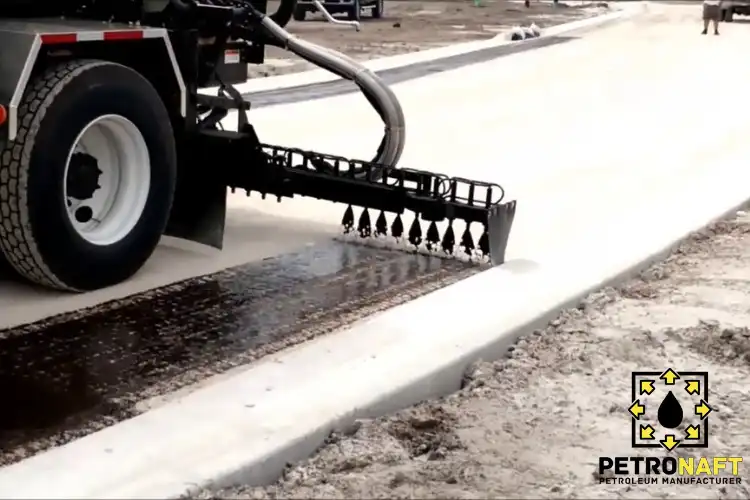
A Bitumen Emulsion Sprayer is the fastest, most consistent way to apply emulsion for tack coats, prime coats, fog seals, and surface treatments. The best machine depends on your job size, required spray width, emulsion type (rapid/medium/slow setting), and how precisely you must control application rate. Choose the right sprayer and you reduce waste, improve bond, and extend pavement life.
Highlights & Key Sections
Why this machine matters more than most people think
If you’ve ever seen a new asphalt layer peel, shove, or crack early, poor bonding is often part of the story. A sprayer isn’t just a “delivery tool”—it’s a quality-control device.
What buyers usually want (even if they don’t say it directly):
- Uniform coverage (no stripes, no heavy bands)
- Repeatable application rate (job-to-job consistency)
- Clean operation (minimal clogging, easy flushing)
- Documentable work (especially on public projects)
Bitumen Emulsion Sprayer: What it is and where it fits
A Bitumen Emulsion Sprayer applies a controlled film of bitumen emulsion (bitumen + water + emulsifier) onto a surface using a spray bar or nozzle set. Unlike hot bitumen spraying, emulsions typically run at lower temperatures and rely on proper “break” and curing to form a strong bond.
Where it’s used most:
- Before laying hot mix asphalt (tack coat)
- Before chip seal or microsurfacing
- On granular bases (prime coat—where specified)
- For rejuvenation / sealing (fog seal)
The common failure pattern (and why the sprayer is the fix):
- Uneven spray → uneven bond → slippage cracks, delamination, raveling
- Wrong rate → flushing/bleeding (too much) or debonding (too little)
Types of sprayers and who they’re best for
Below is a practical, buyer-focused breakdown.
| Type | Typical user | Best for | Strengths | Watch-outs |
|---|---|---|---|---|
| Handheld / lance sprayer | Small crews, maintenance | Patches, edges, spot tack | Lowest cost, mobile | Hard to keep uniform rate; overspray risk |
| Trolley / walk-behind sprayer | Municipal teams | Footpaths, small streets | More consistent than handheld | Limited width/output; slower on large jobs |
| Skid-mounted sprayer (tank + pump) | Contractors with pickups | Medium jobs, site work | Flexible, easy to move | Stability and boom control vary by build |
| Truck-mounted distributor (full spray bar) | Road contractors | Tack coat, chip seal, large paving | Best uniformity + productivity | Higher capex; needs disciplined cleaning |
| Paver-integrated tack system | High-spec paving crews | Precision tack just ahead of paving | Excellent timing and bond | Adds complexity; needs good calibration |
| Specialty track/compact sprayers | Remote/rough sites | Slopes, narrow access | Access and traction | Maintenance and parts planning matter |
Fast rule of thumb:
If the job requires repeatable rates across wide lanes, go truck-mounted or paver-integrated. If you’re mostly patching and small-area work, trolley or skid can be the smart buy.
Key applications and what “good” looks like in the field
1) Tack coat (most common)
Tack coat is about bonding layers—not making the surface shiny. A good application looks like:
- Even, fine texture
- No puddles
- No dry streaks
- Break/cure time matches your paving window
Real example:
On a milled surface, crews often increase the effective tack demand because texture “soaks” more binder. If your sprayer can’t hold a stable rate at working speed, you’ll see alternating dark/light bands—exactly where failures like slippage cracks tend to start.
2) Prime coat (where specified)
Prime is used to prepare certain untreated bases. Success depends on:
- Correct emulsion selection for the base type
- Enough time for curing (rushing prime is a classic mistake)
- Avoiding over-application that softens the base surface
3) Fog seal / rejuvenation
Fog seals are thin applications. Your machine must:
- Deliver stable low rates without pulsing
- Avoid clogging with fine nozzles
- Prevent over-application (slippery surface risk)
4) Chip seal and surface dressing
Uniform distribution is everything:
- Lane-wide consistency prevents bleeding and loss of chips
- Sectional control reduces overlap waste
Quick “application to machine” match
| Application | Minimum recommended setup | Why |
|---|---|---|
| Spot tack / patching | Handheld or trolley | Mobility matters more than lane-wide uniformity |
| City streets tack | Skid or small distributor | Consistency + manageable size |
| Highway tack / large paving | Truck distributor / paver-integrated | Rate control + uniformity at speed |
| Chip seal | Truck distributor with good bar/nozzles | Overlap control and stable flow are critical |
| Fog seal | Distributor with low-rate stability | Prevents slick patches and striping |
How to choose the right machine (buyer guide that actually works)
Start with your job reality, not brochure numbers.
Step 1: Define your operating profile
Answer these before comparing brands:
- Daily output target: small maintenance vs lane-kilometers per day
- Typical spray width: narrow access vs full lane width
- Surface type: milled, dusty, smooth, granular base
- Emulsion family: rapid/medium/slow setting, cationic/anionic
- Crew skill level: will multiple operators use it?
Step 2: Prioritize the “make-or-break” specs
Rate control and uniformity
- Closed-loop rate control (speed-linked) is a major upgrade on real projects
- Consistent pressure and flow at varying speeds prevents striping
Spray bar and nozzle system
- Proper nozzle spacing and overlap pattern
- Quick-change nozzles and anti-drip features reduce mess and waste
- Sectional/zone control helps on junctions, shoulders, and variable widths
Pump and filtration
- A pump designed for emulsions + stable flow control
- Filters that are easy to access and clean (you will do this often)
Tank and circulation
- Adequate agitation/recirculation so the emulsion remains homogeneous
- Cleanout access matters more than people expect
Cleaning and flushing design
- If flushing is painful, crews skip it—then clogs and downtime appear
- A simple flush loop can pay for itself quickly
Step 3: Match features to your buyer category
| If you are… | Must-have features | Nice-to-have features |
|---|---|---|
| Municipal maintenance team | Simple controls, easy flushing, compact footprint | GPS speed input, job logging |
| General contractor | Versatile mounting, stable flow, good filtration | Sectional control, recirculation automation |
| Road contractor (paving focus) | Lane-wide uniformity, rate control, reliable bar/nozzles | Data export, advanced calibration tools |
| Chip seal specialist | Excellent overlap control, stable high output | Automated temperature monitoring, advanced zone control |
Mini tutorial: dial in uniform coverage in one morning
This is a practical method crews use to reduce striping and rework.
A) Quick calibration formula (the one operators remember)
Application rate (L/m²) = Flow (L/min) ÷ [Speed (m/min) × Spray width (m)]
Use it to sanity-check settings before you start the job.
B) 7-step field calibration (simple and repeatable)
- Inspect and clean filters, nozzles, and the bar (start clean or you’ll chase ghosts).
- Confirm nozzle type and spacing match your target texture and rate.
- Water test first (safer, cheaper): run at working pressure and speed.
- Catch test: collect output from a few nozzles for a timed interval.
- Compare nozzle-to-nozzle variation: big differences = clogs, wear, or pressure imbalance.
- Check overlap pattern: stripes usually mean wrong angle/height or uneven pressure.
- Record the winning settings (speed, pressure, nozzle set, bar height). Next job starts faster.
Pro tip from real sites:
Most “mystery striping” issues come from a single partially blocked nozzle or a bar height that changed after a bump. Make bar height part of your daily start-up routine.
Common problems and how to fix them fast
| Symptom | Likely cause | Practical fix |
|---|---|---|
| Stripes/banding across lane | Bar height wrong, nozzle angle off, clogged nozzle | Re-set bar height, clean/replace nozzle, re-check overlap |
| Pulsing or inconsistent rate | Air in line, pump issue, control valve hunting | Prime lines, check suction leaks, stabilize control settings |
| Frequent clogging | Poor filtration habits, contaminated emulsion, dried residue | Improve flushing routine, clean filters, verify emulsion handling |
| Heavy ends / light center | Uneven pressure distribution or bar plumbing issue | Inspect manifold, balance pressure, verify nozzle sizes |
| Overspray / messy edges | Poor shielding, wrong nozzle pattern, operator speed changes | Use edge control/hand lance correctly, keep constant speed |
| Slow breaking / tracking | Wrong emulsion choice, dusty surface, low temperature conditions | Improve surface prep, select appropriate emulsion, adjust timing |
Maintenance that protects resale value
Daily (10–15 minutes):
- Flush lines and bar before material dries
- Clean filters
- Check bar/nozzle condition and anti-drip
Weekly:
- Inspect hoses, clamps, suction line integrity
- Verify pressure gauge accuracy (or sensor readings)
- Check pump seals and any recirculation loop
Seasonal / shutdown:
- Full cleanout and corrosion check
- Protect against freezing where relevant
- Replace worn nozzles as a set (mixed wear = uneven spray)
What’s trending now and why it affects your buying decision
Two changes are pushing buyers toward “smarter” spraying:
- Tighter quality expectations + documentation: More projects want traceable application rates and fewer workmanship variables. Machines with job logging, speed-linked rate control, and stable low-rate spraying fit this shift well.
- Efficiency and environmental pressure: Contractors are pushed to reduce waste, rework, and downtime. Features like sectional control, anti-drip nozzles, better filtration, and easier flushing directly cut material loss and cleanup.
If you’re buying for multi-year use, prioritize the features that reduce operator dependence: consistent rate control, easy calibration, and fast cleaning.
Executive Summary & Practical Checklist
Choosing well is less about the biggest tank and more about control, cleaning, and repeatability.
Practical buying checklist
- Job fit
- ☐ Your typical spray width and daily output are realistic for the machine
- ☐ The machine supports your common emulsion types and operating conditions
- Uniformity and control
- ☐ Stable flow and pressure across the full spray bar
- ☐ Reliable rate control tied to speed (especially for large jobs)
- ☐ Nozzle system supports clean overlap and easy replacement
- Uptime and maintenance
- ☐ Filters are easy to access and sized for real site conditions
- ☐ Flush loop and cleaning workflow are operator-friendly
- ☐ Recirculation/agitation prevents separation during long shifts
- Safety and workmanship
- ☐ Edge control and anti-drip minimize slick spots and overspray
- ☐ Controls are intuitive for multiple operators
- ☐ You can record “best settings” for repeatable results
Bottom line
A well-selected Bitumen Emulsion Sprayer pays back through uniform bonding, fewer failures, less material waste, and smoother operations—especially when calibration and cleaning are built into the workflow.
FAQ
1) Do I need heating for bitumen emulsion spraying?
Usually not like hot bitumen. Emulsions are typically applied at moderate temperatures, and performance depends more on correct emulsion choice, surface prep, and curing time.
2) What’s the biggest reason tack coats fail even with a good sprayer?
Surface condition. Dust, loose fines, or moisture can prevent bonding. Even perfect spray rates won’t compensate for poor cleaning or unsuitable timing.
3) How do I avoid striping across the lane?
Keep bar height consistent, ensure correct nozzle overlap, and replace/clean nozzles routinely. A quick water test can reveal issues before expensive material is wasted.
4) Is a paver-integrated tack system worth it?
It can be, when you need consistent tack immediately ahead of paving and you want to reduce traffic pickup and contamination. It’s most valuable on high-spec paving programs.
5) What features matter most if multiple operators will use the machine?
Simple controls, repeatable presets, easy flushing, and clear calibration routines. Machines that reduce operator “interpretation” deliver more consistent quality.
Sources
- Federal Highway Administration (FHWA) — Practical guidance and research on pavement preservation, surface treatments, and construction quality practices.
- International Slurry Surfacing Association (ISSA) — Industry manuals and best practices for slurry/microsurfacing and related emulsion applications.
- ASTM International — Test methods and specifications covering bituminous materials and emulsions used across pavement applications.
- AASHTO — Standard specifications and guidance widely used for road materials, construction, and acceptance practices.
- PIARC (World Road Association) — Global technical reports on road construction, maintenance, and performance-focused practices.