

Iran Caustic Soda Manufacturers generally fall into two tiers: large chlor-alkali petrochemical complexes that produce 50% liquid caustic soda, and downstream converters that turn that lye into 98–99% flakes/pearls for export. Buyers get the best results by matching the producer type to their process needs, impurity limits, and packaging/logistics.
Caustic soda is simple on paper (NaOH) and unforgiving in reality: small differences in carbonate, chloride, iron, and packaging discipline can decide whether your process runs clean—or corrodes, clogs, or discolors product.
Highlights & Key Sections
Iran Caustic Soda Manufacturers: a buyer’s map
What “manufacturer” really means in Iran’s caustic soda supply chain
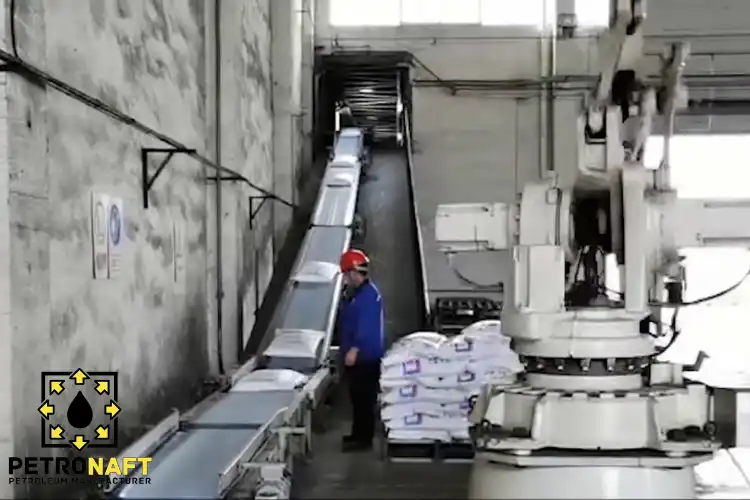
Most export-ready solid products start as liquid caustic soda (typically ~50% w/w) from a chlor-alkali unit. Then a separate operation concentrates and solidifies it into:
- Flakes (98–99%) – easiest to dissolve, common in bags
- Pearls/prills (98–99%) – lower dusting, preferred for automated dosing
- Liquid (48–50%) – best for large continuous users with tank logistics
If you buy flakes, always ask where the lye comes from and who does the flaking. That single detail often explains quality differences.
Product forms, grades, and where each one wins
| Form | Typical spec target | Best for | Buyer watch-outs |
|---|---|---|---|
| Liquid caustic soda | ~48–50% NaOH | Alumina, pulp & paper, large water treatment, refinery utilities | Needs compatible tanks/lining; freezing point & heat tracing planning |
| Caustic soda flakes | 98–99% NaOH | Soap/detergent, pH control, general chemical manufacturing | Moisture pickup + CO₂ absorption increases carbonates; bag quality matters |
| Caustic soda pearls/prills | 98–99% NaOH | Automated dosing, pharma/cleaner lines (where available) | Verify size distribution + dusting; demand can be seasonal |
Quick rule: if your process is sensitive (rayon, alumina, certain catalysts), prioritize lower chloride/carbonate and consistent membrane-cell lye sourcing—even if it costs more.
Top 10 companies buyers look at first
The list below reflects the most visible, established, and commonly referenced players across Iran’s caustic soda production and export ecosystem (upstream chlor-alkali producers + major downstream solid-product manufacturers/packers). Always confirm product form, grade, and origin per shipment.
| Company | Known for | Typical supply | Best fit for buyers |
|---|---|---|---|
| Arvand Petrochemical Company | Large-scale chlor-alkali integrated production | Liquid caustic soda; feedstock for solids | High-volume industrial users needing steady lye |
| Bandar Imam Petrochemical Company | Mature chlor-alkali chain, export documentation familiarity | Liquid caustic soda; downstream solid channels | Buyers who want repeatable COA patterns |
| Shiraz Petrochemical Company | Long-established chemical producer with alkali-chlorine outputs | Liquid caustic soda; selected solid channels | Regional buyers balancing price and continuity |
| Karoun Petrochemical Company | Chlorine derivatives and alkali-linked production | Liquid caustic soda in relevant chains | Buyers needing integrated chlorine/alkali supply context |
| Ghadir Petrochemical Company | Recognized name tied to new/expanding chlor-alkali capacity | Project/plant-linked supply (verify current availability) | Buyers building mid-term supply options |
| Chlor Pars Company | Chlor-alkali specialist production base | Caustic soda (various forms), chlorine derivatives | Buyers needing dedicated chlor-alkali focus |
| Chloran Chemical Production Company (CCPC Group) | Private-sector chlor-alkali + solid product focus | Flakes (and related chlor-alkali products) | Bagged solid buyers wanting producer-direct options |
| Nirou Chlor Co. | Chlor-alkali operations supporting water/industrial markets | Liquid caustic soda + derivatives | Water-treatment and industrial utility buyers |
| Pars Chemia Chlor Company | Private alkali-chlorine unit with multiple outputs | Liquid + flakes (verify grade slate) | Buyers seeking alternatives beyond major complexes |
| Petro Naft | Export-oriented industrial supply + logistics coordination | Sourced Iranian caustic soda (liquid/solid), documentation support | Importers who want one accountable commercial interface |
How to choose the right supplier in 30 minutes
Step 1: Start with your process constraints (not the price)
Ask your production team these three questions:
- What’s the maximum chloride and carbonate we can tolerate?
- Do we need liquid or solid for dosing and storage?
- What is the worst failure mode: corrosion, discoloration, scaling, or yield loss?
If your team can’t answer quickly, default to stricter impurity limits and run a controlled trial.
Step 2: Use a “COA + packaging + consistency” filter
A strong caustic soda offer includes:
- Last 3 COAs from different batches (not one “perfect” sheet)
- Packaging spec: inner liner type, bag material, palletizing, moisture protection
- Stated test methods (common ones reference ASTM-style methods for NaOH assay and impurities)
- Clear tolerance for NaOH assay, Na₂CO₃, NaCl, iron, insolubles
Step 3: Validate with one simple incoming QC routine (mini tutorial)
You don’t need a full lab to prevent 80% of bad shipments.
Incoming QC routine (solid flakes/pearls):
- Check appearance (uniform white, no excessive yellowing)
- Measure moisture pickup indirectly: clumping level + weight variance across bags
- Prepare a standard solution and test:
- NaOH assay (titration)
- Carbonate (titration method)
- Iron (colorimetric/ICP if your product is sensitive)
If your plant already tests alkalinity but not carbonate, add carbonate—many “mystery” process issues show up there first.
Two real-world buying patterns (and what usually works)
Example A: Alumina / metal treatment buyer (low impurity priority)
A buyer running continuous digestion often pays more for:
- Stable liquid supply
- Lower chloride/carbonate variability batch-to-batch
- Predictable logistics (tank, IBC, or bulk)
What typically succeeds: long-term contract with a major chlor-alkali complex + strict COA trending.
Example B: Soap/detergent manufacturer (solid logistics priority)
These buyers care about:
- Fast dissolving flakes
- Clean packaging (no moisture ingress)
- Reliable pallets/container loading
What typically succeeds: upstream lye from a major petrochemical producer + a proven flaker/packer with disciplined storage and container stuffing.
Logistics and trade terms that prevent headaches
Use these practical checks in RFQs:
- Packaging: 25 kg bags (common), jumbo bag overpacks (where available), or IBC for liquid
- Container loading plan: number of pallets, net weight, desiccant strategy
- Incoterms: confirm who controls vessel booking, insurance, and port charges
- Shelf-life reality: caustic soda doesn’t “expire” like food, but packaging failure effectively does
Pro tip: Ask for photos of the last 2 export loads (bags + pallets + container interior). It’s a fast honesty test.
Current market signals buyers should factor in
- Technology upgrades and reliability improvements
Chlor-alkali plants globally keep pushing toward more efficient membrane-cell operations and better corrosion-resistant components, which tends to improve consistency when executed well. - Supply planning is becoming more contractual
Industrial buyers increasingly lock volume with tighter COA ranges and clearer claims procedures—especially when shipping routes or banking/compliance steps add friction.
Conclusion
The safest way to buy is to treat caustic soda as a process-critical reagent, not a commodity. Shortlist Iran Caustic Soda Manufacturers by matching your required form (liquid vs solid), impurity tolerance, and packaging discipline—then confirm with COA trend data and a simple incoming QC routine before scaling volume.
Executive Summary Checklist
Use this checklist before you sign a PO:
- Pick the right form: liquid 48–50% vs flakes/pearls 98–99%
- Request 3 recent COAs from different batches
- Confirm impurity targets: carbonate, chloride, iron, insolubles
- Verify origin of lye + who performs flaking/packing (for solids)
- Require packaging specs + real loading photos
- Define acceptance criteria + claims timeline in the contract
- Run a controlled plant trial if your process is sensitive
- Do compliance screening appropriate to your jurisdiction and route
FAQs
1) What’s the difference between membrane-cell and older chlor-alkali routes for buyers?
Membrane-cell production typically yields caustic soda with fewer impurities and clearer solutions. For sensitive processes, the consistency advantage often matters more than the headline NaOH percentage.
2) Should I buy liquid caustic soda or flakes from Iran?
Choose liquid for continuous, high-volume users with tank logistics and stable consumption. Choose flakes/pearls when you need flexible storage, easier transport, or manual/stepwise dosing.
3) What purity should I request for caustic soda flakes?
Most industrial buyers specify 98–99% NaOH with limits on carbonate, chloride, and iron. If color or catalyst poisoning is a risk, tighten the iron and insolubles limits.
4) Why does caustic soda sometimes arrive clumped or with higher carbonates?
Solid NaOH absorbs moisture and CO₂ from air, increasing carbonates and causing clumping. Weak liners, humid storage, or slow container loading often explain the issue more than “bad chemistry.”
5) What documents should a serious exporter provide?
At minimum: COA, SDS, packing list, commercial invoice, and certificate of origin (when applicable). Strong suppliers also provide batch traceability and a clear specification sheet tied to test methods.
Sources
- Official overview of the chlor-alkali “Kimia” units and their caustic soda output at Bandar Imam Petrochemical Company – Kimia.
- Corporate product/production snapshot for a key Iranian downstream producer at Karoun Petrochemical Co. (PGPIC).
- Primary company information and operational context at Shiraz Petrochemical Company – About Us.
- Manufacturer profile and positioning as a chlor-alkali producer at Chlor Pars – Company History.
- Industry-standard manufacturing, handling, and safety guidance in the OxyChem Caustic Soda Handbook (PDF).