

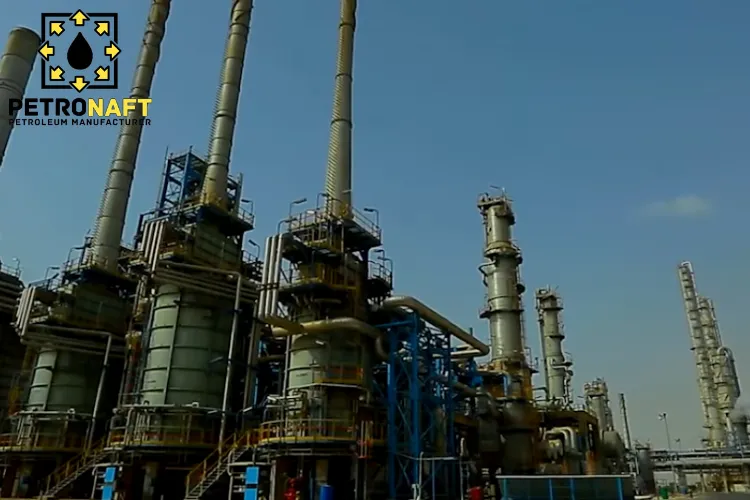
Iran Petroleum Products Manufacturers include Iran’s major refineries, condensate refining complexes, and large lubricant/base-oil producers that supply fuels, bitumen, waxes, and industrial oils to domestic and export markets. For buyers, the “best” manufacturer depends on your product (fuel vs. base oil vs. wax), required specifications, documentation, and compliance constraints.
Highlights & Key Sections
What “petroleum products manufacturers” means in Iran (and why it matters for buyers)
In Iran, the term covers three practical groups:
- Fuel refineries & condensate refineries
Produce gasoline blendstocks, diesel/gasoil, jet/kerosene, fuel oil, LPG, naphtha, and refinery intermediates. - Lube/base-oil producers
Produce base oils (e.g., Group I cuts), finished lubricants, greases, process oils, and related specialties. - Downstream specialty producers
Produce waxes (fully refined/slack), petrolatum, extracts, and select industrial petroleum products.
Buyer takeaway: You’ll shortlist very different companies depending on whether you’re sourcing road construction materials (bitumen), industrial inputs (base oils, waxes), or energy fuels.
Iran Petroleum Products Manufacturers: top 10 players buyers should recognize
Below are widely recognized, large, and reputable downstream players that commonly appear on professional shortlists for buyers evaluating petroleum product supply options.
| # | Company | What they’re best known for | Typical buyer fit | Practical note |
|---|---|---|---|---|
| 1 | National Iranian Oil Refining & Distribution Company (NIORDC) | Downstream supervision/coordination of refining & distribution | Market mapping, refinery ecosystem understanding | Use NIORDC to understand the refinery landscape and how downstream is organized. (niordc.ir) |
| 2 | Persian Gulf Star Oil Company (PGSOC) | Large condensate refining (gas condensate to fuels) | Fuel-related procurement (where legally permissible) | Often referenced in discussions of Iran’s gasoline self-sufficiency. (tappico.com) |
| 3 | Abadan Oil Refining Company | Major historic refinery; diversified fuel slate | Fuel buyers, distributors, large tenders | A key name in Iran’s refining history and capacity footprint. (niordc.ir) |
| 4 | Esfahan (Isfahan) Oil Refining Company | Large refinery; broad product diversity | Fuel buyers needing consistent multi-product supply | Frequently cited for broad product coverage. (niordc.ir) |
| 5 | Bandar Abbas Oil Refining Company | Coastal refining hub; fuels & intermediates | Marine-adjacent logistics routes (where applicable) | Known for strategic geography near key ports. (niordc.ir) |
| 6 | Tehran Oil Refining Company | Large refinery serving central demand | Domestic supply chain and distribution focus | Often referenced in Iran’s core distribution network. (niordc.ir) |
| 7 | Tabriz Oil Refining Company | Regional refinery serving NW Iran | Regional supply programs; select refinery products | Public materials highlight its role in regional supply. (niordc.ir) |
| 8 | IRANOL Oil Company | Lubricants, base oils, slack wax, bright stock | Industrial & automotive lubes; base-oil buyers | Operates lube oil refineries and highlights bright stock production. (iranol.ir) |
| 9 | Behran Oil Company | Major lubricant manufacturer; broad product range | Buyers needing finished lubricants/greases/waxes | Publicly positions itself as a leading lube manufacturer in Iran. (behranoil.co) |
What these manufacturers typically produce (quick buyer map)
Use this as a fast “who makes what” guide:
- Fuels & refinery streams: gasoline blendstocks, diesel/gasoil, jet/kerosene, LPG, naphtha, fuel oil
- Road & industrial binders: bitumen/asphalt grades (availability depends on refinery configuration and export constraints)
- Base oils & lubes: Group I cuts (e.g., solvent neutral ranges), bright stock, finished engine oils, gear oils, greases
- Waxes & specialties: slack wax, fully refined paraffin wax, petrolatum, extracts/process oils
Mini-tutorial: how to shortlist the right manufacturer in 30 minutes
Step 1) Start with a spec-first RFQ (not a brand-first RFQ)
Include:
- Product name + standard:
- Fuels: relevant local spec + test methods
- Base oils: viscosity targets + ASTM methods
- Waxes: oil content, melting point, color targets
- Packaging & quantity: bulk, flexitank, drums, jumbo bags
- Inspection plan: pre-shipment sampling + third-party lab testing
- Documentation list: COA, MSDS/SDS, COO, packing list, bill of lading details
Step 2) Match the product to the right “factory type”
- If it’s fuel, you’re dealing with refinery/condensate refining supply logic.
- If it’s base oil/lube/wax, you want a lube/base-oil producer with stable blending and QC labs.
- If it’s bitumen, you want consistent grade control and temperature-managed logistics.
Step 3) Filter suppliers using a simple “3-proof rule”
Only move forward if the supplier can provide:
- Proof of capability: recent COA with test methods + batch ID
- Proof of consistency: two additional COAs from different batches
- Proof of custody: clear chain-of-custody documents (origin, terminal, loading)
Quality control that actually prevents costly claims
Most disputes happen because buyers skip the two moments that matter: sampling and storage/handling.
Critical tests by product type
| Product | High-impact tests (examples) | Why it matters |
|---|---|---|
| Bitumen (penetration grades) | penetration, softening point, ductility, viscosity, flash point | Prevents “wrong grade” disputes and temperature-performance failures |
| Base oils | kinematic viscosity @ 40/100°C, viscosity index, pour point, flash point, color | Predicts blending behavior and low-temp/high-temp performance |
| Lubricants | viscosity, TBN/TAN, Noack volatility (as applicable), additives fingerprinting | Confirms formulation stability and OEM suitability |
| Paraffin/slack wax | oil content, congealing/melting point, color, needle penetration | Prevents brittleness, odor, and downstream processing problems |
| Fuels | sulfur, density, distillation curve, flash point, cetane/octane indicators | Reduces engine/combustion issues and compliance risk |
Practical tip: Put “retained sample” and “sealed counter-sample” into your contract. It’s the simplest insurance against lab disagreements.
Example scenario: a base-oil buyer cutting rejections by tightening the process
A mid-size lubricant blender (anonymous, real-world pattern) faced inconsistent blending results from imported base oils. They fixed it by:
- Requiring two-batch COAs before confirming volume
- Adding independent viscosity + VI verification on arrival
- Defining acceptance criteria around ASTM D445 viscosity windows and D2270 VI minimum
- Enforcing temperature-controlled storage to prevent wax dropout and contamination
Result: fewer production interruptions, fewer customer complaints, and faster supplier accountability—without changing the product spec.
Commercial reality check: documentation and compliance aren’t optional
Iran-linked petroleum trade can involve sanctions and restricted-party risks depending on your jurisdiction, counterparties, product type, and routing. The professional approach is straightforward:
- Run restricted-party screening for seller, shipper, vessel, insurer, and banks
- Use legal counsel for jurisdiction-specific rules (OFAC/EU/UK/UN or local equivalents)
- Keep traceable documentation (batch ID, terminal, COA, SDS, COO where applicable)
- Don’t rely on “informal workarounds”—they increase risk and reduce enforceability
This is not only about legal exposure—clean documentation also improves claim resolution and repeatability.
Buyer-friendly comparison: choosing the right “top 10” candidate
If you’re buying…
- Fuels / refinery streams: start with refineries + condensate refiners (e.g., PGSOC and major refineries listed under NIORDC’s downstream structure).
- Base oils / bright stock / slack wax: prioritize IRANOL and other lube-focused producers with refinery units and published capabilities.
- Finished lubricants / greases / process oils: shortlist Behran (and other established blenders), then validate with batch documentation and independent testing.
- When evaluating alternative supply plans, compare suppliers based on QC workflows, logistics reliability, documentation quality, and procurement support capabilities.
Trend watch: what’s changing in 2026 procurement decisions
Two shifts are increasingly shaping buyer behavior:
- Traceability as a competitive advantage: Buyers want batch-level documentation, consistent COAs, and verifiable chain-of-custody—because claims and compliance checks have become stricter.
- Refinery upgrading + product tightening: Across the region, more hydrotreating, residue upgrading, and spec tightening pushes buyers to demand clearer COA test methods and tighter acceptance ranges (especially sulfur, stability, and volatility-sensitive products).
Executive Summary Checklist (copy/paste for your procurement SOP)
Supplier & product
- Product spec written in standards + test methods (ASTM/EN/ISO as relevant)
- Two-batch COAs reviewed before purchase
- Supplier confirms batch ID + production window + packaging details
Quality control
- Pre-shipment sample + sealed counter-sample agreed
- Independent lab tests defined (what, where, who pays, pass/fail limits)
- Storage/handling requirements included (temperature, contamination controls)
Commercial & logistics
- Incoterms, inspection point, and claim timeline written clearly
- Documentation list locked: COA, SDS, COO (if needed), packing list, B/L instructions
- Compliance screening completed for all parties in the chain
Risk management
- Alternative supplier identified (dual-source plan)
- Payment/insurance/shipping aligned with jurisdictional requirements
Bottom line: The best outcomes come from treating Iran Petroleum Products Manufacturers like any high-stakes industrial supply chain—spec-first, proof-driven, and contract-backed—while keeping compliance and documentation airtight.
FAQ (high-value, buyer-focused)
1) Are Iranian manufacturers reliable for industrial-grade petroleum products?
Many are technically capable, especially established refineries and major lubricant producers. Reliability depends on batch consistency, documentation quality, and how tightly you manage sampling, testing, and storage.
2) What’s the fastest way to verify product quality before shipment?
Ask for two recent COAs from different batches, then test a pre-shipment sample at an independent lab using the same methods listed on the COA.
3) Which products are most sensitive to logistics mistakes?
Bitumen, waxes, and some base oils are highly temperature-sensitive. Poor heating control or contamination during loading can change performance and trigger disputes.
4) What documents should I demand in every petroleum product shipment?
At minimum: COA with test methods, SDS, packing list, and clear bill of lading instructions. Add COO and traceability documents when required by your compliance or customs process.
5) How do I reduce the risk of claims and rejected cargo?
Use sealed counter-samples, define acceptance ranges (not vague “typical” values), and specify an inspection and dispute process in the contract—including which lab is the tie-breaker.
Sources
- IRANOL – Company at a Glance — Primary source for IRANOL’s facilities and lube/base-oil manufacturing background.
- Behran Oil – About — Primary source for Behran’s positioning and scope in lubricants and related petroleum products.
- Pars Oil Company – About — Primary source for Pars Oil’s history and lubricant manufacturing profile.