


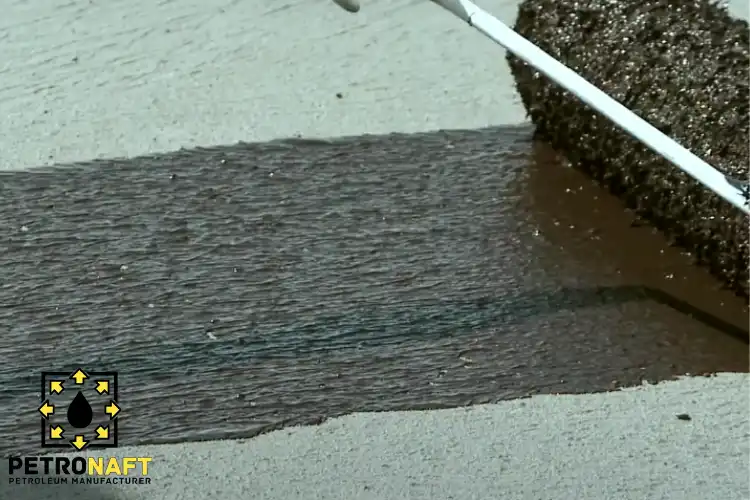
Bitumen Emulsion for Insulation is a water-based bituminous coating used to protect insulation assemblies and adjacent structures from moisture, dampness, and premature failure. The right product depends on water exposure, substrate condition, curing environment, insulation compatibility, and detailing around joints, corners, and penetrations.
Moisture is one of the fastest ways to reduce insulation performance. When water enters a wall, roof, or foundation assembly, thermal efficiency drops, materials age faster, and repair costs rise.
That is why choosing the right bitumen emulsion is less about buying a generic coating and more about matching the product to the real job conditions.
In practice, the best results come from looking at the whole system:
- moisture exposure
- substrate type
- insulation compatibility
- curing conditions
- drainage and protection layers
- detailing at corners, joints, and penetrations
Highlights & Key Sections
What Bitumen Emulsion for Insulation Actually Does
Bitumen emulsion is a blend of bitumen, water, and emulsifying agents. In insulation-related construction, its main role is to protect the assembly from water ingress and help insulation stay dry enough to perform as intended.
It is important to separate moisture protection from thermal insulation. The emulsion itself does not provide meaningful insulating value. Instead, it supports the insulation layer by reducing moisture exposure and improving the durability of the surrounding system.
In real projects, Bitumen Emulsion for Insulation is commonly used to:
- protect foundation walls
- support below-grade insulation systems
- seal and protect roof insulation assemblies
- improve resistance to dampness in wall and floor transitions
- extend the service life of insulation by keeping surrounding materials drier
Quick Selection Table
| Project condition | Recommended approach | Why it works |
|---|---|---|
| Damp soil with no water pressure | Dampproofing-grade emulsion | Suitable for resisting moisture and capillary dampness |
| Below-grade wall with water pressure risk | Waterproofing-grade or polymer-modified system | Better resistance to continuous water exposure |
| Rough masonry or crack-prone substrate | Flexible or reinforced emulsion system | Improves continuity and crack tolerance |
| Roof refurbishment over compatible bituminous surface | Compatible emulsion coating system | Useful when the substrate is sound and properly prepared |
| Areas exposed to backfill damage | Emulsion plus protection board | Helps preserve membrane integrity after application |
Use this table as a starting point, not the final specification. The correct product always depends on actual site conditions.
Types of Bitumen Emulsion Used Around Insulated Assemblies
Most buyers do not need to start with chemical classification. They need to start with application type and performance need.
1) Dampproofing emulsions
These are typically used where the structure faces moisture but not hydrostatic pressure. They are common on ordinary foundation walls, retaining walls, and surfaces that need protection from damp soil conditions.
They are usually cost-effective and practical, but they should not be treated as a substitute for true waterproofing where water pressure exists.
2) Waterproofing-grade emulsions
These are used where the assembly must resist more severe moisture conditions, including persistent exposure or seasonal water pressure. They are better suited for below-grade applications where failure would be costly and difficult to repair.
In commercial and infrastructure work, this is often the safer choice when risk is uncertain.
3) Polymer-modified bitumen emulsions
These products are formulated to improve flexibility, adhesion, crack resistance, and long-term durability. They are especially useful where movement, harsh soil conditions, or extended service life matter.
This category has become more relevant as modern projects demand better waterproofing performance and longer maintenance intervals.
4) Reinforced systems
Some projects need more than a single liquid-applied layer. Reinforced systems use mesh, fabric, or additional treatment at corners, joints, penetrations, and high-stress points.
This is often the difference between a coating that looks good on installation day and a system that still performs years later.
How to Choose Bitumen Emulsion for Insulation
The best way to choose is to begin with field conditions, not product labels.
Bitumen Emulsion for Insulation: Selection Guide
Step 1: Identify the moisture condition
Start by asking whether the project is dealing with:
- simple dampness
- intermittent water exposure
- continuous hydrostatic pressure
This single decision removes many poor product options immediately.
A basement wall in dry or moderately damp soil may only need dampproofing. A wall exposed to seasonal groundwater needs a more robust waterproofing solution.
Step 2: Check the substrate
A product that performs well on smooth concrete may behave very differently on rough blockwork, aged masonry, or mixed surfaces.
Inspect the substrate for:
- dust and contamination
- cracks and voids
- uneven surfaces
- moisture presence
- poor curing or instability
If the surface is not ready, even the best emulsion can fail.
Step 3: Verify compatibility with insulation
This is where many avoidable mistakes happen. The bitumen emulsion must be compatible with:
- insulation board type
- adhesives
- primers
- protection boards
- flashings
- sealants
For example, if an insulation board is sensitive to certain components or requires a specific adhesive method, the wrong coating system can create bond failure or long-term deterioration.
Step 4: Consider weather and curing conditions
Application conditions matter more than many buyers realize. If the substrate is too cold, too wet, or exposed to rain too early, curing may be incomplete.
Before application, confirm:
- minimum temperature range
- dry substrate requirement
- expected cure time
- rain exposure risk
- ventilation conditions for enclosed spaces
A technically correct product applied in the wrong weather becomes the wrong product in practice.
Step 5: Protect the system after application
For below-grade work, many failures happen after installation, not during it. Backfill, tools, site traffic, and follow-on trades can damage a fresh membrane quickly.
That is why protection boards, drainage layers, and careful sequencing are often just as important as the emulsion itself.
A Practical Buyer’s Comparison Table
| Buying question | Strong answer | Warning sign |
|---|---|---|
| Is this for dampness or water pressure? | The supplier clearly separates dampproofing from waterproofing | One product is presented as universal |
| Is it compatible with my insulation system? | Written compatibility guidance is available | Only verbal assurance is given |
| What are the application limits? | Clear rules for temperature, dryness, and curing | No practical installation guidance |
| Do I need reinforcement or protection board? | The supplier reviews the whole assembly | The focus is only on coating thickness |
| What service life should I expect? | Performance is tied to exposure and detailing quality | Unrealistic lifespan claims without conditions |
The most reliable suppliers usually ask technical questions before making recommendations. That is a good sign. It means they are thinking about performance, not only sales.
Real-World Examples
Example 1: Residential basement wall in damp soil
A contractor installs exterior insulation on a basement wall and wants a simple protective coating. The soil is damp, but there is no standing water and drainage is properly designed.
In this case, a dampproofing-grade emulsion may be enough. The success of the job will depend heavily on surface preparation, full coverage, and protection before backfilling.
Example 2: Commercial foundation wall with seasonal groundwater
A warehouse project has below-grade walls in an area where groundwater rises during part of the year. Using a low-cost dampproofing product here may lead to leakage, insulation wetting, and expensive remedial work.
A waterproofing-grade or polymer-modified system is usually the more responsible choice.
Example 3: Roof insulation retrofit
An existing bituminous roof is being refurbished, and the team wants to restore protective continuity around insulation boards and detail areas.
A compatible emulsion coating can be useful here, but only if the substrate is sound, dry, and properly prepared. On roofing jobs, substrate condition often decides success more than product price.
Mini Tutorial: Fast On-Site Selection Method
When a site team needs a practical decision process, this five-step check works well:
- classify the moisture exposure
- inspect the substrate carefully
- confirm insulation compatibility
- verify weather and curing window
- plan membrane protection after installation
Here is a simple rule: if one of these five areas is unclear, do not rush the purchase.
That approach saves money because most real failures come from poor classification, wet substrates, rushed application, or damaged membranes after installation.
Common Mistakes to Avoid
| Mistake | Likely result | Better move |
|---|---|---|
| Using dampproofing where water pressure exists | Early leakage and system failure | Upgrade to waterproofing-grade protection |
| Applying over a damp surface | Weak adhesion and poor curing | Wait until the surface is dry and ready |
| Ignoring corners and penetrations | Leaks begin at vulnerable details | Reinforce and detail stress points properly |
| Backfilling without protection | Mechanical damage to membrane | Use a compatible protection layer |
| Buying on price alone | Higher repair costs later | Compare full system value, not just unit cost |
This is one of the clearest lessons from field experience: a cheap coating can become very expensive when it is used in the wrong condition.
Industry Trends That Matter
Two trends are shaping this category.
First, polymer-modified systems are gaining more attention because buyers want better flexibility, durability, and long-term moisture resistance in demanding applications.
Second, insulation and waterproofing are increasingly being specified as one coordinated envelope system rather than separate material decisions. That shift matters because compatibility between layers now carries more weight in project performance, warranty discussions, and technical approvals.
For manufacturers and buyers alike, this means the market is moving toward better documentation, clearer system thinking, and stronger installation discipline.
Executive Summary Checklist
Before selecting or specifying a product, confirm all of the following:
- the project needs dampproofing or waterproofing, not an undefined middle option
- the moisture condition is clearly understood
- the substrate is dry, clean, stable, and ready
- the emulsion is compatible with insulation and adjacent materials
- weather and curing conditions are acceptable
- corners, joints, and penetrations are properly detailed
- the finished membrane will be protected from backfill or site damage
- the supplier can support the recommendation with technical documentation
Bitumen Emulsion for Insulation is a smart and cost-effective solution when it is selected as part of a complete moisture-control strategy. It performs best when the product, substrate, insulation, and installation details are treated as one coordinated system.
FAQ
1) Is bitumen emulsion an insulation material?
Not in the thermal sense. Its main role is moisture protection, helping insulation remain dry enough to perform properly and last longer.
2) When should I use dampproofing instead of waterproofing?
Use dampproofing when the assembly faces moisture without hydrostatic pressure. Use waterproofing when water pressure or continuous exposure is possible.
3) Are polymer-modified emulsions worth the extra cost?
In many demanding projects, yes. They often provide better flexibility, adhesion, and durability, especially in below-grade or movement-prone conditions.
4) Can bitumen emulsion be applied on a slightly damp surface?
That is risky. Even if application seems possible, moisture can reduce adhesion and affect curing, which weakens long-term performance.
5) Why is protection board important in below-grade insulation systems?
Because the membrane can be damaged during backfilling and construction activity. Protection board helps preserve the waterproofing layer after installation.
Sources
- ASTM D449/D449M – Standard Specification for Asphalt Used in Dampproofing and Waterproofing — Defines asphalt types used in dampproofing and waterproofing and helps connect material selection to service conditions.
- ASTM D7832/D7832M – Standard Guide for Performance Attributes of Waterproofing Membranes Applied to Below-Grade Walls — Explains key performance expectations for below-grade waterproofing where long-term water resistance matters.
- UFGS 07 11 13 – Bituminous Dampproofing — Offers practical guidance on where bituminous dampproofing is suitable and where it should not be used.
- UFGS 07 14 00 – Fluid-Applied Waterproofing — Provides useful field guidance on substrate readiness, application conditions, and system design.
- Materials (2021) – Influence of Groundwater pH on Water Absorption and Waterproofness of Polymer Modified Bituminous Thick Coatings — Supports the technical relevance of polymer-modified bituminous systems in underground waterproofing applications.