

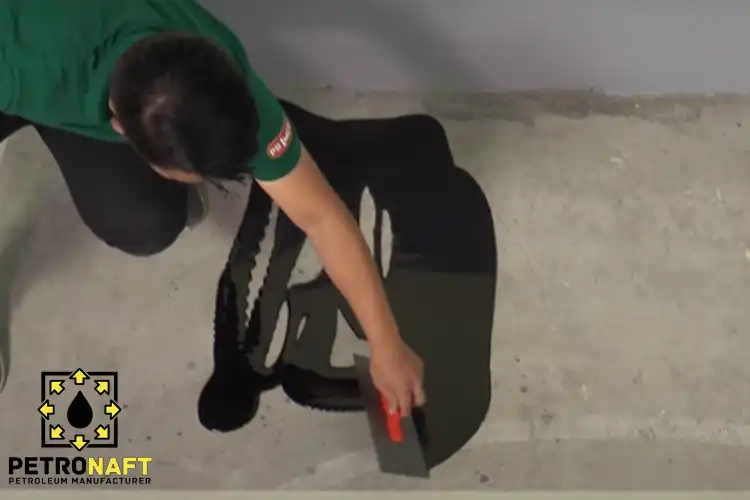
Bitumen Emulsion for Waterproofing is a cold-applied, water-based bituminous coating that forms a seamless moisture barrier after curing. It is widely used on foundations, roofs, retaining walls, and repair areas because it offers good adhesion, practical application, and reliable water resistance when installed correctly.
Bitumen emulsion remains a preferred waterproofing solution because it balances performance, cost, and jobsite convenience. It can be applied by brush, roller, or spray, making it suitable for both new construction and maintenance work. For many contractors and buyers, that flexibility is a major advantage.
Highlights & Key Sections
Why Bitumen Emulsion for Waterproofing Works
Bitumen emulsion contains fine bitumen particles dispersed in water with the help of an emulsifying agent. After application, the water evaporates, the emulsion breaks, and the remaining bituminous film creates the protective waterproof layer.
In real projects, this gives several practical benefits:
- Cold application without heating
- Easier handling on small and medium job sites
- Good adhesion to concrete, masonry, and similar substrates
- Seamless coverage over uneven surfaces
- Compatibility with reinforced waterproofing details
The product performs best when the surface is prepared properly, coats are applied evenly, and curing conditions are respected. In many failed jobs, the problem is not the material itself but poor application practice.
H2: Bitumen Emulsion for Waterproofing Applications
| Application Area | Typical Use | Why It Works Well | Main Caution |
|---|---|---|---|
| Foundation walls | Exterior waterproofing or damp-proofing | Easy to apply and forms a continuous barrier | Must be paired with drainage and protection |
| Concrete roofs | Base waterproofing or restoration layer | Covers details and penetrations well | Avoid application before rain or on weak surfaces |
| Retaining walls | Moisture barrier on the back side | Helps limit water migration into structure | Needs protective board before backfilling |
| Wet areas | Under-tile or protective moisture layer | Useful in controlled internal applications | Must match the total system design |
| Repair zones | Local waterproofing and maintenance work | Good for patching and restoring affected sections | Cracks with movement may need reinforcement |
This versatility is one reason the material remains commercially attractive. It serves both buyers looking for a practical waterproofing option and contractors who need a product that can adapt to different site conditions.
Main Benefits Buyers and Specifiers Care About
1. Easy and practical application
Bitumen emulsion is popular because it reduces complexity on site. It does not require heating equipment, and crews can apply it using common tools. That helps on repair jobs, smaller projects, and maintenance contracts.
2. Seamless protection
Liquid-applied coatings can wrap corners, edges, penetrations, and irregular details more easily than many sheet-based systems. That reduces the number of joints and overlap points where leaks often begin.
3. Good cost-to-performance balance
For many waterproofing tasks, bitumen emulsion offers a practical balance between material cost, labor ease, and reliable performance. It is often chosen where the goal is dependable protection without unnecessary system complexity.
4. Strong fit for maintenance and restoration
Many roofs, foundations, and retaining structures need repair rather than full replacement. Bitumen emulsion is useful in restoration strategies because it works well in localized treatment and renewal programs.
5. Wide project compatibility
The product can be used in commercial, industrial, and residential settings. It fits both simple waterproofing tasks and more detailed systems that include reinforcement, protective layers, or reflective topcoats.
Bitumen Emulsion vs Other Waterproofing Options
| System | Best For | Main Strength | Main Limitation |
|---|---|---|---|
| Bitumen emulsion | Foundations, roofs, repairs, maintenance | Easy application and seamless coating | Weather-sensitive curing |
| Torch-on membrane | Roofs and heavier-duty systems | Thick membrane protection | Requires heat and skilled lap work |
| PU liquid membrane | Complex exposed roofs | Elastic and crack-bridging | Higher cost |
| Cementitious coating | Wet areas and mineral surfaces | Easy use on concrete and masonry | Less flexible on moving cracks |
| Acrylic roof coating | Reflective roof finishes | Helps reduce roof heat gain | Usually needs a compatible base layer |
Choosing the best system depends on the structure, substrate, water exposure, movement, UV conditions, and service life goals. No single waterproofing material is ideal for every case.
How to Choose the Right Product
Before buying, check these points carefully:
- Is the product designed for roofs, foundations, or general waterproofing?
- Is it suitable for the substrate type?
- What coverage rate and dry film thickness are required?
- Does the system recommend reinforcement at corners, joints, and cracks?
- How long does it need to cure before topcoating, tiling, or backfilling?
A professional buyer should also request:
- Technical data sheet
- Safety data sheet
- Storage and shelf-life details
- Application temperature range
- Recoat interval
- Full curing guidance
- Compatibility with primers, fabrics, and topcoats
These checks help avoid a common purchasing mistake: selecting a product by price alone without understanding where and how it should be used.
Mini Tutorial: How to Apply It Properly
1. Prepare the surface
Remove dust, grease, laitance, loose particles, and weak old coating. Repair cracks, holes, and damaged edges. Smooth internal corners where needed.
2. Prime if necessary
Highly porous surfaces often need a primer or a properly diluted first coat, depending on the manufacturer’s method. This helps create even adhesion and better film formation.
3. Apply the first coat
Use a brush, roller, or spray. Keep the coat even and controlled. Avoid applying too much material in one pass, because thick wet layers can cure slowly and trap moisture.
4. Reinforce critical areas
Use reinforcement fabric at:
- Corners
- Pipe penetrations
- Parapet joints
- Cracks
- Drain details
- Wall-floor junctions
5. Apply the second coat
Once the first coat has set properly, apply a second coat in the opposite direction. This improves continuity and reduces weak spots or pinholes.
6. Protect or finish the surface
Depending on the project, the cured coating may need:
- Protection board before backfill
- Screed or tile build-up
- A reflective topcoat
- Another compatible protective finish
Real Examples from Practical Use
Example 1: Foundation wall waterproofing
A warehouse project uses two coats of bitumen emulsion on an exterior concrete wall. The crew adds protection board before backfilling and includes proper drainage around the structure. The result is stronger long-term moisture control because the waterproofing layer is supported by the overall design.
Example 2: Roof restoration
An aging concrete roof develops leaks around cracks and service penetrations. Instead of replacing the whole roof, the maintenance team cleans the surface, repairs damaged points, reinforces details, and applies a bitumen emulsion system with a compatible finishing layer. This can extend service life at a lower cost than full replacement.
Example 3: Retaining wall treatment
A retaining wall receives a bitumen emulsion coating on the back face before protective board installation and backfill. The system works best because the coating is not left exposed to direct mechanical damage during fill placement.
Common Mistakes That Cause Failure
| Mistake | What Happens | Better Approach |
|---|---|---|
| Applying on dusty or weak surfaces | Poor adhesion and peeling | Clean and repair the substrate first |
| Ignoring moving cracks | Repeated leakage | Reinforce cracks or use a more flexible system |
| Applying one overly thick coat | Slow cure and blistering | Build thickness in multiple coats |
| Working in bad weather | Wash-off or incomplete curing | Respect drying and weather limits |
| Backfilling too early | Mechanical damage | Allow full cure and use protection board |
| Depending only on the coating | Water pressure overload | Combine waterproofing with drainage design |
These problems are common in real projects. In many cases, waterproofing fails because the product was applied outside its proper use conditions.
Industry Trends Making This Topic More Relevant
Two trends are making bitumen-based waterproofing more important today.
The first is the strong market focus on building maintenance, renovation, and energy-conscious upgrades. Owners increasingly prefer restoration strategies that improve building durability without the disruption of full replacement.
The second is growing interest in roof systems that support heat management. In warmer climates, reflective finishing layers over compatible waterproof bases are gaining more attention because they can support better thermal performance and lower roof surface temperatures.
These trends make bitumen emulsion more relevant not only as a basic waterproofing material, but also as part of broader envelope and roof-upgrade strategies.
Who Should Buy It?
Bitumen emulsion is a smart option for:
- Contractors needing a cold-applied waterproofing material
- Buyers looking for a cost-effective solution
- Maintenance teams handling leaks and repairs
- Project owners restoring aging roofs or foundations
- Specifiers building layered waterproofing systems
It is less suitable where the project includes:
- Permanent immersion
- Heavy traffic without protection
- Large structural movement
- Severe chemical exposure
- Situations requiring a highly specialized membrane system
Conclusion
Bitumen Emulsion for Waterproofing performs best when the correct grade is chosen, the substrate is prepared properly, weak points are reinforced, and the cured coating is protected within a complete waterproofing design. For roofs, foundations, retaining walls, and restoration work, Bitumen Emulsion for Waterproofing remains a reliable and commercially practical solution.
Executive Summary Checklist
Use this checklist before purchase or application:
- Confirm the project type: roof, foundation, wet area, or repair
- Check substrate compatibility
- Review primer requirements
- Verify coverage rate and required thickness
- Reinforce corners, joints, drains, and cracks
- Apply in multiple controlled coats
- Respect weather and curing conditions
- Protect the membrane before backfill or finishing
- Combine the coating with drainage and detailing
- Review technical and safety documents before use
FAQs
1. Is bitumen emulsion fully waterproof?
Yes, when it is applied correctly and built to the required thickness, it can form an effective waterproof barrier. The final performance depends heavily on surface preparation, curing, and detail treatment.
2. Can bitumen emulsion be used on concrete?
Yes, it is commonly used on concrete foundations, roofs, and retaining walls. The surface should be clean, sound, and properly prepared for the coating to bond well.
3. How many coats are usually needed?
Two coats are common in many waterproofing applications, although exact requirements depend on the product specification and target dry film thickness. Some critical areas also need reinforcement.
4. Is it suitable for roof waterproofing?
Yes, it can be suitable for roof waterproofing, especially in restoration and maintenance work. Performance depends on slope, ponding conditions, detailing, and whether the system includes a compatible topcoat.
5. What is the main advantage over hot-applied systems?
The main advantage is easier cold application. It reduces handling complexity, avoids heating on site, and can improve convenience for contractors working on repair or maintenance projects.
Sources
- Asphalt Institute — Industry reference for asphalt terminology and emulsion concepts. Asphalt Institute Glossary
- ASTM International — Standard reference for emulsified asphalt protective coatings used in roofing and related applications. ASTM D1227/D1227M
- Building Science Corporation — Practical technical guidance on moisture control and below-grade wall protection. Understanding Basements
- U.S. Environmental Protection Agency — Authoritative guidance on cool roofs and heat reduction. Using Cool Roofs to Reduce Heat Islands
- International Energy Agency — Reliable context on building energy use, retrofit pressure, and performance trends. IEA Buildings