
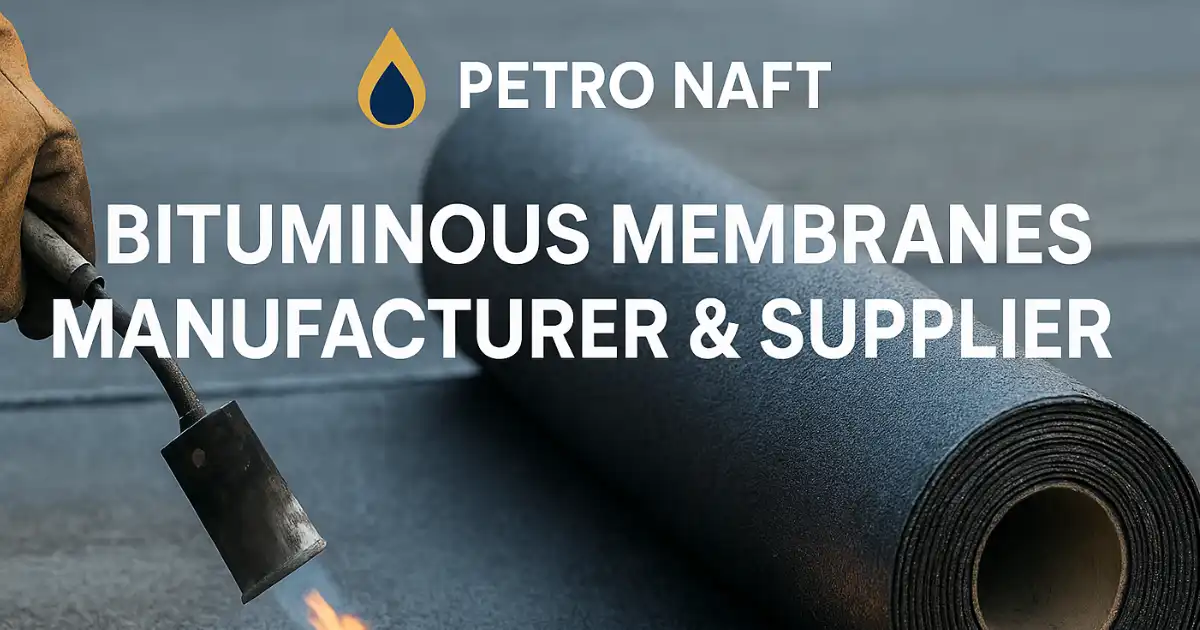
Bituminous membranes are multilayer waterproofing sheets that Petro Naft designs, manufactures, and supplies for roofs, foundations, tanks, and special structures. By combining APP-modified bitumen, high-quality fiberglass or polyester reinforcement, and carefully engineered primers and liquid systems, Petro Naft delivers durable, code-compliant waterproofing solutions for contractors, engineering firms, and asset owners worldwide.
Modern projects demand more than a generic roll of material. You need a bituminous membranes manufacturer and supplier that understands design codes, site realities, and long-term lifecycle costs. Below, you’ll see how Petro Naft’s membrane systems are engineered, selected, and installed, plus practical checklists you can use directly on your next project.
Highlights & Key Sections
What Are Bituminous Membranes and How Does Petro Naft Use Them in Waterproofing?
Quick question: What exactly are bituminous membranes, and why are they still so widely specified?
Short answer: They are factory-made, polymer-modified bitumen sheets that form a continuous waterproof barrier, especially on flat and low-slope structures, where Petro Naft tailors reinforcement, thickness, and finishes to project needs.
Bituminous membranes combine refined bitumen with modifiers such as APP and polyester or fiberglass carriers to create sheet-based waterproofing systems. They are used on flat roofs, podium decks, tunnels, basements, and water-retaining structures where a continuous, crack-bridging barrier is essential.
International standards such as EN 13707 and EN 13969 define the performance and testing of reinforced bitumen sheets for roofing and damp-proofing, covering properties like tensile strength, flexibility, and water tightness. This is the benchmark Petro Naft designs against when developing and qualifying its product range.
Key performance characteristics of high-grade bituminous membranes include:
High tensile and tear strength
Low temperature flexibility and high softening point
Excellent adhesion to primed concrete and screeds
Resistance to standing water and soil chemicals
Compatibility with protective screeds, tiles, or ballast
As global demand for waterproofing membranes continues to grow — with the total market valued in the mid–tens of billions of dollars and sheet membranes holding a major share — robust, standards-driven solutions like Petro Naft’s membranes are becoming central to ensuring durable and reliable building envelopes.
Why Do Project Owners Trust Petro Naft as a Bituminous Membranes Manufacturer & Supplier?
Quick question: What differentiates Petro Naft from a generic membrane supplier?
Short answer: In-house membrane manufacturing, strict quality control, and engineering support turn Petro Naft from a simple seller into a long-term technical partner.
Petro Naft’s membrane catalogue covers fiberglass- and polyester-reinforced APP membranes, liquid membranes, and primers, designed as a full system rather than stand-alone items. F-Series fiberglass-reinforced rolls, for example, use APP-modified bitumen with polyethylene or aluminum surfaces, supplied in 1×10 and 1×15 m rolls with softening points above 120 °C, cold flexibility down to around −10 °C, and 100% water resistance when properly applied.
Similarly, PP-Series polyester membranes provide higher elongation and crack-bridging capacity for more demanding structural movements, while associated liquid membranes and primers are formulated to integrate with the sheet systems.
From a buyer’s perspective, this matters because:
Specifications are easier to defend. You can reference recognized EN and TS standards and a single manufacturer for the whole system.
Risk is reduced. The same team that makes the bitumen blend also validates adhesion, aging, and dimensional stability.
Supply chains are predictable. Petro Naft’s network in Turkey, the UAE, China, India, and other hubs helps maintain continuity even when regional logistics are volatile
Petro Naft Bituminous Membrane Portfolio at a Glance
| Product family | Reinforcement | Top surface | Typical uses | Key benefits |
|---|---|---|---|---|
| F-2 / F-3 | Fiberglass tissue | PE film | Roofs, pergolas, terraces, gutters, foundations | Stable dimensions, easy torch-on, 100% water resistance |
| FAL-3 | Fiberglass tissue | Aluminum | Exposed roofs, UV-exposed details | Reflective surface, reduced heat gain |
| PP-3 / PP-4 | Polyester mat | PE film | Podiums, parking decks, underground structures | Higher elongation, crack-bridging ability |
| PAL-3 / PAR-40 / PAR-50 | Polyester mat | Aluminum / slate stone | Capsheets on roofs with traffic or visual requirements | Robust surface, mechanical protection |
| Liquid membrane & primer | Rubber-fiber liquid + bitumen emulsion primer | N/A | Complex details, wet areas, sub-membrane priming | Super-elastic detailing, strong adhesion, cold application |
Which Types of Bituminous Membranes Does Petro Naft Provide for Different Applications?
Quick question: How do Petro Naft membrane families map to real-world use cases?
Short answer: Fiberglass-reinforced F-Series handles dimensionally stable areas, polyester PP-Series manages movement, while shingles, liquid membranes, and primers complete the system for sloped roofs and complex details.
What Defines the F-Series Fiberglass-Reinforced Membranes?
F-Series bituminous waterproofing membranes are fiberglass-reinforced APP sheets, coated on both sides with polyethylene film or aluminum foil.
Their dimensional stability makes them ideal for:
Flat and gently sloped roofs on commercial buildings
Parking decks, pergolas, and terraces
Balconies, garden terraces, and tile substrates
Gutters, hidden valleys, and some retaining walls
Because fiberglass has low elongation, F-Series works best where substrates are stable, joints are controlled, and loads are mainly thermal rather than structural.
How Do PP-Series Polyester Membranes Perform on Dynamic Structures?
PP-Series membranes use a polyester mat reinforcement to gain higher elongation and fatigue resistance.
In practice, that means they excel in:
Podium slabs above parking garages
Basement walls subject to soil movement
Raft slabs and retaining walls
Structures exposed to vibration or dynamic loads
When you use bitumen for production waterproofing membrane systems, polyester-reinforced sheets often form the primary barrier, with fiberglass variants acting as protective or base layers.
When Should You Choose Shingle, Liquid Membrane, or Primer Systems?
Petro Naft complements sheet membranes with:
Bituminous shingles (hexagon and circular). These use fiberglass carriers with high tensile strength (~600 N/5 cm) and mineral granules, ideal for sloping roofs, wooden or steel structures, pergolas, and domes.
Liquid membrane (super elastic, rubber-fiber reinforced). Supplied in 18 kg buckets, it offers roughly 100% elongation, making it perfect for complex geometries, wet rooms, balconies, and metal surfaces where a seamless coating is preferable.
Bitumen primer. A bitumen–water emulsion used as a sub-membrane primer to neutralize dust and improve adhesion between concrete and bituminous membranes.
This system approach lets you combine polymer modified bitumen for waterproofing with liquid and priming solutions tailored to each detail.
How Should You Select the Right Bituminous Membrane for Your Project?
Quick question: What practical criteria should guide your membrane choice?
Short answer: Match reinforcement, thickness, and surface finish to structural movement, exposure conditions, and installation constraints, then verify compliance with relevant standards and project warranties.
Key selection factors include:
Substrate type and movement. Stable slabs favor fiberglass; more dynamic structures often require polyester.
Climate. Hot climates push you toward higher softening points and, often, APP-modified membranes; cold climates may prefer SBS.
Exposure. UV, mechanical wear, and chemical contact influence whether you need mineral-slated, aluminum-faced, or protected membranes.
Application method. Torch-on, cold-applied, or self-adhesive systems must align with site safety and local regulations.
Design service life. For 20–30-year roofs, thicker capsheets and multi-layer systems are often justified.
Quick Selection Table for Petro Naft Systems
| Decision factor | What to check on site | Petro Naft system guidance |
|---|---|---|
| Roof or deck slope | Confirm drain positions and minimum 1–2% fall | Use F- or PP-Series base + cap sheet; ensure detailing around drains and parapets |
| Structural movement | Look for joints, long spans, vibration sources | Favor PP-Series polyester membranes where significant movement is expected |
| Exposure to sunlight | Determine if membrane will be buried, tiled, or exposed | Choose aluminum or slate-finished capsheets for exposed roofs; use PE-film membranes under tiles or screeds |
| Traffic level | Clarify whether roof is serviceable, landscaped, or technical only | Combine sheet membranes with protective screeds, tiles, or pavers; consider liquid detailing at penetrations |
| Complexity of details | Count penetrations, internal/external corners, terminations | Use liquid membrane for complex areas and bitumen primer on all absorbent substrates |
When evaluating membrane for waterproofing solutions, project teams increasingly consider lifecycle carbon and circularity, not only initial cost. Choosing long-life systems that reduce future tear-off can be more sustainable than lightweight but short-lived alternatives.
How Are Petro Naft Bituminous Membranes Installed in Practice?
Quick question: What does a correct torch-applied membrane installation look like on site?
Short answer: It starts with clean, primed substrates, continues with carefully aligned rolls and controlled torching, and ends with protected surfaces and documented quality controls.
Step-by-Step Mini Tutorial (Torch-Applied System)
Surface preparation
Remove laitance, loose particles, oil, and curing compounds.
Repair voids with compatible mortar and ensure slopes toward drains.
Priming
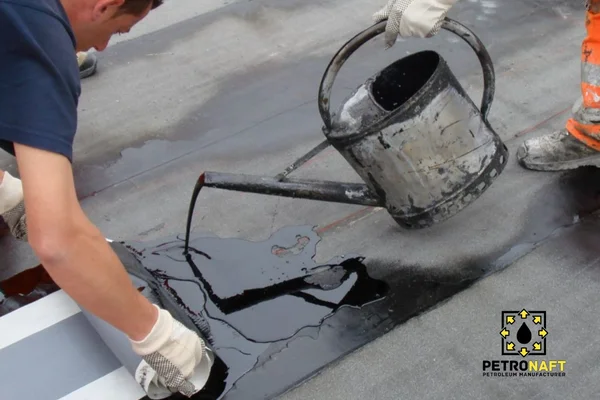
Apply bitumen primer, typically around 400 g/m², on dry surfaces with brush, roller, or spray.
Allow full drying (often 4–24 hours depending on climate) before laying sheets.
Membrane layout
Pre-cut and relax rolls.
Plan laps so water always flows over, not against, overlaps.
Torching and bonding
Torch the underside of the sheet and the substrate simultaneously, aiming for a small bitumen “bead” at laps.
Maintain side laps of ~10 cm and end laps of ~15 cm, rolling firmly to remove air pockets.
Detailing
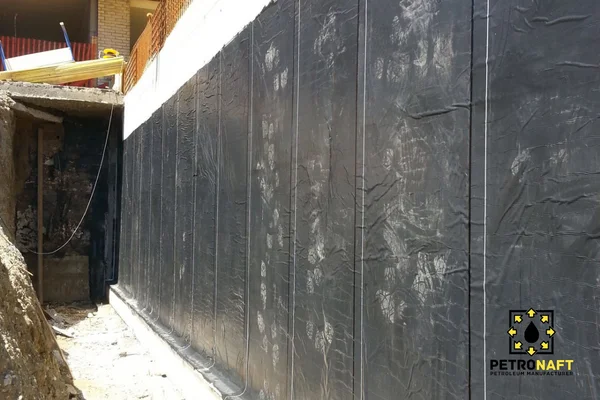
Reinforce corners, penetrations, drains, and upstands with extra strips. International guidelines from manufacturers emphasize multi-layer corner builds and correct sequencing on internal and external corners.
Protection
On accessible terraces, add screed, tiles, or protective boards.
Avoid leaving membranes exposed to unnecessary mechanical damage.
Typical Installation Stages and Equipment
| Stage | Main tools | Notes |
|---|---|---|
| Substrate cleaning | Broom, scraper, grinder, vacuum | Aim for sound, dust-free concrete |
| Priming | Roller, airless sprayer | Maintain coverage rate; avoid ponding primer |
| Torch-on application | Propane torch, gas hoses, roller | Follow site-specific safety plan; control flame distance |
| Detailing | Smaller torch, trowel, scissors | Pre-cut pieces for corners, drains, and terminations |
| Protection | Screed tools, tile cutter, insulation boards | Protect membrane before heavy trades access |
Where hot works are restricted, project teams may combine Petro Naft sheet systems with cold-applied areas, or use liquid membrane for localized details, reflecting a broader industry trend toward flame-free installation approaches.
What Real-World Examples Show Petro Naft Bituminous Membranes in Use?
Quick question: How do these membranes behave on actual projects, not just in data sheets?
Short answer: Case histories show strong performance on hot-climate roofs, water-retaining structures, and complex podium decks when design and installation are coordinated.
Case 1 – Retail Roof in a Hot, Coastal Climate
Challenge: A large shopping center needed a 25-year roof in a region with high UV and daily temperature swings.
Solution: A two-layer F-Series system with an aluminum-faced cap sheet on a primed, sloped screed, plus liquid membrane around HVAC supports.
Result: Infrared inspections after several summers showed no trapped moisture, and the reflective surface reduced rooftop temperature, lowering HVAC loads.
Case 2 – Deep Basement with High Groundwater
Challenge: A multi-storey residential basement in a city with aggressive groundwater and limited external access for future repairs.
Solution: PP-Series polyester membranes fully torched to primed raft slabs and walls, with double-layer treatment at construction joints and sumps.
Result: After multiple monsoon seasons, monitoring points showed dry walls, and no joint leaks were reported by facility management.
Case 3 – Ornamental Pool and Adjacent Wet Areas
Challenge: A hotel required seamless waterproofing for ornamental pools tied into nearby bathrooms and service corridors.
Solution: Bitumen primer followed by liquid membrane in multiple coats at roughly 600 g/m² per layer on complex geometries, combined with sheet membranes on simpler flat areas.
Result: The pools operated without leakage, and maintenance staff could re-coat selected areas without shutting down the entire system.
How Are Trends and Sustainability Shaping the Future of Bituminous Membranes?
Quick question: Are bituminous membranes still a future-proof choice in an era of green buildings and strict codes?
Short answer: Yes—when designed with polymer modification, proper detailing, and long service life, they meet modern durability and sustainability expectations.
Global waterproofing and bitumen membrane markets are growing steadily, driven by urbanization, green roofs, and the need to protect more complex infrastructure assets. Sheet membranes remain a major segment because of their predictable performance and compatibility with energy-efficient roof buildups.
Key trends affecting bituminous membranes include:
Higher performance expectations. Designers expect membranes to handle more cycles of thermal movement and ponding water, favoring advanced polymer modified bitumen for waterproofing.
Flame-free and low-VOC systems. Self-adhesive and cold-applied products help meet VOC and hot-work restrictions on sensitive sites.
Alternative binders. Using natural bitumen for waterproofing membranes can reduce processing steps and support lower-impact supply chains when carefully sourced.
Bitumen for waterproofing remains a central material, but its formulation and application now sit within a broader technical and regulatory framework that prioritizes durability, energy performance, and environmental impact.
How Can You Work with Petro Naft for Specification, Supply, and Support?
Quick question: What does collaboration with Petro Naft look like from first enquiry to final inspection?
Short answer: You get engineering-grade guidance on membrane selection, samples and data for approvals, and coordinated logistics from plant to project site.
Typical cooperation steps include:
Technical consultation. Share drawings and performance requirements; Petro Naft suggests suitable F- or PP-Series systems, capsheets, and detailing combinations, referencing standards and internal testing.
Specification support. For projects exploring polymer modified bitumen for waterproofing, oxidized bitumen for membrane systems, or hybrid approaches, engineers help refine layer build-ups and detail drawings.
Sampling and approvals. Batches can be produced to match target softening point, flexibility, and reinforcement type, with test reports aligned to EN and TS methods.
Logistics and packaging. Membrane rolls are stored horizontally, protected from sunlight, and shipped with clear labeling; liquid products are supplied in sealed 18 kg buckets with defined shelf lives.
MEMBRANES Catalogue
After-sales assistance. Petro Naft’s technical team can review installation photos, advise on troubleshooting, and support warranty documentation through the building’s early operational years.
For complex or high-risk systems, combining APP and SBS membrane technologies, or integrating bitumen for production waterproofing membrane solutions with other materials, early engagement helps avoid clashes between design intent and site reality.
What Key Points Should You Remember About Bituminous Membranes?
Quick question: If you had to summarise this entire topic for a busy project manager, what would you highlight?
Short answer: Choose standards-compliant bituminous membranes from a proven manufacturer, match the system to your structure and climate, and insist on proper installation and protection.
Executive Summary
Bituminous membranes remain one of the most reliable ways to waterproof flat and low-slope structures, especially when built on APP and SBS technology and backed by sound engineering.
Petro Naft offers a complete system: reinforced sheet membranes, shingles, liquid membranes, and primers, all designed to work together.
Correct surface preparation, priming, lap control, and detailing are as important as membrane selection itself.
Trends such as green roofs, stricter energy codes, and low-VOC regulations are reshaping materials and installation practices but still favor robust, long-life bituminous systems.
Practical Checklist for Your Next Bituminous Membrane Project
Confirm design life, exposure conditions, and structural movement before choosing reinforcement type.
Verify that proposed membranes comply with relevant standards (e.g., EN 13707 / EN 13969 or equivalent).
Ensure substrates are sound, dry, and properly primed with compatible bitumen primer.
Specify minimum laps, detailing rules, and protection layers in the project documents.
Coordinate fire safety and VOC requirements with the chosen installation method.
Use liquid membrane solutions for complex geometries where sheets are difficult to form.
Plan inspections at key milestones: after priming, after base sheet, after capsheet, and before covering.
Require traceable batch numbers and test certificates from your bituminous membranes manufacturer and supplier.
Train or brief installers on project-specific details rather than assuming generic experience.
Document the final system (drawings, photos, data sheets) to support warranties and future maintenance.
Frequently Asked Questions About Bituminous Membranes
1. Where are bituminous membranes most commonly used?
Bituminous membranes are most common on flat and low-slope roofs, podium decks, basements, water tanks, and tunnels. They provide a continuous waterproof barrier that can be protected with screeds, tiles, or ballast, making them suitable for both exposed and buried conditions in commercial, industrial, and infrastructure projects.
2. What is the difference between APP and SBS membrane technology?
APP and SBS membrane technologies differ mainly in polymer chemistry and temperature behavior. APP membranes, often used by Petro Naft, offer excellent heat and UV resistance, making them ideal for hot climates and exposed roofs. SBS membranes provide greater flexibility at low temperatures, which helps avoid cracking in colder regions or highly dynamic structures.
3. How thick should a bituminous membrane system be?
System thickness depends on design life, exposure, and local codes. Many roofs use a two-layer system with a base sheet and a thicker capsheet, reaching combined thicknesses around 4–6 mm. More demanding conditions—such as inverted roofs, green roofs, or high-traffic decks—may justify additional layers or protective screeds to meet durability targets.
4. Can bituminous membranes be used under tiles or pavers?
Yes. Bituminous membranes are widely used under tiles, pavers, and concrete screeds on terraces, balconies, and podiums. The membrane normally sits on a primed, sloped substrate, with separation and drainage layers above it where necessary. The key is to avoid mechanical damage before the protective layer is installed and to maintain effective drainage paths.
5. Are bituminous membranes compatible with green roofs?
They can be excellent for green roofs when root-resistant membranes or additional root barriers are specified. The membrane must be robust enough to tolerate permanent moisture, nutrients, and occasional mechanical disturbance. Detailing around drains, upstands, and irrigation penetrations is critical, and many green roof systems specify sheet membranes as the waterproofing base layer.
6. How long do bituminous membrane roofs typically last?
Well-designed and correctly installed bituminous membrane systems often achieve service lives of 20–30 years or more. Longevity depends on factors such as climate, UV exposure, protective layers, and maintenance. Regular inspections to clear drains, repair accidental damage, and reseal critical details can significantly extend service life beyond the original expectation.
7. What are the most common failure modes of bituminous membranes?
Common failure modes include poorly welded laps, inadequate detailing at corners and penetrations, punctures from construction traffic, and trapped moisture due to inadequate drying or ventilation. These are usually workmanship or design issues rather than material defects. Following manufacturer installation manuals and quality-control checklists drastically reduces such risks.
8. Can bituminous membranes be repaired locally?
Yes. Localized repairs are often straightforward. Technicians clean and dry the area, cut out damaged sections, prime as required, and weld new patches with generous overlaps. For liquid systems, they may abrade and clean the surface before recoating. However, repeated repairs can indicate systemic issues with design, drainage, or traffic protection.
9. How do liquid bituminous membranes compare with sheet systems?
Liquid bituminous membranes excel on complex details, small roofs, and refurbishment projects where a seamless coating is beneficial. Sheet membranes offer more consistent factory-controlled thickness and are usually faster for large, open areas. Many high-performance systems combine both: sheets on main fields and liquid membranes at transitions, terminations, and congested penetrations.
10. What information should I request from a membrane supplier before ordering?
Before ordering, ask for product data sheets, test reports to relevant standards, installation guidelines, recommended primers and accessories, and confirmation of available roll dimensions and packaging. Clarify whether the proposal covers complete systems—membranes, primer, liquid detailing, and protection—or just individual products, so that responsibilities and warranties are clearly defined.
Sources
Sika – Application Guide / Bituminous Membranes. Global technical guidance on design, detailing, and installation of bituminous waterproofing membranes. https://www.sika.com/dam/dms/corporate/6/glo-sika-bituminous-membranes.pdf
SOPREMA – Roofer’s Guide: Bituminous Membranes. Practical best-practice manual for torch-applied and other modified bitumen roof systems. https://soprema.com.au/wp-content/uploads/2021/05/Roofers_Guide_-Bituminous_Membranes_2021.pdf
BS EN 13707:2013 – Flexible Sheets for Waterproofing, Reinforced Bitumen Sheets for Roof Waterproofing. European standard defining key characteristics and test methods for roofing membranes. https://knowledge.bsigroup.com/products/flexible-sheets-for-waterproofing-reinforced-bitumen-sheets-for-roof-waterproofing-definitions-and-characteristics
Fortune Business Insights / Global Market Insights – Waterproofing Membrane Market Reports. Market analyses detailing size, growth rate, and key trends in liquid and sheet waterproofing membranes worldwide. https://www.fortunebusinessinsights.com/waterproofing-membranes-market-102393 and https://www.gminsights.com/industry-analysis/waterproofing-membrane-market
Asphalt Roofing Manufacturers Association – The Bitumen Roofing Industry: A Global Perspective. Overview of bitumen roofing systems, including modified bitumen membranes and their role in low-slope construction. https://www.asphaltroofing.org/wp-content/uploads/2017/05/The_Bitumen_Roofing_Industry_-_A_Global_Perspective.pdf