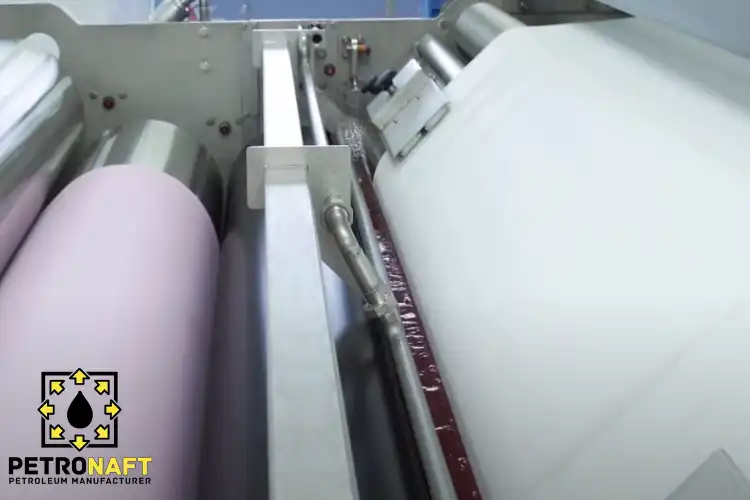
Caustic Soda in Textile Industry is the workhorse alkali behind mercerizing shine, effective scouring, and consistent dye fixation. Here’s how mills set concentration, temperature, and tension; prevent fiber damage; control pH during peroxide bleaching and reactive dyeing; and verify quality with practical checks. You’ll also find a buyer-focused guide to flakes vs liquid, storage and safety essentials, and waste-reduction options like caustic recovery.
Caustic Soda in Textile Industry is mainly used to swell and clean cellulosic fibers, raise pH for bleaching, and enable strong, even dyeing. At the right concentration and control points (time, temperature, tension, washing), NaOH improves luster, absorbency, and color yield—while lowering defects, rework, and chemical waste.
Textile mills don’t “add caustic and hope.” They manage it like a process variable—because small shifts in alkalinity can change:
Shade (especially reactive dyeing)
Handle (harsh vs soft)
Strength loss (over-alkalinity + heat)
Wastewater load (neutralization chemicals and salt formation)
This guide focuses on what matters on the floor and in purchasing:
Where NaOH delivers measurable gains (mercerizing, scouring, dyeing)
Typical operating windows and what to monitor
Practical mini-tutorials you can apply immediately
Buying and QC checks that prevent costly batch failures
Highlights & Key Sections
Caustic Soda in Textile Industry: What It Does and Why It’s So Effective
Sodium hydroxide (NaOH) is a strong alkali. In textiles, that strength translates into three “superpowers”:
Swelling cellulose (cotton/viscose/lyocell) so dyes penetrate better
Saponifying oils/waxes so fabric becomes absorbent and clean
Setting the right pH so peroxide bleaching and many dye chemistries work predictably
Low: poor absorbency. High: strength loss, harsh hand
Wetting/scouring agent
Helps penetration and emulsification
Patchy scouring, greasy spots
Sequestering agent
Controls hardness/metal ions
Peroxide instability, pinholes, shade issues
H₂O₂ (bleaching)
Oxidizes natural coloring matter
Low: dull whiteness. Unstable: fiber damage
Stabilizer
Controls peroxide decomposition
Spotty bleaching, pinholes
Mini tutorial: fast NaOH dosing calculation (so you don’t overpay or underdose)
Example: You want 5 g/L NaOH in a 1,000 L bath.
Pure NaOH needed = 5 g/L × 1,000 L = 5,000 g = 5 kg
If you’re using 50% liquid caustic, required liquid = 5 kg ÷ 0.50 = 10 kg of 50% solution
Operator tips that prevent accidents and off-shade:
Add caustic to water, not water to caustic.
Mix with agitation and allow temperature to stabilize before dosing peroxide.
Bleaching: Why Caustic Controls Whiteness and Damage Risk
Hydrogen peroxide bleaching needs an alkaline environment to work efficiently. NaOH is one of the most direct ways to achieve and hold that pH.
What good bleaching looks like
High, even whiteness
No pinholes, no tendering
Stable peroxide (no runaway decomposition)
Practical controls that matter more than the “recipe”
pH stability: drifting pH causes uneven bleaching and later shade variation.
Metal control: iron/copper contamination accelerates peroxide breakdown and can create defects.
Temperature discipline: too hot + too alkaline increases cellulose damage risk.
If you only improve one thing: tighten water quality + sequestering and standardize pH checks per batch.
Dyeing: Where Caustic Soda Helps and Where It Can Hurt
In dyeing, NaOH mainly acts as a pH tool—but the “right pH” depends on the dye class.
Reactive dyeing (cotton): NaOH vs soda ash
Reactive dyes fix to cellulose better under alkaline conditions. Many mills use soda ash for gentler alkalinity, but NaOH can be used in certain routes for faster or more controlled pH rise.
Use NaOH thoughtfully when:
You run continuous or semi-continuous dyeing where pH needs rapid control
You need tight shade reproducibility and have strong process control
You’ve validated that fiber strength and handle remain acceptable
Risks if you push alkalinity too hard:
Hydrolysis of reactive dyes (wasted dye, lower fixation)
Tendering (especially with high temperature or long dwell time)
Harsh handle and higher rewash demand
Vat and sulfur dyeing: why NaOH appears in the recipe
These dye systems often use strongly alkaline conditions in reduction and development steps. If you supply NaOH for these lines, consistency and impurity control (especially metals) pays off in fewer shade issues.
Mini tutorial: a “no-surprises” pH workflow for dyehouses
Measure pH at make-up, after alkali dosing, and before rinse
Track pH against shade deviations by lot
Build a simple “pH window” per shade family (light/medium/deep)
This is one of the cheapest ways to improve right-first-time dyeing.
Quality Control: What to Test (Without Overcomplicating It)
Whether you run a mill or supply a mill, NaOH QC is where trust is built.
Incoming caustic checks that prevent costly problems
Assay / active alkalinity (is it the strength you’re paying for?)
Certificate of Analysis with assay, carbonates, chlorides, iron
Packaging spec (bags/drums/IBC/bulk) and protection against moisture
Consistent batch-to-batch specs (especially for dyehouses)
Clear SDS and transport compliance documentation
Local availability for uninterrupted production
Commercial insight: If your mill does peroxide bleaching or shade-critical dyeing, paying a bit more for lower-impurity caustic can cost less overall than handling re-dyes and claims.
Sustainability and 2026 Trends: Why Caustic Management Is Getting More Strategic
Two forces are pushing change fast:
Water scarcity and wastewater expectations are tightening in supply chains.
Brands increasingly want chemical transparency, not just “pass/fail.”
Practical innovations gaining adoption:
Caustic recovery in mercerization: modern systems can recover a large share of used alkali, lowering fresh NaOH demand and reducing neutralization load.
Low-liquor and foam applications: less water means less chemical carryover and faster washing.
Data-driven dosing: inline pH/conductivity and recipe control reduce operator variability.
If you want a “Discover-friendly” angle: the mills winning new orders are the ones that combine shade consistency + lower environmental footprint—and caustic control is central to both.
Conclusion
Used correctly, Caustic Soda in Textile Industry is a performance lever: it improves mercerizing luster, drives scouring absorbency, and stabilizes dyeing chemistry. The real advantage comes from control—measuring concentration and pH, preventing contamination, washing efficiently, and buying consistent quality. That’s how you get better fabric and fewer production surprises.
Executive Summary Checklist (Print This)
Process
Standardize NaOH concentration windows per fabric and machine
Add pH checkpoints (make-up → after dosing → before rinse)
Improve wetting and pickup control in mercerization and padding
Strengthen water-quality control (hardness + metal ions)
Use counter-current washing where possible to reduce carryover
Quality
Verify incoming NaOH assay and key impurities (carbonates, iron)
Track defects against pH and concentration logs for root-cause learning
Validate any recipe change with absorbency + shade reproducibility tests
Safety
Enforce PPE at dosing/transfer points
Train for exothermic dilution and spill response
Audit tank/piping materials compatibility and secondary containment
Cost + Sustainability
Evaluate caustic recovery feasibility for mercerization lines
Reduce rework with dosing automation and tighter SOPs
Align wastewater controls with brand and regional expectations
FAQ
1) What concentration of NaOH is typically used for cotton mercerization?
Most industrial mercerization uses concentrated caustic (often around 20–30% w/w), applied under controlled tension and followed by strong washing. Exact targets depend on fabric weight, construction, and equipment.
2) Why does caustic soda improve dye uptake on cotton?
NaOH swells cellulose and increases fiber accessibility, which helps dyes diffuse more evenly. In reactive dyeing, alkalinity also promotes the fixation reaction—if pH is controlled correctly.
3) Can too much caustic damage fabric strength?
Yes. High alkalinity combined with heat and long exposure can weaken cellulose, leading to tendering and harsh handle. Tight control of concentration, temperature, and time prevents most damage.
4) What’s the biggest cause of bleaching pinholes related to NaOH?
Unstable peroxide decomposition, often triggered by metal contamination (iron/copper) and excessive alkalinity peaks. Sequestering agents, better water control, and disciplined pH management usually solve it.
5) Is liquid caustic safer than flakes for textile mills?
In high-volume operations, liquid caustic with closed transfer and automated dosing is often safer and more consistent. Flakes can work well too, but they require strict dust/moisture control and careful manual handling.
Sources
Industry wastewater discharge expectations and testing framework widely adopted in textile supply chains. ZDHC Wastewater Guidelines (PDF)