

Caustic Soda Suppliers are best chosen by verifying three things: the right grade (membrane vs diaphragm), proven hazardous logistics (bulk/IBC/drums), and transparent quality control (COA + traceable batches). Shortlist reputable chlor-alkali producers and their authorized partners, then run a small delivery trial before locking in annual volume.
Buying caustic looks simple until it isn’t: a delayed tanker can stop a plant, a salty grade can ruin a process, and one unloading incident can erase a year of savings.
Here’s what experienced buyers focus on:
- Fit-for-purpose quality (impurities matter more than most quotes admit)
- Delivery reliability (your “OTIF” rate is the real KPI)
- Total delivered cost (convert everything to a comparable basis)
Highlights & Key Sections
How to Choose Caustic Soda Suppliers for Your Application
1) Match the product to your process (don’t start with price)
Caustic soda is sold in multiple forms and grades because different processes tolerate different impurities and handling constraints.
Quick decision rules
- If you’re sensitive to chloride/salt (many chemical syntheses, ion-exchange systems): prioritize membrane grade.
- If you’re in general cleaning, neutralization, basic pH control: you may tolerate broader specs, but still require consistency.
- If you need low metals (some electronics, specialty formulations): specify iron and trace metals explicitly.
2) Pick the right supply model
You’re not just buying NaOH—you’re buying a supply chain that can safely move a corrosive, heat-generating chemical.
- Producer-direct: strongest traceability and consistency; often best for steady volumes.
- Authorized distributor/terminal: faster lead times, smaller MOQs, local inventory.
- Trader/sourcing partner: useful for multi-origin supply planning, spot needs, or complex routing—best when documentation discipline is strong.
3) Confirm logistics capabilities early
If the supplier can’t deliver safely in your preferred format, the “best price” is meaningless.
Typical delivery options
- Bulk tanker / rail / ship
- ISO tank
- IBC / drums
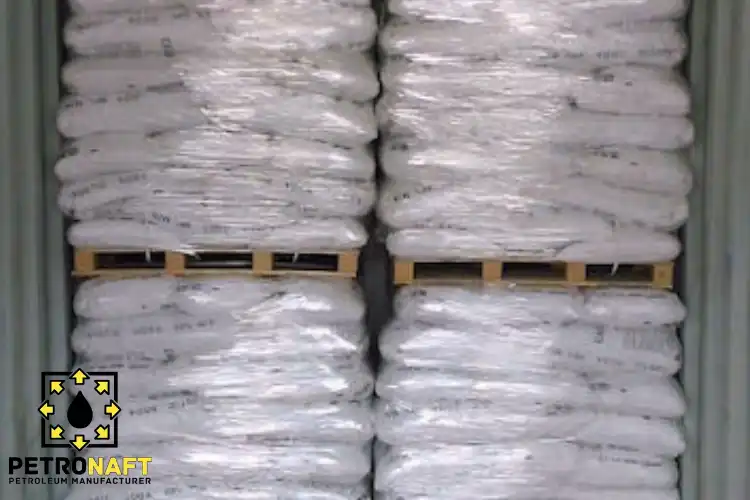
- Bags (solid flakes/pearls)
Caustic Soda Buying Specs That Prevent Costly Mistakes
What you should specify (minimum viable spec sheet)
Ask for these items in writing—before you request a quote:
- Form & concentration (e.g., 50% liquid, 99% flakes)
- Production route (membrane vs diaphragm) when relevant
- Key impurities (typical: sodium carbonate, sodium chloride, iron; add chlorate if your process is sensitive)
- Packaging & lining (especially for bulk/ISO tanks)
- Temperature limits (important in cold climates and for unloading)
Common commercial forms at a glance
| Commercial form | Typical NaOH (w/w) | Best for | Watch-outs |
|---|---|---|---|
| Liquid caustic soda | ~50% | High-volume continuous users; easiest dosing | Can crystallize in cool weather; needs compatible tanks/lines |
| Liquid (diluted) | ~25–32% | Smaller sites; easier pumping in colder temps | Higher freight cost per “active” NaOH |
| Flakes | ~98–99% | Flexible, lower water freight, export-friendly | Dust control; dissolving generates heat |
| Pearls / prills / microbeads | ~98–99% | Controlled feeding, faster dissolution | Still needs dry storage; moisture pickup reduces quality |
| Food / high-purity grades | varies | Food/pharma-related processes (only if required) | Documentation requirements are stricter than many expect |
A realistic example (why specs beat “cheapest per ton”)
A detergent blender buying 25% in drums often pays more in freight and packaging than they realize. Switching to 50% in bulk or IBC can cut delivered cost per “active NaOH” substantially—but only if the site can handle safe unloading and heated storage when needed.
The Top 10 Global Caustic Soda Suppliers
Use this list to understand who the most recognized, large-scale players are. Your best-fit choice still depends on your region, packaging needs, and documentation requirements.
| Company | Primary footprint | Why buyers shortlist them | Typical strengths |
|---|---|---|---|
| Olin Corporation | North America + global network | Large chlor-alkali platform with broad market reach | Reliable large-volume supply, established logistics |
| Dow Inc. | Global | Major integrated chemical producer with chlor-alkali offerings | Specialty/regulated applications, technical support |
| Westlake Corporation | North America | Large integrated chlor-alkali and vinyls producer | Competitive production economics, strong distribution |
| OxyChem | North America + Americas | Well-known chlor-alkali supplier with extensive production footprint | Industrial-grade scale, deep handling guidance |
| Formosa Plastics Corporation | Asia + Americas | Major chlor-alkali and vinyl chain producer | Strong regional supply, multiple product forms |
| INEOS Inovyn | Europe | Large European chlor-alkali and chlorovinyls supplier | Broad industrial coverage, sustainability-focused lines |
| AGC Inc. | Japan + Southeast Asia | Long-standing chlor-alkali producer with regional scale | Stable supply into Asian markets, integrated operations |
| Tosoh Corporation | Japan + Asia | Major chlor-alkali producer with established product portfolio | Consistent industrial supply, broad customer base |
| Hanwha Solutions | South Korea + Asia | Major chlor-alkali producer in Korea | Large regional capacity, industrial focus |
| Petro Naft | Turkey + regional/global hubs | Sourcing-focused supplier for industrial buyers needing flexible logistics | Multi-origin procurement, shipment coordination, tailored packaging |
How to use this list practically
- If you’re a large continuous consumer: start with top producers + a secondary approved source.
- If you’re mid-size or project-based: prioritize local inventory + documentation + responsive support over brand name alone.
- If you’re in a regulated or high-sensitivity process: treat documentation, impurity limits, and traceability as “must-have,” not “nice-to-have.”
Step-by-Step: Qualify a Supplier in 2 Weeks
This is a lightweight qualification flow many procurement teams use to reduce risk fast.
Day 1–2: Build a one-page “buying definition”
Include:
- Concentration/form, annual volume, delivery frequency
- Required impurity limits (what truly breaks your process)
- Required packaging (bulk/IBC/drums/bags)
- Site constraints (unloading method, heat tracing, storage capacity)
Day 3–5: Request a standard documentation pack
Ask for:
- Current spec sheet
- SDS in your language/region format
- COA template + sample COA from recent lots
- Traceability statement (batch/lot coding)
- Country of origin + HS code support for customs (if importing)
Day 6–10: Sample + verify (mini tutorial)
Have a trained lab team do simple checks to confirm what you’re paying for:
- NaOH concentration (titration)
- Carbonate (important for viscosity/alkalinity behavior in some formulations)
- Chloride/salt (critical if you need membrane-grade behavior)
- Iron/appearance (if color or metals matter)
Practical tip: define pass/fail limits before you see the sample results to avoid “moving the goalposts.”
Day 11–14: Run a controlled delivery trial
Score the supplier on:
- On-time arrival
- Correct paperwork on arrival
- Safe unloading support
- Packaging integrity / tamper evidence
- Post-delivery response time (issues happen—response is the test)
Receiving, Storage, and Safety Basics
Caustic soda is highly corrosive and reacts strongly with water dilution (releases heat). Safety discipline belongs in the buying decision, not just operations.
Receiving checklist (what prevents incidents)
- Dedicated unloading procedure + trained operators
- Eyewash and emergency shower within reach
- Verified hose/connection compatibility and inspection logs
- Clear segregation from acids and reactive metals
Storage & materials (quick guidance)
- Store liquids in compatible tanks with proper venting and secondary containment.
- Prevent contamination: NaOH absorbs CO₂ over time, forming sodium carbonate.
- Plan for temperature: many sites learn the hard way that 50% caustic can start crystallizing around cool ambient temperatures, so cold-weather storage may need heat tracing.
Materials caution: avoid reactive metals (e.g., aluminum, zinc) in contact areas; use proven compatible materials and correct linings.
For workplace safety references, many teams align procedures with guidance from NIOSH and OSHA.
Pricing & Contracting: How Pros Buy Caustic Without Overpaying
What actually drives price
- Electricity/energy costs (chlor-alkali is power intensive)
- Co-product market balance (chlorine and caustic economics are linked)
- Freight and packaging (often the hidden winner/loser)
- Contract structure (spot vs term, take-or-pay, index linkage)
Mini tutorial: compare offers on the same basis
Quotes can look “cheaper” simply because concentration or packaging differs.
Convert to 100% NaOH basis (simple method)
- If you buy 50% liquid at price P per ton of solution, the 100% basis is approximately:
- P ÷ 0.50
Then add:
- Packaging cost (if drums/IBC)
- Freight to your site
- Handling cost differences (bulk vs packaged)
Pro tip: Many industrial contracts also reference dry basis conventions (you’ll sometimes see “Na₂O basis” language). If that appears, ask the supplier to provide a side-by-side conversion table in the quote—so finance, QA, and ops all see the same numbers.
Contract clauses worth negotiating (buyer-friendly)
- Quality dispute window + retain sample protocol
- OTIF target with remedies
- Backup supply/terminal options during outages
- Clear COA requirements tied to each batch shipped
Executive Summary Checklist
Use this to shortlist, qualify, and buy with fewer surprises:
- Product fit
- ☐ Form (liquid/solid) and concentration match your dosing and storage reality
- ☐ Grade chosen for impurity sensitivity (membrane vs diaphragm when relevant)
- ☐ Impurity limits defined (carbonate, chloride, iron, chlorate if needed)
- Supplier credibility
- ☐ COA format and batch traceability confirmed
- ☐ SDS and regulatory documentation ready for your jurisdiction
- ☐ References or track record in your industry segment
- Logistics & safety
- ☐ Delivery format feasible at your site (bulk/IBC/drums/bags)
- ☐ Unloading procedure and emergency response readiness verified
- ☐ Cold-weather and storage temperature plan validated
- Commercial discipline
- ☐ Prices compared on the same basis (100% NaOH)
- ☐ Trial delivery completed before annual commitment
- ☐ OTIF expectations and dispute terms written into the contract
If you work through this checklist, you’ll end up with Caustic Soda Suppliers you can trust for both quality and continuity of supply.
FAQ
1) What’s the difference between membrane-grade and diaphragm-grade caustic soda?
Membrane-grade typically has much lower residual salt (chloride) than diaphragm-grade. That matters in processes sensitive to ionic contaminants, corrosion risk, or product purity.
2) Is 50% liquid always cheaper than flakes or pearls?
Not always. Liquids can be cheaper for high-volume users with bulk handling, while solids can win in export, storage space, or when water freight is too expensive.
3) Why does caustic soda sometimes arrive “off-strength”?
Measurement basis, temperature effects, and sampling errors can create apparent variation. A proper COA plus controlled sampling and titration verification usually clarifies the true concentration.
4) What documents should be attached to every shipment?
At minimum: SDS, COA for the batch/lot shipped, packaging/transport details, and traceability identifiers. For sensitive uses, add impurity-specific data and change-control notifications.
5) How do I prevent crystallization in storage tanks?
Maintain storage temperature above the crystallization range for your concentration, insulate/heat-trace where needed, and avoid dead legs in piping where cold spots form.
Sources
- Euro Chlor provides a clear overview of how caustic soda is produced in membrane-cell chlor-alkali electrolysis. Membrane cell process
- The NIOSH Pocket Guide summarizes key hazards, first aid, and protective measures for sodium hydroxide in workplaces. Sodium hydroxide (NPG)
- OxyChem’s technical handbook covers handling, storage, shipping methods, and analytical testing methods used in industry. Caustic Soda Handbook (PDF)
- INEOS Inovyn’s announcement highlights the industry trend toward lower-carbon chlor-alkali products (including caustic soda) powered by renewable energy. Ultra Low Carbon chlor-alkali range