PG Grade Determination tells you which asphalt binder performance grade will resist rutting in heat and cracking in cold for a specific project location and traffic. You determine the grade by converting local climate data into design pavement temperatures, selecting the closest PG high/low temperature pair (in 6°C steps), then confirming with standardized rheology and aging tests.
When you pick the right PG grade, you’re buying fewer callbacks—not just “a binder.”
Design goal: match climate + traffic + construction reality
Business goal: reduce rutting, thermal cracking, and premature maintenance
Practical goal: get a binder that’s available, consistent, and test-verified
Highlights & Key Sections
What a PG Grade Really Means
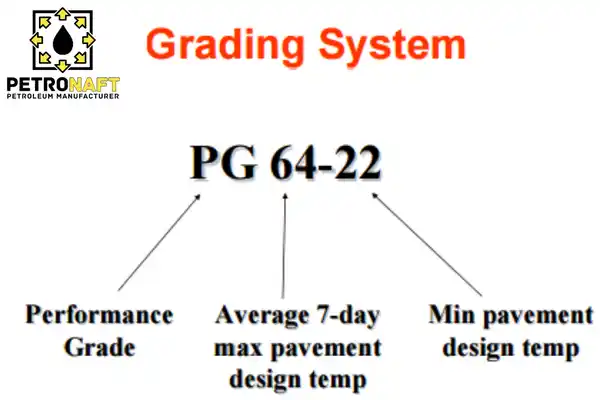
A PG grade has two numbers, like PG 64-22:
64 = the binder’s high-temperature performance target (rutting resistance during hot periods)
-22 = the binder’s low-temperature performance target (thermal cracking resistance during cold events)
Those numbers relate to pavement design temperatures, not just air temperature. Pavement runs hotter than air in summer, and the “hot side” uses an average 7-day maximum concept because rutting tends to grow during multi-day heat waves.
Quick interpretation (plain language)
If your pavement regularly experiences very hot weeks, you need a higher PG high number.
If your winters reach very low pavement temperatures, you need a lower PG low number (more negative).
PG Grade Determination: The Practical Step-by-Step Method
Step 1) Define the project reality (not just the map pin)
Before you touch any numbers, lock these down:
Road class: urban arterial, highway, industrial road, port access, airport, etc.
Construction conditions: warm mix? night paving? long haul times? storage temperature control?
Small details matter. A “normal” climate grade can fail fast under standing traffic at intersections, toll plazas, or port gates.
Step 2) Convert climate into pavement design temperatures
Use reliable climate data (multi-year) and a pavement temperature model/tool to estimate:
Average 7-day maximum pavement temperature (high side)
Minimum pavement design temperature (low side)
Reliability level (how conservative you want to be)
If you don’t have modeling tools, a practical approach is to start from the agency’s standard PG map/table (if available), then refine using local extremes and site conditions (shade, elevation, coastal humidity, urban heat island).
Step 3) Select the nearest PG high and low in 6°C steps
PG grades are typically available in 6°C increments:
High side: 46, 52, 58, 64, 70, 76, 82…
Low side: -10, -16, -22, -28, -34, -40…
Rule of thumb: round up on the high side when rutting risk is high, and round down (more negative) on the low side when thermal cracking risk is high.
Mini tutorial example (climate-only starting point)
You estimate:
7-day max pavement temp = 67°C
minimum pavement temp = -20°C
Closest grade is PG 70-22:
67°C → move to 70
-20°C → move to -22
That’s your baseline grade before traffic adjustment.
Step 4) Adjust for traffic and speed (where most costly mistakes happen)
High rutting risk often comes from load + slow speed, not just hot climate.
Two common approaches:
Grade bumping (traditional): increase the high PG by one or two grades (e.g., 64 → 70 or 76) for heavy/slow traffic.
Traffic-graded approach (modern): keep the climate grade, then specify a traffic designation verified by creep-recovery behavior (especially valuable for modified binders and heavy-duty pavements).
Practical guidance
Use traffic-graded selection for: ports, logistics hubs, tolling areas, bus lanes, steep grades, slow-moving congestion
Use simple climate grade for: lighter traffic, high-speed corridors, standard municipal resurfacing
Step 5) Verify the grade in the lab (confirmation, not guesswork)
PG grade is confirmed by testing binder behavior:
Before aging (original binder)
After short-term aging (simulates plant mixing/laydown)
After long-term aging (simulates years in service)
What each test “protects you from”
High-temp shear response: rutting resistance during hot loading
Intermediate response after aging: fatigue-related cracking sensitivity
Low-temp stiffness/relaxation: thermal cracking resistance in cold snaps
Creep-recovery behavior (if traffic-graded): real-world rutting control under heavy/slow loads
Lab Testing Workflow: From Sample to Confirmed Grade
A clean workflow improves trust in results and prevents false fails.
Sample handling that prevents expensive retests
Seal containers immediately; keep water out.
Avoid overheating during reheating (excess heat ages the binder and shifts results).
Mix gently and thoroughly to ensure homogeneity (especially with modified binders).
Label everything with batch, date, storage temperature, and sampling point.
Test package overview
What you’re checking
When (binder condition)
What it indicates
Common pitfall
Workability at mixing/handling temps
Original binder
Pumping, mixing, and coating practicality
Overheating the sample before testing
Rutting resistance
Original + short-term aged
High-temp stability under load
Using “climate only” grade in slow traffic zones
Long-term durability vs cracking
Long-term aged
How binder stiffens with time
Assuming modified = always safer for cracking
Thermal cracking resistance
Long-term aged
Low-temp stiffness and stress relaxation
Choosing low grade too warm for local cold events
Heavy/slow traffic rutting control
Short-term aged
Elastic response and permanent deformation risk
Relying on viscosity alone for polymer systems
Choosing the Right PG Grade in Real Projects
Case study 1: Urban intersection rutting (the “slow traffic trap”)
Situation
Normal summer climate, but buses/trucks brake and accelerate repeatedly.
Surface shows early shoving/rutting within 1–2 seasons.
What works
Keep the climate low grade appropriate for winter
Upgrade rutting control using a higher high grade or a traffic-graded specification
Confirm with creep-recovery behavior if you use modified binder
Why it pays
You spend a bit more on binder, but you avoid milling and traffic disruption costs.
Case study 2: Cold-region cracking (the “looks fine until winter” problem)
Situation
Pavement performs well in summer
First winter produces transverse cracks that propagate quickly
What works
Select a colder low PG (more negative) based on pavement minimum temperature
Confirm low-temp performance after long-term aging
Focus on low-temp relaxation, not just “softness”
Why it pays
Cracking drives water intrusion, stripping risk, and fast structural deterioration.
A practical selection table
Project scenario
Biggest risk
Better selection approach
What to demand from supplier/lab
Port access / toll plaza
Rutting in standing traffic
Traffic-graded + verified creep-recovery
Full test report on aged binder behavior
Highway resurfacing (high speed)
Balanced performance
Climate-based PG + standard verification
Consistent COA across batches
Cold/high-altitude roads
Thermal cracking
Lower (more negative) low grade
Low-temp verification after long-term aging
High RAP / RAS mixtures
Brittleness & cracking
Balance low-temp binder + mixture cracking checks
Support with compatibility and aging guidance
Buying & Specifying PG Binders: What to Ask Your Supplier
If you want professional-grade procurement (and fewer disputes), ask for specifics.
Minimum documentation
Certificate of Analysis (COA) with pass/fail against the specified PG grade
Improve handling, agitation, and temperature control
Trends Shaping PG Binder Selection
Climate volatility and heat waves
Designs increasingly need to withstand longer hot periods and rapid seasonal swings. This pushes more projects to prioritize rutting control without sacrificing low-temperature performance.
Heavier freight corridors + slow traffic zones
Urban logistics, ports, and dense metro networks amplify rutting stress. More agencies and buyers rely on creep-recovery-based traffic grading to avoid over-specified (and overpriced) high-temperature bumps.
Bonus trend you’ll feel on-site: higher RAP content raises mixture stiffness, so teams pay more attention to cracking resistance and aging behavior—not only the high PG number.
Conclusion
The fastest way to reduce pavement risk is to treat binder grading as an engineering decision, not a catalog choice. Start with climate-based grade selection, then adjust intelligently for traffic and verify performance after aging. When you do PG Grade Determination this way, you typically gain longer service life, fewer early failures, and clearer accountability between supplier, lab, and contractor.
Executive Summary & Practical Checklist
Use this checklist before approving a binder grade:
Climate
7-day maximum pavement temperature estimated reliably
Minimum pavement temperature estimated reliably
Reliability level chosen and documented
Traffic
ESALs and truck % estimated realistically
Slow/standing traffic zones identified (intersections, tolling, ports)
Traffic-graded approach considered for high rutting risk zones
Verification
Tests include original, short-term aged, and long-term aged binder
Low-temp verification matches the selected low grade
Modified binder behavior verified for heavy/slow traffic if applicable
Procurement
COA shows consistent grade verification across batches
Storage/handling limits supplied and followed
Sample retention and retest procedure agreed in writing
FAQ
1) Is PG 64-22 always “better” than PG 58-22?
Not necessarily. A higher high-temperature grade can improve rutting resistance but may reduce cracking tolerance if not balanced correctly. Match the grade to climate and traffic, then verify aging-conditioned performance.
2) Why does the high-temperature side use a 7-day average maximum?
Because rutting typically grows during multi-day hot periods, not just a single peak day. Using a multi-day high temperature better reflects how pavements actually accumulate permanent deformation.
They often improve rutting resistance and elastic response, but performance depends on formulation, compatibility, handling, and aging behavior. Always verify performance after conditioning and confirm the grade for your application.
4) What’s the biggest reason PG selections fail in the field?
Ignoring slow/standing traffic zones. Many pavements fail from localized rutting at intersections, bus stops, and logistics bottlenecks even when the climate grade looks correct.
5) Can I determine a PG grade using lab tests only, without climate data?
You can measure and report the binder’s tested grade range, but you still need climate and traffic context to choose the right grade for a project. Lab results tell you what the binder can do; climate/traffic tells you what it must do.
Sources
Official specification describing performance-graded asphalt binder requirements, grading structure, and test framework: AASHTO M 320-23.
Standard specification outlining performance-graded asphalt binder grading based on pavement temperatures and test tables: ASTM D6373.
Traffic-graded PG binder specification using creep-recovery behavior and “S/H/V/E” traffic designations: AASHTO M 332.
Detailed laboratory manual describing binder sampling/conditioning and test procedures used in PG verification workflows: FHWA Asphalt Binder PG Tests Manual (PDF).
Foundational reference explaining the Superpave binder grading concept and temperature-based grade selection logic: SHRP-A-410 (PDF).