


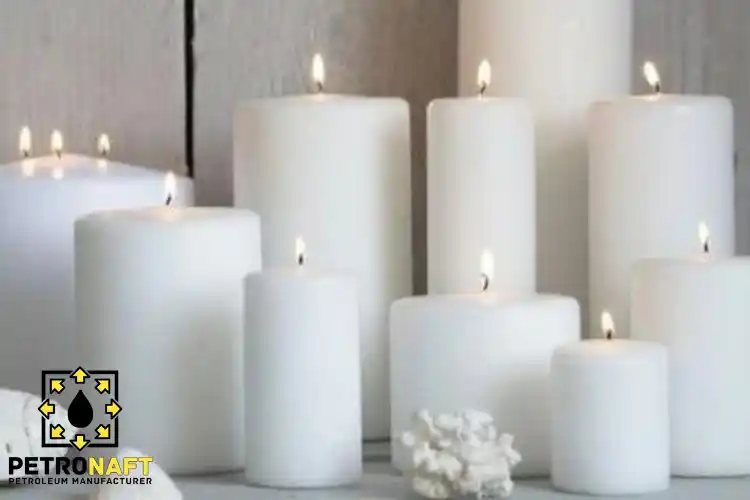
Paraffin “grades” differ mainly in purity (refining level) and measured properties like melting point/congealing point, oil content, hardness, viscosity, and compliance (food/pharma/cosmetic). The Difference Between Paraffins matters because the same “paraffin” label can mean candle wax, coating wax, petrolatum, or liquid paraffin—each behaving very differently in production and end-use.
Highlights & Key Sections
Why “paraffin” is confusing in purchasing
In industry, paraffin can refer to different hydrocarbon ranges and forms:
Solid paraffin wax (crystalline wax for candles, packaging, boards)
Slack wax (oilier, less refined intermediate)
Liquid paraffin / white oil (cosmetics, pharma, food-contact processing, industrial)
Soft paraffin / petrolatum (ointment base, corrosion barrier, lubrication)
Microcrystalline wax (tougher, more flexible structure)
Synthetic paraffin wax (GTL/FT) (very consistent, often low oil)
If you buy based on the name alone, you’ll get surprises: frosting in candles, oil bleed in coatings, poor release in rubber, or compliance issues.
Difference Between Paraffins: Different grades explained for buyers
Here’s a quick map you can use for RFQs and spec checks.
| “Paraffin” type (what sellers mean) | Typical refining level | Key specs that define the grade | Best-fit uses | Common buyer pitfall |
|---|---|---|---|---|
| Fully refined paraffin wax | High | Melting point, oil % (low), color, odor | Candles, food/packaging coatings, crayons | Overpaying for purity you don’t need |
| Semi-refined paraffin wax | Medium | Melting point, oil % (moderate), color | Matches, boards, general industrial wax | Odor/smoke complaints in candles |
| Slack wax | Low (intermediate) | Congealing point, oil % (high) | Rubber, wet-process boards, wax blends | Assuming it will behave like candle wax |
| Microcrystalline wax | Medium–High | Drop melting point, penetration, viscosity | Cosmetics, adhesives, chewing-gum base, polish | Using it alone where you need crystalline structure |
| Petrolatum / soft paraffin | High (but semi-solid) | Penetration, oil separation, purity | Pharma ointments, corrosion barrier | Confusing it with paraffin wax slabs |
| Liquid paraffin (white oil) | High | Viscosity (ISO VG), color (Saybolt), aromatic/PAH control | Cosmetics, pharma, textiles, plastics | Buying “technical” when you need pharma compliance |
| Synthetic paraffin wax (GTL/FT) | Very high consistency | Narrow melt range, hardness, low odor | Premium candles, hot-melts, coatings | Expecting it to match petroleum wax fragrance behavior |
The 4 levers that actually define a paraffin grade
When I evaluate a paraffin offer, I focus on these levers (not the marketing label):
Carbon range & structure (crystal behavior)
More linear hydrocarbons → sharper crystallization, cleaner burn, higher hardness.
More branching/cyclic content → softer feel, different viscosity response.
Refining severity (purity and odor)
Higher hydrotreating/hydrofinishing usually improves color, odor, UV stability, and reduces problematic trace components.
Residual oil content (especially in waxes)
Higher oil content often improves flexibility and blending, but can cause oil bleed, smoke, or weaker hardness.
Compliance and intended contact
Food-contact, cosmetic, and pharmaceutical uses often require tighter impurity control and documentation—not just “looks white”.
Solid paraffin wax grades: what the common “52/54, 58/60, 60/62” really mean
In many markets, the grade name is shorthand for a melting point range (°C). But melting point alone is not enough.
Practical rule of thumb
Lower melt (e.g., ~52–54°C): softer wax, faster melt pool, easier blending.
Mid melt (e.g., ~58–60°C): general-purpose candle and coating territory.
Higher melt (e.g., ~60–62°C and above): harder wax, higher heat resistance, often used where shape retention matters.
What to request on the COA (solid wax)
| Property | Why it matters in production | What to watch for |
|---|---|---|
| Melting point / congealing point | Heat setting, shrink, storage stability | Narrow range = more consistent batching |
| Oil content (%) | Smoke, surface feel, oil bleed | Lower oil typically = cleaner/whiter, but can frost more |
| Needle penetration (hardness) | Pillar strength, packaging stiffness | Too soft = dents; too hard = cracking risk |
| Color (visual / instrument) | Cosmetics, packaging aesthetics | “White” varies—ask for a measurable color method |
| Odor | Candles/cosmetics | “Neutral” is subjective—request an odor description or panel note |
| Flash point (for safety) | Handling and process safety | Verify against your process temperatures |
Mini case: candle maker fixing frosting and scent throw
Problem: A pillar candle frosts heavily and the fragrance throw is inconsistent.
Quick fix path:
Keep the same melting grade, but tighten oil content and penetration targets for consistency.
If cracking appears, blend a small fraction of microcrystalline wax to improve flexibility.
If smoke is the issue, move toward more refined / lower odor wax rather than only changing melting point.
Slack wax vs semi-refined vs fully refined: the buyer’s “quality ladder”
Think of these as a ladder of refinement:
Slack wax
Higher oil content, used as a feedstock or for applications that benefit from oiliness.
Great for blends, rubber processing, certain board impregnation.
Not ideal when odor, smoke, or “clean surface” is critical.
Semi-refined paraffin wax
Balanced cost/performance for many industrial uses.
Often acceptable where minor odor/color is not a deal-breaker.
Fully refined paraffin wax
Cleaner odor profile, better color, better stability for sensitive applications.
Typically chosen for candles with strict sensory requirements, packaging coatings, and some personal care formulations.
Liquid paraffin grades: how “light” and “heavy” are defined in practice
Liquid paraffin (white oil) grades are usually purchased by viscosity at 40°C, commonly aligned to ISO viscosity grades (ISO VG).
| Liquid paraffin category | Typical viscosity behavior | Where it fits best | Common mistake |
|---|---|---|---|
| Light liquid paraffin | Lower viscosity, faster wetting | Sprays, textiles, light lubrication, some cosmetics | Evaporation feel/“dryness” mismatch in skin products |
| Medium viscosity white oil | Balanced film strength | General cosmetics, polymers, processing aid | Not matching pump/flow design |
| Heavy liquid paraffin | Higher viscosity, thicker film | ointment-like feel, heavy-duty processing | Poor low-temperature flow or dosing inconsistency |
Mini tutorial: specifying liquid paraffin in one line
Instead of “white oil,” write:
Viscosity grade (ISO VG) + intended use + compliance requirement + packaging
Example spec line:
“White oil ISO VG 32 for cosmetic manufacturing, low odor, pharma-style documentation preferred, 170 kg drums.”
Microcrystalline wax and petrolatum: when “paraffin” is semi-solid (and why it matters)
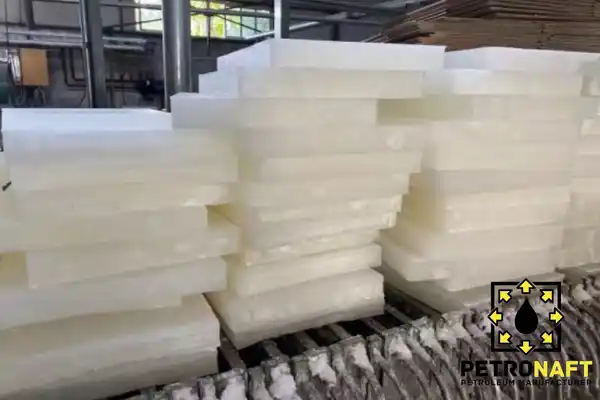
These are often confused with paraffin wax slabs, but they behave differently.
-
Microcrystalline wax
-
More plastic, flexible, tackier.
-
Great as a modifier for hot-melts, polishes, cosmetics, and to reduce brittleness.
-
-
Petrolatum / soft paraffin
-
Semi-solid hydrocarbon base used in ointments and barriers.
-
Specified by penetration, consistency, and purity expectations—less about a simple melting range.
-
Trends that are changing paraffin grade selection
-
Tighter purity expectations (especially for cosmetics and food-contact adjacent uses): Buyers increasingly demand clearer impurity control, better odor stability, and stronger documentation.
-
More interest in synthetic/GTL/FT waxes: Many manufacturers adopt these for consistency between batches and predictable performance—useful when you scale production and can’t afford seasonal variability.
Mini tutorial: read any paraffin COA/TDS in 3 minutes
-
Match the form to your process
-
Solid wax slabs/pastilles vs liquid oil vs petrolatum.
-
-
Check the two “identity anchors”
-
Solid wax: melting/congealing point + oil content
-
Liquid paraffin: viscosity at 40°C + color/clarity
-
-
Check performance risk flags
-
Candle: odor note, oil %, penetration
-
Coating: oil bleed risk, congealing point stability
-
Cosmetics: purity/compliance statements, odor neutrality
-
-
Check consistency controls
-
Ask for min/max ranges, not only a single “typical” value.
-
-
Confirm packaging & handling
-
Pastilles vs slabs change melt speed; drums vs IBC changes dosing accuracy.
-
Practical buying guide: what to put in your RFQ (so you get the right grade)
Include these in your inquiry:
-
Application: candle (container/pillar), coating, rubber, cosmetics, pharma base, etc.
-
Target melting/congealing point (solid wax) or ISO VG (liquid paraffin)
-
Max oil content (%) for wax
-
Hardness target (needle penetration range)
-
Color requirement (method + minimum)
-
Odor requirement (neutral/low odor + acceptable notes)
-
Required documents: COA, SDS, allergen statement (if relevant), regulatory statement (food/pharma/cosmetic as applicable)
-
Quantity + packaging: 25 kg cartons, 5 kg slabs, bulk, drums, IBC
-
Delivery terms and temperature constraints (hot climates change handling decisions)
Conclusion
The Difference Between Paraffins is not a simple “better vs worse” story—it’s about matching refining level + measurable properties + compliance to your exact use case. If you buy by melting point alone (or by the word “paraffin”), you risk odor issues, oil bleed, brittleness, and documentation gaps that show up only after production starts.
Executive checklist (use this before you approve any grade)
-
Confirm the paraffin type (solid wax, slack wax, liquid paraffin, petrolatum, microcrystalline)
-
Lock the primary control spec (melt/congealing point or ISO VG)
-
Set oil content max (especially for wax used in candles/coatings)
-
Define hardness range (needle penetration) if shape retention matters
-
Require color + odor expectation (don’t rely on “white/neutral”)
-
Verify documentation/compliance fits your industry
-
Choose packaging that matches your melting/dosing workflow
-
Ask for min/max limits (not only “typical”) to protect consistency
FAQs
1) Is fully refined paraffin always better than semi-refined?
Not always. Fully refined is usually cleaner in odor/color and better for sensitive uses, but semi-refined can be more economical and perfectly suitable for boards, matches, and many industrial blends.
2) Why do two “58/60” waxes perform differently in candles?
Because melting range is only one variable. Oil content, hardness (penetration), odor profile, and even the crystal structure can change frosting, scent throw, and burn behavior.
3) What’s the simplest way to choose a liquid paraffin grade?
Pick by viscosity at 40°C (often ISO VG), then confirm color/odor and the documentation level you need. For cosmetics/pharma-like uses, don’t buy “technical” unless it’s explicitly acceptable.
4) When should I use microcrystalline wax instead of paraffin wax?
Use microcrystalline when you need flexibility, toughness, better adhesion, or reduced brittleness—especially in hot-melts, polishes, cosmetics, or as a modifier to improve crack resistance.
5) What’s the biggest red flag in a paraffin COA?
A COA that only lists “typical” values with no limits. For consistent production, you want defined min/max ranges for the properties that control your process (oil %, penetration, viscosity, melting/congealing point).
Sources
-
Industry standard methods for determining petroleum wax melting point (cooling curve): ASTM D87
-
Industry standard method for measuring wax hardness/consistency by needle penetration: ASTM D1321
-
U.S. regulatory requirements and conditions for safe use of petroleum wax in/on food: eCFR 21 CFR 172.886
-
Official European Pharmacopoeia update highlighting harmonised monographs for soft paraffin excipients: EDQM (Ph. Eur.) monograph update
-
Official definition of ISO viscosity classification used to specify liquid lubricant/white oil viscosity grades: ISO 3448