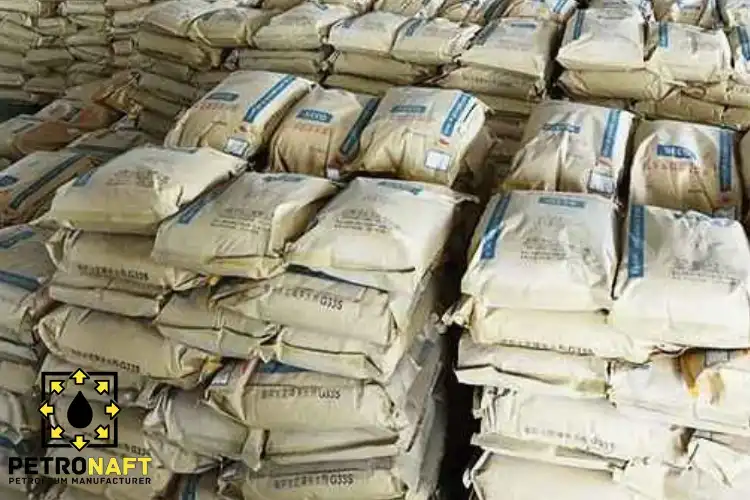
Gilsonite Suppliers matter most when you need consistent performance—not just a low price. The best suppliers prove quality with repeatable specs (softening point, ash, moisture, particle size, solubility), ship in the right packaging for your plant, and back it up with traceable lots, COAs, and responsive technical support so your asphalt, drilling, or industrial formula doesn’t drift.
Buying gilsonite is deceptively simple: it’s a solid natural hydrocarbon, but small variations can change viscosity, filtration control, rutting resistance, coating gloss, or melt behavior.
Use this guide if you want to:
Compare suppliers beyond “$/MT”
Reduce rejects, dust issues, and delays
Choose the right grade, mesh, and packaging for your application
Highlights & Key Sections
Why “supplier choice” changes performance and cost
Gilsonite shows up in three places where consistency is everything:
Asphalt modification: High-temperature stiffness and rutting resistance depend on stable softening behavior and low contaminants.
Oilfield drilling and cementing: Fluid-loss control and sealing performance depend on predictable particle size distribution and solubility behavior.
Industrial (inks, paints, foundry, adhesives): Color, gloss, dispersion, and odor control depend on cleanliness, ash, and lot-to-lot uniformity.
If two offers look similar on paper, the difference is usually hidden in:
Lot variability (especially ash, moisture, and oversized particles)
Packaging and handling (dust, bridging, moisture pickup)
Reliability (lead time, export documents, and consistent loading)
How to Choose Gilsonite Suppliers (Buyer’s Framework)
Step 1: Match the supplier’s “best fit” to your use case
Different applications reward different strengths. Start by selecting a supplier type that matches your risk tolerance and the complexity of your formulation.
Buyer situation
Best supplier fit
Why it works
Watch-outs
You need maximum consistency for repeated blends
Integrated producer/processor
Better control over mining + processing + QC
Verify true lot traceability and QA ownership
You need flexible packaging + fast export cycles
Export-focused supplier with regional stock
Faster turnaround, multiple incoterm options
Confirm storage conditions and re-bagging controls
You need very tight particle size control
Specialist micronizer
Better PSD and dust management options
Ensure they don’t “over-grind” into poor flowability
You buy for multiple plants and countries
Multi-origin supplier with documented equivalency
Simplifies approvals
Validate equivalency across origins with your own tests
Step 2: Treat the COA as a “starting point,” not the truth
A Certificate of Analysis is useful, but it’s only a snapshot. Your job is to confirm that the COA matches the delivered lot and that the lot stays stable through shipping and storage.
High-impact quality checks most buyers use:
Softening point (Ring & Ball): Indicates heat resistance and processing window.
Ash content: Tracks mineral impurities; affects asphalt aging and industrial cleanliness.
Moisture: Drives caking, poor dosing, and inconsistent blending.
Particle size distribution (PSD): Determines dispersion, filtration performance, and melt kinetics.
Solubility behavior: Helps predict compatibility in binders/solvents.
Practical rule: If your process is sensitive, run a quick incoming test on every lot, and a full panel on every new supplier.
Step 3: Specify the grade the way your plant actually consumes it
A common mistake is buying “gilsonite powder” without defining how it must behave in your line.
Use a spec that includes performance-linked requirements, not just chemistry.
What to define in your RFQ
Why it matters in real life
Example of a clear requirement
Form (lump / granular / powder / micronized)
Drives feeding method and dispersion
“Micronized powder suitable for pneumatic conveying”
Mesh / PSD target and tolerance
Prevents filtration drift or poor mixing
“Tight PSD with limit on oversize fraction”
Moisture max at loading
Prevents caking and dosing errors
“Moisture controlled at loading and sealed packaging”
Softening point range + tolerance
Stabilizes asphalt/drilling behavior
“Grade aligned to high-temp performance target”
Packaging type + palletization
Reduces damage and contamination
“Multiwall bags with inner liner, pallet-wrapped”
Documentation pack
Avoids customs and QA delays
“COA, SDS, lot ID, net weight, origin docs”
Step 4: Compare total landed cost (and your hidden costs)
A low FOB price can lose to a higher-priced offer when you include rejects, downtime, and dust control.
Total landed cost usually includes:
Product price + packaging grade
Inland trucking, port handling, and loading method
Freight, insurance, and demurrage exposure
Customs classification support and documentation completeness
Buyer tip: Ask for a quote that separates product, packaging, and logistics so you can compare apples-to-apples.
Step 5: Run a lightweight supplier audit (even if you can’t visit)
You can screen most suppliers with proof-based questions:
Do you assign a unique lot number that follows the shipment end-to-end?
Who owns the lab results—in-house or third-party—and how often do you test?
Can you provide retained samples for dispute resolution?
What is your standard deviation on key parameters across the last 10 lots?
How do you prevent moisture pickup between production and loading?
What’s your plan if a lot fails—replacement timeline, claim handling, and documentation?
If answers are vague, your risk is real.
Product forms and where each one wins
Lump
Best when you have on-site crushing or you need minimal fines and dust.
Trade-off: More handling steps and variability if you crush inconsistently.
Granular
A strong middle ground for plants that want easier handling than powder.
Trade-off: May need longer mixing to fully disperse in some binders.
Powder / Micronized
Best for fast dispersion and consistent dosing (especially in asphalt and drilling additives).
Trade-off: Dust control, bridging in hoppers, and moisture sensitivity become critical.
Mini tutorial: incoming QC you can do fast (and what it tells you)
Goal: Catch the problems that cause 80% of complaints—before the material hits production.
Verify lot ID match across bags, COA, and bill of lading.
Run a quick moisture check (especially if shipment crossed humid routes).
Sieve screen spot-check for oversize and excessive fines.
Simple melt/softening behavior check to confirm grade consistency.
Record color and odor notes for industrial uses (dispersion issues show early).
Retain a sealed reference sample from the delivered lot.
If your process is sensitive: Require pre-shipment sample approval for the first 1–3 lots.
Industry trends buyers should plan for
Performance-driven asphalt specs are tightening. More agencies and contractors focus on rutting resistance and high-temperature behavior, pushing buyers to demand tighter control over softening behavior and PSD consistency.
Dust-free handling and automation are becoming standard. Plants increasingly prefer better-flowing powders, lined packaging, and cleaner unloading to reduce housekeeping load, worker exposure, and dosing variability.
These trends reward suppliers who invest in processing control, documentation discipline, and consistent packaging.
Top 5 companies buyers commonly shortlist
Below are five widely recognized names that frequently appear in industrial procurement shortlists—covering mining, processing, distribution, and application support. Your best fit depends on region, required documentation, and whether you need raw material or application-ready grades.
Company
Strength buyers recognize
Common buyer fit
What to verify quickly
American Gilsonite Company
Long-established producer focused on gilsonite/uintaite
High-consistency industrial and oilfield requirements
Grade availability, lead times, lot traceability
Ziegler Chemical & Mineral Corp.
Specialty asphalt/gilsonite materials and formulations
Buyers needing tailored grades and technical support
Spec alignment, repeatability across lots
Wasit Group
Broad minerals trading with gilsonite supply
Buyers prioritizing export logistics and packaging options
Particle size offering, product fit to fluid system, documentation
What to ask any “top-tier” supplier (works for all five)
Can you supply two consecutive lots that match the same spec window?
Can you support your target mesh/PSD with documented tolerance?
Can you load in moisture-protected packaging appropriate to my climate?
What’s your standard documentation pack and turnaround time?
How do you handle off-spec lots (replacement, credit, timing)?
Practical pitfalls (and how to avoid them)
Pitfall: Buying by mesh only.
Fix: Specify PSD tolerance and limit oversize fraction, not just “325 mesh.”
Pitfall: Ignoring moisture until it clumps.
Fix: Require moisture controls at loading and sealed inner liners.
Pitfall: Assuming one COA represents the entire shipment.
Fix: Require lot-level COA and keep retained samples.
Pitfall: Paying for “high purity” without defining ash and solubility.
Fix: Tie purity claims to measurable acceptance criteria.
Pitfall: Comparing offers without packaging and logistics detail.
Fix: Quote templates should separate product, packaging, and freight terms.
Executive Summary & Buyer Checklist
Use this checklist to qualify suppliers quickly and protect performance:
Fit-for-use defined: application, form, mesh/PSD, and handling method
Spec window set: softening behavior, ash, moisture, and PSD tolerances
QC proof collected: lot traceability, testing frequency, retained samples
Packaging validated: liners, pallet wrap, labeling, and moisture protection
Logistics de-risked: lead time, export docs, and realistic shipping plan
Commercial terms clear: claim policy, replacement timeline, and payment terms
Trial plan written: first-lot acceptance tests + performance monitoring
If you follow these steps when evaluating Gilsonite Suppliers, you’ll cut variability, reduce rework, and choose partners who can scale with your demand instead of just filling a shipment.
FAQ
1) What’s the most important quality parameter when buying gilsonite?
It depends on the application, but softening behavior and particle size distribution are usually the biggest drivers of performance. Ash and moisture are the most common causes of inconsistency and handling problems.
2) Is micronized gilsonite always better than granular?
Not always. Micronized gilsonite grades disperse faster and dose more consistently, but they can increase dust and caking risk. If your handling system isn’t designed for fine powders, granular may be more stable.
3) How do I prevent caking during shipping and storage?
Control moisture at loading, use lined bags, and store pallets in a dry, covered area. For humid routes, require sealed inner liners and avoid long port dwell times.
4) Can I use the same gilsonite grade for asphalt and drilling?
Sometimes, but it’s not automatic. Drilling applications often require tighter PSD and specific behavior in fluid systems, while asphalt buyers focus on high-temperature performance and blending compatibility.
5) What documents should I require from a supplier?
At minimum: lot-level COA, SDS, packing list, bill of lading, and clear labeling with lot numbers. For regulated markets, you may also need origin documentation and consistency records across lots.
Sources
Official manufacturer overview describing gilsonite/uintaite supply positioning and operations. American Gilsonite Company