
Paraffin Wax Suppliers that consistently meet global buyer expectations are the ones with predictable quality, transparent specs, and reliable logistics. Below is a practical shortlist of leading producers and distributors (including Petro Naft), plus a buyer-ready method to compare grades, verify compliance, and place safer, faster purchase orders.
Highlights & Key Sections
What this article helps you do (in minutes)
- Shortlist credible global suppliers by region and product fit
- Match wax grade to application (candles, packaging, cosmetics, rubber, PVC, hot-melt)
- Vet quality fast using a simple COA + sampling workflow
- Reduce risk around contamination, oil content, odor, and shipment variability
Top paraffin wax suppliers worldwide (shortlist)
The “best” supplier depends on grade (fully refined vs semi-refined vs slack vs microcrystalline), regulatory needs, and lead time. Use this shortlist as a starting point, then validate with the qualification steps later.
Supplier snapshot table
| Supplier | Primary footprint | Typical offering | Common buyer fit | Practical note |
|---|---|---|---|---|
| Petro Naft | Turkey-focused exports + multi-origin sourcing | Fully refined, semi-refined, slack, tailored specs | Candle, packaging, industrial users needing flexible supply | Often strongest when you need spec-matching + export documentation discipline |
| Sasol | Global distribution (strong specialty portfolio) | Fully refined paraffin waxes, specialty waxes | Candles, coatings, higher consistency needs | Known for consistent quality control and defined product families |
| ExxonMobil | Global | Paraffin and specialty hydrocarbon materials (availability varies by market) | Industrial formulators, large-volume programs | Strength is scale and product governance |
| Shell | Global (market-dependent availability) | Wax streams and specialty hydrocarbons (varies) | Large buyers aligned with major supply chains | Best approached with exact spec + local availability check |
| Sinopec | China + exports | Paraffin wax grades (varies by refinery stream) | Large-volume importers, industrial/candle | Confirm batch-to-batch odor/color targets carefully |
| PetroChina | China + exports | Paraffin wax grades (varies by facility) | Large-volume programs | Use tighter incoming inspection to manage variability |
| IndianOil (IOCL) | India + regional exports | Paraffin wax grades | Regional buyers, industrial/candle | Often attractive on regional lead time and product familiarity |
| H&R Group | Europe + global specialty markets | Paraffin & microcrystalline waxes, specialties | Adhesives, rubber, technical wax needs | Strong for specialty applications and technical dialogues |
| Sonneborn (HF Sinclair group) | North America + global specialty | Highly refined white oils/waxes (portfolio dependent) | Pharma/cosmetic-adjacent, high-purity needs | Documentation and purity alignment are typical strengths |
| Nippon Seiro | Japan + Asia | Paraffin wax and specialty wax products | Technical buyers needing consistent specs | Strong where tight specs and process control matter |
Tip for procurement teams: treat this as a shortlist, not a ranking. Two suppliers can both be “top” but serve different grades, regions, and compliance needs.
Quick buyer guide by application (pick the right wax first)
Many “supplier problems” are actually grade mismatch. This table helps you choose the right wax family before requesting quotes.
| Application | Recommended wax type | Why it works | Common spec targets to request |
|---|---|---|---|
| Candles (container/pillar/tea light) | Fully refined (often), sometimes semi-refined blends | Cleaner burn, lower odor, better color control | Congealing point, oil %, color, odor, needle penetration |
| Packaging / paper coating | Fully refined or tailored blends | Good barrier, consistent melt behavior | Melt point range, viscosity (at temp), oil %, color |
| Cosmetics / personal care | Fully refined (high purity) | Low odor/color, better stability | Purity statement, compliance docs, PAH/odor controls |
| Rubber compounding | Microcrystalline or semi-refined (depends) | Tack, flexibility, process aid | Penetration, melt point, compatibility tests |
| PVC / plastics processing | Paraffin or microcrystalline (as lubricant aid) | Flow, release, processing window | Melt point, compatibility, thermal stability notes |
| Hot-melt adhesives | Specialty paraffin / microcrystalline blends | Open time, set speed control | Viscosity behavior, penetration, softening profile |
How to choose Paraffin Wax Suppliers (a practical qualification workflow)
If you want fewer surprises, qualify suppliers like a quality engineer, not like a price shopper.
Step 1) Lock your spec into 6–8 measurable values
Use measurable properties (not “good quality”). Start with:
- Wax type: fully refined / semi-refined / slack / microcrystalline
- Congealing point / melting point range
- Oil content
- Color (Saybolt/Lovibond or agreed method)
- Needle penetration
- Odor acceptance criteria (simple but explicit)
- Packaging + net weight + labeling requirements
- Target compliance (food-contact/cosmetic/pharma/industrial)
Step 2) Demand a COA that matches your spec (and reject “generic COA”)
A reliable supplier can align COA values to your requested range. Watch for:
- Missing test methods
- Very wide ranges (hard to control outcomes)
- “Typical values” without batch numbers
- COAs that look copied across unrelated grades
Step 3) Run a fast incoming test set (mini tutorial)
You can catch most issues in 24–48 hours with basic checks:
- Melt point/congealing point check vs COA
- Visual color check at controlled lighting
- Odor check after melting a small sample (standardize temperature/time)
- Oil content verification if you have lab capability, or outsource as spot-check
- For candles: pour a small test batch and measure sweating, frosting, soot, and fragrance throw
Step 4) Pilot shipment before annual contract
Even if pricing looks perfect, do one pilot container (or a smaller lot) first. Then set:
- Acceptance limits
- Rejection/credit process
- “Do not substitute origin/refinery without approval” clause
- Lead time and demurrage responsibilities
Real-world examples (what “good supplier fit” looks like)
Case example 1: Candle maker reduces soot and returns
A mid-size candle brand had customer complaints about soot and inconsistent scent throw. Their wax met melt point, but oil content and odor varied. They switched to a fully refined grade with tighter oil limits, standardized fragrance load testing, and required lot-based COAs. Returns dropped, and they could keep fragrance performance consistent across seasons.
Case example 2: PVC compounder stabilizes processing window
A PVC compounder used an “equivalent” wax grade from a cheaper source. Small penetration differences changed lubrication behavior, causing torque variation and surface defects. They moved to a supplier that could hold penetration tighter and provided consistent packaging/handling to avoid contamination. Scrap dropped noticeably after two production cycles.
What to request in an RFQ (copy/paste-ready)
Ask for these items up front to filter serious suppliers quickly:
- Grade + intended application (so they don’t quote the wrong family)
- Target monthly volume + delivery ports
- COA with batch number and test methods
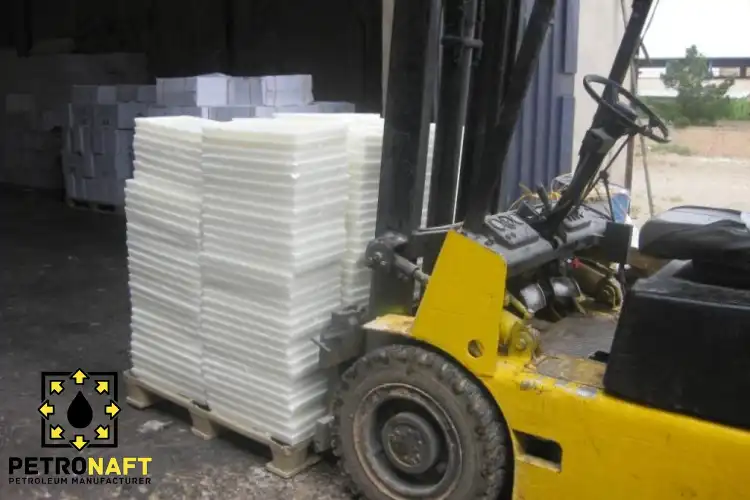
- Packaging options (bag/carton/slab), pallet pattern, container loading plan
- Origin statement + HS code + export docs capability
- Compliance needs (food-contact/cosmetic/pharma where applicable)
- Quote by Incoterms (EXW / FOB / CFR / CIF) + lead time
Specs that matter most (and what they influence)
| Property | Why it matters | What can go wrong if it’s off |
|---|---|---|
| Congealing/melting point | Controls set time and handling | Soft candles, sweating, brittle slabs |
| Oil content | Impacts odor, burn, stability | Smoke/soot, odor, surface sweating |
| Needle penetration | Indicates hardness/plasticity | Poor mold release, cracks, torque changes |
| Color | Affects appearance and blending | Off-white tint, brand inconsistency |
| Odor | Critical for candles/cosmetics | Fragrance distortion, customer complaints |
| Contamination control | Prevents defects | Black specks, fisheyes, inconsistent burn |
Logistics and packaging: the hidden ranking factor
The “best” supplier on paper can still fail you if packaging and loading are sloppy.
What to standardize:
- Packaging: slab size, inner liners, carton strength, strapping
- Labeling: grade, batch, net/gross, production date, origin
- Container loading: heat protection (where needed), pallet wrap, moisture control
- Storage guidance: temperature range, stacking limits, FIFO rules
Current trends shaping paraffin wax buying decisions
- Tighter purity expectations in candles and personal care: buyers increasingly request lower odor and cleaner burn behavior, pushing demand for better refining consistency and clearer documentation.
- Supply chain volatility and regional pricing swings: refinery optimization and shifting base-oil economics can change wax availability. Buyers who dual-source (or keep spec-equivalent alternates qualified) are simply more stable.
Conclusion
Choosing Paraffin Wax Suppliers that perform well long-term comes down to measurable specs, disciplined COA alignment, and repeatable logistics—not marketing claims. Start with a shortlist, lock your acceptance limits, run a pilot shipment, and keep a second qualified option ready for peak seasons or market disruptions.
Executive checklist (use this before placing a PO)
- Define wax family (fully refined / semi-refined / slack / microcrystalline) for your application
- Set 6–8 measurable acceptance limits (melt, oil %, penetration, color, odor, packaging)
- Require lot-based COA with test methods and batch numbers
- Run a standard incoming test set (including a mini production trial for candles)
- Pilot ship once before annual or high-volume commitments
- Contract clauses: no unapproved substitutions, clear claims/returns workflow, lead-time penalties/terms
- Maintain a qualified alternate supplier and spec-equivalent backup grade
FAQ
1) What’s the difference between fully refined and semi-refined paraffin wax?
Fully refined wax has lower oil and typically lower odor/color, making it better for candles and sensitive applications. Semi-refined can be cost-effective for industrial uses but may require tighter incoming checks to manage odor and variability.
2) Which specs matter most for candle manufacturers?
Congealing/melt point, oil content, odor, and penetration are the big four. Small shifts can change burn behavior, frosting, scent throw, and soot—so ask for tight ranges and verify with a quick pilot pour test.
3) How can I verify supplier quality without expensive lab work?
Start with COA validation, melt/congealing point checks, controlled visual/odor checks, and a small-scale application trial. For higher risk programs, outsource periodic oil-content or contaminant checks as a spot-audit.
4) Is microcrystalline wax the same as paraffin wax?
Not exactly. Microcrystalline wax usually has a different crystal structure, higher viscosity, and more flexibility, which can help in rubber, adhesives, and specialty blends. Many buyers blend paraffin and microcrystalline to balance hardness and tack.
5) What documents should a serious exporter provide?
At minimum: COA by batch, packing list, commercial invoice, certificate of origin (when needed), SDS, and clear HS code guidance. For regulated uses, add compliance statements and traceability/lot documentation.