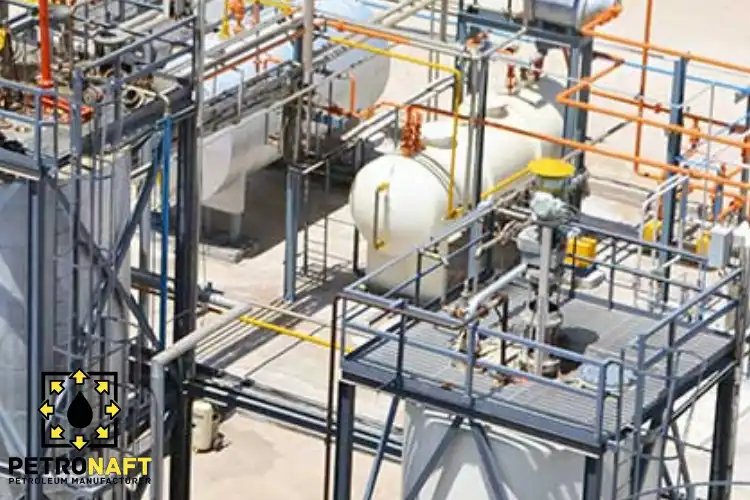
The Sulfonated Asphalt Manufacturing Process converts selected asphalt into a water-dispersible, performance-tuned material by controlled sulfonation, quenching, and (often) neutralization, then finishing to a target pH, solids, and viscosity. Done correctly, it delivers consistent rheology control, shale inhibition, and fluid-loss performance—especially in drilling and specialty industrial formulations.
Highlights & Key Sections
What you’ll get from this guide
A practical, step-by-step production flow (batch and continuous)
The key variables that control quality and repeatability
Mini tutorials for setting targets, running trials, and troubleshooting
A buyer-focused QC/spec checklist to reduce sourcing risk
Where sulfonated asphalt is used (and why specs matter)
Sulfonated asphalt shows up in applications that punish inconsistent quality:
Oil & gas drilling fluids: shale inhibition, filtration control, temperature stability
Water-based systems: improved dispersion and tolerance to salts/hard water (formulation-dependent)
Industrial additives: niche use cases where polar functionality improves compatibility
Specialty blends: when operators need performance at specific pH, salinity, or temperature windows
In practice, “good” isn’t one grade. The right product depends on sulfonation level, neutralization form, solids, and particle/dispersibility profile.
Sulfonation in plain language: what’s happening to the asphalt
Asphalt contains polar and aromatic fractions (including asphaltenes/resins). Sulfonation introduces sulfonic functional groups onto reactive sites, increasing polarity and enabling controlled interaction with water, clays, and other fluid components.
Most commercial grades then undergo neutralization (commonly to sodium or ammonium salts) to tune:
Dispersibility
pH behavior
Compatibility with other additives
Handling (dusting, caking, pumpability)
Sulfonated Asphalt Manufacturing Process: what happens chemically
At production scale, you’re managing an exothermic electrophilic sulfonation where heat removal and mass transfer determine product uniformity. The process goal is not “maximum reaction,” but repeatable functionalization without runaway heat, localized over-sulfonation, or excessive free acidity.
Why this matters in real plants
Uneven mixing can create “hot pockets” that darken/char product and spike free acid.
Over-aggressive sulfonation may raise dispersibility but damage thermal stability or filtration behavior.
Neutralization strategy (base type, rate, endpoint pH) can make or break field performance.
Inputs and equipment you actually need
Typical inputs (selection drives final grade)
Input
Common options
What it influences
Asphalt base
Hard/soft grades, selected by penetration/softening point
Reactivity, viscosity, final solids behavior
Sulfonating agent
Oleum or SO₃ systems
Reaction rate, fuming risk, heat load
Quench medium
Water or controlled aqueous phase
Heat control, dispersion start, safety margin
Neutralizing base
NaOH, ammonia solution, or tailored bases
Salt form, pH curve, compatibility
Processing aids
Anti-foam, dispersants (when needed)
Handling and consistency
Core equipment (batch line)
Jacketed reactor with high-torque agitation
Metering for sulfonating agent (and often inert gas handling)
Quench system with controlled addition
Neutralization tank or in-reactor neutralization capability
Filtration (bag filter or pressure leaf, grade-dependent)
Scrubber/vent handling and corrosion-resistant piping where required
Step-by-step: the batch manufacturing route (most common)
1) Prepare and condition the asphalt
Heat to a controlled viscosity window so it mixes predictably.
Filter out oversize solids that can seed localized reactions.
Confirm baseline: penetration/softening point, ash, and water content.
Practical tip: If your feed varies by lot, your “same recipe” won’t behave the same. Lock down feed specs first.
2) Start controlled sulfonation (reaction phase)
Bring reactor to your setpoint temperature.
Begin sulfonating-agent dosing slowly, watching temperature rise and torque/viscosity change.
Maintain strong mixing to prevent localized overreaction.
Mini tutorial (operator mindset):
Think of dosing like steering a truck downhill—small corrections early prevent major problems later. If temperature climbs faster than expected, slow the dose first before chasing it with cooling alone.
3) Hold for conversion (short stabilization)
After dosing, hold long enough to smooth out composition gradients. This is where uniformity improves—especially if your feed asphalt is naturally heterogeneous.
4) Quench and dilute (safest way to “lock in” control)
Quench converts a high-risk, highly reactive state into a manageable intermediate.
Add quench medium in a controlled manner to avoid violent boiling or aerosol formation.
Use staged quenching if your line historically sees spikes.
5) Neutralize (if producing salt-form grades)
Neutralization is where many plants lose consistency.
Add base slowly under agitation.
Track pH trend and temperature; both affect endpoint behavior.
Choose a target pH window aligned to the end use (drilling-fluid grades often favor a practical handling range rather than “perfect neutrality”).
Field-reality note: Two batches can share the same pH and still perform differently if one has higher free acid or different dispersion behavior. pH is necessary, not sufficient.
6) Finish, homogenize, and filter
Adjust solids and viscosity to shipping targets.
Homogenize long enough to eliminate stratification.
Filter to remove gels or insolubles that cause plug-ups at the customer site.
7) Package to preserve performance
Choose packaging based on how the buyer doses it:
Bags/big bags for dry products
Drums/IBCs for liquids or slurries
Control moisture pickup and caking with proper storage conditions.
Mini tutorial: how to set targets before you scale
A fast way to avoid expensive scale-up mistakes is to define three measurable targets that match the end-user needs:
Dispersion time (how quickly it wets/disperses under standard mixing)
Filtration/plugging tendency (simple filter test as a proxy)
Stability at temperature (heat-age a sample and re-check viscosity/dispersion)
Example approach (pilot logic)
Run a small batch at a conservative sulfonation level.
Split into 3 jars and neutralize to three endpoints (low/mid/high in your acceptable pH band).
Compare dispersion time and filtration behavior side-by-side.
This “3-endpoint” test often reveals the best neutralization window faster than repeated full runs.
Fouling risk if dispersion/neutralization is not tuned
Higher instrumentation and control complexity
Critical process controls and typical operating windows
These ranges are intentionally broad because plants vary by feedstock, equipment, and grade targets. Use them as a starting framework for internal trials—not as a universal recipe.
Control point
What to monitor
Why it matters
Reaction temperature
Setpoint + rate of rise
Prevent runaway and reduce side reactions
Dosing rate
Mass/time + temperature response
Controls uniformity and sulfonation level
Mixing intensity
Torque, vortex stability
Avoid hot pockets and gels
Quench strategy
Addition staging + off-gas behavior
Safety and product repeatability
Neutralization curve
pH vs. time + temperature
Controls salt form and stability
Final solids/viscosity
In-line or lab checks
Determines pumpability and dosing behavior
Operator shortcut: If one variable drifts, don’t “fix everything.” Stabilize temperature and dosing first; then correct viscosity/solids at the end.
Safety and environmental fundamentals (non-negotiable)
Sulfonation systems demand disciplined process safety. Plan around:
Exothermic heat release: design cooling capacity for worst-case scenarios
Fuming/corrosion: choose compatible materials and isolate vulnerable sections
Vent and scrubbing: control acidic off-gases and aerosols
PPE and procedures: strict handling and emergency response plans
Documentation: SDS alignment, training, and incident-prevention culture
If you’re commissioning a new line, treat the first runs like a controlled experiment: slower dosing, tighter monitoring, and conservative endpoints.
Quality control: tests buyers actually ask for
A buyer-focused QC sheet reduces disputes and makes your product easier to qualify.
QC item
What it tells the customer
Common risk if out of spec
Appearance & homogeneity
Batch consistency
Field inconsistency, separation
pH (as supplied / in dilution)
Handling and compatibility
Unexpected reactions in formulations
Solids content
Active material delivered
Underperformance or overdosing
Free acidity / acid value (method-dependent)
Safety + stability indicator
Corrosion, instability, odor/fuming
Dispersibility / wetting time
Ease of use
Clumping, slow mixing, waste
Insolubles / filtration residue
Cleanliness
Plugged screens/nozzles
Viscosity (if liquid/slurry)
Pumpability
Transfer problems and dosing errors
Thermal aging behavior
Real-world stability
Thickening, gel formation
Commercial tip: Offer a small qualification package (COA + dispersion test result + recommended dosing range). It speeds up buyer trials and reduces back-and-forth.
Compatibility requirements: salinity tolerance, hard-water tolerance, temperature window
Documentation: COA per lot, SDS, handling/storage guidance
Trial support: recommended treat rate range and mixing procedure
Packaging and logistics that buyers prefer
Packaging
Best for
Watch-outs
25 kg bags
General distribution
Moisture pickup and caking
Big bags
Bulk users
Handling equipment needed
Drums
Controlled small-to-mid volume
Cost per ton higher
IBCs
Liquid/slurry dosing
Freeze/thickening management
Conclusion
A reliable line comes down to disciplined control of reaction heat, dosing, quench, and neutralization—plus QC tests that match the end user’s performance drivers. When you build your product around measurable dispersion, stability, and cleanliness targets, the Sulfonated Asphalt Manufacturing Process becomes predictable, scalable, and commercially easier to qualify.
Executive Summary Checklist (use this before scale-up or sourcing)
Define the end use (drilling, industrial blend, specialty) and required compatibility window
Lock down feed asphalt specs to reduce variability
Control sulfonation dosing using temperature rise as your primary guardrail
Use staged quench to improve safety and repeatability
Neutralize slowly and validate with dispersion + filtration proxy tests (not pH alone)
Filter and homogenize to prevent plugging and field inconsistency
Ship with buyer-ready QC: solids, free acidity indicator, dispersibility, insolubles, and stability checks
FAQ
1) Is sulfonated asphalt water soluble?
Many grades disperse well in water rather than truly dissolving like a small-molecule salt. Dispersion quality depends on sulfonation level, neutralization form, particle profile, and mixing conditions.
2) What’s the biggest cause of inconsistent batch performance?
Feedstock variability and uneven reaction control are the top drivers. Tight feed specs plus controlled dosing and strong mixing usually improve repeatability faster than chasing minor additive tweaks.
3) Why do some grades foam during neutralization?
Foaming typically comes from rapid base addition, entrained gases, and surfactant-like behavior created during functionalization. Slower neutralization, degassing, and small anti-foam doses usually stabilize the system.
4) How do buyers qualify a new supplier quickly?
They focus on dispersion behavior, filtration/plugging tendency, thermal stability, and consistent COAs. Providing a clear mixing procedure and a suggested treat-rate range accelerates lab and field trials.
5) Can the process be run continuously?
Yes—continuous or semi-continuous systems can improve consistency and heat control. They require tighter instrumentation, stable feed quality, and a well-designed quench/neutralization strategy to avoid fouling.